
In the dynamic landscape of media and entertainment, few stories are as compelling and financially intricate as that of SiriusXM. The ubiquitous satellite radio service, a fixture in millions of vehicles and homes, represents a unique business model built on subscriptions and exclusive content. However, to truly understand its operational backbone and strategic direction, one must delve into the fundamental question of ownership. The answer, while seemingly straightforward, unravels a complex web of corporate finance, strategic investments, and market consolidation that firmly places SiriusXM under the expansive umbrella of Liberty Media Corporation.
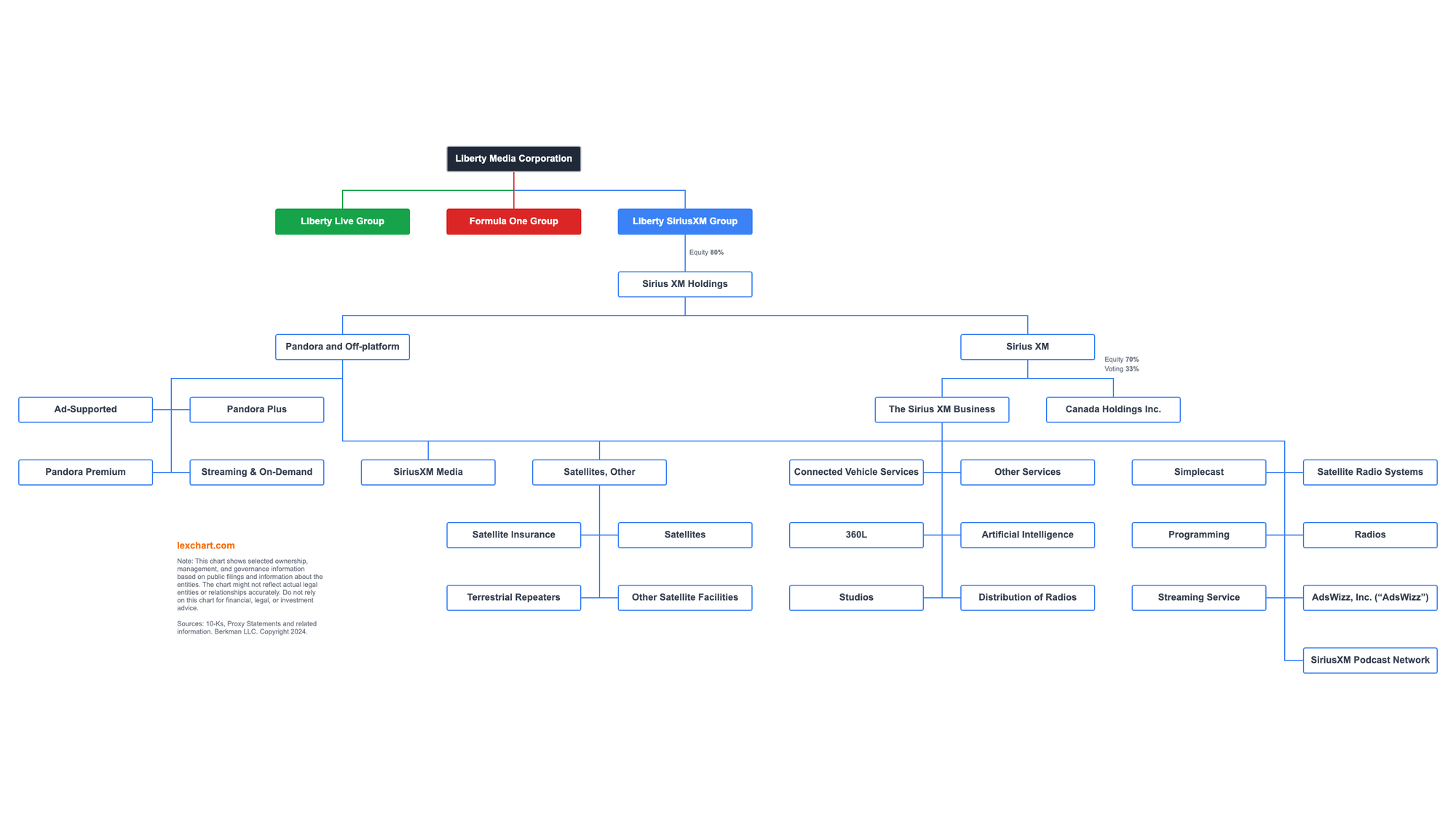
This article will meticulously explore the ownership structure of SiriusXM, focusing exclusively on its financial and corporate aspects. We will examine how Liberty Media came to dominate the satellite radio giant, the financial implications of this relationship, SiriusXM’s market position, and the investment considerations that define its trajectory.
The Dominant Shareholder: Liberty Media Corporation
At the heart of SiriusXM’s ownership lies Liberty Media Corporation, a diversified media conglomerate controlled by billionaire John C. Malone. Liberty Media has a reputation for shrewd investments and an unconventional corporate structure, often utilizing tracking stocks to allow investors to track the performance of specific assets within the larger company without owning a direct equity stake in those individual assets.
Liberty Media’s journey to becoming the controlling shareholder of SiriusXM is a tale of strategic financial maneuvers and a long-term vision for the audio entertainment market. Following the challenging economic climate of 2008 and the subsequent merger of Sirius Satellite Radio and XM Satellite Radio, the combined entity faced significant financial distress. It was during this precarious period that Liberty Media stepped in, providing a crucial $530 million loan to prevent bankruptcy in early 2009. This rescue package came with warrants that allowed Liberty Media to acquire a significant equity stake, marking the beginning of its increasing control.
Over the years, Liberty Media steadily increased its ownership through various stock purchases and financial transactions. By 2012, Liberty Media had acquired a majority stake in SiriusXM. Today, it maintains a controlling interest, holding approximately 80% of the common stock of SiriusXM Holdings Inc. This dominant position grants Liberty Media substantial influence over SiriusXM’s strategic decisions, financial policies, and executive appointments.
Tracing the Liberty Media Ecosystem
Liberty Media itself is structured into various “tracking stocks,” each designed to reflect the financial performance and value of distinct groups of assets. For investors interested in SiriusXM, the primary vehicle is the Liberty SiriusXM Group (LSXMA, LSXMB, LSXMK). These tracking stocks are intended to reflect the performance of Liberty Media’s interest in SiriusXM, along with certain cash and liabilities. It’s crucial for investors to understand that these are not direct shares of SiriusXM Holdings but rather shares in a tracking stock group within Liberty Media. This unique structure allows Liberty Media to maintain corporate control while offering investors a focused exposure to specific segments of its portfolio.
Beyond SiriusXM, Liberty Media’s portfolio includes diverse assets such as the Atlanta Braves Major League Baseball team (reflected in the Liberty Braves Group tracking stock) and Formula 1 racing (reflected in the Liberty Formula One Group tracking stock). This broad and diversified portfolio highlights Liberty Media’s strategy of investing in content and distribution platforms with significant long-term potential.
The Rationale Behind Liberty’s Investment
Liberty Media’s initial investment in SiriusXM was driven by a keen understanding of the satellite radio’s unique value proposition and its potential for long-term subscriber growth. Despite the initial financial woes, the merged SiriusXM held a monopolistic position in a niche market, offering ad-free music, exclusive talk content, and comprehensive sports coverage – a differentiated offering from traditional terrestrial radio and early streaming services.
John Malone’s philosophy often centers on owning valuable content and distribution channels. SiriusXM perfectly fit this mold, possessing a robust subscription model that generated predictable, recurring revenue streams. The investment allowed Liberty Media to capitalize on a resilient business that, once stabilized, could generate significant free cash flow and exhibit strong pricing power. Furthermore, the ability to integrate SiriusXM into a larger media ecosystem offered synergistic opportunities, enhancing the overall value proposition of Liberty Media’s diverse holdings.
A Legacy of Mergers and Financial Consolidation
The current corporate identity of SiriusXM is the direct result of a monumental merger and subsequent financial restructuring. Understanding this history from a financial lens is critical to appreciating its present ownership and market standing.
From Competition to Collaboration: The Sirius XM Merger
Before 2008, Sirius Satellite Radio and XM Satellite Radio were fierce competitors, each burning through capital to sign exclusive content deals and build out their respective satellite infrastructure. Both companies operated at significant losses, underpinned by ambitious plans for subscriber growth. The logic behind their eventual merger was purely financial: eliminate competition, reduce redundant operational costs (like satellite maintenance and content acquisition), and create a unified platform that could achieve profitability through scale.
The merger, completed in July 2008, was a complex regulatory and financial undertaking. It brought together two entities with distinct corporate cultures and financial liabilities. While it promised greater efficiency and a stronger market position, the timing coincided with a severe global financial crisis, exacerbating the newly merged company’s immediate financial challenges. This precarious situation ultimately opened the door for Liberty Media’s pivotal intervention.
Navigating Bankruptcy and Strategic Rescue
The combined Sirius XM Holdings found itself on the brink of bankruptcy in early 2009, burdened by debt and unable to secure new financing amidst the credit crunch. It was at this critical juncture that Liberty Media emerged as the white knight. Their $530 million capital infusion was not merely a loan; it was a strategic investment designed to secure a significant ownership stake. The terms of the deal provided Liberty with preferred stock and warrants, which, upon conversion, would grant them effective control of the company.
This strategic rescue highlighted Liberty Media’s acumen in identifying undervalued assets with strong underlying business models that were temporarily distressed. By providing much-needed liquidity, Liberty not only prevented a catastrophic collapse but also positioned itself to acquire a dominant share of a unique media asset at a highly favorable valuation. This event fundamentally shaped the current ownership structure and financial trajectory of SiriusXM, transforming it from an independent entity into a key component of Liberty Media’s diversified portfolio.
SiriusXM’s Financial Engine: Revenue Streams and Market Position

Under Liberty Media’s stewardship, SiriusXM has solidified its position as a financial powerhouse in the audio entertainment sector. Its business model, primarily driven by subscriptions, has proven remarkably resilient and profitable, generating substantial free cash flow.
Subscription Model: The Core of Profitability
The bedrock of SiriusXM’s financial success is its robust subscription model. Unlike traditional radio, which relies solely on advertising, or many streaming services that offer free tiers, SiriusXM’s core offering is premium, ad-free (or limited-ad) content delivered directly to paying subscribers. The company offers a variety of subscription packages, catering to different content preferences and vehicle types.
This model provides several key financial advantages:
- Predictable Recurring Revenue: Subscriptions generate a stable and recurring revenue stream, making financial forecasting more reliable and reducing volatility compared to purely ad-supported models.
- High Customer Lifetime Value: SiriusXM boasts relatively low churn rates, especially among its embedded base of in-car subscribers, leading to high customer lifetime value.
- Pricing Power: Given its exclusive content and unique delivery mechanism (satellite radio), SiriusXM has demonstrated an ability to periodically increase subscription prices, contributing directly to revenue growth.
- Operational Leverage: The fixed costs associated with satellite infrastructure and content acquisition can be spread across a growing subscriber base, leading to higher profit margins as the company scales.
Diversification and Advertising Revenue
While subscriptions remain paramount, SiriusXM has also successfully diversified its revenue streams. Its acquisition of Pandora in 2019 was a significant strategic move, bringing a large base of ad-supported listeners and a programmatic advertising platform into the fold. This expanded SiriusXM’s reach into the digital audio advertising market, allowing it to offer advertisers a broader audience across both its satellite and streaming platforms.
The advertising revenue segment, though smaller than subscriptions, provides an important growth vector and hedges against potential slowdowns in subscription growth. By leveraging data analytics and targeted advertising capabilities through Pandora and its own growing digital presence, SiriusXM aims to capture a larger share of the rapidly expanding digital audio ad market. Additionally, the company generates revenue through direct sales of its radio units, royalties, and other ancillary services.
Market Valuation and Investor Perspective
From an investor’s standpoint, SiriusXM (through the Liberty SiriusXM tracking stocks) is viewed as a mature, cash-generative business with a strong competitive moat. Its market capitalization reflects its substantial subscriber base, predictable revenue, and high profitability. Investors often look at metrics such as subscriber additions/churn, average revenue per user (ARPU), free cash flow, and EBITDA margins when evaluating SiriusXM’s financial health and growth prospects.
The company’s stable financial performance has enabled it to return capital to shareholders through regular dividends and share repurchases, signaling financial strength and a commitment to shareholder value. Despite the rise of numerous streaming competitors, SiriusXM’s embedded position in millions of vehicles and its exclusive content continue to provide a significant barrier to entry, making it an attractive asset within the media investment landscape.
The Influence of Ownership on Financial Strategy and Growth
Liberty Media’s controlling ownership has profoundly influenced SiriusXM’s financial strategy, capital allocation decisions, and long-term growth initiatives. This relationship underscores how corporate governance and strategic alignment with a dominant shareholder can shape a company’s financial destiny.
Capital Allocation and Strategic Investments
Under Liberty Media’s influence, SiriusXM has adopted a disciplined approach to capital allocation. A significant portion of its robust free cash flow is directed towards share repurchases, which reduce the number of outstanding shares and increase earnings per share for existing shareholders. This strategy aligns with Liberty Media’s broader philosophy of enhancing shareholder value through efficient capital management.
Strategic investments and acquisitions, such as the Pandora acquisition, are also carefully considered through a financial lens. The goal is to acquire assets that either expand SiriusXM’s market reach, diversify its revenue streams, or enhance its content offerings in a financially accretive manner. These decisions are often made with an eye toward maintaining strong balance sheet health while pursuing growth opportunities that complement its core satellite radio business. The backing of Liberty Media, with its deep financial resources and strategic expertise, provides SiriusXM with a distinct advantage in pursuing such ventures.
Shareholder Value and Corporate Governance
Liberty Media’s controlling stake means that its interests are heavily intertwined with those of SiriusXM. This often translates into a strong focus on maximizing shareholder value over the long term. Decisions regarding dividends, debt levels, and executive compensation are made with the aim of benefiting the broader Liberty Media ecosystem and its tracking stock holders.
Corporate governance within SiriusXM is influenced by Liberty Media’s board representation and strategic oversight. While SiriusXM operates as a publicly traded company with its own independent board members, the influence of Liberty Media’s nominees ensures alignment with the parent company’s strategic vision. This structure aims to balance the need for operational autonomy with centralized financial and strategic guidance, ensuring that SiriusXM’s capital investments and operational decisions support the larger financial objectives of Liberty Media.

Future Financial Horizons: Streaming and Beyond
Looking ahead, SiriusXM’s financial strategy is increasingly focused on expanding its presence beyond the traditional in-car satellite radio experience. The proliferation of digital audio consumption through smartphones, smart speakers, and connected vehicles presents both opportunities and challenges. SiriusXM is investing in its streaming platforms and personalized content offerings to attract new subscribers and retain existing ones who seek a more integrated audio experience across multiple devices.
Financially, this involves balancing investment in technology and content for its streaming services with the continued profitability of its core satellite business. The goal is to evolve into a comprehensive audio entertainment company that can capture market share in a fragmented digital landscape, leveraging its premium content and established brand. The backing of Liberty Media is crucial in funding these long-term strategic initiatives, providing the financial stability and vision necessary to navigate the evolving media ecosystem and ensure SiriusXM’s continued financial success and relevance.
In conclusion, the ownership of SiriusXM by Liberty Media is a pivotal aspect of its financial identity. It defines its corporate governance, strategic direction, and approach to capital management. For investors and industry observers, understanding this relationship provides invaluable insight into the financial engine driving one of the world’s most enduring and profitable audio entertainment platforms.
aViewFromTheCave is a participant in the Amazon Services LLC Associates Program, an affiliate advertising program designed to provide a means for sites to earn advertising fees by advertising and linking to Amazon.com. Amazon, the Amazon logo, AmazonSupply, and the AmazonSupply logo are trademarks of Amazon.com, Inc. or its affiliates. As an Amazon Associate we earn affiliate commissions from qualifying purchases.