
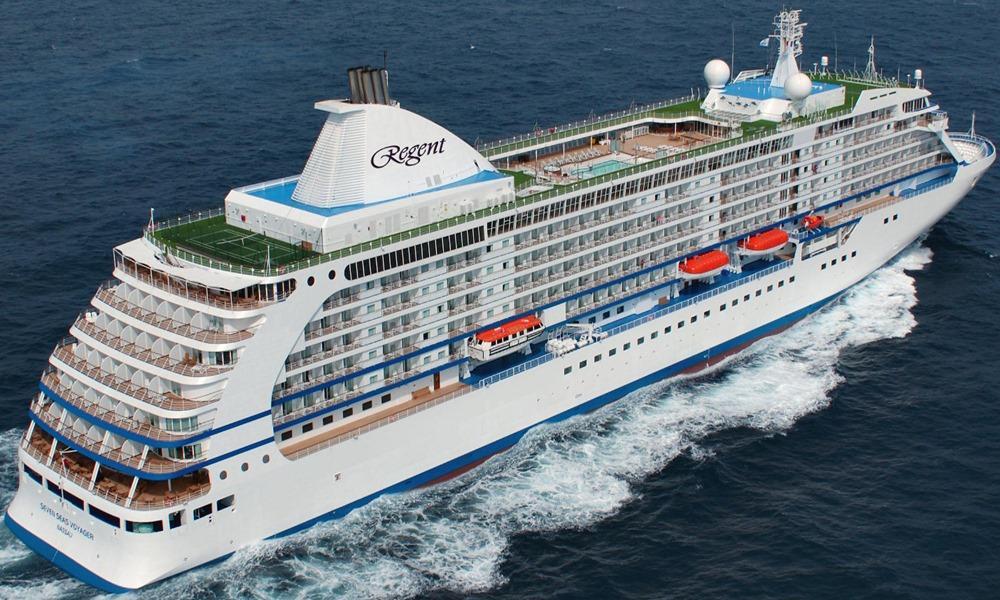
The realm of luxury travel, particularly in the cruise industry, often evokes images of opulence, exotic destinations, and impeccable service. But behind the grandeur of brands like Regent Seven Seas Cruises lies a complex tapestry of corporate ownership, financial strategy, and investor relations. Understanding who owns Regent Seven Seas Cruises is not merely a trivial pursuit of trivia; it’s an insightful dive into the mechanics of corporate finance, market consolidation, and the strategic positioning of assets within a multi-billion dollar industry. From a purely “Money” perspective, this exploration reveals the intricate financial ecosystem that underpins one of the world’s premier luxury cruise lines, detailing its place within a larger publicly traded entity and the financial implications thereof.

The Corporate Parent: Norwegian Cruise Line Holdings Ltd.
At the heart of the ownership structure for Regent Seven Seas Cruises is Norwegian Cruise Line Holdings Ltd. (NCLH). This prominent global cruise company operates a portfolio of distinct brands, each targeting different segments of the cruise market. For those interested in the financial performance and investment landscape of the cruise industry, NCLH represents a significant player, publicly traded on the NASDAQ stock exchange under the ticker symbol NCLH. This public ownership structure means that Regent Seven Seas Cruises is, in essence, indirectly owned by a vast network of institutional investors, mutual funds, and individual shareholders who hold stakes in NCLH.
An Overview of Norwegian Cruise Line Holdings (NCLH)
Norwegian Cruise Line Holdings Ltd. is one of the world’s largest and most diversified cruise operators, a titan in an industry characterized by high capital expenditure and significant revenue potential. Its portfolio comprises three distinct brands: Norwegian Cruise Line, known for its “Freestyle Cruising” concept and broad appeal; Oceania Cruises, which caters to the upper-premium segment with a focus on culinary excellence and destination immersion; and, of course, Regent Seven Seas Cruises, which anchors the ultra-luxury tier.
From a financial standpoint, NCLH’s multi-brand strategy is a shrewd move to diversify revenue streams and mitigate risks. By having a presence across various price points and demographic targets, NCLH can weather market fluctuations more effectively than a single-brand operator. Each brand contributes uniquely to the parent company’s consolidated financial statements, influencing overall revenue, profitability, and, ultimately, shareholder value. Regent Seven Seas, with its higher price points and premium offerings, often commands stronger margins and caters to a clientele that may be less susceptible to economic downturns, providing a degree of financial stability to the larger group.
The Acquisition and Strategic Rationale
The journey of Regent Seven Seas Cruises into the NCLH family is a classic example of strategic corporate acquisition designed to enhance market position and unlock financial synergies. Regent Seven Seas Cruises was part of Prestige Cruises International, which NCLH acquired in 2014 for an impressive sum of approximately $3.025 billion in cash and stock. This substantial investment underscored NCLH’s ambition to not only expand its fleet but, more critically, to diversify its financial portfolio by entering the lucrative and high-margin luxury cruise segment.
The strategic rationale behind such an acquisition from a “Money” perspective is multifaceted. Firstly, it enabled NCLH to immediately gain a dominant foothold in the ultra-luxury segment without the prohibitive costs and time associated with building a new luxury brand from scratch. This instant market penetration brought with it established brand recognition, a loyal customer base, and a seasoned operational team. Secondly, the acquisition created significant opportunities for economies of scale across the entire NCLH group. Centralized purchasing, shared administrative functions, and integrated marketing efforts could lead to substantial cost savings, directly impacting the bottom line and boosting NCLH’s consolidated profitability. Furthermore, it provided NCLH with a platform for cross-selling and up-selling across its brand portfolio, potentially migrating satisfied customers from one brand to another as their preferences and financial capacities evolve. Ultimately, such acquisitions are justified by the projected increase in shareholder value through expanded market share, enhanced profitability, and stronger competitive positioning.
The Financial Structure and Public Ownership
Understanding the ownership of Regent Seven Seas Cruises requires a grasp of how publicly traded companies like NCLH operate and generate value for their shareholders. The financial structure of such an entity is a complex interplay of equity, debt, and operational cash flow, all subject to market scrutiny and investor expectations.
Understanding Publicly Traded Companies
When a company is “publicly traded,” it means its shares are bought and sold on a stock exchange, accessible to the general public. In the case of NCLH, its shares are listed on NASDAQ, making it subject to stringent regulatory oversight and requiring regular, transparent financial reporting. This transparency is crucial for investors, who rely on quarterly and annual reports (10-Q and 10-K filings) to assess the company’s financial health, performance, and future prospects.
Investors, by purchasing shares, become part-owners of NCLH and, by extension, indirectly own a slice of all its brands, including Regent Seven Seas Cruises. This ownership is fractional, and individual shareholders typically don’t have direct control over specific brand operations, but their collective investment provides the capital that fuels the company’s growth and operations. Institutional investors, such as pension funds, mutual funds, and hedge funds, often hold significant portions of NCLH stock, influencing corporate governance and strategic decisions through their voting power and engagement with management. For the individual investor, buying NCLH stock is an investment in the entire cruise portfolio, seeking returns through capital appreciation (stock price increase) and potential dividends (though cruise lines often reinvest profits rather than pay significant dividends).
Financial Performance and Investor Confidence
The financial performance of Regent Seven Seas Cruises is inextricably linked to NCLH’s overall valuation and investor confidence. Each sailing, each booking, and each onboard expenditure on a Regent ship contributes to NCLH’s consolidated revenue. Metrics such as occupancy rates, average ticket prices, onboard spending per passenger, and net yield are closely scrutinized by financial analysts and investors to gauge the health and profitability of the luxury segment.
Robust performance from Regent Seven Seas, characterized by high demand and strong pricing power, positively impacts NCLH’s revenue and profit margins. Conversely, external shocks like global pandemics, economic recessions, or geopolitical instability can significantly impact bookings and cruise operations, leading to reduced revenue, increased costs (e.g., health and safety protocols), and a subsequent decline in NCLH’s stock price. Investors constantly evaluate these factors, alongside the company’s debt levels, cash flow, and management’s strategic vision, to determine the long-term viability and attractiveness of their investment. The luxury segment, typically targeting high-net-worth individuals, can sometimes demonstrate greater resilience during economic downturns compared to mass-market segments, offering a valuable buffer for NCLH’s financial stability.
Debt and Equity Financing

Large-scale operations like NCLH, especially capital-intensive ones like the cruise industry, rely on a blend of debt and equity financing to fund their substantial investments, particularly in new ship builds and fleet modernization. Equity financing comes from issuing shares to investors, which provides capital without incurring interest payments but dilutes existing ownership. Debt financing involves borrowing money through loans from banks or issuing bonds to investors, which incurs interest expenses but does not dilute ownership.
NCLH, like its peers, regularly taps into debt markets to finance the construction of new, multi-hundred-million-dollar luxury vessels for brands like Regent Seven Seas. These ships are significant assets, designed to generate revenue for decades. The judicious management of debt-to-equity ratios and the cost of debt are critical financial considerations. High debt levels can increase financial risk, especially during periods of low revenue or rising interest rates. Investors closely monitor NCLH’s balance sheet for its ability to service its debt obligations while continuing to invest in growth initiatives. The financial strength of NCLH, backed by the profitability of its brands including Regent Seven Seas, is key to securing favorable borrowing terms and maintaining investor confidence.
Regent Seven Seas Cruises: A Jewel in the Luxury Segment
Regent Seven Seas Cruises holds a distinguished position within NCLH’s portfolio, representing the pinnacle of its offerings and playing a specific, strategic role in its overall financial architecture. Its focus on the ultra-luxury market segment differentiates it and contributes uniquely to NCLH’s financial performance and market standing.
Market Positioning and Value Proposition
Regent Seven Seas Cruises distinguishes itself through an all-inclusive, ultra-luxury model. This means that nearly everything – flights, shore excursions, specialty restaurants, beverages, gratuities, and even often pre-cruise hotel stays – is included in the upfront fare. From a financial perspective, this pricing strategy targets a specific demographic: affluent travelers who prioritize convenience, exceptional service, and a transparent, hassle-free luxury experience, often less concerned with the absolute lowest price than with the perceived value and quality.
This premium positioning allows Regent Seven Seas to command significantly higher per-diem rates compared to contemporary or even premium cruise lines. These higher rates translate into stronger revenue per passenger and, assuming efficient cost management, potentially higher profit margins for NCLH. The brand’s strong reputation for luxury and its high customer satisfaction scores contribute to repeat bookings and positive word-of-mouth, reducing customer acquisition costs and strengthening long-term revenue predictability. The financial success of Regent Seven Seas hinges on its ability to consistently deliver on this high-value proposition, justifying its premium pricing in a competitive market.
Contribution to NCLH’s Financial Diversification
The inclusion of Regent Seven Seas Cruises provides crucial financial diversification for NCLH. While Norwegian Cruise Line caters to a broader, more contemporary market, and Oceania Cruises occupies the upscale-premium niche, Regent addresses the top-tier luxury segment. This multi-tiered brand strategy acts as a hedge against market volatility affecting any single segment.
For instance, during economic downturns, the contemporary cruise market might experience more significant drops in demand and pressure on pricing. However, the ultra-luxury segment, typically serving individuals with substantial disposable income, can be more resilient, maintaining demand and pricing power. This provides a stable, high-margin revenue stream for NCLH during challenging economic cycles. Moreover, having a presence in the luxury market enhances NCLH’s overall brand prestige and market perception, potentially attracting investors who are looking for exposure to diversified assets within the travel and leisure sector. The varied revenue streams from different brands help balance the overall financial risk profile of NCLH, making it a more attractive investment proposition.
The Broader Economic Landscape and Future Outlook
The ownership of Regent Seven Seas Cruises by NCLH is not static; it exists within a dynamic global economic landscape, influenced by industry trends, consumer behavior, and strategic growth initiatives that all have profound financial implications.
Industry Trends and Investment Opportunities
The global cruise industry, despite periodic challenges (such as the recent pandemic), demonstrates remarkable long-term growth potential, driven by an aging global population with increasing leisure time and disposable income, coupled with a growing desire for experiential travel. For NCLH and its luxury brand Regent Seven Seas, these trends translate into significant investment opportunities.
New ship builds, for example, represent massive capital commitments but are essential for growth, fleet modernization, and maintaining a competitive edge in the luxury market. Each new Regent ship, costing hundreds of millions of dollars, is an investment in future revenue generation, operational efficiency (with newer, more fuel-efficient technologies), and enhanced passenger experience. Furthermore, investments in sustainability initiatives (reducing environmental footprint) are becoming increasingly important, not only for regulatory compliance but also for attracting environmentally conscious consumers and investors, thereby safeguarding long-term brand equity and financial viability. NCLH’s capital allocation decisions, including where and how it invests in its various brands, are closely watched by financial markets as indicators of its strategic direction and commitment to maximizing shareholder value.
Shareholder Value and Strategic Growth Initiatives
Ultimately, NCLH’s primary financial objective, as a publicly traded company, is to maximize shareholder value. This is achieved through a combination of sustained revenue growth, efficient cost management leading to profitability, strategic capital deployment, and prudent financial management. For Regent Seven Seas, this means continuing to enhance its luxury offering, expanding its global itineraries, and maintaining high customer satisfaction levels to drive repeat business and attract new, high-net-worth clients.
Future growth initiatives might include further fleet expansion for Regent, exploring new luxury markets, or even strategic partnerships. Any such initiative would be rigorously evaluated based on its projected return on investment, impact on earnings per share, and contribution to NCLH’s overall financial health. Transparent financial reporting, robust investor relations, and clear communication of strategic objectives are paramount for NCLH to maintain investor confidence and ensure continued access to capital markets for its ambitious growth plans, which benefit all its brands, including the esteemed Regent Seven Seas Cruises.
In conclusion, Regent Seven Seas Cruises is owned by Norwegian Cruise Line Holdings Ltd., a publicly traded global cruise company. This ownership is a testament to strategic financial planning, market consolidation, and the pursuit of diversified revenue streams within the lucrative luxury travel sector. From the billions invested in its acquisition to its ongoing contribution to NCLH’s financial statements, Regent Seven Seas is not just a cruise line; it’s a valuable asset within a sophisticated financial ecosystem, delivering returns to a vast network of global investors while setting the standard for ultra-luxury cruising.
aViewFromTheCave is a participant in the Amazon Services LLC Associates Program, an affiliate advertising program designed to provide a means for sites to earn advertising fees by advertising and linking to Amazon.com. Amazon, the Amazon logo, AmazonSupply, and the AmazonSupply logo are trademarks of Amazon.com, Inc. or its affiliates. As an Amazon Associate we earn affiliate commissions from qualifying purchases.