
NVIDIA (NVDA) has evolved from a niche graphics card manufacturer into a behemoth of artificial intelligence, high-performance computing, and data center technology. Its market capitalization frequently places it among the most valuable companies globally, making the question “Who owns NVDA?” far more complex and intriguing than it might appear at first glance. For a company of NVIDIA’s scale and public trading status, ownership is not concentrated in a single individual or entity. Instead, it’s a mosaic of institutional investors, individual shareholders, company insiders, and employees, each holding a piece of this technological giant. Understanding this intricate web of ownership is crucial for investors, market analysts, and anyone interested in the dynamics of modern corporate finance.
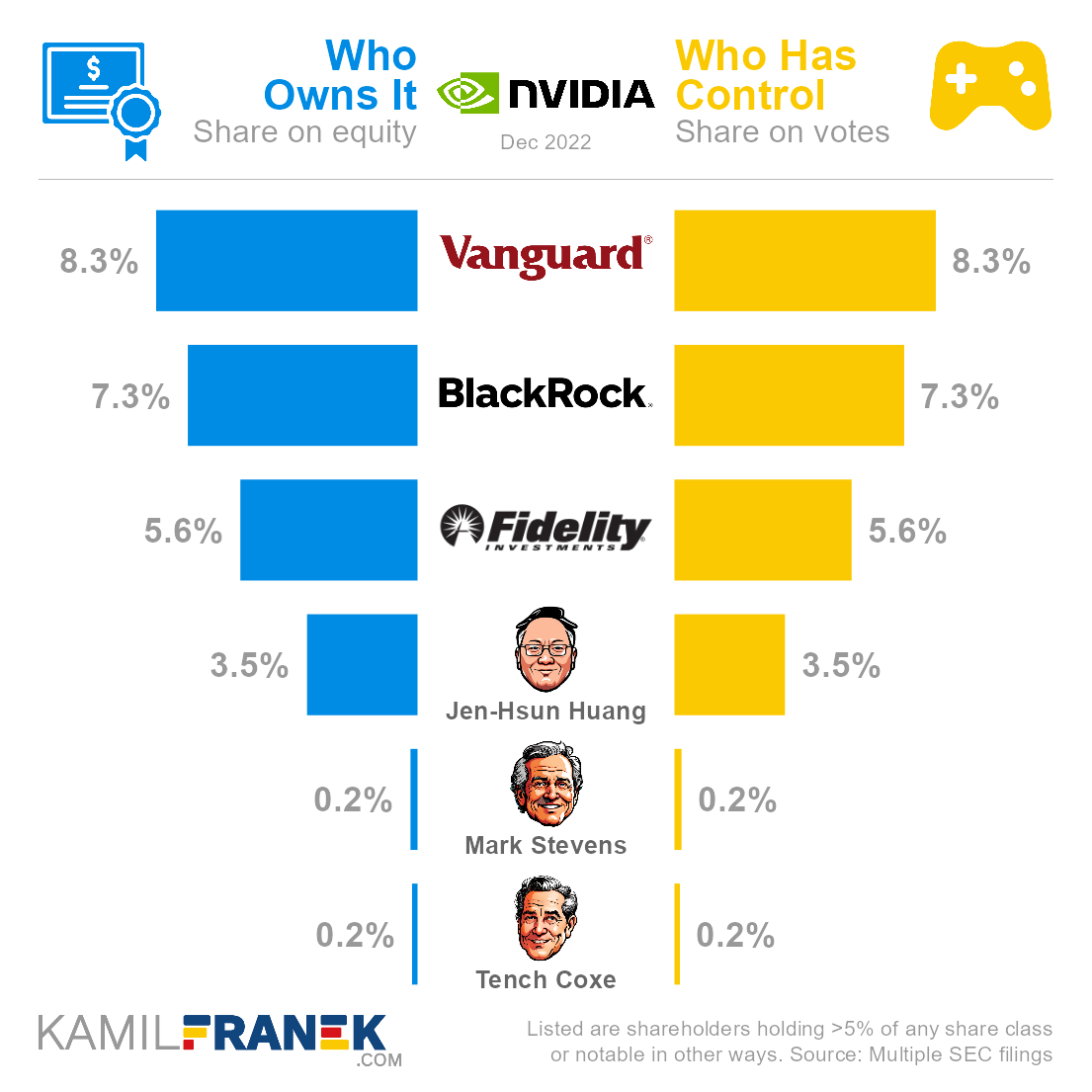
This article delves deep into the layers of NVIDIA’s ownership, exploring the different categories of stakeholders, their motivations, and the profound implications of their collective influence on the company’s trajectory, market stability, and financial performance. We will examine how this distributed ownership model functions within the broader context of the financial markets and what it means for NVIDIA’s strategic direction and long-term value creation.
The Distributed Reality of Public Company Ownership
The notion of “ownership” for a publicly traded company like NVIDIA is fundamentally different from that of a private enterprise. There isn’t a single deed or title held by one entity; rather, ownership is fragmented across millions of shares, each representing a tiny fraction of the company, bought and sold on open exchanges daily. This distributed model is a cornerstone of modern capitalism, enabling capital formation for companies while providing investment opportunities for a vast array of participants.
NVIDIA’s Market Position and Significance
Before dissecting its ownership, it’s vital to appreciate NVIDIA’s unparalleled position in the global market. The company is not merely a component supplier; it is a foundational technology provider whose Graphics Processing Units (GPUs) are indispensable for AI development, scientific research, professional visualization, and, of course, gaming. Its innovation in parallel computing has driven revolutions in various sectors, establishing it as a critical player in the global technology ecosystem. This significance naturally attracts a broad spectrum of investors, from long-term institutional funds to agile retail traders, all seeking exposure to its growth potential. Its market value, often fluctuating into the trillions, reflects investor confidence in its continued innovation and market leadership, making the distribution of its ownership a matter of considerable financial interest.
Dispelling the Myth of a Single Owner
The question “Who owns NVDA?” often implies a search for a controlling individual or family, similar to how one might ask about a privately held business. However, for a company listed on major stock exchanges like the NASDAQ, this concept is largely a myth. While founders and early investors may retain substantial stakes, the very act of going public disperses ownership widely. Every share traded represents a claim on a portion of the company’s earnings and assets, along with voting rights on corporate matters. This broad distribution prevents any single entity from dictating terms without significant consensus, fostering a more democratic (albeit complex) form of corporate governance. The collective actions and holdings of these diverse owners profoundly influence NVIDIA’s valuation, strategic decisions, and overall market perception.
The Dominant Hand of Institutional Investors
When examining the ownership structure of a large public company like NVIDIA, institutional investors invariably emerge as the largest block of shareholders. These are professional organizations that invest on behalf of their clients or members, managing vast pools of capital. Their holdings can represent an enormous percentage of a company’s outstanding shares, exerting a significant, albeit often passive, influence.
Giants of Asset Management: Vanguard, BlackRock, and Beyond
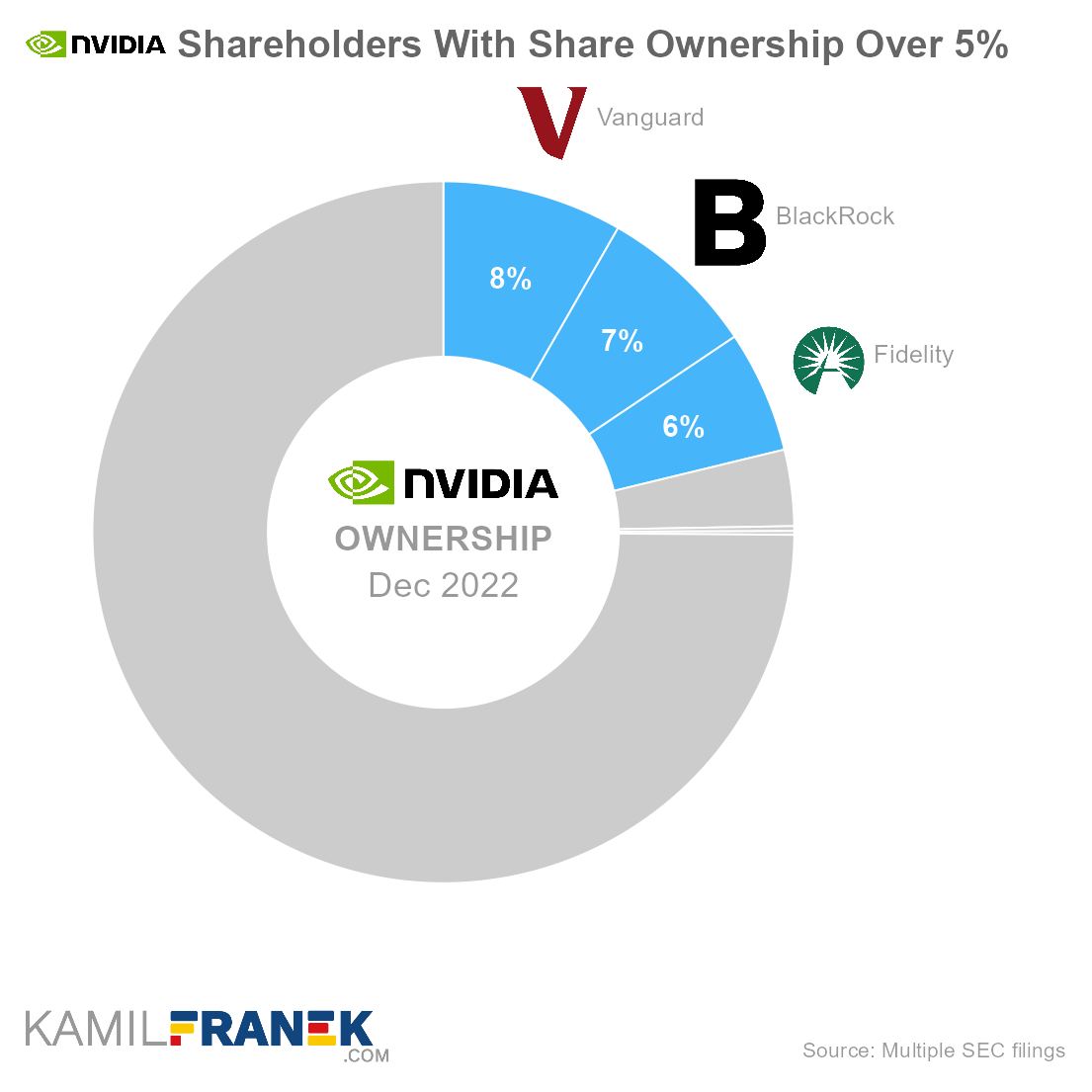
Among the most prominent owners of NVDA shares are the world’s largest asset management firms. Companies like Vanguard, BlackRock, and State Street Global Advisors, often referred to as the “Big Three,” consistently rank among the top institutional holders of most major public companies. This is primarily due to their extensive offerings of index funds and exchange-traded funds (ETFs) that track broad market indices like the S&P 500, in which NVIDIA is a significant component. When you invest in a Vanguard S&P 500 ETF, for example, a portion of your money indirectly buys NVDA shares. Beyond these giants, other major players such as Fidelity, T. Rowe Price, Capital Group, and dozens of other mutual fund complexes and hedge funds also hold substantial positions in NVIDIA, driven by their active management strategies or sector-specific funds.
Driving Forces: Mutual Funds, ETFs, and Pension Funds
The institutional ownership of NVIDIA can be broadly categorized by the type of fund. Mutual funds, particularly those focused on growth, technology, or large-cap stocks, will naturally allocate capital to a high-performing leader like NVIDIA. ETFs, especially those designed for specific sectors like semiconductors or AI, also aggregate significant shares. Pension funds, managing retirement savings for millions of employees, seek stable, long-term growth and often include NVIDIA in their diversified portfolios to achieve their financial objectives. Hedge funds, with their more aggressive and varied strategies, might take both long and short positions, influencing volatility and liquidity. Each type of fund has different investment horizons and objectives, contributing to the dynamic nature of NVIDIA’s stock performance.
The Strategic Imperatives Behind Institutional Holdings
Institutional investors aren’t just buying shares; they’re making strategic decisions based on a myriad of factors. For passive funds, the imperative is simply to mirror the market index accurately. For active funds, the decision to invest in NVIDIA is based on rigorous analysis of the company’s financials, market position, innovation pipeline, management quality, and future growth prospects. These investors are looking for sustainable competitive advantages, strong earnings growth, and a clear path to market leadership. Their large holdings imply a collective conviction in NVIDIA’s long-term value, providing a degree of stability to the stock. Furthermore, their sheer size means their buying and selling activities can significantly impact NVIDIA’s share price and trading volume, acting as a powerful force in the market.
The Influence of Insiders and Individual Shareholders
While institutional investors dominate in terms of sheer volume, other groups of shareholders play equally critical roles, contributing to both the stability and dynamism of NVIDIA’s ownership structure. These include the company’s founders, executives, and board members, as well as the vast legion of individual retail investors.
Founders, Executives, and Board Members: Aligning Interests
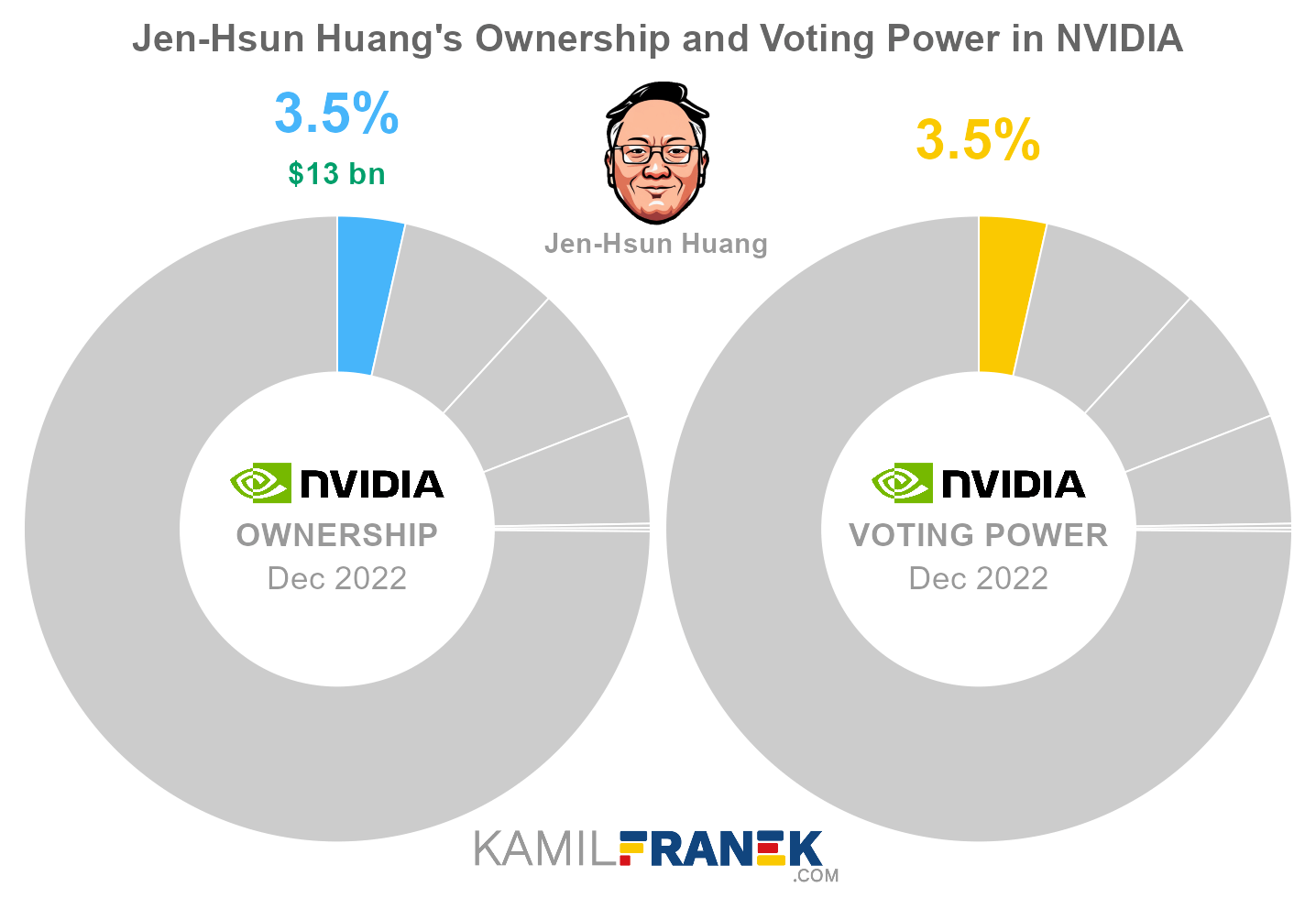
A significant portion of NVIDIA’s shares is held by its own management team and board of directors, including its visionary co-founder and CEO, Jensen Huang. This “insider ownership” is often viewed favorably by the market because it signifies a strong alignment of interests between those running the company and the shareholders. When executives have substantial personal capital tied up in the company’s stock, they are highly incentivized to make decisions that enhance long-term shareholder value. Their financial success is directly linked to the company’s performance. While these individuals do not collectively hold a majority of shares, their substantial stakes, combined with their intimate knowledge of the company’s operations and strategic direction, give them considerable influence. Their trading activities (buying or selling shares, often through pre-arranged plans) are closely monitored by investors as potential signals of confidence or concern.
The Power of the Crowd: Retail Investors and Their Impact
Beyond the large institutions and insiders, millions of individual investors, or “retail investors,” own shares of NVIDIA. These are ordinary people investing through brokerage accounts, often drawn to NVIDIA by its strong brand, innovative products, and impressive stock performance. While individual retail holdings are typically smaller than institutional blocks, their collective impact can be substantial, particularly in an age of accessible online trading platforms. Social media trends, investment forums, and accessible financial news can mobilize large numbers of retail investors, sometimes leading to significant short-term price movements. While less directly involved in corporate governance, their accumulated capital forms a vital part of the market’s liquidity and contributes to the overall demand for NVIDIA stock.
Employee Stock Ownership and Incentives
Many employees at NVIDIA also hold company shares, often through stock options, restricted stock units (RSUs), or employee stock purchase plans (ESPPs). These programs are a common form of compensation in the tech industry, serving as powerful incentives to attract, retain, and motivate top talent. By making employees shareholders, NVIDIA fosters a culture of ownership and shared success, aligning individual efforts with the company’s overall performance. This broad base of employee ownership not only acts as a retention tool but also ensures that a significant portion of the workforce has a direct financial stake in the company’s innovation and profitability, further aligning their interests with those of external shareholders.
The Dynamic Implications of Ownership Distribution
The intricate distribution of NVIDIA’s ownership has far-reaching implications, extending beyond mere financial figures to influence corporate governance, market dynamics, and the company’s strategic future. Understanding these implications is key to grasping the full picture of “who owns NVDA.”
Corporate Governance and Shareholder Power
The distributed nature of ownership means that no single entity can unilaterally control NVIDIA. Instead, corporate governance relies on a balance of power. While the board of directors and executive management make day-to-day and strategic decisions, they are ultimately accountable to shareholders. Major institutional investors, through their sheer voting power, can influence board elections, executive compensation, and significant corporate actions. Though often quiet, their collective voice can sway outcomes on critical issues like mergers, acquisitions, or environmental, social, and governance (ESG) policies. Retail investors, though individually small, can collectively impact shareholder resolutions and, through proxy voting, express their views on company direction. This dynamic ensures that NVIDIA’s leadership must consider the diverse interests of its broad ownership base.
Market Liquidity, Volatility, and the Free Float
The “free float” refers to the number of shares available for public trading, excluding those held by insiders or restricted shareholders. NVIDIA’s large free float, stemming from its distributed ownership, ensures high market liquidity. This means shares can be bought and sold easily without significantly impacting the price, which is attractive to investors. However, the mix of institutional and retail ownership also affects volatility. Large block trades by institutions can move the market, while concentrated buying or selling by retail investors (sometimes amplified by market sentiment or news cycles) can also contribute to price swings. The balance between stable, long-term institutional holdings and more active trading segments defines the stock’s typical market behavior.
Ownership Trends as a Barometer for Investor Confidence
Tracking changes in NVIDIA’s ownership structure provides valuable insights into investor sentiment and confidence. An increase in institutional ownership, particularly from highly respected funds, can signal strong conviction in the company’s future prospects. Conversely, a significant reduction in institutional holdings might raise concerns. Similarly, insider buying often indicates strong internal confidence, while heavy insider selling, absent of planned diversification, could be a red flag. These ownership trends act as a barometer, offering clues about how sophisticated investors and those closest to the company perceive its current performance and future outlook.
Navigating the Future: Why Understanding NVIDIA’s Ownership Matters
The question of “who owns NVDA” is more than an academic exercise; it’s a practical inquiry with profound implications for how the company operates, innovates, and creates value for its stakeholders. The distributed yet powerful ownership structure shapes NVIDIA’s journey into the future.
Impact on Strategic Direction and Innovation
NVIDIA’s owners, particularly its large institutional investors and its insider management, implicitly and explicitly influence its strategic direction. Shareholders generally favor decisions that promise long-term growth, sustainable profitability, and continued market leadership. This pressure encourages NVIDIA to remain at the forefront of innovation in AI, data centers, and new computing paradigms. The company’s ability to allocate capital to research and development, pursue strategic acquisitions, and expand into new markets is often a reflection of the confidence and mandate granted by its diverse ownership base. A solid, supportive shareholder base allows management to execute ambitious long-term plans without excessive short-term pressure, fostering the kind of groundbreaking innovation NVIDIA is known for.
Financial Stability and Long-Term Value Creation
The broad and diversified ownership of NVIDIA contributes significantly to its financial stability. A company largely owned by long-term institutional investors and insiders tends to be more resilient to short-term market fluctuations and less susceptible to hostile takeovers. This stability allows NVIDIA to focus on its core mission: delivering cutting-edge technology and creating substantial value for its shareholders over the long haul. The ongoing investment by these diverse groups underscores a collective belief in NVIDIA’s capacity to continue generating significant returns, cementing its position as a cornerstone investment in the modern technology landscape. For anyone looking to understand the forces behind NVIDIA’s success and its future potential, knowing who holds its shares is an indispensable part of the financial narrative.
aViewFromTheCave is a participant in the Amazon Services LLC Associates Program, an affiliate advertising program designed to provide a means for sites to earn advertising fees by advertising and linking to Amazon.com. Amazon, the Amazon logo, AmazonSupply, and the AmazonSupply logo are trademarks of Amazon.com, Inc. or its affiliates. As an Amazon Associate we earn affiliate commissions from qualifying purchases.