
The question “who owns Microsoft now?” often conjures images of a singular visionary at the helm, perhaps Bill Gates, or a shadowy cabal of executives pulling strings behind closed doors. In reality, the ownership structure of a global behemoth like Microsoft (NASDAQ: MSFT) is far more complex, dynamic, and reflective of modern capitalism. It’s a story not of a single owner, but of millions of shareholders, institutional titans, and individual investors whose collective stakes form the very foundation of its multi-trillion-dollar valuation. Understanding this distributed ownership is crucial for anyone interested in business finance, investing, and the mechanics of the global stock market.
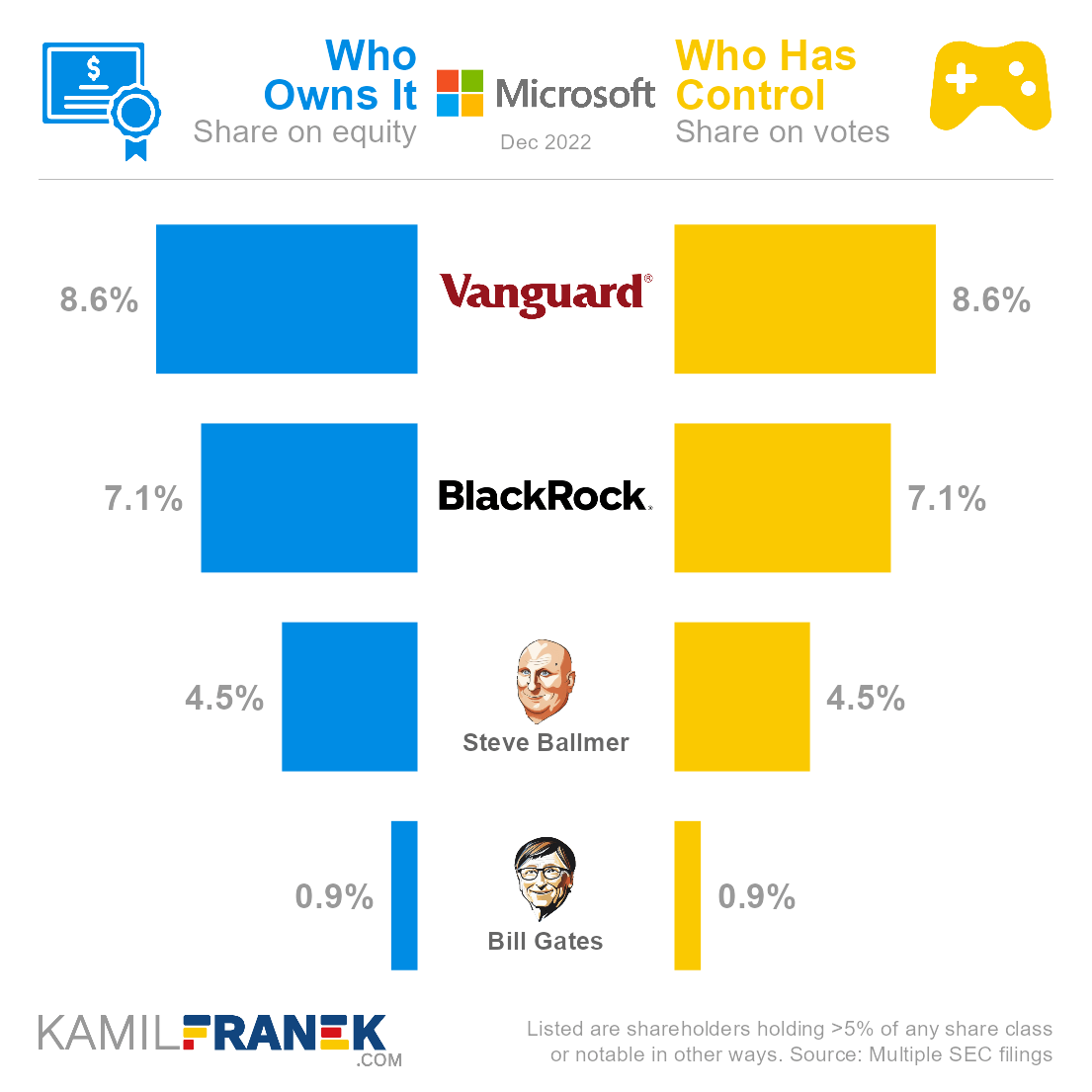
Microsoft, since its initial public offering (IPO) in 1986, transformed from a privately held startup into one of the world’s most valuable publicly traded companies. This shift means that its ownership is dispersed among a vast number of entities and individuals who hold its shares. While founders and early investors held significant stakes initially, over decades, these stakes have diversified and diluted, making the company a truly public entity. Far from being “owned” by any single individual or family in the traditional sense, Microsoft is a mosaic of financial interests, each contributing to its stability, growth, and direction.
The Dispersed Ownership of a Tech Giant
The notion of singular ownership is a relic of bygone eras, especially for companies of Microsoft’s scale. Its current structure is a testament to the power of public markets and the mechanisms that allow millions to participate in its success.
A Publicly Traded Enterprise: Understanding MSFT
Microsoft is traded on the NASDAQ stock exchange under the ticker symbol MSFT. This designation signifies that its shares are available for purchase and sale by the general public. When a company goes public, it essentially sells portions of its ownership (shares) to investors. These investors, in turn, become fractional owners, entitled to certain rights, including a share of profits (dividends), voting rights on corporate matters, and a claim on the company’s assets. For Microsoft, this means that every share bought or sold contributes to its market valuation and signifies a transfer of a tiny piece of its ownership. This public trading mechanism allows for massive capital formation, enabling Microsoft to fund its ambitious research and development, acquisitions, and global expansion, all while offering liquidity and returns to its investors. The constant ebb and flow of its stock price reflects collective investor sentiment about its financial health, future prospects, and market position.
The Myth of a Single Overlord: Beyond Bill Gates
Many still instinctively associate Microsoft with Bill Gates, its visionary co-founder. While Gates undeniably played an instrumental role in shaping the company’s culture, technology, and initial strategy, he does not “own” Microsoft today in the sense of holding a controlling stake. His ownership, while still substantial, has significantly diminished over the decades as he diversified his portfolio, sold shares to fund philanthropic endeavors through the Bill & Melinda Gates Foundation, and stepped back from day-to-day operations.
The myth of a single owner often stems from the early days of private companies where founders indeed hold 100% or near-100% ownership. However, once a company goes public, its ownership becomes a shared enterprise. No single individual or even a small group of individuals holds a majority of Microsoft’s outstanding shares. This dispersed ownership structure is typical for mature, large-cap companies, preventing any one entity from unilaterally dictating the company’s direction. Decisions are made by a board of directors, elected by shareholders, and executed by a management team, accountable to that board.
Bill Gates’ Evolving Stake: From Founder to Influential Shareholder
At its IPO, Bill Gates owned a significant portion of Microsoft. However, his stake has progressively decreased over the years. Through systematic share sales, largely to fund the Bill & Melinda Gates Foundation, his direct ownership has fallen to less than 1% of the company’s outstanding shares. While still a billionaire many times over thanks to his remaining shares and other investments, his influence at Microsoft today is primarily advisory and historical, rather than through direct majority control. His foundation, however, holds significant investments in various companies, and its portfolio management is a separate entity from Bill Gates’ personal holdings. This evolution highlights a common trajectory for successful founders: from proprietor to influential shareholder, allowing new leadership and a broader investor base to drive the company forward.
Decoding Microsoft’s Shareholder Landscape
To truly understand who owns Microsoft, one must look at the different categories of shareholders who collectively hold its stock. This landscape is dominated by institutional powerhouses but also includes a vast number of individual investors.
Institutional Investors: The Quiet Giants
The largest portion of Microsoft’s ownership resides with institutional investors. These are large organizations that invest on behalf of their clients or members. They include:
- Mutual Funds and ETFs: These funds pool money from many investors to buy a diversified portfolio of stocks. Major fund managers like Vanguard, BlackRock, and State Street Global Advisors are consistently among the top shareholders of Microsoft. They hold billions of dollars worth of MSFT shares across countless funds, making them colossal yet ‘passive’ owners. Their influence comes from their sheer size and their ability to vote on corporate proposals.
- Pension Funds: Public and private pension funds invest to secure retirement benefits for their employees. Microsoft is a common holding in such funds due to its stability, growth potential, and dividend payments.
- Hedge Funds: While often more active and short-term oriented, many large hedge funds also hold significant long positions in Microsoft, viewing it as a core tech investment.
- Sovereign Wealth Funds: Government-owned investment funds from countries with surplus capital (e.g., Norway, Singapore, Middle Eastern nations) often hold substantial stakes in leading global companies like Microsoft.
These institutional investors manage trillions of dollars in assets and collectively own well over 70-80% of Microsoft’s outstanding shares. Their investment decisions are driven by financial models, market trends, and long-term strategies, making them crucial to the company’s stability and valuation.
Retail Investors: The Collective Force
Beyond the institutional giants, millions of individual retail investors own Microsoft shares. These are everyday people who buy stock directly through brokerage accounts, retirement plans (like 401ks or IRAs), or investment apps. While no single retail investor holds a stake comparable to a large institutional fund, their collective ownership is substantial. The accessibility of stock markets means that virtually anyone can become a fractional owner of Microsoft. These investors are often drawn to Microsoft for its strong brand, consistent performance, dividend payouts, and long-term growth prospects, making it a staple in many diversified personal portfolios. Their collective trading activity and sentiment contribute significantly to the stock’s daily movements.
Executive and Board Holdings: Aligned Interests
Current and former executives, as well as members of Microsoft’s Board of Directors, also hold significant shares in the company. Satya Nadella, the current CEO, and other senior leaders typically receive compensation in the form of stock options and restricted stock units (RSUs). This practice is designed to align their financial interests with those of the company’s shareholders. When executives own a meaningful portion of the company they manage, they are incentivized to make decisions that enhance long-term shareholder value. While their individual stakes are much smaller than institutional holdings, their ownership is strategically important for governance and leadership alignment.
The Financial Power of Microsoft’s Ownership Structure
The intricate web of Microsoft’s ownership is not merely an academic detail; it has profound financial implications that underpin its market power and investment appeal.

Market Capitalization: A Trillion-Dollar Valuation
Microsoft’s ownership translates directly into its staggering market capitalization. Market cap is calculated by multiplying the total number of outstanding shares by the current share price. With a market capitalization consistently hovering in the multi-trillion-dollar range, Microsoft stands as one of the most valuable companies globally. This valuation reflects the collective belief of its millions of owners in its current profitability, future growth trajectory, and robust balance sheet. A high market cap provides Microsoft with immense financial flexibility, enabling it to pursue large-scale acquisitions (like LinkedIn or Activision Blizzard), invest heavily in groundbreaking technologies (such as AI), and withstand economic downturns better than smaller entities. It also signals a degree of stability and investor confidence that attracts further capital.
Dividend Policy and Shareholder Returns
A key benefit for Microsoft’s owners, especially long-term investors, is its consistent dividend policy. As a mature and highly profitable company, Microsoft regularly distributes a portion of its earnings to shareholders in the form of cash dividends. These dividends represent a tangible return on investment and are a significant draw for income-focused investors, including many pension funds and retirees. Beyond dividends, Microsoft also engages in share buybacks, a strategy where the company repurchases its own stock from the open market. This reduces the number of outstanding shares, which can increase earnings per share and, in theory, boost the stock price, thereby benefiting remaining shareholders. Both dividends and buybacks are direct mechanisms through which Microsoft’s ownership structure provides financial benefits to its diverse shareholder base.
Influence Without Absolute Control: The Power of the Vote
While no single entity “controls” Microsoft in the traditional sense, large institutional shareholders exert significant influence. They vote on crucial matters such as the election of board members, executive compensation packages, and major corporate initiatives. While their votes are usually proportional to their holdings, their sheer size can swing outcomes. Furthermore, institutional investors often engage in direct dialogue with management and the board, advocating for specific strategies related to governance, environmental, social, and corporate governance (ESG) practices, or capital allocation. This system ensures that management remains accountable to its diverse ownership base, even without a single controlling voice. This delicate balance of influence prevents entrenchment and promotes a focus on long-term value creation.
Investing in Microsoft: What Prospective Owners Should Know
For those considering becoming a part of Microsoft’s ownership tapestry, a strategic approach rooted in financial analysis is essential.
Analyzing Financial Performance: Key Metrics
Prospective investors need to delve into Microsoft’s financial statements. Key metrics to consider include:
- Revenue Growth: Consistent growth across its segments (Azure cloud services, Office 365, LinkedIn, gaming) indicates a healthy and expanding business.
- Profitability: Net income, operating margins, and earnings per share (EPS) reveal the company’s ability to turn revenue into profit.
- Cash Flow: Strong free cash flow (FCF) is critical, as it indicates the cash available for dividends, share buybacks, debt repayment, and future investments.
- Balance Sheet Health: Low debt, ample cash reserves, and strong asset bases signify financial resilience.
- Valuation Ratios: Price-to-earnings (P/E), price-to-sales (P/S), and enterprise value to EBITDA (EV/EBITDA) ratios help assess if the stock is undervalued or overvalued compared to its peers and historical performance.
Regularly reviewing quarterly and annual reports is paramount for informed investment decisions.
Growth Drivers and Future Prospects
Microsoft’s continued appeal to investors lies in its diversified growth drivers. Its cloud computing platform, Azure, is a cornerstone, competing vigorously with AWS and Google Cloud. Office 365 and Dynamics 365 maintain their dominance in productivity and business software, continuously evolving with AI integrations. LinkedIn offers a powerful professional networking and advertising platform, while its Xbox gaming division represents a significant entertainment segment. Crucially, Microsoft’s aggressive push into Artificial Intelligence across all its products and services, including its substantial investment in OpenAI, positions it at the forefront of the next technological revolution. Understanding these growth engines helps investors gauge the sustainability of its future earnings and, consequently, its shareholder value.
Risks and Considerations
Even a company as robust as Microsoft faces risks. Investors must consider:
- Competitive Landscape: Intense competition from Google, Amazon, Apple, and other tech giants across various segments.
- Regulatory Scrutiny: Increased antitrust oversight globally could impact its business practices, acquisition strategies, and profitability.
- Economic Downturns: A recession could dampen IT spending by businesses, affecting cloud and software revenues.
- Technological Disruption: While Microsoft is an innovator, unforeseen technological shifts could disrupt its core businesses.
- Cybersecurity Threats: As a major cloud provider, Microsoft is a constant target for cyberattacks, which could lead to reputational damage and financial costs.
- Geopolitical Factors: Global political instability and trade tensions can affect international operations and supply chains.
A thorough assessment of these risks is crucial for any potential investor.
The Enduring Legacy of Ownership and Innovation
Microsoft’s journey from a garage startup to a global powerhouse is inextricably linked to its evolving ownership structure. Its financial success is a direct result of its ability to attract and retain a vast, diverse shareholder base that believes in its vision and execution.
Balancing Profit with Purpose
The concept of who owns Microsoft extends beyond mere financial holdings to the broader implications of corporate governance and stakeholder capitalism. While maximizing shareholder value remains a primary objective, Microsoft, like many modern corporations, increasingly emphasizes balancing profit generation with broader societal responsibilities. This includes investments in sustainability, diversity and inclusion, ethical AI development, and digital accessibility. These initiatives are not just altruistic; they often resonate with a growing segment of institutional and retail investors who factor ESG (Environmental, Social, Governance) criteria into their investment decisions, reflecting a shift in how ownership is perceived and valued.

The Future of Microsoft’s Ownership
The future of Microsoft’s ownership will likely continue to be characterized by increasing institutionalization, global diversification, and a growing emphasis on responsible investing. As passive investment vehicles like index funds continue to grow, the concentration of ownership among a few large asset managers may increase. Furthermore, the impact of AI on business models and market valuations will continue to shape investor sentiment and capital flows. Microsoft’s ability to navigate these trends, maintain its innovative edge, and continue delivering strong financial performance will dictate its appeal to future “owners” and ensure its enduring legacy as a titan of the global economy.
In conclusion, “who owns Microsoft now” is not a question with a simple answer, but rather a profound illustration of modern corporate finance. Microsoft is owned by millions – from the largest institutional funds overseeing vast sums to the individual investor with a few shares. This dispersed, dynamic ownership structure, deeply rooted in the principles of publicly traded markets, is fundamental to its financial might, its governance, and its continued trajectory as a leading force in technology and an indispensable component of countless investment portfolios worldwide.
aViewFromTheCave is a participant in the Amazon Services LLC Associates Program, an affiliate advertising program designed to provide a means for sites to earn advertising fees by advertising and linking to Amazon.com. Amazon, the Amazon logo, AmazonSupply, and the AmazonSupply logo are trademarks of Amazon.com, Inc. or its affiliates. As an Amazon Associate we earn affiliate commissions from qualifying purchases.