
The question “who owns J.P. Morgan?” is a common one, often steeped in misconceptions born from its historical roots as a powerful private banking empire and its prominent role in global finance. Unlike a family-owned business or a privately held entity controlled by a few partners, J.P. Morgan today – officially known as JPMorgan Chase & Co. – is a behemoth of the financial world, and its ownership structure reflects the intricate nature of modern corporate capitalism. In essence, JPMorgan Chase & Co. is a publicly traded corporation, meaning it is owned by its shareholders, a vast and diverse group ranging from individual investors to massive institutional investment firms and pension funds.
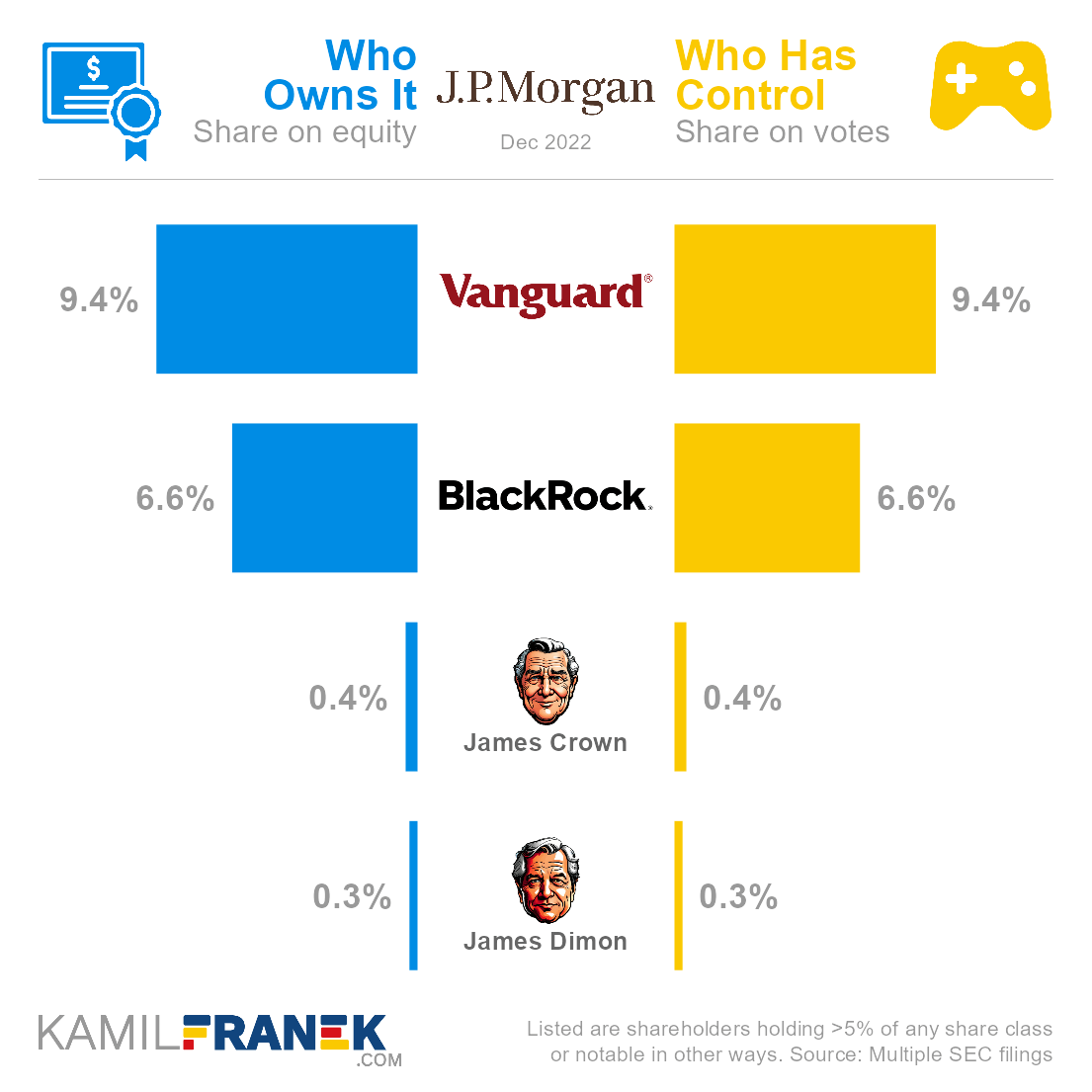
This dispersed ownership model is fundamental to understanding how one of the world’s most influential banks operates and is governed. It signifies a departure from the days when figures like J.P. Morgan himself held singular control, evolving into a complex web where millions of shares represent fragments of ownership, each carrying a right to a portion of the company’s profits and a say (however small for individual investors) in its direction through proxy voting. Diving into the specifics of this ownership reveals not a single proprietor, but a dynamic ecosystem of investment and governance that underpins its colossal market capitalization and global reach.
The Publicly Traded Nature of JPMorgan Chase & Co.
To grasp the concept of “who owns J.P. Morgan,” one must first understand its evolution from a private partnership to a publicly traded corporation. This transformation is key to deciphering its current ownership model, which is distinct from many historical financial institutions.
From Private Partnership to Public Powerhouse
The lineage of JPMorgan Chase & Co. traces back to J.P. Morgan & Co., founded in 1871 by the legendary financier John Pierpont Morgan. For much of its early history, J.P. Morgan & Co. operated as a private partnership, meaning its ownership and control rested firmly in the hands of its partners. This model allowed for immense influence and decision-making power to be concentrated, enabling the firm to play a pivotal role in financing industrial consolidation and even bailing out the U.S. government on occasion.
However, the modern JPMorgan Chase & Co. is a product of significant mergers and acquisitions, most notably the combination of J.P. Morgan & Co. and Chase Manhattan Bank in 2000. Chase Manhattan itself had a rich history, including its own series of mergers and a substantial public presence. This merger created the diversified financial services giant we know today, operating across investment banking, retail banking, commercial banking, asset management, and private banking. As part of this evolution, the combined entity became a publicly traded company listed on the New York Stock Exchange (NYSE) under the ticker symbol “JPM.” This transition meant that instead of a select group of partners, ownership was fractionalized into shares available for purchase by the public.
Understanding Shareholder Ownership
A publicly traded company is one whose ownership is distributed among its shareholders through freely traded stock. When you buy a share of JPM stock, you become one of its owners, albeit a very tiny one. Each share represents a claim on a portion of the company’s assets and earnings, and shareholders have certain rights, including the right to vote on key corporate matters like electing the board of directors, approving major mergers, and weighing in on executive compensation.
This model allows companies like JPMorgan Chase to raise vast amounts of capital from a broad base of investors, fueling their growth and expansion. Instead of relying on a few wealthy individuals or private equity firms, they tap into the collective capital of millions of investors worldwide. The market price of these shares fluctuates based on the company’s performance, economic conditions, and investor sentiment, making ownership dynamic and fluid. While any single shareholder might hold a minuscule percentage, the collective power of all shareholders is paramount, fundamentally defining the company’s ultimate ownership.
Who Are the Major Shareholders?
While millions of individuals might own a few shares of JPMorgan Chase, the reality of public company ownership is that a significant majority of shares are held by a relatively small number of very large entities. These are typically institutional investors whose sheer volume of holdings gives them substantial influence.
The Influence of Institutional Investors
Institutional investors are the true heavyweights in the ownership landscape of a company like JPMorgan Chase. These include:
- Mutual Funds and Exchange-Traded Funds (ETFs): Investment vehicles managed by firms like Vanguard, BlackRock, and State Street Global Advisors, which pool money from countless individual investors to buy diversified portfolios of stocks. These firms often hold vast quantities of shares in major companies as part of their index funds (which track market benchmarks like the S&P 500) or actively managed funds. For instance, it’s not uncommon for BlackRock or Vanguard to be among the top three shareholders in almost every major U.S. corporation, including JPMorgan Chase, simply because they offer index funds that own a slice of all major public companies.
- Pension Funds: Funds managed on behalf of current and retired employees, such as CalPERS (California Public Employees’ Retirement System) or various corporate pension schemes. These funds invest billions to ensure future payouts to their beneficiaries and thus hold significant stakes in blue-chip companies.
- Hedge Funds: Private investment funds that use a variety of strategies, often taking large positions in companies to influence management decisions or profit from price movements.
- Sovereign Wealth Funds: State-owned investment funds that manage national savings, often from commodity revenues or budget surpluses, investing globally.
These institutions hold shares not out of personal conviction for the banking industry, but as part of their fiduciary duty to their own clients or beneficiaries. Their holdings represent the collective investment of millions of people who have retirement accounts, mutual funds, or pension plans. While they don’t “control” the company in the daily operational sense, their massive voting power in shareholder meetings and their ability to engage with management on corporate governance issues make them incredibly influential.
The Role of Retail Investors and Employees
While institutional investors dominate, retail investors—individual people buying and selling shares for their personal portfolios—still constitute a crucial segment of JPMorgan Chase’s ownership. These individuals might invest directly through brokerage accounts, or more commonly, indirectly through 401(k)s, IRAs, and other retirement accounts that invest in mutual funds or ETFs that, in turn, hold JPM stock.
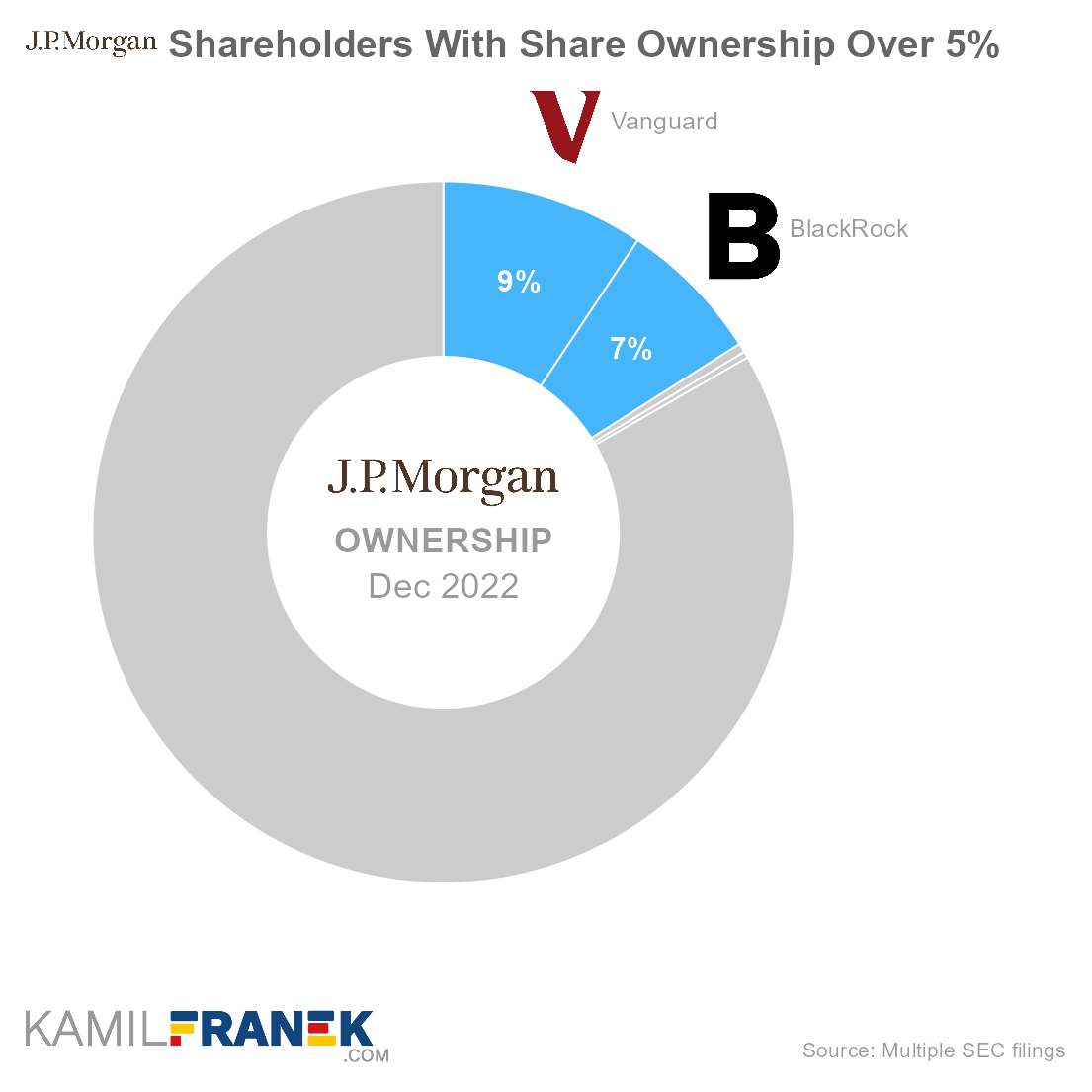
Furthermore, employees of JPMorgan Chase also constitute a segment of its ownership. Executive compensation packages often include stock options or restricted stock units, aligning the interests of top management with those of the broader shareholder base. Employee stock purchase plans (ESPPs) also allow staff to buy shares, fostering a sense of ownership and direct participation in the company’s success. While individually these holdings are small compared to institutional blocks, collectively, retail investors and employees represent a substantial portion of the company’s overall ownership, reflecting a broad base of support and belief in its long-term prospects.
The Board of Directors and Corporate Governance
While shareholders collectively “own” the company, they do not manage its day-to-day operations. That responsibility falls to the executive management team, overseen by the Board of Directors. This structure of corporate governance is crucial to understanding how shareholder ownership translates into actual control and decision-making.
Fiduciary Duty to Shareholders
The Board of Directors is elected by the shareholders and acts as their primary representative. Each director has a fiduciary duty to act in the best interests of the company and its shareholders. This means they are responsible for:
- Strategic Oversight: Approving the company’s overall strategic direction, long-term goals, and major investments.
- Risk Management: Ensuring robust risk management frameworks are in place, particularly critical for a financial institution of JPMorgan Chase’s size and systemic importance.
- Executive Compensation: Setting and reviewing the compensation packages for the CEO and other top executives, aiming to align their incentives with shareholder value creation.
- Dividend Policy: Deciding how much of the company’s earnings should be distributed to shareholders as dividends and how much should be reinvested in the business.
- Succession Planning: Ensuring a smooth transition of leadership for key executive positions.
The board serves as a vital check and balance, bridging the gap between the diffuse ownership of shareholders and the concentrated power of the executive team. Independent directors, who have no direct operational ties to the company, are particularly important in ensuring objective oversight.
The Power of Jamie Dimon and Executive Leadership
Jamie Dimon, the Chairman and CEO of JPMorgan Chase, is arguably the most recognizable figure associated with the bank and wields significant influence. He is responsible for the daily operations, strategic execution, and overall performance of the vast enterprise. Under his leadership, JPMorgan Chase has navigated financial crises, expanded its global footprint, and maintained its position as a financial powerhouse.
However, it’s crucial to understand that even an executive as powerful as Jamie Dimon is ultimately accountable to the Board of Directors, which in turn answers to the shareholders. Dimon, like other top executives, holds a substantial amount of company stock and stock options, which financially aligns his interests with those of the broader shareholder base. His compensation, continued employment, and strategic decisions are all subject to the board’s review and approval. While his vision and leadership are undeniably critical to the company’s success, he operates within a governance framework designed to protect the interests of the millions of owners, rather than acting as a singular proprietor.
The Implications of Dispersed Ownership
The publicly traded, widely dispersed ownership model of JPMorgan Chase & Co. has profound implications for its operations, financing, and accountability. This structure, while complex, underpins the stability and dynamism of one of the world’s most critical financial institutions.
Advantages of Public Ownership
The shift from a private partnership to a publicly traded corporation brought several significant advantages for JPMorgan Chase:
- Access to Capital: Going public provides access to a vast pool of capital from global investors, enabling the company to fund ambitious projects, expand its services, acquire other businesses, and maintain the necessary capital reserves mandated by regulators. This access to funding is crucial for a bank of its scale.
- Liquidity for Investors: Public ownership offers liquidity to investors. Shareholders can easily buy or sell their shares on stock exchanges, providing flexibility and allowing them to realize gains or losses. This liquidity attracts more investors, further enhancing the company’s ability to raise capital.
- Transparency and Regulatory Oversight: Public companies are subject to rigorous reporting requirements from regulatory bodies like the Securities and Exchange Commission (SEC) in the U.S. This mandates detailed financial disclosures, promoting transparency and accountability, which are particularly important for a systemically important financial institution like JPMorgan Chase. This oversight helps to build investor confidence and mitigate risks.
- Corporate Governance Structure: While sometimes criticized, the established structure of a Board of Directors, independent committees, and shareholder voting mechanisms provides a framework for accountability and strategic direction, ensuring decisions are made with the long-term health of the company and its shareholders in mind.

Challenges and Shareholder Activism
Despite its advantages, dispersed ownership also presents certain challenges:
- Potential for Short-Term Focus: The pressure from quarterly earnings reports and the constant scrutiny of the stock market can sometimes lead management to prioritize short-term results over long-term strategic investments, although JPMorgan Chase has generally been lauded for its long-term vision under Jamie Dimon.
- Shareholder Activism: Large institutional investors, particularly hedge funds, can sometimes take substantial stakes and actively push for changes in corporate strategy, management, or even a sale of the company. While this can sometimes benefit all shareholders by unlocking value, it can also lead to disruptive battles and divert management’s attention.
- Balancing Diverse Interests: With millions of shareholders, there can be a divergence of interests. What one investor considers beneficial (e.g., higher dividends) might be viewed as detrimental by another (e.g., reduced reinvestment in growth). The board’s role is to navigate these diverse interests and make decisions that best serve the collective good of the company over the long term.
- Proxy Voting Complexity: For many individual retail investors, understanding and participating in proxy voting can be complex, often leading to a situation where institutional investors’ votes carry more weight due to higher participation rates.
In conclusion, the answer to “who owns J.P. Morgan?” is not a simple name, but rather a vast collective of individuals and institutions who hold shares in JPMorgan Chase & Co. This ownership is dynamic, constantly shifting with market activity, yet consistently anchored by the principles of corporate governance and the fiduciary duties of its Board of Directors and executive leadership. It is a testament to the evolution of modern finance, where private empires have transformed into public entities, pooling global capital to fuel economic activity on an unprecedented scale.
aViewFromTheCave is a participant in the Amazon Services LLC Associates Program, an affiliate advertising program designed to provide a means for sites to earn advertising fees by advertising and linking to Amazon.com. Amazon, the Amazon logo, AmazonSupply, and the AmazonSupply logo are trademarks of Amazon.com, Inc. or its affiliates. As an Amazon Associate we earn affiliate commissions from qualifying purchases.