
Apple Inc. (AAPL) is more than just a technology company; it is a global financial institution that serves as the cornerstone of the modern equity market. As one of the most valuable publicly traded entities in history, the question of “who owns Apple” is not merely a matter of curiosity for enthusiasts—it is a critical data point for investors, fund managers, and financial analysts. Unlike a private startup led by a single founder with a majority stake, Apple’s ownership structure is a complex tapestry of institutional giants, individual insiders, and millions of retail investors.
To understand the financial architecture of Apple today, one must look beyond the boardroom and into the massive index funds and institutional portfolios that hold the weight of the company’s $3 trillion-plus valuation.
The Dominance of Institutional Investors
The vast majority of Apple’s shares—approximately 60% to 65%—are held by institutional investors. These are large organizations, such as mutual funds, pension funds, and insurance companies, that trade securities in quantities large enough to qualify for preferential treatment. In the case of Apple, the ownership list reads like a “who’s who” of Wall Street’s most powerful entities.
The Vanguard Group and BlackRock: The Kingmakers
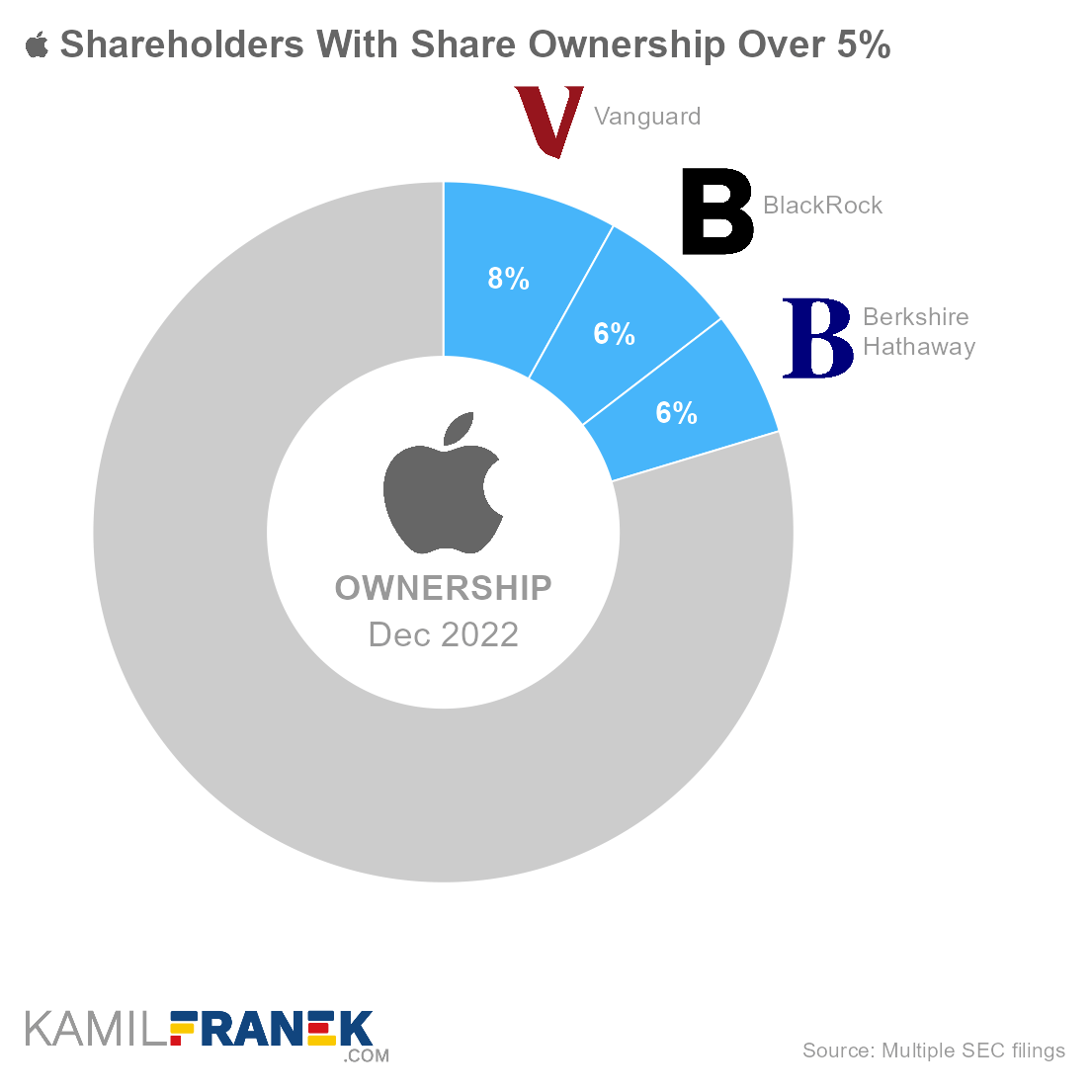
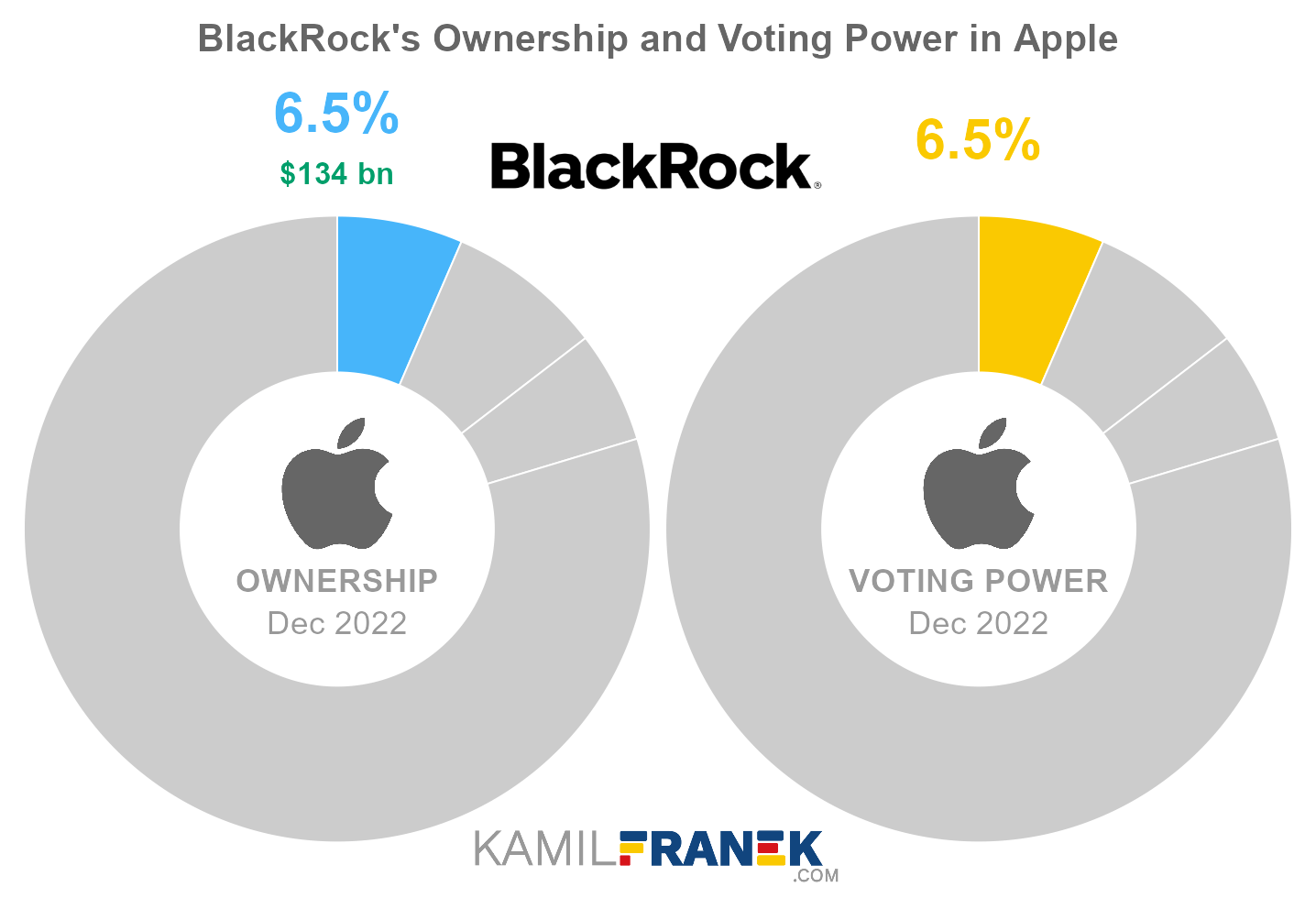
The two largest shareholders of Apple are consistently The Vanguard Group and BlackRock, Inc. As of the most recent filings, Vanguard typically holds between 7% and 8% of the company, while BlackRock follows closely with a stake often exceeding 6%.
It is important to note that these firms do not “own” Apple in the traditional sense of seeking to control its daily operations. Instead, their ownership is primarily driven by the rise of passive investing. Because Apple is a dominant component of the S&P 500 and the Nasdaq-100, any fund that tracks these indices must hold a proportional amount of Apple stock. Consequently, as more retail money flows into low-cost index funds, the ownership stakes of Vanguard and BlackRock naturally expand.
Berkshire Hathaway: The Warren Buffett Influence
While Vanguard and BlackRock represent passive ownership, Warren Buffett’s Berkshire Hathaway represents a more deliberate, active investment strategy. Berkshire Hathaway owns roughly 5.8% of Apple, making it the third-largest shareholder.
Buffett’s entry into Apple marked a historic shift in his investment philosophy, moving away from his traditional avoidance of technology stocks. He famously refers to Apple not as a tech stock, but as a “consumer products” powerhouse with a “sticky” ecosystem. For financial observers, Berkshire’s massive position serves as a “seal of approval,” signaling that Apple is a safe-haven asset with robust cash flow and a formidable economic moat.
The Role of Individual and Insider Ownership
While institutional giants hold the lion’s share, the ownership by “insiders”—the executives and board members who steer the ship—provides insight into the alignment between management and shareholders. Although their percentage of the total company is mathematically small, the dollar value of their holdings is astronomical.
Top Individual Shareholders: Tim Cook and the Board
CEO Tim Cook is the most prominent individual shareholder among Apple’s leadership. With over 3 million shares (and many more in unvested restricted stock units), his net worth is inextricably linked to the company’s performance. Other significant individual holders include Chairman Arthur Levinson and various senior vice presidents like Luca Maestri (CFO) and Jeff Williams (COO).
The collective insider ownership usually hovers below 1% of total shares outstanding. In a company the size of Apple, even a 0.1% stake is worth billions of dollars. This level of skin in the game ensures that the leadership team remains focused on long-term capital appreciation and dividend sustainability, as their personal wealth fluctuates with the stock price.
Why Insider Ownership Matters for Long-Term Growth
From a financial analysis perspective, low insider ownership in a mega-cap company is common. However, the consistency of Apple’s leadership ownership is a positive indicator. When executives hold onto their shares rather than liquidating them at the first sign of a peak, it signals confidence in the product pipeline and future revenue streams. For the individual investor, tracking the “Form 4” filings with the SEC (which track insider trades) provides a window into whether the people running the company believe the stock is currently undervalued or overvalued.

Apple’s Capital Allocation Strategy: How Ownership Evolves
One of the most fascinating aspects of who owns Apple is how the company itself influences that answer through its capital allocation strategy. Apple is not a passive participant in its ownership structure; it is an active buyer of its own equity.
Stock Buybacks: Shrinking the Pool to Increase Value
Since 2012, Apple has engaged in one of the most aggressive share repurchase programs in corporate history. By spending hundreds of billions of dollars to buy back its own stock, Apple effectively “retires” those shares.
This has a profound effect on ownership: as the total number of outstanding shares decreases, the ownership percentage of every remaining shareholder increases automatically. If you own one share of Apple today, you own a larger “slice of the pie” than you did five years ago, even if you never bought an additional share. This strategy has been a primary driver of Apple’s earnings per share (EPS) growth, making the stock highly attractive to value-oriented institutional investors.
The Impact of Dividend Policies on Institutional Interest
In addition to buybacks, Apple’s commitment to a growing dividend attracts a specific class of “income” investors. Many pension funds and dividend-growth mutual funds have strict mandates to only invest in companies that provide a regular yield. By maintaining and regularly increasing its dividend, Apple ensures that it remains a staple in “widows and orphans” funds—highly stable institutional portfolios that provide a floor for the stock price during market volatility.
The Influence of Passive vs. Active Investing
The shift in how people own Apple is just as important as who owns it. The financial markets have seen a tectonic shift from active stock picking to passive index tracking, and Apple is the poster child for this movement.
The Rise of ETFs and Index Funds in Apple’s Portfolio
When a retail investor buys an S&P 500 ETF (like SPY or VOO), they are unknowingly becoming an Apple owner. Because Apple often carries a weighting of 6% to 7% in these indices, billions of dollars in “blind” capital flow into Apple stock every month via 401(k) contributions and automated investment plans.
This creates a self-reinforcing cycle: as Apple’s market cap grows, its weighting in the index increases, forcing funds to buy more shares, which in turn supports the price. From a financial stability standpoint, this high level of passive ownership provides Apple with a level of liquidity and price support that few other companies on earth enjoy.
How Institutional Ownership Shapes Corporate Governance
With great ownership comes great responsibility—or at least, significant influence. Large institutional shareholders like State Street, Vanguard, and BlackRock are increasingly using their voting power to influence Apple’s corporate governance. This includes voting on executive compensation packages, board appointments, and environmental, social, and governance (ESG) proposals.
In recent years, institutional owners have pressured Apple to provide more transparency regarding its supply chain and labor practices. While Apple’s management retains high autonomy, they cannot ignore the “Big Three” asset managers who hold the power to swing a board vote. This dynamic ensures that while the company is run by tech visionaries, it is ultimately accountable to the financial standards of its institutional masters.
Conclusion: A Global Asset
Who owns Apple now? The answer is a global collective of institutional giants, strategic value investors like Warren Buffett, and millions of individuals through retirement accounts and index funds. Apple has moved beyond being a “tech stock” to become a fundamental component of the global financial system.
Its ownership structure is a reflection of modern capitalism: a mix of massive, automated passive flows and calculated, high-conviction active positions. As Apple continues to buy back its shares and increase its dividends, the concentration of ownership among its most loyal institutional supporters only deepens, solidifying its place as the bedrock of the 21st-century investment portfolio. For the investor, understanding this web of ownership is key to recognizing why Apple remains one of the most stable and sought-after assets in the financial world.
aViewFromTheCave is a participant in the Amazon Services LLC Associates Program, an affiliate advertising program designed to provide a means for sites to earn advertising fees by advertising and linking to Amazon.com. Amazon, the Amazon logo, AmazonSupply, and the AmazonSupply logo are trademarks of Amazon.com, Inc. or its affiliates. As an Amazon Associate we earn affiliate commissions from qualifying purchases.