
American Express (NYSE: AXP) is more than just a provider of premium credit cards; it is a pillar of the global financial system and a cornerstone of the modern “spend-centric” business model. When individuals ask who owns American Express, they are often looking for a single name—a founder or a tech mogul. However, as a publicly traded Fortune 500 company, the reality of its ownership is a sophisticated tapestry of institutional giants, legendary value investors, and thousands of individual shareholders.
Understanding the ownership structure of American Express is essential for any investor or finance enthusiast. It reveals how the company maintains its elite market position and why its stock is often viewed as a bellwether for the health of the high-end consumer economy.
The Institutional Giants: Who Holds the Majority Stake?
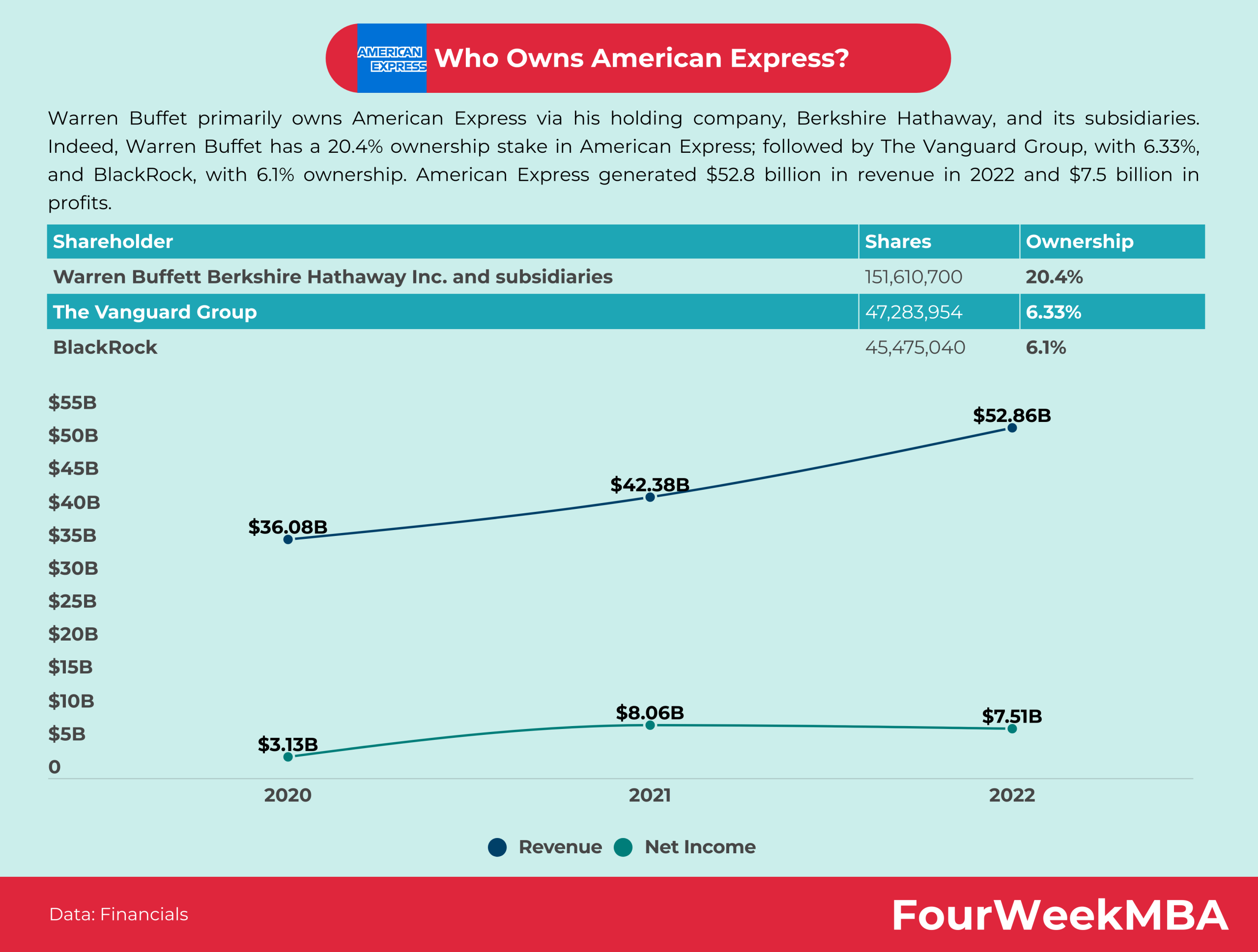
Like most major publicly traded corporations in the United States, American Express is primarily owned by institutional investors. These are professional organizations—such as mutual funds, pension funds, and insurance companies—that manage money on behalf of millions of individual clients. As of recent filings, institutional ownership in American Express consistently hovers around 83% to 85%, indicating that the “smart money” has a massive say in the company’s direction.
Vanguard and BlackRock: The Passive Investing Powerhouses
The most prominent names on the American Express shareholder roster are The Vanguard Group and BlackRock, Inc. These two entities are the largest asset managers in the world. Their ownership in American Express is largely driven by the explosion of passive investing.
Because American Express is a key component of the S&P 500 and various financial sector ETFs, Vanguard and BlackRock must hold significant portions of AXP stock to mirror these indices. Vanguard typically holds between 6% and 8% of the company, while BlackRock follows closely behind. For the individual investor, this provides a layer of stability; these institutions rarely sell their shares based on short-term market volatility, as their holdings are tied to the long-term performance of the broader market.
State Street and Other Major Asset Managers
Beyond the “Big Two,” State Street Corporation holds a significant stake, often around 3% to 4%. Other major players include Fidelity (FMR LLC) and Wellington Management. These institutions provide the liquidity that allows American Express to trade millions of shares daily. Their presence also ensures a high level of corporate governance. When these massive shareholders vote on board members or executive compensation packages, their influence is profound, ensuring that the management team remains aligned with the goal of maximizing shareholder value.
The Berkshire Hathaway Influence: Warren Buffett’s Long-Term Bet
While institutional giants hold the most shares collectively, the single most famous and influential owner of American Express is Warren Buffett through his conglomerate, Berkshire Hathaway. Buffett’s relationship with American Express is legendary in the world of value investing, serving as a masterclass in identifying a “moat”—a sustainable competitive advantage.
The History of the Investment
Warren Buffett first began investing in American Express in the 1960s, famously during the “Salad Oil Scandal” when the company’s stock plummeted due to a localized fraud. Buffett recognized that while the company’s balance sheet was temporarily impaired, its brand and “closed-loop” network remained intact.
Over the decades, Berkshire Hathaway has increased its stake significantly. Today, Berkshire Hathaway owns approximately 20% of American Express. This is a staggering level of concentration for a company of this size. Unlike the passive holdings of Vanguard or BlackRock, Buffett’s stake is an active choice, reflecting his deep conviction in the company’s business model.
Why Buffett Won’t Sell Amex
For Buffett, American Express represents the ultimate financial business. It doesn’t just issue credit; it operates a payment network. This allows Amex to earn money from both the interest on loans and the merchant discount fees every time a card is swiped.
Buffett has frequently praised the company’s “share of mind,” noting that the prestige associated with the American Express brand is something competitors cannot easily replicate. Because Berkshire Hathaway owns a fifth of the company, American Express is often categorized as one of Berkshire’s “Big Four” investments. This ownership provides Amex with a “permanent” capital base, allowing management to make long-term strategic decisions without fearing a sudden exit from their largest shareholder.
Individual and Insider Ownership: The Role of the Board and Executives
While the headlines are dominated by institutional billionaires and asset management firms, a portion of American Express is owned by the people who run the company. Insider ownership is a critical metric for investors because it measures “skin in the game”—the degree to which executives’ personal wealth is tied to the company’s success.
Executive Compensation and Stock Alignment
The Chairman and CEO of American Express, along with other high-level executives, hold significant amounts of AXP stock. This ownership usually comes through a combination of direct purchases and stock-based compensation. By paying executives in shares that vest over several years, the Board of Directors ensures that the leadership team is incentivized to drive long-term growth rather than chasing short-term quarterly targets.
When insiders hold a meaningful stake, it signals confidence to the market. For American Express, the level of insider ownership is typical for a large-cap financial firm, ensuring that the interests of the C-suite are tethered to the interests of the average retail investor.
The Impact of Retail Investors
Retail investors—individual people buying shares through brokerage accounts like Robinhood, Charles Schwab, or Fidelity—own the remaining portion of the company (roughly 15%). While an individual holding 100 shares might feel insignificant compared to Berkshire Hathaway’s millions, the collective power of retail investors is a vital component of market liquidity.
Retail sentiment often reflects the “consumer view” of the brand. When individuals use their Platinum or Gold cards and see the value in the rewards program, they are more likely to invest in the stock. This synergy between being a customer and being an owner is a hallmark of the American Express ecosystem.
Understanding the Corporate Structure: How Ownership Affects Strategy
The ownership profile of American Express isn’t just a list of names; it dictates the company’s financial strategy and its approach to growth. Because the company is owned by “stable hands” like Buffett and large index funds, American Express can focus on high-margin, sustainable growth rather than risky, high-volume lending.
Dividend Policy and Share Buybacks
One of the primary ways American Express rewards its owners is through a robust capital return program. Institutional investors and Berkshire Hathaway value consistent cash flow. To satisfy these owners, American Express maintains a disciplined dividend policy.
Furthermore, the company is known for its aggressive share buyback programs. By repurchasing its own stock, American Express reduces the total number of shares outstanding. This increases the ownership percentage of existing shareholders—like Buffett—without them having to spend another dime. This “financial engineering” is a key reason why the stock remains a favorite among value investors.

Influence on Global Financial Markets
Because of its unique ownership structure, American Express acts with a level of independence that many other banks do not have. Its owners prioritize the “spend-centric” model, which focuses on travel, entertainment, and premium services. This focus has allowed Amex to navigate economic downturns more effectively than traditional banks that rely solely on interest income.
The stability provided by its major owners allows American Express to invest heavily in its digital infrastructure and global expansion. Whether it is expanding its footprint in China or upgrading its AI-driven fraud detection, the company’s owners provide the “patient capital” required to maintain a technological edge in the fast-evolving fintech landscape.
In conclusion, the ownership of American Express is a balanced ecosystem. While Vanguard and BlackRock provide the institutional framework and Berkshire Hathaway provides the legendary backing of the world’s greatest investor, the company remains a publicly owned entity accessible to anyone with a brokerage account. This blend of massive institutional support and high-conviction individual ownership is what makes American Express a powerhouse in the world of finance, ensuring its legacy remains secure for decades to come.
aViewFromTheCave is a participant in the Amazon Services LLC Associates Program, an affiliate advertising program designed to provide a means for sites to earn advertising fees by advertising and linking to Amazon.com. Amazon, the Amazon logo, AmazonSupply, and the AmazonSupply logo are trademarks of Amazon.com, Inc. or its affiliates. As an Amazon Associate we earn affiliate commissions from qualifying purchases.