
The question “who owns Costco?” might seem straightforward, but for a multi-billion dollar enterprise like Costco Wholesale Corporation (NASDAQ: COST), the answer is far more nuanced than a single name or entity. It delves deep into the mechanisms of modern corporate finance, highlighting the intricate web of ownership that characterizes publicly traded companies. Unlike a small, privately held business where ownership might reside with a founder or a handful of partners, a global behemoth like Costco is owned by millions – from vast institutional investment funds to individual retail investors, all holding a stake in its success. This distributed ownership model is a hallmark of the capitalist system, allowing broad participation in the growth and profitability of leading companies.
Understanding Costco’s ownership structure is not merely an academic exercise; it offers critical insights into its corporate governance, strategic direction, financial stability, and the very philosophy that underpins its sustained success. It reveals how diverse financial interests converge to collectively own and indirectly steer one of the world’s most recognizable and valuable retail brands. This article will dissect the layers of Costco’s ownership, exploring the roles of major institutional players, individual investors, and company insiders, all through the lens of business finance and investment strategy.
The Publicly Traded Nature of Costco Wholesale Corporation
Costco Wholesale Corporation operates as a publicly traded company, a fundamental characteristic that dictates its ownership structure. This means its shares are bought and sold on stock exchanges, primarily the NASDAQ, under the ticker symbol COST. The transition from a privately held entity to a publicly traded one is a transformative event for any company, broadening its access to capital and distributing its ownership widely.
From Private Enterprise to Global Public Powerhouse
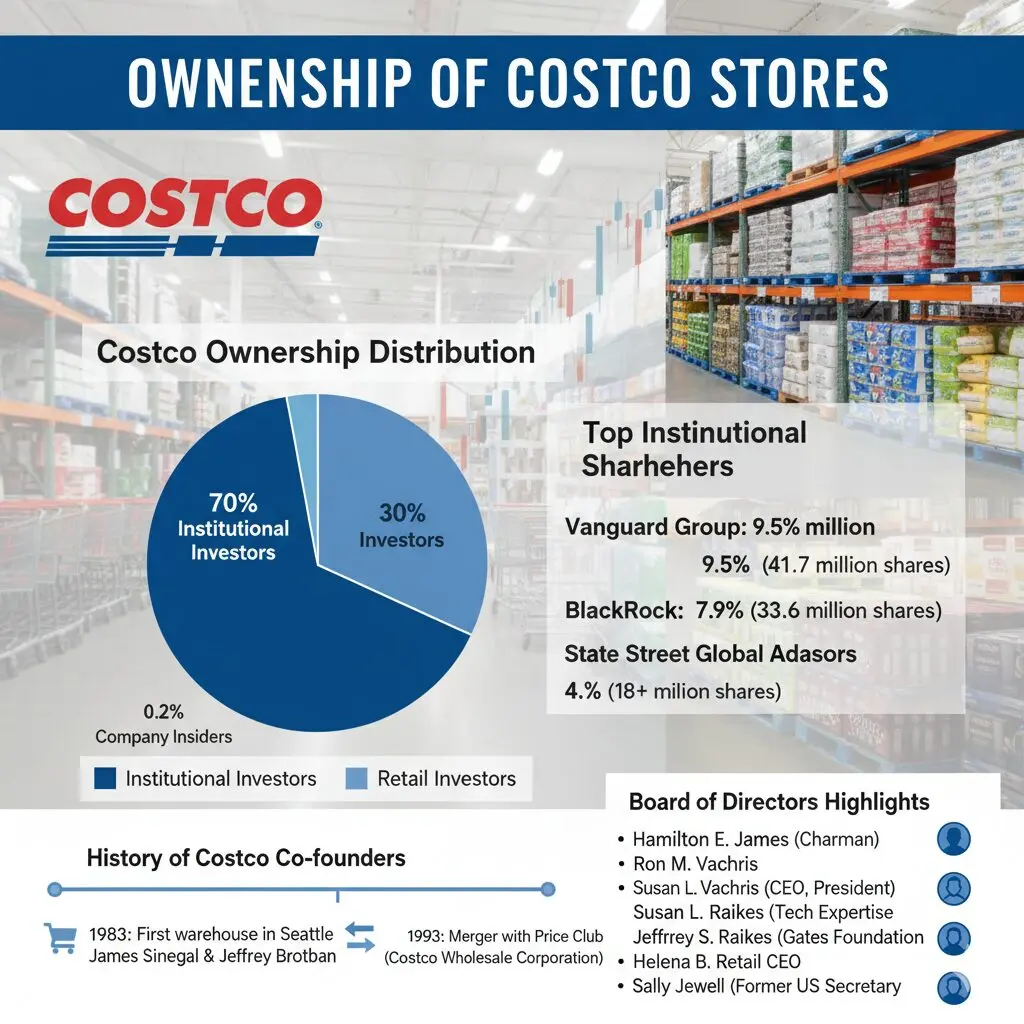
Costco’s journey began with its first warehouse in Seattle, Washington, in 1983, a merger of Price Club and Costco Wholesale in 1993 forming the entity we know today. Over the decades, its unique membership-based, bulk-sales model proved immensely successful, fueling rapid expansion. To finance this growth and offer liquidity to early investors and founders, the company chose to go public. This decision, common among successful enterprises seeking to scale, allows the general public to buy “slices” of the company in the form of shares. Each share represents a fractional ownership claim on the company’s assets and earnings, granting shareholders certain rights and responsibilities, albeit largely passive for most.
The public listing means that Costco is subject to stringent reporting requirements from regulatory bodies like the U.S. Securities and Exchange Commission (SEC). These mandates ensure transparency, providing investors with regular insights into the company’s financial performance, strategic initiatives, and governance. This transparency is crucial for maintaining investor confidence and ensuring a fair and efficient market for its shares.
Understanding Shares and Shareholder Rights
At its core, ownership in a publicly traded company like Costco is determined by the number of shares an individual or entity holds. Each common share typically carries one vote on matters presented at the annual shareholder meeting, such as the election of board members, approval of executive compensation plans, or significant corporate actions like mergers and acquisitions. While individual shareholders with a few dozen or even a few hundred shares might not wield significant direct influence, their collective vote, particularly when aggregated by institutional investors, can be powerful.
Beyond voting rights, shareholders are also entitled to a portion of the company’s profits, typically distributed as dividends, and benefit from capital appreciation if the stock price increases. The market price of Costco’s stock, therefore, reflects investor sentiment about its future prospects, profitability, and overall economic conditions. Owning Costco stock is not just about having a piece of a successful retailer; it’s about participating in the financial performance and strategic direction of a dynamic global enterprise.
The Major Players: Institutional Investors Driving Ownership
When we talk about “who owns Costco,” the vast majority of its shares are held by institutional investors. These are large organizations that pool money from various sources to invest in securities. Their holdings often constitute the lion’s share of publicly traded companies, making them incredibly influential stakeholders.
The Titans of Investment: Vanguard, BlackRock, and State Street
Among the most prominent institutional owners of Costco are the world’s largest asset managers: Vanguard Group, BlackRock Inc., and State Street Corporation. These financial giants manage trillions of dollars on behalf of millions of individual investors, pension funds, endowments, and sovereign wealth funds. Their ownership of Costco shares is primarily through their vast array of index funds, mutual funds, and Exchange Traded Funds (ETFs) that track broad market indices like the S&P 500 or specialized retail sector funds. Since Costco is a significant component of these indices, these firms automatically acquire and hold large blocks of its stock.
For example, a Vanguard S&P 500 ETF would hold a proportional amount of Costco shares simply because Costco is part of the S&P 500 index. These “passive” investments, while not actively picking individual stocks, result in massive ownership stakes. Their presence as major shareholders provides a layer of stability due to their long-term investment horizon, as they rarely engage in rapid buying or selling based on short-term market fluctuations. However, their sheer size also grants them considerable influence in corporate governance discussions, particularly on issues like environmental, social, and governance (ESG) factors.
Pension Funds and Mutual Funds: Collective Power
Beyond the behemoths, numerous other institutional investors hold substantial stakes in Costco. These include various pension funds (e.g., California Public Employees’ Retirement System – CalPERS, Ontario Teachers’ Pension Plan), university endowments, hedge funds, and other mutual fund complexes. Pension funds, in particular, invest for the very long term, seeking reliable growth and income to meet future retiree obligations. Costco’s consistent performance, strong balance sheet, and membership retention make it an attractive holding for such funds, representing a stable investment that aligns with their fiduciary responsibilities.
Mutual funds, both actively managed and passively indexed, also represent a collective form of ownership. Investors buy into these funds, and the fund managers, in turn, purchase shares of companies like Costco. This diversification allows individual investors to indirectly own a piece of Costco without having to select and manage individual stocks themselves, demonstrating the power of pooled investment vehicles in modern finance.
The Rationale Behind Institutional Investment in Costco
Institutional investors are drawn to Costco for several compelling financial reasons. Its consistent revenue growth, driven by a highly sticky membership model and strong customer loyalty, provides predictable cash flows. The company’s low-margin, high-volume strategy, coupled with its membership fees, creates a resilient business model that performs well across various economic cycles. Furthermore, Costco’s operational efficiency, strong brand reputation, and global footprint offer a robust investment thesis.
For portfolio managers, Costco represents a relatively defensive growth stock that can provide both capital appreciation and a reliable dividend. Its inclusion in major indices further ensures that it remains a core holding for a vast swathe of the investment community, underscoring its status as a foundational element within many diversified investment portfolios.
Individual Investors and Insider Holdings
While institutional investors dominate the landscape, individual investors and company insiders also play a crucial role in Costco’s distributed ownership structure, each with distinct motivations and levels of influence.
The Everyday Investor: A Slice of Retail Royalty
Millions of individual investors, often referred to as retail investors, own shares of Costco. These are everyday people who buy stock directly through brokerage accounts, either for long-term wealth building, retirement planning, or even out of loyalty to a brand they admire and frequently patronize. For many, investing in a company like Costco is a tangible way to participate in the success of a business whose products and services they value.
The rise of commission-free trading and accessible online brokerage platforms has democratized stock ownership, making it easier than ever for individuals to buy a slice of companies like Costco. While individual holdings might be small in comparison to institutional blocks, collectively, retail investors represent a significant segment of the ownership base. Their investment decisions are often influenced by personal experience, financial goals, and an affinity for the brand, contributing to the overall market demand for Costco’s stock.
Executives and Board Members: Aligning Interests

A crucial component of Costco’s ownership structure involves its insiders – primarily the company’s executive leadership team and members of its board of directors. These individuals typically hold a significant number of shares, often acquired through stock options, restricted stock units, or direct purchases. This insider ownership is strategically important for several reasons.
Firstly, it aligns the financial interests of those running the company with those of all other shareholders. When executives and board members own a substantial amount of stock, they are directly incentivized to make decisions that enhance shareholder value, as their personal wealth is tied to the company’s performance. This alignment can foster better governance and more thoughtful long-term strategic planning. Secondly, insider buying or selling activity is closely watched by the market, as it can signal management’s confidence (or lack thereof) in the company’s future prospects. These transactions are publicly disclosed and scrutinized by investors seeking clues about the company’s trajectory.
The Founder’s Legacy: A Historical Perspective
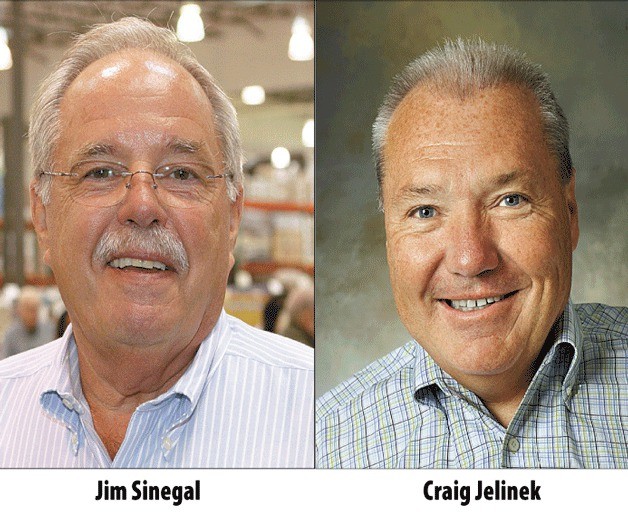
While most founders of large public companies typically reduce their direct ownership over time to diversify their wealth, their legacy often remains. James Sinegal, co-founder of Costco, and other early leaders or their families might still hold significant stakes. These holdings, though perhaps smaller than their initial percentages, can still be substantial in absolute terms given Costco’s immense market capitalization.
Such legacy holdings often represent a long-term, committed stake, potentially influencing the corporate culture and upholding the original vision and values of the company. While their direct control might have diminished as the company grew and diversified its ownership, their historical influence and continued presence as shareholders can be an important factor in the company’s identity and strategic continuity.
The Mechanics of Corporate Ownership in a Public Company
Understanding who owns Costco requires a grasp of the fundamental mechanics of corporate ownership within a publicly traded framework. It’s a system designed to facilitate capital formation while distributing risks and rewards among a broad investor base.
Navigating the Stock Market: Buying and Selling Shares
The ownership of Costco shares is dynamic, constantly changing hands on the stock market. Every trading day, millions of shares are bought and sold, reflecting shifts in investor sentiment, company performance, economic news, and individual financial decisions. When an investor buys a share of Costco (COST), they are effectively purchasing a piece of its ownership from another investor who is selling. The price at which these transactions occur is determined by supply and demand, influenced by a multitude of factors, including the company’s earnings, growth prospects, dividend policy, industry trends, and broader market conditions.
This liquid market allows investors to easily enter and exit their positions, providing flexibility and efficiency for capital allocation. For Costco, the ability to have a vibrant trading market for its shares enhances its attractiveness to investors and provides a clear valuation benchmark for its business.
The Power of the Proxy: Shareholder Voting and Governance
While the daily trading is important, the formal act of ownership manifests most clearly during shareholder meetings, typically held annually. Shareholders receive proxy statements detailing issues to be voted upon, such as the election of board directors, approval of executive compensation, and other corporate proposals. Even if unable to attend in person, shareholders can vote by proxy, instructing the company how to cast their votes.
Institutional investors, with their substantial holdings, wield considerable power in these votes. They often engage directly with company management on governance issues, advocating for practices that they believe will enhance long-term shareholder value. This active engagement is a critical aspect of corporate governance, ensuring accountability and shaping the company’s strategic direction. For individual investors, voting, even with a small number of shares, is their direct means of participating in the company’s democratic process and holding management accountable.
Dividends and Capital Appreciation: Returns for Owners
The financial benefits of owning Costco stock primarily come in two forms: dividends and capital appreciation. Dividends are a portion of the company’s profits distributed to shareholders, often on a quarterly basis. Costco has a history of paying regular dividends, reflecting its stable profitability and commitment to returning value to its owners. It has also, on occasion, issued special dividends, a strong signal of its robust financial health and a further reward to long-term shareholders.
Capital appreciation occurs when the market price of the stock increases above the purchase price. As Costco continues to grow its membership, expand its global footprint, and increase its earnings, its intrinsic value tends to rise, often leading to a higher stock price. Investors holding Costco shares benefit directly from this growth, realizing profits when they sell their shares at a higher price than they paid. Both dividends and capital appreciation are key drivers for investors to own a piece of Costco, reflecting the company’s ability to generate wealth for its diverse ownership base.
The Strategic Implications of Costco’s Ownership Structure
The broad and diversified ownership of Costco has profound implications for its strategic decision-making, corporate governance, and long-term vision. It fosters a complex interplay of interests that shapes how the company operates and grows.
Influence on Corporate Strategy and Long-Term Vision
With a significant portion of its shares held by long-term institutional investors and retirement funds, Costco is often encouraged to adopt a long-term strategic outlook. These investors are typically less concerned with quarterly earnings fluctuations and more focused on sustainable growth, market share, and the company’s ability to generate consistent returns over many years. This patient capital can allow management to invest in initiatives that may not yield immediate results but are crucial for future competitiveness, such as supply chain improvements, technology upgrades, or international expansion.
However, the influence of short-term oriented hedge funds or activist investors, though less dominant for a stable company like Costco, can still push for changes aimed at maximizing immediate shareholder returns, such as share buybacks or asset sales. Balancing these differing perspectives is a key challenge for Costco’s board and management team.
Shareholder Activism and Corporate Accountability
The distributed ownership model, particularly the presence of large institutional investors, also facilitates corporate accountability. Shareholders, especially those with significant stakes, have the power to challenge management decisions, propose alternative strategies, or even initiate proxy battles to replace board members if they believe the company is underperforming or mismanaged. This shareholder activism, while sometimes contentious, serves as a vital check and balance, pushing companies to operate efficiently and ethically.
For Costco, its strong financial performance and generally well-regarded corporate governance have largely shielded it from aggressive activist campaigns. However, the potential for such activism is always present, ensuring that management remains attentive to shareholder interests and maintains open lines of communication with its diverse owner base.
Balancing Growth, Profitability, and Member Value
Perhaps the most compelling strategic implication for Costco’s ownership structure is the continuous balancing act between driving shareholder value (growth, profitability, dividends) and maintaining its unique value proposition for its members. Costco’s business model is predicated on providing high-quality goods at exceptionally low prices, a strategy that often translates to thinner profit margins than some other retailers. This commitment to member value is, in fact, a long-term strategy for shareholder value, as it drives membership retention and growth, which in turn fuels revenue and profit.
The diverse ownership group, including loyal individual investors who are also members, typically understands and supports this strategy. They recognize that short-term profit maximization at the expense of member satisfaction could erode the very foundation of Costco’s success. Therefore, the company’s management is consistently navigating the delicate balance of satisfying its shareholders’ financial expectations while remaining true to the core principles that have made it a retail powerhouse.
In conclusion, “who owns Costco” is not a simple question with a singular answer. It’s a complex tapestry woven from the holdings of institutional titans, individual investors, and company insiders. This distributed ownership structure is not just a financial detail but a fundamental driver of its corporate governance, strategic decisions, and enduring commitment to both shareholder prosperity and member satisfaction, solidifying its position as a unique and robust player in the global retail landscape.
aViewFromTheCave is a participant in the Amazon Services LLC Associates Program, an affiliate advertising program designed to provide a means for sites to earn advertising fees by advertising and linking to Amazon.com. Amazon, the Amazon logo, AmazonSupply, and the AmazonSupply logo are trademarks of Amazon.com, Inc. or its affiliates. As an Amazon Associate we earn affiliate commissions from qualifying purchases.