
Alphabet Inc., the parent company of Google, YouTube, Android, and a myriad of other ventures, stands as one of the world’s most influential and valuable corporations. Its technological innovations permeate nearly every aspect of modern life. However, for those keen on understanding the financial underpinnings of such a behemoth, a crucial question arises: “Who truly owns Alphabet Inc.?” The answer is far from monolithic, revealing a complex tapestry of public shareholders, institutional powerhouses, and the enduring influence of its visionary founders. Delving into Alphabet’s ownership structure is not merely an exercise in corporate genealogy; it’s an essential journey into the heart of modern business finance, offering profound insights into control, valuation, and investment dynamics within the tech sector.
The Publicly Traded Nature of Alphabet’s Ownership
At its core, Alphabet Inc. is a publicly traded company, meaning its ownership is distributed among countless shareholders who have acquired its stock on public exchanges. This broad distribution makes it accessible to both individual investors and large financial institutions. However, the simplicity of “publicly traded” belies a nuanced corporate structure designed to achieve specific strategic objectives, primarily maintaining long-term vision while still benefiting from public capital.
Alphabet’s Dual-Class Share Structure (Class A, B, C)
A critical aspect of Alphabet’s ownership, and one that significantly impacts control and investor influence, is its distinctive dual-class share structure. Unlike many companies that offer a single class of common stock with equal voting rights per share, Alphabet employs three distinct classes:
- Class A shares (GOOGL): These are publicly traded shares that carry one vote per share. They are the primary avenue for most individual and institutional investors to gain a voting stake in the company.
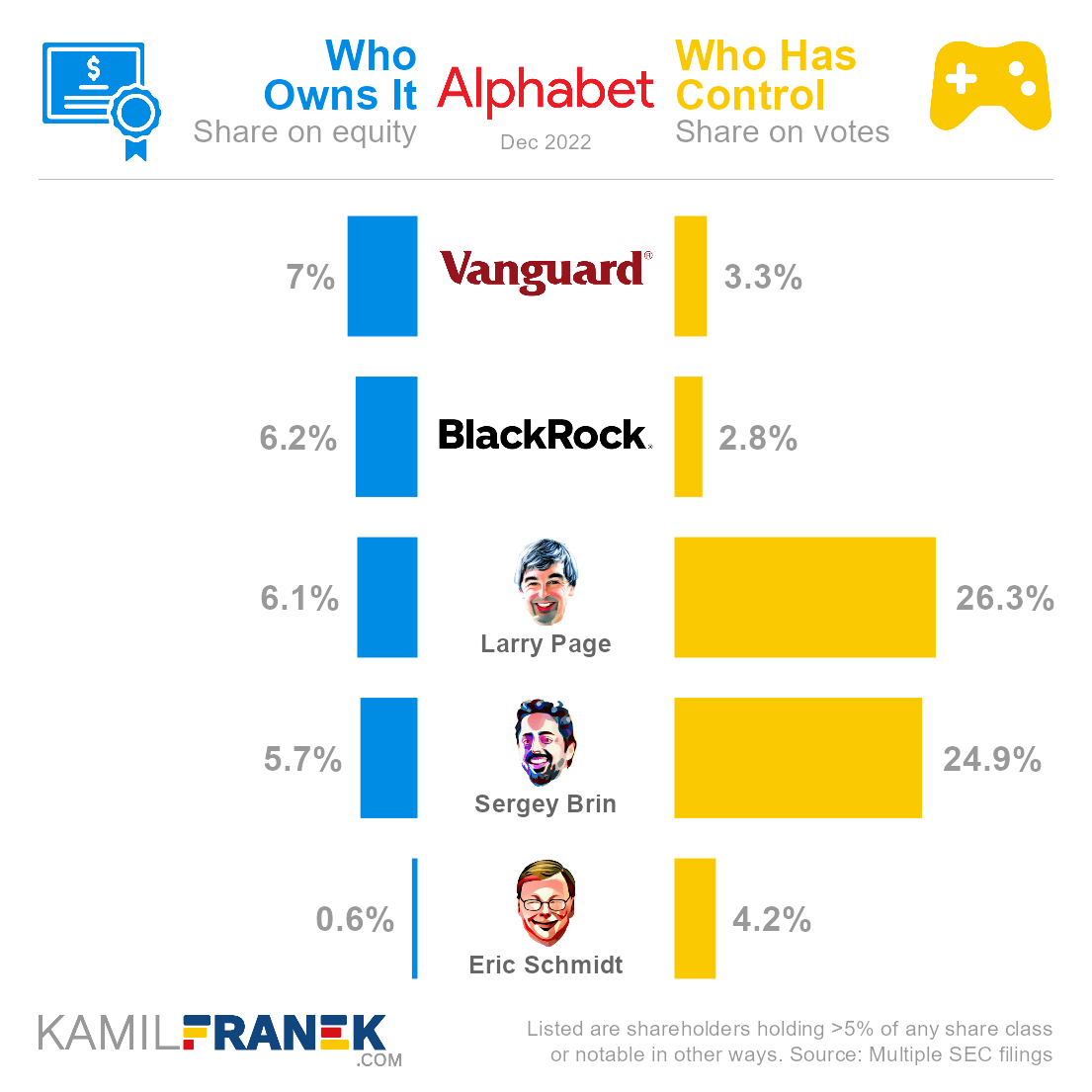
- Class B shares: These shares are not publicly traded and are predominantly held by the company’s founders, Larry Page and Sergey Brin, along with a select few insiders. Crucially, each Class B share carries ten votes per share. This super-voting power grants the founders immense control over the company’s strategic direction, corporate governance, and key decisions, effectively insulating them from short-term market pressures or activist investor campaigns.
- Class C shares (GOOG): These are also publicly traded shares but carry no voting rights whatsoever. They were introduced in 2014 through a stock split, allowing Alphabet to issue new equity for acquisitions, employee compensation, or capital raising without diluting the voting power of Class A or, more importantly, Class B shareholders.
This ingenious structure ensures that while a vast portion of Alphabet’s economic value is publicly owned, the ultimate control over the company’s future remains firmly in the hands of its founders. For investors, this means understanding the difference between GOOGL (voting) and GOOG (non-voting) is paramount, as their investment offers distinct levels of influence, even if their economic exposure to Alphabet’s success is largely similar.
Market Capitalization and Investor Accessibility
Alphabet’s sheer scale is reflected in its colossal market capitalization, which often fluctuates in the multi-trillion-dollar range. This valuation, determined by multiplying the total number of outstanding shares by their current market price, makes it one of the world’s most valuable companies. Such a high market cap signifies not only market confidence in its business model and future prospects but also the immense financial resources at its disposal and the vast number of investors worldwide who hold a stake.
Investor accessibility is broad, with Alphabet’s shares listed on major stock exchanges, making them readily available for purchase by anyone with a brokerage account. This global accessibility means that ownership is incredibly diverse, ranging from pension funds managing vast sums on behalf of retirees, to sophisticated hedge funds seeking alpha, to individual retail investors looking for long-term growth. The liquidity of its shares, given the high trading volume, also ensures that investors can buy and sell their stakes with relative ease, a key feature of a healthy public market.
Key Players in Alphabet’s Ownership Landscape
While the dual-class structure defines the mechanism of control, it’s equally important to identify the actual entities and individuals who hold significant portions of Alphabet’s stock, effectively comprising its ownership landscape.
The Enduring Influence of Founders: Larry Page and Sergey Brin
Larry Page and Sergey Brin, the co-founders of Google, remain the undisputed financial and strategic anchors of Alphabet Inc. Through their substantial holdings of Class B shares, they collectively command a majority of the voting power, despite holding a minority of the total equity in terms of market value. This unique arrangement allows them to steer the company’s long-term vision, investment priorities, and executive leadership without being swayed by the quarterly performance demands or short-term pressures often exerted by institutional investors. Their vision-driven leadership, enabled by this ownership structure, has been credited by many analysts with Alphabet’s sustained innovation and willingness to invest in moonshot projects with distant payoffs. Understanding their stake is fundamental to grasping the long-term strategic stability of Alphabet.
Institutional Investors: The Powerhouses of Public Ownership
Beyond the founders, the largest share of Alphabet’s publicly traded stock is held by institutional investors. These are professional money management firms that invest on behalf of their clients. They include:
- Mutual Funds: Companies like Vanguard, BlackRock, and Fidelity manage vast portfolios that often include significant stakes in leading companies like Alphabet, reflecting its inclusion in major market indices.
- Pension Funds: Public and private pension funds invest in stocks to ensure they can meet future obligations to retirees. Alphabet, with its strong growth prospects, is a common holding.
- Hedge Funds: These funds employ a variety of sophisticated strategies and may take substantial positions in Alphabet, sometimes actively engaging with management (though less effectively given the dual-class structure).
- Sovereign Wealth Funds: Government-owned investment funds from countries with large surpluses often invest globally, including in major U.S. tech firms.
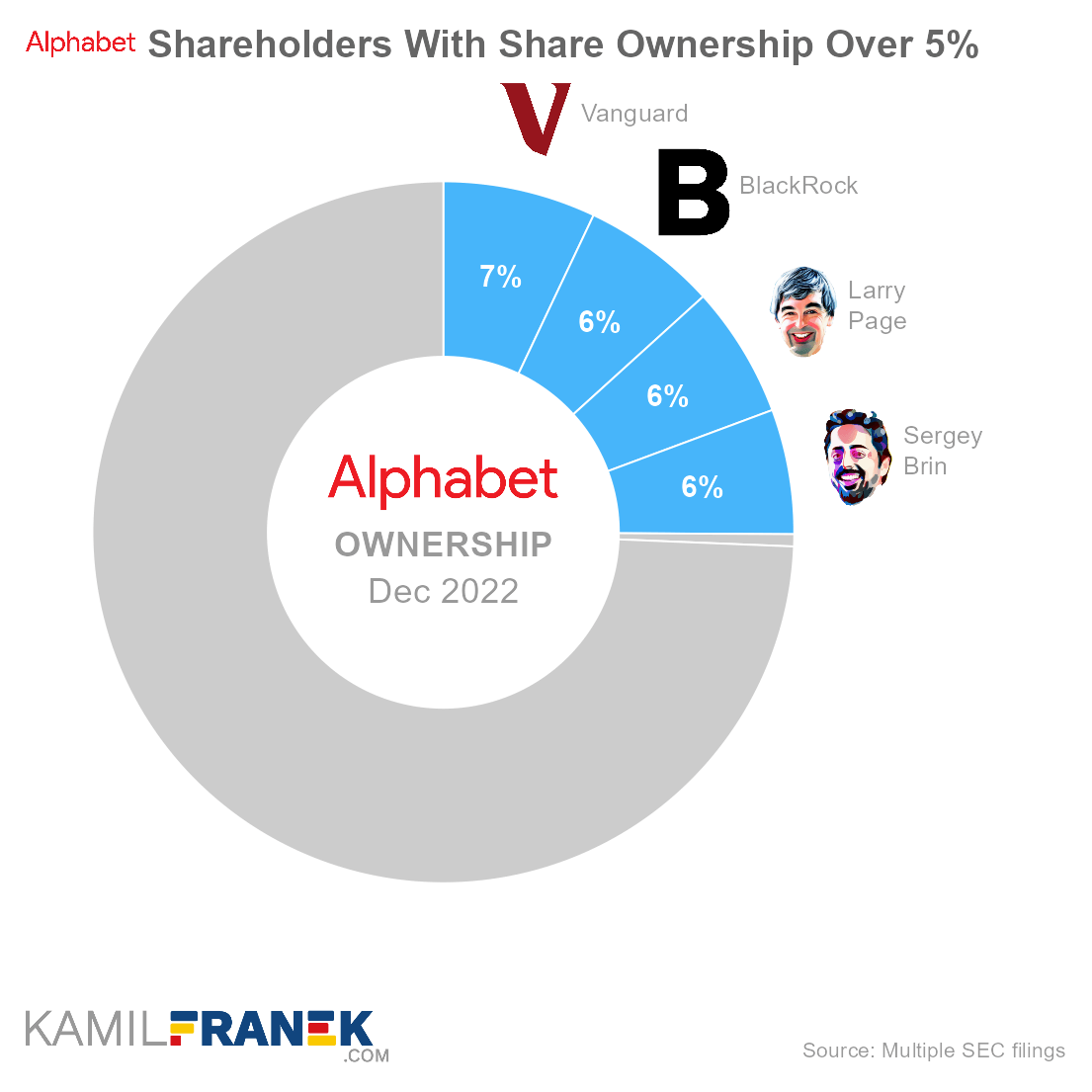
Firms like Vanguard Group Inc., BlackRock Inc., and State Street Corp. consistently rank among the top institutional holders of both Alphabet’s Class A (GOOGL) and Class C (GOOG) shares. Their collective holdings represent hundreds of billions of dollars, and while they possess significant economic ownership, their voting influence is diluted by the Class B shares. Nevertheless, their investment decisions—whether to buy, hold, or sell—can significantly impact Alphabet’s stock price and liquidity. They play a critical role in market stability and overall valuation.
Retail Investors and Employee Stock Ownership

While institutional investors command the largest aggregate stakes, millions of individual retail investors also own shares of Alphabet. These are everyday people investing through brokerage accounts, retirement plans (like 401(k)s and IRAs), or direct stock purchase plans. Their collective holdings, though individually smaller, represent a significant portion of the publicly available float and contribute to market breadth and liquidity.
Furthermore, a considerable amount of Alphabet’s equity is distributed among its employees through stock options, restricted stock units (RSUs), and employee stock purchase programs. This aligns employee interests with shareholder interests, incentivizing long-term commitment and performance. For many employees, their stock grants represent a significant portion of their net worth, making them direct stakeholders in the company’s financial success.
The Financial Implications of Alphabet’s Ownership Structure
The intricate ownership structure of Alphabet Inc. carries profound financial implications, influencing everything from corporate governance to investment appeal and market performance.
Control and Strategic Direction vs. Shareholder Rights
The most significant financial implication of Alphabet’s dual-class structure is its impact on corporate control. The concentrated voting power of Larry Page and Sergey Brin, through their Class B shares, allows them to prioritize long-term strategic investments and ambitious “moonshot” projects that may not yield immediate profits but could define future markets. This structure shields management from the short-term pressures often exerted by institutional investors who might prioritize quarterly earnings over long-horizon innovation. From a financial perspective, this fosters stability and allows for capital allocation to risky, potentially transformative ventures.
However, this also means that traditional shareholder rights are somewhat diminished for Class A and entirely absent for Class C shareholders. While these public shareholders own a significant economic stake, their ability to influence executive compensation, board elections, or major corporate transactions is limited. This trade-off is often debated in corporate finance circles: does stable founder control outweigh the benefits of robust shareholder democracy? For Alphabet, the market has largely supported this model, viewing the founders’ continued leadership as a driver of long-term value, even if it means less direct investor influence.
Alphabet as an Investment Vehicle
For investors, Alphabet’s two publicly traded share classes (GOOGL and GOOG) present distinct investment propositions. Both offer exposure to the financial performance and growth of the underlying Alphabet businesses. However, the choice often boils down to whether voting rights are a priority. GOOGL shares offer a voice, albeit a limited one, in corporate affairs, while GOOG shares are purely an economic stake. Historically, the prices of GOOGL and GOOG have tracked very closely, indicating that the market primarily values the underlying economic performance rather than the nuances of voting power.
Investing in Alphabet means betting on its diverse portfolio of market-leading products (Search, Android, Chrome, YouTube), its cloud computing arm (Google Cloud), and its ambitious “Other Bets” (Waymo, Verily, Calico). Its strong cash flow generation, robust balance sheet, and significant research and development investments make it an attractive prospect for growth-oriented investors. As a publicly traded company, its shares can be bought and sold on the secondary market, providing liquidity for investors who wish to enter or exit their positions.
Impact on Market Valuation and Share Performance
The ownership structure, particularly the concentrated control, has arguably contributed to Alphabet’s consistently high market valuation. Investors often value the stability and long-term strategic focus that founders’ control provides, viewing it as a safeguard against managerial short-sightedness or hostile takeovers. This perception can translate into a premium in the company’s stock price.
Alphabet’s share performance is driven by a multitude of financial factors: revenue growth, profitability, innovation pipeline, market share in key sectors, and broader macroeconomic conditions. The company’s consistent ability to generate substantial free cash flow and reinvest it into growth opportunities or share buybacks (a form of returning capital to shareholders by reducing the number of outstanding shares) underpins its financial strength. Understanding the ownership structure provides context for interpreting financial results, capital allocation decisions, and strategic shifts, which in turn influence the stock’s long-term trajectory and investor confidence.
Beyond Direct Ownership: The Broader Financial Ecosystem
While direct equity ownership forms the primary basis of “who owns Alphabet,” a holistic financial perspective also considers other stakeholders and external entities within its broader financial ecosystem.
Debt Holders and Creditors
Alphabet, like many large corporations, also raises capital through debt issuance, such as corporate bonds. These debt holders are not owners in the traditional sense, but they are crucial financial stakeholders. They have a claim on the company’s assets and earnings, senior to equity holders, and receive regular interest payments. Understanding Alphabet’s debt structure—its credit ratings, bond maturities, and cost of capital—is vital for assessing its overall financial health and leverage, even though debt holders do not possess voting rights or equity ownership. From a business finance perspective, effective management of debt alongside equity is a key determinant of a company’s financial resilience.
The Role of Financial Analysts and Rating Agencies
A network of financial analysts, investment banks, and credit rating agencies (like Moody’s, Standard & Poor’s, and Fitch) continuously scrutinize Alphabet’s financial performance, ownership structure, and strategic decisions. These external entities play a significant role in influencing investor sentiment and capital flows. Their reports, ratings, and recommendations inform millions of investors and financial institutions, affecting buy/sell decisions and ultimately impacting Alphabet’s stock price and its cost of borrowing. While not direct owners, their independent assessments are a critical component of the financial market’s understanding and valuation of Alphabet Inc.
In conclusion, the question “who owns Alphabet Inc.?” reveals a sophisticated financial architecture where founders maintain control through super-voting shares, while a vast and diverse pool of institutional and retail investors own the majority of its economic value through publicly traded stock. This intricate balance between concentrated control and distributed economic ownership has enabled Alphabet to pursue long-term innovation and growth, solidifying its position as a global financial powerhouse. For anyone engaging with business finance, investing, or corporate strategy, understanding this multi-faceted ownership model is key to deciphering the dynamics of one of the 21st century’s most defining companies.
aViewFromTheCave is a participant in the Amazon Services LLC Associates Program, an affiliate advertising program designed to provide a means for sites to earn advertising fees by advertising and linking to Amazon.com. Amazon, the Amazon logo, AmazonSupply, and the AmazonSupply logo are trademarks of Amazon.com, Inc. or its affiliates. As an Amazon Associate we earn affiliate commissions from qualifying purchases.