
The humble calculator, a device we often take for granted today, represents a cornerstone of human ingenuity, embodying centuries of relentless innovation in computation. Far from being the brainchild of a single inventor, its lineage is a fascinating tapestry woven by myriad brilliant minds across different eras, each building upon the achievements of their predecessors. Tracing its origins reveals not just a history of a tool, but a saga of humanity’s continuous quest to master numbers, simplify complex calculations, and push the boundaries of what’s computationally possible. This journey from rudimentary counting aids to sophisticated electronic devices reflects profound shifts in technology, engineering, and our understanding of information processing. Understanding “who made the calculator” is to appreciate a collective intellectual endeavor that has profoundly shaped science, commerce, and daily life.

The Dawn of Calculation: Ancient Roots and Early Mechanization
The desire to perform calculations quickly and accurately is as old as civilization itself. Before the advent of modern calculators, humans relied on a diverse array of tools and techniques to manage numbers, laying the groundwork for more advanced mechanical solutions.
From Abacus to Analog Devices
The earliest “calculators” were remarkably simple yet profoundly effective. The abacus, with its beads strung on rods, emerged independently in various cultures, including Mesopotamia, China, and ancient Rome, thousands of years ago. It provided a tactile and visual method for performing addition, subtraction, multiplication, and division, becoming an indispensable tool for merchants, scribes, and scholars for millennia. Its brilliance lay in its representation of numerical values and its ability to carry out operations through physical manipulation, a precursor to the digital logic that would much later define electronic computation.
Beyond the abacus, the scientific revolution spurred the development of more complex analog devices. John Napier, a Scottish mathematician, introduced “Napier’s Bones” in the early 17th century—a set of numbered rods used for multiplication and division. Shortly thereafter, the invention of the slide rule by William Oughtred in England, based on Napier’s concept of logarithms, revolutionized engineering and science. Slide rules, essentially analog computers, allowed complex multiplication and division to be performed rapidly by aligning scales, remaining an essential tool for engineers and scientists until the advent of electronic calculators in the latter half of the 20th century. These early instruments, though vastly different from today’s calculators, underscored a persistent human need to externalize and expedite computational processes.
Wilhelm Schickard’s Calculating Clock
The true dawn of mechanical calculation is often attributed to Wilhelm Schickard, a German polymath, who in 1623 designed and constructed what is widely considered the first automatic calculating machine. Known as the “Calculating Clock,” this device was capable of performing the four basic arithmetic operations: addition, subtraction, multiplication, and division. Schickard, a contemporary and correspondent of Johannes Kepler, built his machine primarily for astronomical calculations.
The Calculating Clock utilized a system of geared wheels and cylinders. Its innovative design incorporated Napier’s Bones for multiplication, a set of rotating cylinders that could be used for simple addition and subtraction, and a series of “carry” mechanisms for handling digits that exceeded nine. Tragically, at least one of Schickard’s prototypes was destroyed in a fire, and his invention largely remained unknown until the 1960s when his letters to Kepler describing the machine were rediscovered. Despite its obscurity for centuries, Schickard’s work represents a pivotal moment, demonstrating the feasibility of an automated mechanical calculator.
Blaise Pascal and the Pascaline
Just two decades after Schickard’s invention, the French prodigy Blaise Pascal, at the age of 19, began work on his own calculating machine. Driven by the tedious and error-prone nature of his father’s work as a tax commissioner, Pascal sought to create a device that could automate sums of money. In 1642, he unveiled the “Pascaline,” arguably the most famous and widely recognized early mechanical calculator.
The Pascaline was an adding machine that operated on a system of geared wheels, each representing a digit. Users would dial in numbers using styluses, and the machine would automatically carry digits over to the next wheel. While primarily an adder and subtractor (subtraction was performed by complementing numbers), Pascal’s innovative use of a single-direction carry mechanism was a significant engineering feat. He built around 50 prototypes, refining his design over a decade, and even secured a royal privilege for its manufacture and sale. Despite its ingenuity, the Pascaline was expensive to produce and complex to operate, limiting its commercial success. Nevertheless, it marked a crucial step in the evolution of mechanical computation, proving that complex arithmetic could be performed mechanically and inspiring future inventors.
Leibniz and the Stepped Reckoner: Towards Greater Complexity
The contributions of Gottfried Wilhelm Leibniz, the German polymath, profoundly advanced mechanical calculation beyond simple addition and subtraction, setting the stage for more versatile machines.
Gottfried Wilhelm Leibniz’s Vision
Inspired by Pascal’s work, Gottfried Wilhelm Leibniz embarked on his own quest to build a more powerful calculating machine. Unlike Pascal, whose machine was primarily an adder, Leibniz envisioned a device that could directly perform all four arithmetic operations—addition, subtraction, multiplication, and division—with greater efficiency. His ambition was to create a machine capable of assisting in scientific and philosophical calculations, reflecting his broader interest in logic and automated reasoning.
Between 1671 and 1694, Leibniz developed the “Stepped Reckoner” (or Staffelwalze in German). His design incorporated a key innovation: the stepped drum (or Leibniz wheel), a cylinder with nine teeth of increasing length. This mechanism allowed for variable input of digits for multiplication and division through repeated additions or subtractions, a significant improvement over previous designs.
Expanding Beyond Addition
The Stepped Reckoner was a groundbreaking achievement because it mechanized multiplication and division directly, rather than relying on repeated manual operations. For multiplication, a carriage was shifted, and the stepped drum would engage with a counting wheel for each digit of the multiplier. The machine could also perform subtraction and division with relative ease by reversing the process or using complementary arithmetic.
Although Leibniz’s machine was more theoretically advanced and versatile than the Pascaline, it was also mechanically complex and prone to reliability issues due to the precision required in its construction. Only two prototypes were built, neither of which fully met Leibniz’s exacting standards for perfect operation. However, the conceptual brilliance of the stepped drum and its application to all four arithmetic operations had a lasting impact. The Leibniz wheel mechanism became a fundamental component in many mechanical calculators for the next two centuries, underscoring his profound influence on the development of computing technology. His work demonstrated the potential for mechanical devices to handle increasingly complex mathematical tasks, paving the way for the intricate machines of the industrial age.
The Age of Mechanical Marvels: Industrial Revolution and Beyond
The Industrial Revolution provided the engineering prowess and manufacturing capabilities necessary to transform theoretical designs into practical, commercially viable mechanical calculators. This era saw a significant proliferation of inventive solutions.
Charles Xavier Thomas de Colmar’s Arithmometer
While Leibniz’s Stepped Reckoner demonstrated the theoretical possibility of a four-function calculator, it was Charles Xavier Thomas de Colmar, a French inventor, who in 1820 created the first commercially successful mechanical calculator: the Arithmometer. Thomas’s machine was a significant leap forward, making reliable mechanical calculation available for widespread use in offices and businesses for the first time.
The Arithmometer was based on an improved version of Leibniz’s stepped drum mechanism. What set it apart was its robust construction and meticulous engineering, which made it durable and relatively easy to use. It could perform addition, subtraction, multiplication, and division with remarkable accuracy. The machine gained immense popularity throughout Europe, particularly after the mid-19th century, remaining in production for over 90 years. Its success proved the commercial viability of mechanical calculators and established a market for precision calculating instruments, ushering in an era where businesses could streamline their accounting and record-keeping processes. The Arithmometer truly democratized advanced mechanical calculation.
Babbage’s Analytical Engine: A Glimpse of the Future
While not a “calculator” in the conventional sense of performing basic arithmetic, Charles Babbage’s conceptual designs for the Difference Engine and, more importantly, the Analytical Engine in the mid-19th century were visionary steps towards what we now recognize as the modern computer. Babbage, a British mathematician and inventor, sought to eliminate human error in large-scale mathematical tables.
His Difference Engine was designed to automate the calculation of polynomial functions used to create navigation and astronomical tables. More revolutionary was his unbuilt Analytical Engine, conceived between 1833 and 1842. This design possessed all the fundamental elements of a modern computer: a “mill” (the CPU) for performing arithmetic, a “store” (memory) for holding data, input devices (punched cards), and an output device (a printer). It was programmable, capable of conditional branching, looping, and parallel processing, making it far more than just a calculator. Though never fully constructed in his lifetime due to technological limitations and funding issues, Babbage’s theoretical work, alongside Ada Lovelace’s insights into its programming potential, laid the conceptual foundation for electronic computing, foreshadowing the complex machines that would emerge over a century later.
The Ingenuity of the Curta Calculator
Even as electromechanical and early electronic computers began to appear, mechanical calculators continued to evolve. One of the most remarkable examples of mechanical ingenuity is the Curta calculator, invented by Curt Herzstark, an Austrian engineer, during World War II while he was imprisoned in a Nazi concentration camp. Released in 1948, the Curta was a compact, hand-cranked mechanical calculator, often referred to as a “mathematical grenade” due to its cylindrical shape.
Despite its small size, the Curta was a marvel of precision engineering. It could perform addition, subtraction, multiplication, division, and even square roots with impressive accuracy and speed for a mechanical device. Its design ingeniously incorporated a stepped drum (similar in principle to Leibniz’s) and a complex system of gears and levers within a remarkably small footprint. The Curta became highly popular among engineers, surveyors, and aviators who needed portable and reliable calculation tools in the field, enduring as a high-precision instrument well into the 1970s, even after electronic calculators began to emerge. Its existence serves as a testament to the enduring appeal and sophisticated potential of purely mechanical computation.
The Electronic Revolution: From Vacuum Tubes to Pocket Powerhouses
The mid-20th century marked a paradigm shift in calculation, moving from the mechanical and electromechanical realms to the lightning speed and miniaturization offered by electronics. This transition was driven by foundational advancements in computing technology.
Early Electronic Computers and the Calculator’s Ancestry
The first true electronic calculating devices were not called “calculators” but rather “computers.” Machines like the Atanasoff-Berry Computer (ABC) in the late 1930s, the Colossus in Britain during World War II, and the formidable ENIAC (Electronic Numerical Integrator and Computer) completed in 1946, showcased the immense power of electronic circuits for rapid computation. These machines used vacuum tubes for processing and were enormous, expensive, and consumed vast amounts of power. While their primary purpose was complex scientific and military calculations, they established the fundamental principles of electronic digital computation that would eventually shrink down into dedicated calculator devices.
These early computers, by proving the feasibility of high-speed electronic arithmetic, provided the conceptual and technological blueprint for smaller, more focused electronic calculators. The lessons learned in building reliable electronic circuits, designing logical gates, and handling digital data were directly applicable to creating devices solely dedicated to arithmetic. The challenge shifted from if electronics could calculate, to how to make electronic calculation practical, affordable, and accessible.
The Advent of Transistors and Integrated Circuits
The real breakthrough that enabled the proliferation of electronic calculators was the invention of the transistor in 1947 at Bell Labs and, subsequently, the integrated circuit (IC) in 1958 by Jack Kilby at Texas Instruments and Robert Noyce at Fairchild Semiconductor. Transistors replaced bulky, unreliable, and power-hungry vacuum tubes, leading to smaller, more robust, and more energy-efficient electronic devices. The integrated circuit took this miniaturization a step further by combining multiple transistors and other electronic components onto a single silicon chip, drastically reducing size, cost, and complexity.
These innovations were game-changers. With integrated circuits, it became possible to cram the entire “brain” of a calculator—the arithmetic logic unit, memory, and control circuitry—onto a single, mass-producible chip. This technological leap made electronic calculators not only feasible but also increasingly affordable and compact, paving the way for their eventual dominance over mechanical and electromechanical counterparts.
Key Players in the Electronic Calculator Boom
The 1960s and 1970s witnessed a fierce race among technology companies to bring electronic calculators to market, transforming them from laboratory curiosities into indispensable tools.
- Sharp: In 1964, Sharp introduced the Compet CS-10A, the world’s first all-transistor diode desktop electronic calculator. While still large and expensive, it marked the beginning of the end for mechanical desktop machines.
- Wang Laboratories: Under An Wang, Wang Laboratories produced increasingly sophisticated desktop calculators, often programmable, which found widespread use in scientific and engineering fields.
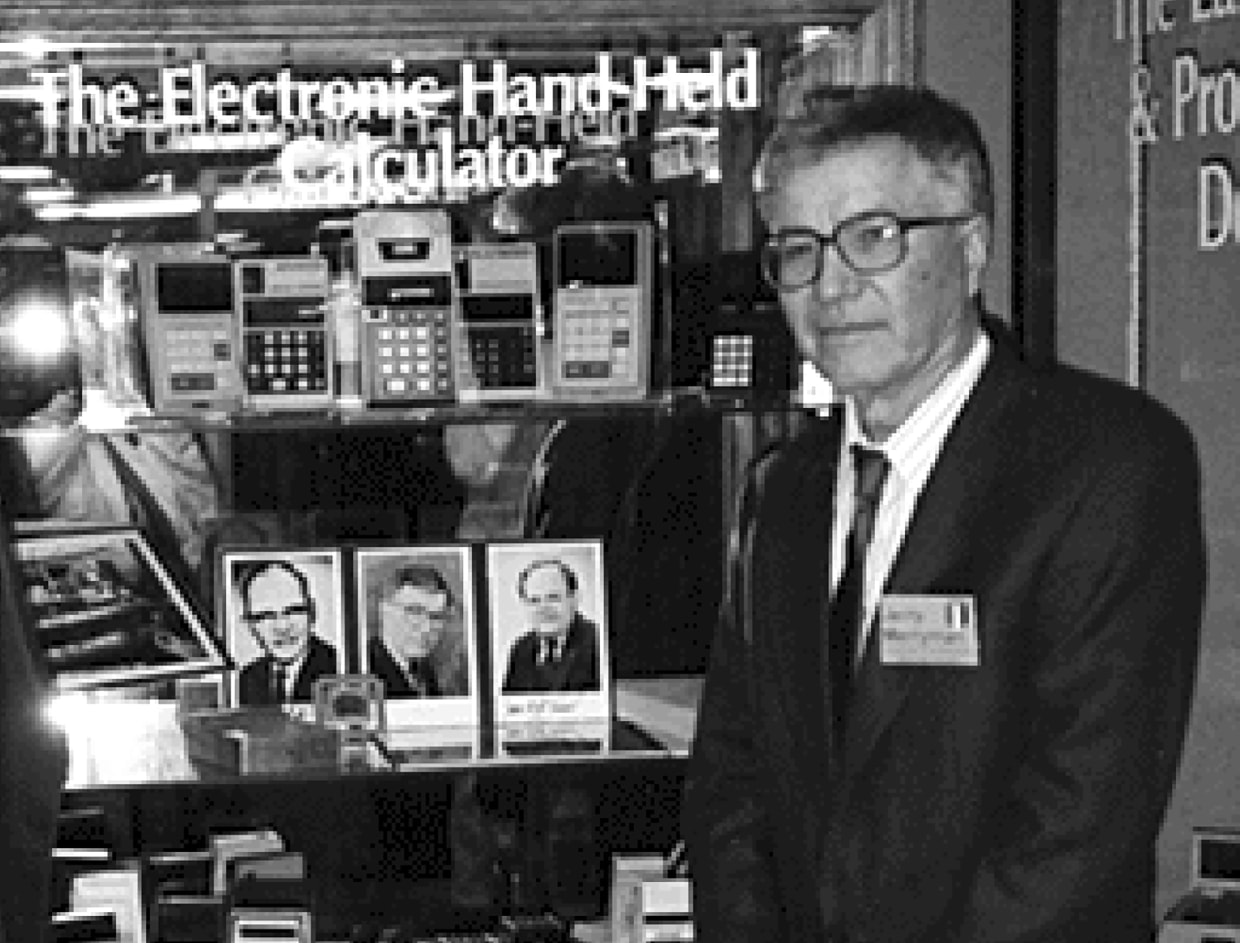
- Texas Instruments (TI): A major innovator in integrated circuits, TI played a crucial role in bringing affordable pocket calculators to the masses. In 1967, a team at TI, including Jack Kilby, developed a handheld calculator prototype, the Cal-Tech. Their later models, like the TI-2500 Datamath in 1972, were among the first affordable battery-powered pocket calculators, catalyzing a revolution in personal computation.
- Hewlett-Packard (HP): HP entered the calculator market with a focus on scientific and engineering users. In 1972, HP released the HP-35, the world’s first handheld scientific electronic calculator. Its use of Reverse Polish Notation (RPN) and its ability to handle complex functions made it an instant classic and a staple for professionals in technical fields.
- Casio, Canon, and Others: Japanese companies like Casio and Canon also played a pivotal role, rapidly developing and mass-producing compact, reliable, and increasingly feature-rich electronic calculators. Casio, in particular, became known for its innovative designs and affordable products, making calculators accessible to students and the general public.
The fierce competition and rapid technological advancements in this era led to an exponential increase in calculator capabilities and a dramatic decrease in their size and price, ultimately making the pocket calculator a ubiquitous device by the late 1970s.
The Enduring Legacy and Future of Calculation
The calculator’s journey from a complex mechanical marvel to a ubiquitous digital tool reflects a profound evolution in human-technology interaction. Its impact is immeasurable, and its future continues to integrate with broader computational trends.
Impact on Science, Engineering, and Everyday Life
The advent of the calculator had a transformative impact across nearly every facet of modern life. For scientists and engineers, it dramatically reduced the time spent on tedious manual calculations, freeing them to focus on theoretical problem-solving, design, and experimentation. Complex equations that once took hours or days could now be solved in seconds, accelerating research and development in fields from aerospace to medicine. The ability to perform quick, accurate computations in the field empowered professions like surveying, construction, and finance, where precision is paramount.
In education, the calculator initially sparked debates but ultimately became an indispensable learning aid, particularly for higher-level mathematics and science. For the general public, the pocket calculator simplified household budgeting, tax preparation, and everyday arithmetic, making financial literacy and numerical accuracy more accessible. It fundamentally changed how individuals and institutions interacted with numbers, making complex data manageable and analysis more immediate.
Calculators in the Digital Age: From Dedicated Device to Ubiquitous App
While dedicated physical calculators remain popular, especially in educational and professional settings, the digital age has seen the functionality of the calculator largely absorbed into other devices. Smartphones, tablets, and personal computers all come equipped with powerful calculator applications, ranging from basic arithmetic tools to advanced scientific and graphing calculators. This integration means that sophisticated computational power is virtually always at our fingertips, seamlessly embedded within the fabric of our digital lives.
This shift underscores a broader trend in technology: the convergence of functions. The calculator is no longer just a standalone gadget; it’s a fundamental capability expected of almost any smart device. This evolution highlights the success of the original inventors’ goals—to make computation readily available and intuitive—even if the form factor has drastically changed.

The Unsung Heroes of Computation
In answering “who made the calculator,” we see that it wasn’t one person, but a long line of visionaries: from ancient abacus users and medieval scholars, through the mechanical geniuses like Schickard, Pascal, and Leibniz, to the industrial innovators like Thomas de Colmar and Herzstark. The final leap to the electronic era was driven by the semiconductor pioneers like Kilby and Noyce, and the competitive drive of companies like Sharp, TI, and HP.
Each individual and each company contributed a crucial piece to the puzzle, driven by a common desire to overcome computational limitations. Their combined efforts have gifted humanity with tools that not only save time and reduce error but have also fundamentally expanded our capacity for scientific discovery, technological advancement, and economic efficiency. The calculator, in its myriad forms, stands as a testament to the cumulative power of human intellect and relentless innovation.
aViewFromTheCave is a participant in the Amazon Services LLC Associates Program, an affiliate advertising program designed to provide a means for sites to earn advertising fees by advertising and linking to Amazon.com. Amazon, the Amazon logo, AmazonSupply, and the AmazonSupply logo are trademarks of Amazon.com, Inc. or its affiliates. As an Amazon Associate we earn affiliate commissions from qualifying purchases.