
The question “who is the owner of Chase Bank?” might seem straightforward, but for a financial institution of its colossal size and global reach, the answer is a fascinating illustration of modern corporate ownership structures. In essence, Chase Bank is not a standalone entity owned by a single individual or family. Instead, it operates as a major subsidiary of JPMorgan Chase & Co., one of the world’s leading financial services firms. This distinction is critical because understanding JPMorgan Chase & Co.’s ownership reveals a complex web of public shareholders, institutional investors, and the intricate mechanisms of the global financial markets.
In the realm of multi-billion dollar corporations, “ownership” rarely signifies a singular proprietor. For a publicly traded entity like JPMorgan Chase & Co., ownership is distributed among millions of shareholders who collectively own the company through their holdings of its stock. This article delves into the specifics of this ownership, exploring the structure of JPMorgan Chase & Co., the nature of its shareholders, and why this distributed ownership model is fundamental to its operations and the broader financial landscape.
Understanding Corporate Ownership in Modern Finance
The concept of “owning” a major bank like Chase is far more nuanced than holding a deed to a property or a title to a car. It involves navigating the intricate world of publicly traded companies, where the lines between a brand, its parent company, and its ultimate owners can be blurred without a clear understanding of corporate finance.
The Concept of Publicly Traded Companies
JPMorgan Chase & Co., the parent company of Chase Bank, is a publicly traded company. This means its shares are bought and sold on stock exchanges, primarily the New York Stock Exchange (NYSE), under the ticker symbol “JPM.” When a company goes public, it offers its shares to the general public and institutional investors, effectively dispersing ownership. Each share represents a tiny fraction of ownership in the company, entitling the holder to certain rights, most notably a claim on future earnings and voting power in corporate decisions. This public ownership model allows companies to raise vast amounts of capital to fund operations, expansion, and innovation, while also providing liquidity for investors. It also subjects the company to rigorous regulatory oversight and public scrutiny, demanding transparency in its financial reporting and operations.
Distinguishing Between a Subsidiary and a Parent Company
Chase Bank is a brand name and a key operating division under the umbrella of JPMorgan Chase & Co. Think of JPMorgan Chase & Co. as the vast holding company that owns numerous brands and business units, including:
- Chase Bank: The consumer and commercial banking arm, offering services like checking accounts, savings accounts, credit cards, mortgages, and small business loans. This is the part most people are familiar with through its branches and ATMs.
- J.P. Morgan: The investment banking, asset management, private banking, and treasury services arm catering to corporations, institutions, and wealthy individuals.
- Other specialized units: Various other divisions focusing on specific financial products or market segments.
So, while you interact directly with “Chase Bank” for your personal finance needs, the ultimate corporate entity responsible for its operations, liabilities, and strategic direction is JPMorgan Chase & Co. The profits generated by Chase Bank contribute to the overall earnings of JPMorgan Chase & Co., which are then reported to its shareholders.
The Role of Shareholders and Institutional Investors
In a publicly traded company, the actual “owners” are its shareholders. These can be individual retail investors who own a few shares, or massive institutional investors such as mutual funds, pension funds, hedge funds, and sovereign wealth funds that hold millions of shares. These institutional investors often manage vast portfolios on behalf of their clients or beneficiaries, making them significant stakeholders in major corporations. Their combined holdings typically represent the largest portion of a company’s ownership. For JPMorgan Chase & Co., the vast majority of its shares are held by such institutional investors, who collectively exert considerable influence through their voting power and engagement with company management and the board of directors. This distributed ownership model means that no single individual or entity typically owns a controlling stake in such a large corporation, promoting a form of corporate democracy where decisions are made considering a broad range of shareholder interests.
JPMorgan Chase & Co.: The Parent Entity
To understand who owns Chase Bank, one must look to its parent company, JPMorgan Chase & Co. This financial behemoth represents not just a bank, but a cornerstone of the global financial system, with a history deeply intertwined with American economic development.
A Brief History of a Financial Giant
JPMorgan Chase & Co. as we know it today is the product of a long series of mergers and acquisitions involving some of the most storied names in American finance. Its lineage can be traced back to the establishment of the Bank of the Manhattan Company in 1799, making it one of the oldest financial institutions in the United States. However, the modern form really began to take shape through the 19th and 20th centuries, notably with the founding of J.P. Morgan & Co. in 1871 by John Pierpont Morgan, an investment bank that played a pivotal role in financing major American industries like railroads and steel.
Key mergers that shaped the current entity include:
- Chase Manhattan Corporation: Formed in 1955 from the merger of the Bank of the Manhattan Company and Chase National Bank.
- J.P. Morgan & Co. and Chase Manhattan Corporation (2000): This blockbuster merger created JPMorgan Chase & Co., combining a venerable investment bank with a dominant commercial bank.
- Acquisition of Bank One (2004): Significantly expanded its retail banking presence, especially in the Midwest.
- Acquisition of Bear Stearns (2008): A forced acquisition during the 2008 financial crisis, which bolstered its investment banking division but also came with significant risks.
- Acquisition of Washington Mutual (2008): Another crisis-era acquisition that massively expanded its consumer banking operations and branch network.
These strategic integrations have forged a financial institution with unparalleled breadth and depth across virtually every facet of banking and finance.
The Structure of JPMorgan Chase & Co.
JPMorgan Chase & Co. is organized into several primary business segments, each serving distinct customer bases and offering specialized financial products and services. These segments include:
- Consumer & Community Banking (CCB): This is where Chase Bank resides. It serves millions of consumers and small businesses through its vast network of branches, ATMs, digital platforms, and call centers, offering checking and savings accounts, credit cards, mortgages, auto loans, and small business services.
- Corporate & Investment Bank (CIB): Operating under the J.P. Morgan brand, this segment provides investment banking, market-making, prime brokerage, and treasury services to corporations, institutional investors, and governments worldwide.
- Commercial Banking: Focuses on middle-market companies, large corporations, and real estate investors, offering a wide range of financial services including lending, treasury services, and investment banking products.
- Asset & Wealth Management (AWM): Manages assets for institutional investors, high-net-worth individuals, and retail clients globally, offering investment management, private banking, and retirement planning services.
This diversified structure makes JPMorgan Chase & Co. a comprehensive financial powerhouse, capable of serving clients from individual consumers to the largest multinational corporations and governments.
Global Reach and Financial Clout
JPMorgan Chase & Co.’s influence extends far beyond the borders of the United States. It operates in over 100 markets worldwide, making it a truly global financial institution. Its balance sheet is enormous, with trillions of dollars in assets, making it one of the largest banks globally by assets. This immense financial clout means that its operations have a significant impact on global markets, economies, and financial stability. As a systematically important financial institution (SIFI), it is subject to enhanced regulatory scrutiny, reflecting its critical role in the international financial system. Its ability to navigate economic cycles, adapt to technological changes, and lead in various financial sectors underscores its standing as a pillar of the global economy.
The Shareholder Base: Dispersed Ownership
The ultimate owners of Chase Bank, through its parent JPMorgan Chase & Co., are its shareholders. This ownership is highly dispersed, meaning no single entity holds a controlling stake. Instead, a vast and diverse group of investors collectively owns the company.
Who Are the Largest Owners?

While individual investors hold some shares, the vast majority of JPMorgan Chase & Co.’s stock is owned by institutional investors. These are professional asset managers that invest on behalf of their clients or beneficiaries. The largest institutional holders often include:
- Vanguard Group, Inc.: Known for its low-cost index funds and ETFs, Vanguard holds significant stakes in thousands of public companies, including JPM, on behalf of millions of investors.
- BlackRock, Inc.: The world’s largest asset manager, BlackRock’s various funds and portfolios consistently rank among the top shareholders of major corporations.
- State Street Corporation: Another major institutional investor, State Street also manages extensive passive and active portfolios.
These asset management firms hold JPM shares in their various index funds, actively managed funds, and pension funds. When you invest in a Vanguard S&P 500 index fund, for example, you are indirectly gaining a tiny fraction of ownership in JPMorgan Chase & Co. among hundreds of other companies. These large institutions don’t necessarily “control” the company in an operational sense, but their significant voting power can influence major corporate decisions, such as the election of board members or executive compensation policies.
The Influence of Retail Investors
Alongside these titans of institutional finance, millions of individual retail investors also own shares of JPMorgan Chase & Co. These can be people investing directly through brokerage accounts, or indirectly through mutual funds and retirement accounts. While individual retail investors typically hold much smaller portions of the company’s stock compared to institutional investors, their collective ownership is still substantial. Their investments contribute to the company’s market capitalization and liquidity, and their sentiment can impact stock performance. However, their influence on corporate governance is generally less direct than that of large institutional shareholders due to the sheer volume of shares held by the latter.
Voting Rights and Corporate Governance
Each share of JPMorgan Chase & Co. stock typically comes with voting rights. Shareholders exercise these rights at the company’s annual general meeting (AGM) or through proxy voting. Key decisions subject to shareholder vote include:
- Election of the Board of Directors: Shareholders elect the individuals who will oversee the company’s management and represent shareholder interests.
- Approval of Executive Compensation: Proposals related to the pay packages of top executives are often put to a shareholder vote (though often advisory).
- Major Corporate Actions: Significant strategic decisions, such as mergers, acquisitions, or changes to the company’s articles of incorporation, may require shareholder approval.
Institutional investors, with their large blocks of shares, play a pivotal role in these votes. They often employ dedicated stewardship teams to engage with companies on environmental, social, and governance (ESG) issues, further influencing corporate strategy and accountability. This system of dispersed ownership and voting rights is a cornerstone of modern corporate governance, designed to ensure that management acts in the best long-term interests of the company’s owners – its shareholders.
Why Does Ownership Matter?
Understanding the ownership structure of JPMorgan Chase & Co. is not merely an academic exercise; it has tangible implications for the company’s strategy, its accountability, and for anyone considering an investment in the financial sector.
Impact on Company Strategy and Direction
Shareholders, particularly large institutional ones, have a vested interest in the long-term profitability and sustainability of JPMorgan Chase & Co. Their investment choices and voting decisions can exert pressure on the company’s management and board of directors to pursue strategies that maximize shareholder value. This could involve decisions related to:
- Capital Allocation: How the bank uses its capital, whether for dividends, stock buybacks, or investments in new technologies and markets.
- Risk Management: The level of risk the bank is willing to undertake in its lending and trading activities.
- Growth Initiatives: Expansion into new geographies or business lines, or investments in digital transformation.
- Sustainability and ESG Factors: Increasingly, shareholders are pushing for stronger commitments to environmental, social, and governance principles, recognizing their impact on long-term value.
Ultimately, the board of directors, elected by shareholders, is responsible for setting the company’s strategic direction and overseeing its execution by the executive management team.
Transparency and Accountability
As a publicly traded company, JPMorgan Chase & Co. is subject to stringent regulatory requirements and public disclosure rules. It must regularly report its financial performance, business operations, and risk factors to the Securities and Exchange Commission (SEC) and its shareholders. This level of transparency fosters accountability, as the company’s performance is constantly scrutinized by analysts, investors, and the media. Dispersed ownership, combined with regulatory oversight, helps to prevent any single entity from wielding unchecked power and ensures that the company operates within legal and ethical boundaries, benefiting not just shareholders but also customers, employees, and the broader economy.
Investment Implications
For potential investors, understanding that Chase Bank is part of the larger JPMorgan Chase & Co. structure is fundamental. When you invest in JPM stock, you are buying into the entire diversified financial enterprise, not just the retail bank. This means your investment performance is tied to the success of its consumer banking, investment banking, asset management, and commercial banking divisions, as well as its overall financial health and global economic conditions. Analyzing JPMorgan Chase & Co. as an investment involves evaluating its overall business segments, financial statements, management team, competitive landscape, and regulatory environment. It allows investors to participate in the growth and profitability of one of the world’s leading financial institutions.
The Role of Leadership and Management
While shareholders are the ultimate owners, the day-to-day operations and strategic execution of JPMorgan Chase & Co. are entrusted to its leadership team and management, guided by the Board of Directors. This distinction between ownership and management is crucial in understanding how such a vast organization functions.
The Board of Directors
The Board of Directors sits at the apex of the company’s governance structure, serving as the primary link between shareholders and management. Composed of a mix of executive (internal) and independent (external) directors, the Board’s responsibilities include:
- Overseeing Management: Appointing, evaluating, and compensating the CEO and other senior executives, and ensuring they are leading the company effectively.
- Strategic Guidance: Providing input and approval on the company’s long-term strategy and major corporate initiatives.
- Risk Management: Ensuring robust risk management frameworks are in place to safeguard the company’s assets and reputation.
- Fiduciary Duty: Acting in the best interests of the shareholders and the company as a whole.
The Board is elected by shareholders, making it directly accountable to the owners and acting as their representatives in overseeing the company’s operations.
Jamie Dimon and Executive Leadership
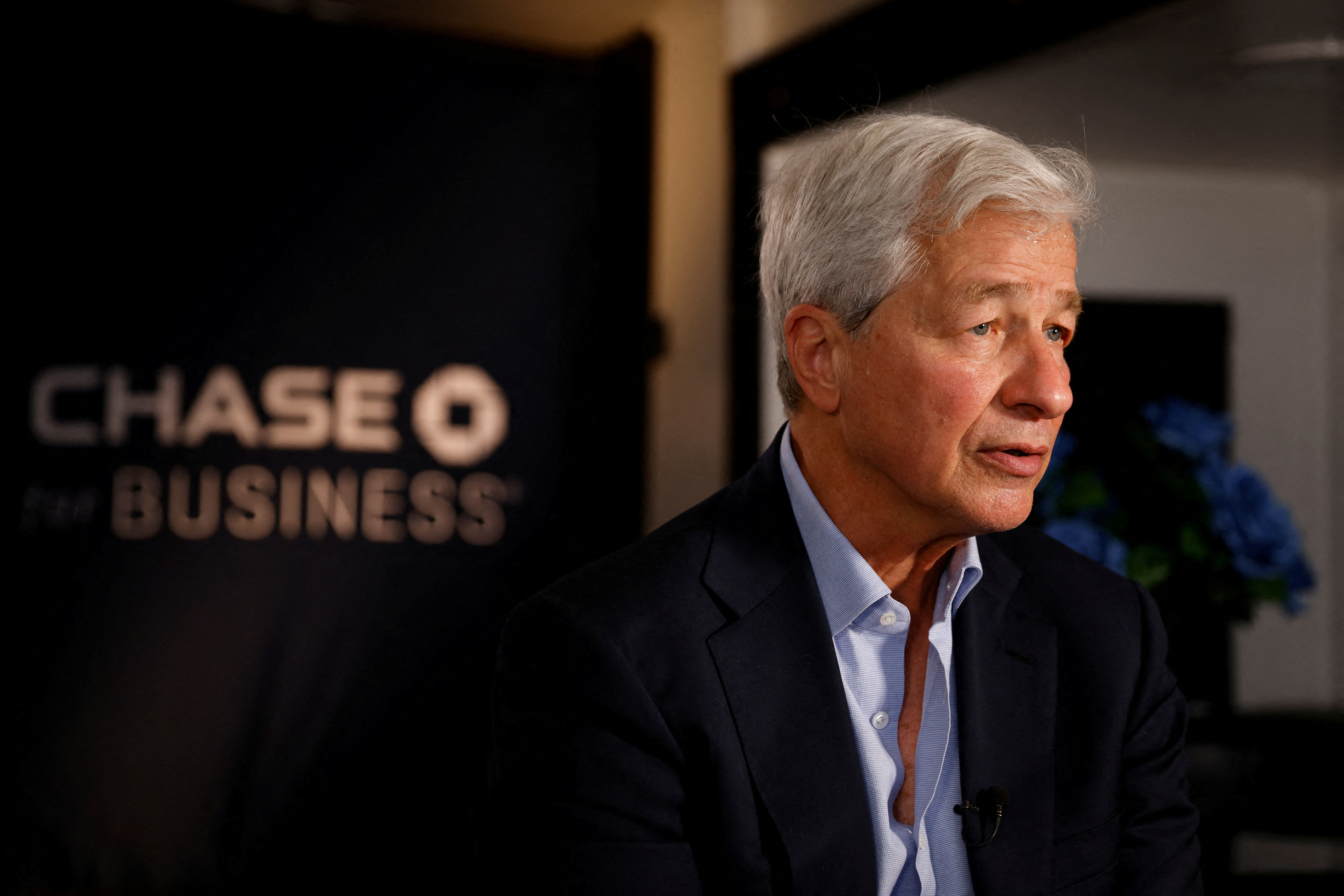
Jamie Dimon is a prominent figure in global finance, serving as the Chairman and CEO of JPMorgan Chase & Co. Since taking the helm in 2005, he has guided the company through challenging economic periods, including the 2008 financial crisis, and has been instrumental in shaping its current strategic direction. While Dimon holds a significant leadership position and may own a considerable number of shares, he is an employee of the company, albeit the most senior one. His role is to manage the company on behalf of the shareholders and to execute the strategy approved by the Board. His compensation, performance, and succession planning are all subject to the oversight of the Board of Directors, which in turn is accountable to the shareholders. The executive leadership team, under Dimon, is responsible for the day-to-day operations, financial performance, and implementation of the company’s vision across all its business units, including Chase Bank.

Conclusion
In summary, the question of “who is the owner of Chase Bank?” leads us to its parent company, JPMorgan Chase & Co. This financial giant is not owned by a single individual or entity but by its millions of shareholders. These shareholders range from individual retail investors to massive institutional investors like Vanguard, BlackRock, and State Street, who collectively own the company through their holdings of its publicly traded stock.
This distributed ownership model is fundamental to modern corporate finance, providing capital, ensuring transparency through regulatory oversight, and establishing a governance structure where the Board of Directors and executive leadership are accountable to the owners. For anyone engaging with Chase Bank, whether as a customer or an investor, understanding its place within the vast JPMorgan Chase & Co. enterprise and the nature of its public ownership provides crucial insight into one of the most powerful and influential institutions in the global financial landscape.
aViewFromTheCave is a participant in the Amazon Services LLC Associates Program, an affiliate advertising program designed to provide a means for sites to earn advertising fees by advertising and linking to Amazon.com. Amazon, the Amazon logo, AmazonSupply, and the AmazonSupply logo are trademarks of Amazon.com, Inc. or its affiliates. As an Amazon Associate we earn affiliate commissions from qualifying purchases.