
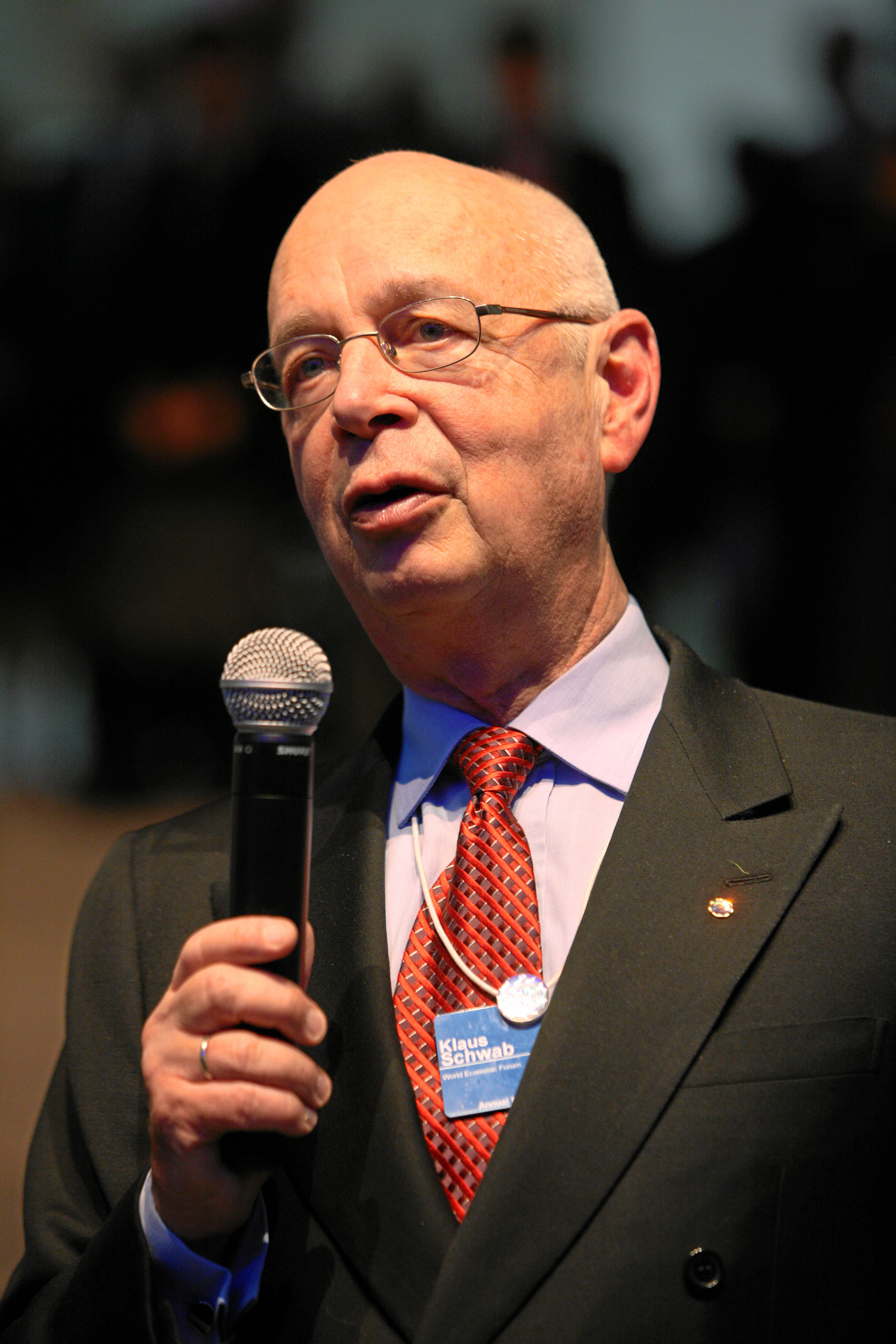
To understand the trajectory of modern technology, one must understand the man who coined the term that defines our current era: the Fourth Industrial Revolution. Klaus Schwab, the founder and Executive Chairman of the World Economic Forum (WEF), has transitioned from a traditional academic and economist into a primary visionary for the integration of technology into every facet of human life.
While many recognize him as the facilitator of the annual Davos meetings, Schwab’s true influence lies in his role as a technological philosopher. He has provided the intellectual framework for how global leaders perceive artificial intelligence (AI), robotics, the Internet of Things (IoT), and biotechnology. This article explores Klaus Schwab through a strictly technological lens, examining his theories on the digital transformation of society and the profound implications of the “Great Reset” for global tech infrastructure.
The Fourth Industrial Revolution (4IR): A Framework for the Digital Age
Klaus Schwab’s most significant contribution to the tech world is the conceptualization of the Fourth Industrial Revolution (4IR). Introduced in his 2016 book of the same name, Schwab argued that we are no longer merely in an extension of the digital age (the Third Industrial Revolution), but rather at the dawn of a fundamentally new era.
Defining the Convergence of Physical, Digital, and Biological Spheres
The hallmark of Schwab’s 4IR is “convergence.” In previous eras, technology was seen as a tool used by humans to achieve a specific end—a computer for calculations or a steam engine for transit. Schwab posits that the 4IR is characterized by a blurring of lines between the physical world, the digital realm, and biological systems.
This includes “cyber-physical systems” where sensors, software, and hardware communicate autonomously. For Schwab, this convergence isn’t just about better gadgets; it is about the integration of technology into the very fabric of existence. Whether it is through wearable tech that monitors biological vitals in real-time or smart cities that use digital twins to manage physical infrastructure, Schwab’s vision emphasizes a world where everything is connected and data-driven.
Why the 4IR Differs from Previous Technological Shifts
Schwab identifies three reasons why today’s transformations represent not merely a prolongation of the Third Industrial Revolution but rather the arrival of a Fourth: velocity, scope, and systems impact.
- Velocity: Unlike previous revolutions, the 4IR is evolving at an exponential rather than a linear pace.
- Scope: It is disrupting almost every industry in every country.
- Systems Impact: The breadth and depth of these changes herald the transformation of entire systems of production, management, and governance.
By framing technology in this way, Schwab has forced tech developers and policy-makers to look beyond individual apps or hardware releases and consider the “systemic” nature of technological progress.
AI, Automation, and the Future of Labor
Central to Schwab’s technological worldview is the role of Artificial Intelligence. Long before “Generative AI” became a household term, Schwab was advocating for a global understanding of how machine intelligence would restructure the world’s economy and labor markets.
The Rise of Generative AI and Decision-Making Systems
Schwab views AI not just as a tool for automation, but as a “foundational technology” comparable to electricity. He has consistently highlighted the shift from “weak AI” (designed for specific tasks) to “strong AI” and eventually “Artificial General Intelligence” (AGI).
In the Schwabian view, AI becomes a core component of decision-making. Through the WEF’s Center for the Fourth Industrial Revolution, he has championed the idea of “Agile Governance,” where AI systems provide real-time data to help governments and corporations make faster, more accurate decisions. However, he also warns of the “black box” problem—the lack of transparency in how AI algorithms reach their conclusions—and has been a vocal proponent of creating international standards for AI ethics.
Navigating the Disruption of the Global Workforce
One of Schwab’s more sobering technological insights involves the future of work. He acknowledges that the automation of both manual and cognitive tasks will lead to significant labor displacement. However, rather than viewing this through a lens of pure techno-pessimism, Schwab advocates for a “human-centric” approach to tech deployment.

He suggests that the 4IR will demand a massive “upskilling” revolution. In his vision, technology should augment human potential rather than replace it. This involves the use of AR (Augmented Reality) and VR (Virtual Reality) in training, as well as digital platforms that facilitate lifelong learning. For Schwab, the challenge isn’t the technology itself, but the speed at which social and educational systems can adapt to it.
Digital Governance and Global Security in a Connected World
As technology becomes the backbone of society, Klaus Schwab argues that the “Wild West” era of the internet must come to an end. His work frequently touches upon the need for a global digital architecture that ensures security, privacy, and ethical standards.
The Ethical Frameworks for Emerging Technologies
Schwab is a proponent of “Stakeholder Capitalism,” a concept he has adapted for the tech world. He believes that technology companies have a responsibility not just to their shareholders, but to the global community. This manifests in his calls for “responsible innovation.”
He has been instrumental in creating forums where tech giants (like Google, Microsoft, and Meta) meet with world leaders to discuss the guardrails of technology. This includes issues like data privacy, the bias in facial recognition software, and the ethics of gene editing (CRISPR). Schwab’s goal is to ensure that the 4IR does not lead to a “tech-driven inequality” where only the elite have access to the benefits of high-tech advancements.
Cybersecurity as a Pillar of Modern Infrastructure
In a world defined by the Internet of Things (IoT), Schwab recognizes that the attack surface for bad actors has expanded exponentially. He has famously warned of a “cyber-attack with COVID-like characteristics”—a “cyber-pandemic” that could spread faster and further than any biological virus.
From a tech perspective, Schwab advocates for “Cyber Resilience.” This goes beyond simple firewalls and antivirus software; it involves building systems that can withstand and recover from attacks on critical infrastructure like power grids, financial systems, and healthcare networks. His focus on digital security is not just about protecting data, but about protecting the very stability of the global technological ecosystem.
Schwab’s Vision for a Transhumanist Future?
Perhaps the most controversial and forward-looking aspect of Klaus Schwab’s tech philosophy is his discussion of the “fusion” between technology and the human body. Often categorized under the umbrella of “transhumanism,” this aspect of his work looks at the long-term evolution of the human species.
The Integration of Biotech and Human Enhancement
Schwab has written extensively about technologies that were once the realm of science fiction: implantable microchips, brain-computer interfaces (BCIs), and customized genomic medicine. He views these not as distant possibilities, but as the logical conclusion of the 4IR.
The integration of technology into the human body represents the ultimate convergence. Schwab discusses the potential for BCIs to allow humans to communicate directly with machines or even with each other via thought. While he acknowledges the profound ethical dilemmas—such as the potential for “digital dictatorships” or the loss of biological privacy—he argues that these technologies are coming regardless, and therefore we must develop the technological and legal frameworks to manage them now.
Data Sovereignty and the Ethics of the “Quantified Self”
Within this high-tech future, “data” becomes the most valuable commodity. Schwab explores the concept of the “quantified self,” where every heartbeat, every step, and even every thought (via BCIs) is translated into data.
From a technical standpoint, this requires a massive overhaul of how we handle data sovereignty. Schwab has explored blockchain and decentralized ledger technologies as potential tools for giving individuals more control over their digital identities. The technological challenge he poses to the world is this: How do we build a hyper-connected world that benefits from big data while simultaneously protecting the individual’s right to digital autonomy?

Conclusion: The Legacy of a Tech Visionary
Klaus Schwab is often viewed through a political or economic lens, but his primary impact on the 21st century is his role as the lead scout for the technological frontier. By defining the Fourth Industrial Revolution, he provided a vocabulary and a roadmap for the most rapid period of technological change in human history.
His work serves as a bridge between the laboratory and the boardroom, ensuring that emerging technologies like AI, biotech, and quantum computing are not developed in a vacuum. Whether one agrees with his specific visions for the “Great Reset” or the “Internet of Bodies,” it is undeniable that Schwab has set the agenda for the global tech conversation. As we move deeper into the 4IR, the frameworks he established will continue to shape how we build, regulate, and live alongside the machines of the future.
aViewFromTheCave is a participant in the Amazon Services LLC Associates Program, an affiliate advertising program designed to provide a means for sites to earn advertising fees by advertising and linking to Amazon.com. Amazon, the Amazon logo, AmazonSupply, and the AmazonSupply logo are trademarks of Amazon.com, Inc. or its affiliates. As an Amazon Associate we earn affiliate commissions from qualifying purchases.