
United Services Automobile Association, widely known as USAA, stands as a titan in the American financial services landscape. Unlike traditional retail banks or insurance providers that cater to the general public, USAA is a member-owned association with a specific mission: to serve the military community and their families. Because of its exclusive nature and consistently high ratings for customer service and financial stability, the question of eligibility is one of the most frequent inquiries in the world of personal finance. Understanding who can access these products is the first step in leveraging one of the most powerful financial tools available to those who have served the United States.
Understanding the USAA Legacy: Why Eligibility Matters
To understand the eligibility requirements, one must first understand the unique structure of USAA. Founded in 1922 by a group of 25 Army officers who decided to insure each other’s vehicles when no one else would, the organization has evolved from a small insurance pool into a diversified financial services group. It is not a publicly-traded company; rather, it functions similarly to a mutual insurance company where members have a vested interest in the organization’s success.
A Financial Institution Built for the Military
The “Money” niche often focuses on finding the best rates and the most reliable institutions. USAA consistently tops charts for “Net Promoter Scores” and customer satisfaction because its business model is tailored to the high-mobility, high-risk lifestyle of military personnel. From providing car insurance that covers vehicles during overseas deployments to offering mortgages that understand the nuances of Basic Allowance for Housing (BAH), the institution is built on a foundation of specialized financial intelligence.
The Exclusive Nature of the USAA Community
The exclusivity of USAA is not a marketing gimmick; it is a regulatory and structural necessity. By limiting membership to a specific demographic—the military and their families—USAA manages risk profiles differently than a standard insurer. This often results in lower premiums for auto and home insurance, as well as higher interest rates on savings products. For the personal finance enthusiast, gaining entry into this community is often viewed as a significant “financial win.”
The Core Eligibility Criteria: Who Can Join?
The primary gatekeepers of USAA eligibility are service and sacrifice. The organization’s bylaws strictly define who can become a member, focusing primarily on those who have taken the oath of office or enlisted in the various branches of the U.S. Armed Forces.
Active Duty and Retired Military Personnel
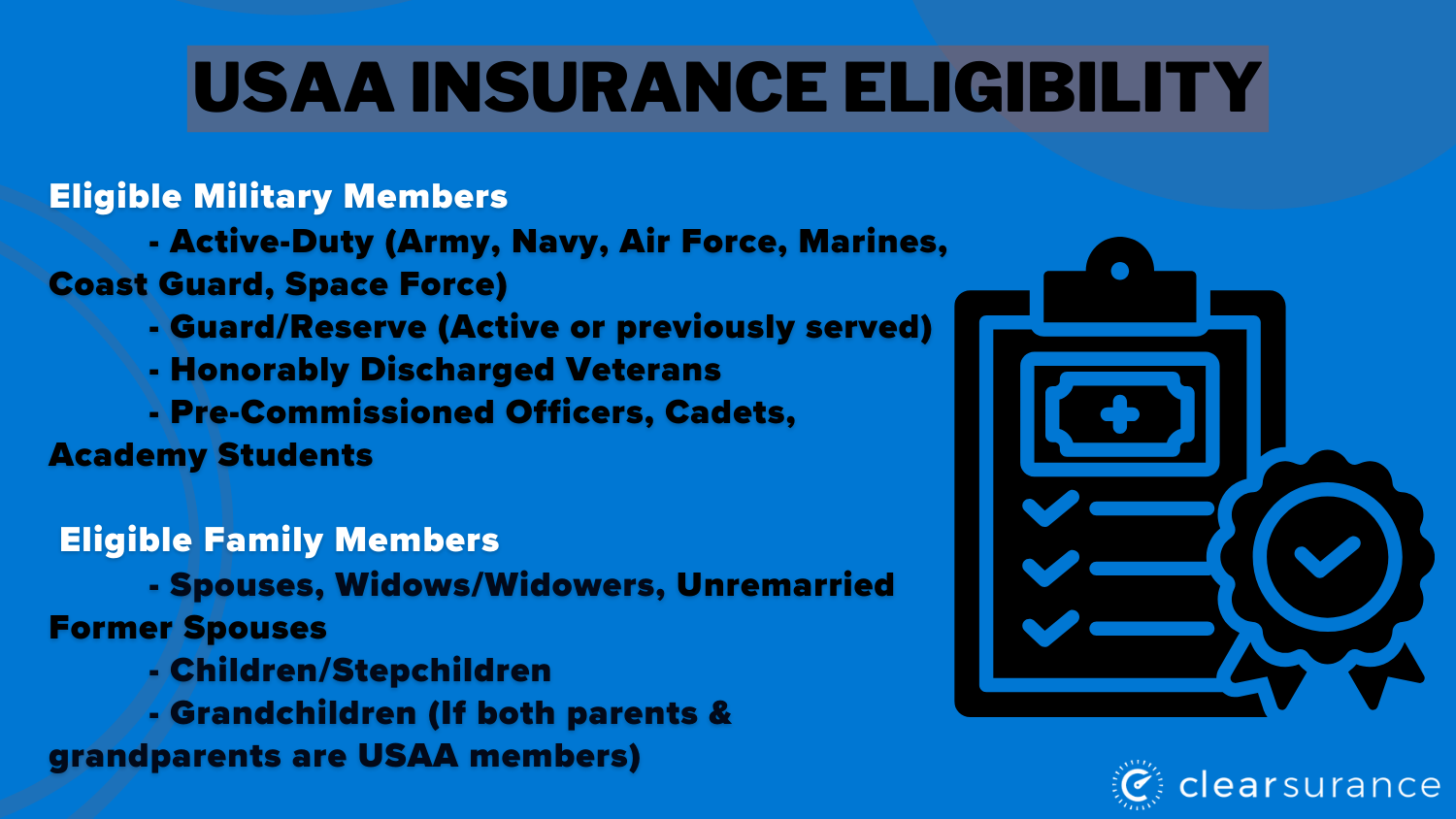
The most straightforward path to eligibility is current or former service. This includes individuals serving in the U.S. Air Force, Army, Coast Guard, Marine Corps, Navy, and the newly established Space Force. Whether you are currently on active duty, serving in the Selected Reserve, or a member of the National Guard, you are eligible to apply for membership. Furthermore, those who have retired from the military—generally after 20 or more years of service—retain their eligibility for life.
Veterans with Honorable Discharges
In the past, USAA eligibility was more restrictive, often requiring a certain rank or officer status. However, in recent years, the organization has expanded its reach to include all veterans who have served honorably. If you served in any branch of the military and received a discharge status of “Honorable,” you are eligible to join. This expansion has opened the door for millions of veterans to access competitive insurance rates and specialized banking tools that were previously unavailable to them.
Cadets, Midshipmen, and Officer Candidates
Recognizing the future leaders of the military, USAA extends eligibility to students at U.S. service academies, including West Point, the Naval Academy, the Air Force Academy, and the Coast Guard Academy. Additionally, those enrolled in ROTC programs with a contract to serve, as well as Officer Candidate School (OCS) or Officer Training School (OTS) students, can begin their financial journey with USAA before they even receive their commissions.
Expanding the Circle: Eligibility for Family Members

One of the most powerful aspects of USAA is its generational reach. Eligibility is not just a personal benefit; it is a legacy that can be passed down to spouses and children, creating a long-term financial safety net for the entire family unit.
Spouses and Former Spouses
Legal spouses of USAA members are eligible for membership and can maintain their own accounts. This is a vital component of military family financial planning, ensuring that the non-military spouse has access to the same high-quality banking and insurance products. Furthermore, un-remarried former spouses who joined USAA during their marriage can often maintain their eligibility, providing continuity in their financial lives even after a divorce.
Children and Stepchildren
The children of USAA members—including biological children, stepchildren, and adopted children—are eligible to join. This is perhaps the most significant “side hustle” for military parents: passing on the gift of eligibility to their offspring. Once a child becomes a USAA member, they carry that eligibility with them for the rest of their lives, regardless of whether they choose to serve in the military themselves. They can then, in turn, pass that eligibility to their own children.
The Generational Path to Membership
It is important to note a common misconception regarding extended family. Eligibility generally does not “skip” generations. For example, a grandchild is not automatically eligible through a grandparent unless the parent (the child of the veteran) has already established a USAA membership. Therefore, for a family to maintain its USAA legacy, it is crucial for each generation to “activate” their membership by opening at least one account—even if it is just a simple savings account—to ensure the line of eligibility remains unbroken.
Navigating the Application Process
Once you determine that you meet the criteria, the process of joining is relatively streamlined, though it requires specific verification to protect the integrity of the membership pool.
Required Documentation and Verification
To verify eligibility, USAA typically requires information that can be cross-referenced with Department of Defense (DoD) records. For active-duty members and veterans, this usually involves providing a Social Security number and details regarding service dates and branch. In some cases, veterans may need to provide a copy of their DD Form 214 (Certificate of Release or Discharge from Active Duty). For family members, the process involves linking their identity to an existing member’s USAA number.
Common Myths About Eligibility
A frequent myth in the personal finance world is that anyone can join USAA’s banking side, even if they can’t join the insurance side. While this was briefly true in the past, USAA has since reverted to a stricter model. Today, to open a bank account or purchase an insurance policy, you must meet the military-affiliated eligibility requirements. Another myth is that being the sibling of a member confers eligibility; currently, siblings do not qualify for membership unless they meet the criteria independently through their own service or through their parents.
Beyond Insurance: The Financial Advantages of USAA Membership
Why is there such a focus on who is eligible? From a “Money” perspective, the answer lies in the total financial package. USAA is frequently cited as a “one-stop-shop” for wealth management and protection.
Competitive Banking and Lending Rates
Members have access to a suite of banking products that often outperform traditional high-street banks. This includes checking accounts with no monthly fees and reimbursed ATM fees (up to a certain limit), which is a significant boon for personal cash flow management. On the lending side, USAA offers competitive rates on auto loans, personal loans, and mortgages, often with lower down-payment requirements or specialized terms for military moves (PCS).

Investment and Retirement Planning Tools
While USAA transitioned its investment management and brokerage services to partners like Charles Schwab and Victory Capital, it remains a central hub for financial planning. Members receive specialized guidance on Thrift Savings Plan (TSP) allocations, military pension integration, and life insurance products that do not have “war clauses”—a rarity in the commercial insurance market. For those focused on long-term wealth building, these tools are indispensable for navigating the complexities of military retirement.
In conclusion, eligibility for USAA is a valuable asset for those within the military community. It serves as a bridge between service to the nation and personal financial security. By understanding the nuances of who can join—from the active-duty soldier to the child of a veteran—families can ensure they are maximizing their financial potential through an institution that truly understands their unique needs. If you fall within these categories, obtaining your USAA membership is not just a checkbox; it is a strategic move toward a more secure financial future.
aViewFromTheCave is a participant in the Amazon Services LLC Associates Program, an affiliate advertising program designed to provide a means for sites to earn advertising fees by advertising and linking to Amazon.com. Amazon, the Amazon logo, AmazonSupply, and the AmazonSupply logo are trademarks of Amazon.com, Inc. or its affiliates. As an Amazon Associate we earn affiliate commissions from qualifying purchases.