
The question of “who created alternating current” is often met with a single, resounding name: Nikola Tesla. While Tesla’s genius undoubtedly propelled alternating current (AC) into the forefront of electrical technology, the full story is a fascinating tapestry woven with the threads of multiple inventors, fierce corporate rivalry, and the relentless march of scientific progress. Delving into this history reveals not just the origin of a fundamental technology, but a pivotal moment that shaped the modern world. This article explores the key figures, scientific breakthroughs, and the dramatic “War of the Currents” that ultimately established AC as the dominant power system globally.

The Dawn of Electrical Illumination: Direct Current’s Early Reign
Before alternating current became the standard, the world was introduced to electricity primarily through direct current (DC). Invented by Thomas Edison and championed by his companies, DC technology was the first viable system for distributing electrical power.
Edison’s Vision and the DC Grid
Thomas Edison, often called “The Wizard of Menlo Park,” was a prolific inventor whose contributions transformed daily life. In 1882, he launched the Edison Electric Light Company, illuminating the Pearl Street Station in New York City – a landmark event that marked the beginning of commercial electricity distribution. Edison’s system was based on direct current, where electricity flows in one constant direction.
DC power was revolutionary. It powered incandescent light bulbs, motors, and provided a steady, predictable supply of energy. However, it had a significant limitation: DC could not be easily stepped up or down in voltage. This meant that power plants had to be located very close to consumers, typically within a mile or two, due to significant power loss over longer distances. To electrify a city, numerous small power stations were required, making it an expensive and spatially demanding undertaking. Despite these drawbacks, Edison was a staunch advocate for DC, investing heavily in its infrastructure and promoting its perceived safety and simplicity.
The Inherent Limitations of DC
The inability to efficiently transmit DC over long distances was its Achilles’ heel. High current was needed for a given power level at low voltages, leading to substantial energy loss (as heat) in the transmission wires. Increasing the voltage to reduce current was possible at the generation point but required bulky, inefficient motor-generator sets at the consumer end to step it down, making widespread adoption impractical and costly. This fundamental challenge set the stage for a new kind of electrical system – one that could overcome the tyranny of distance.
Nikola Tesla: The Visionary Architect of the AC System
While Edison laid the groundwork for commercial electricity, it was Nikola Tesla whose conceptual brilliance and engineering prowess provided the theoretical and practical framework for the alternating current system we use today.
From Serbian Roots to Electrical Revolution
Born in Smiljan, Austrian Empire (modern-day Croatia) in 1856, Nikola Tesla displayed an exceptional intellect and an innate understanding of electrical phenomena from a young age. His early education focused on engineering and physics, where he first conceived of the idea for an induction motor while walking in a park, envisioning rotating magnetic fields.
Tesla’s early career saw him working for Edison Machine Works in Paris and then in New York, where he initially tackled problems for Edison. However, their approaches and visions for electricity distribution soon diverged dramatically. Edison was practical and empirical, focused on incremental improvements to existing DC technology. Tesla was theoretical and visionary, seeing beyond the immediate applications to a more efficient, far-reaching system.
The Genesis of the Polyphase AC System
Tesla’s groundbreaking work centered on the polyphase alternating current system. Unlike DC, AC periodically reverses its direction of flow. Crucially, AC voltage can be easily “stepped up” or “stepped down” using transformers. This capability addressed the core limitation of DC: power could be generated at a relatively low voltage, stepped up to very high voltages for efficient long-distance transmission with minimal loss, and then stepped down again at substations and individual homes for safe use.
Tesla developed a complete system:
- The Induction Motor: His most famous invention, the AC induction motor (patented in 1888), ingeniously converted AC power into mechanical rotation without the need for commutators and brushes that plagued DC motors, making it more robust and efficient.
- Polyphase Transmission: Tesla devised a system using multiple phases of alternating current, typically two or three, where each phase’s current peaks at different times. This created a constantly rotating magnetic field, ideal for driving his induction motors and improving power transmission efficiency.
- Generators and Transformers: Tesla’s designs for AC generators and his understanding of how transformers could manipulate voltage were integral to making the entire system viable.
In 1888, Tesla secured multiple patents for his polyphase AC system, effectively laying the intellectual property foundation for the modern electrical grid. These inventions were not just incremental improvements; they represented a paradigm shift in how electricity could be generated, transmitted, and utilized.
George Westinghouse: The Strategic Champion of AC
While Tesla was the brilliant inventor, it was George Westinghouse, an astute industrialist and entrepreneur, who recognized the immense potential of Tesla’s AC system and had the business acumen to bring it to the world.
An Entrepreneurial Vision
George Westinghouse was already a successful inventor and businessman, having made his fortune with the air brake system for railways. His company, Westinghouse Electric Company, was a major player in the electrical industry, but he was constantly seeking better ways to transmit power. He had experimented with his own AC systems but recognized the superiority of Tesla’s designs.

In 1888, Westinghouse acquired Tesla’s patents for the induction motor and transformer designs for a significant sum, reportedly $60,000 in cash and stock, plus royalties. This acquisition was a pivotal moment, as it provided Tesla with the resources to continue his research and gave Westinghouse the technological arsenal to challenge Edison’s DC empire.
Building the AC Empire
Westinghouse’s genius lay not just in recognizing brilliance but in commercializing it. He understood that a complete system, from generation to consumption, was needed. He assembled a team of engineers, including skilled European electrical engineers who had been exploring AC technology, and aggressively began manufacturing AC generators, transformers, and motors based on Tesla’s designs.
Westinghouse was instrumental in scaling up AC technology. He championed its long-distance transmission capabilities, demonstrating its superiority for large-scale power distribution. His strategic decisions and willingness to invest heavily in the nascent AC infrastructure were crucial in the face of intense opposition.
The War of the Currents: Edison vs. Tesla/Westinghouse
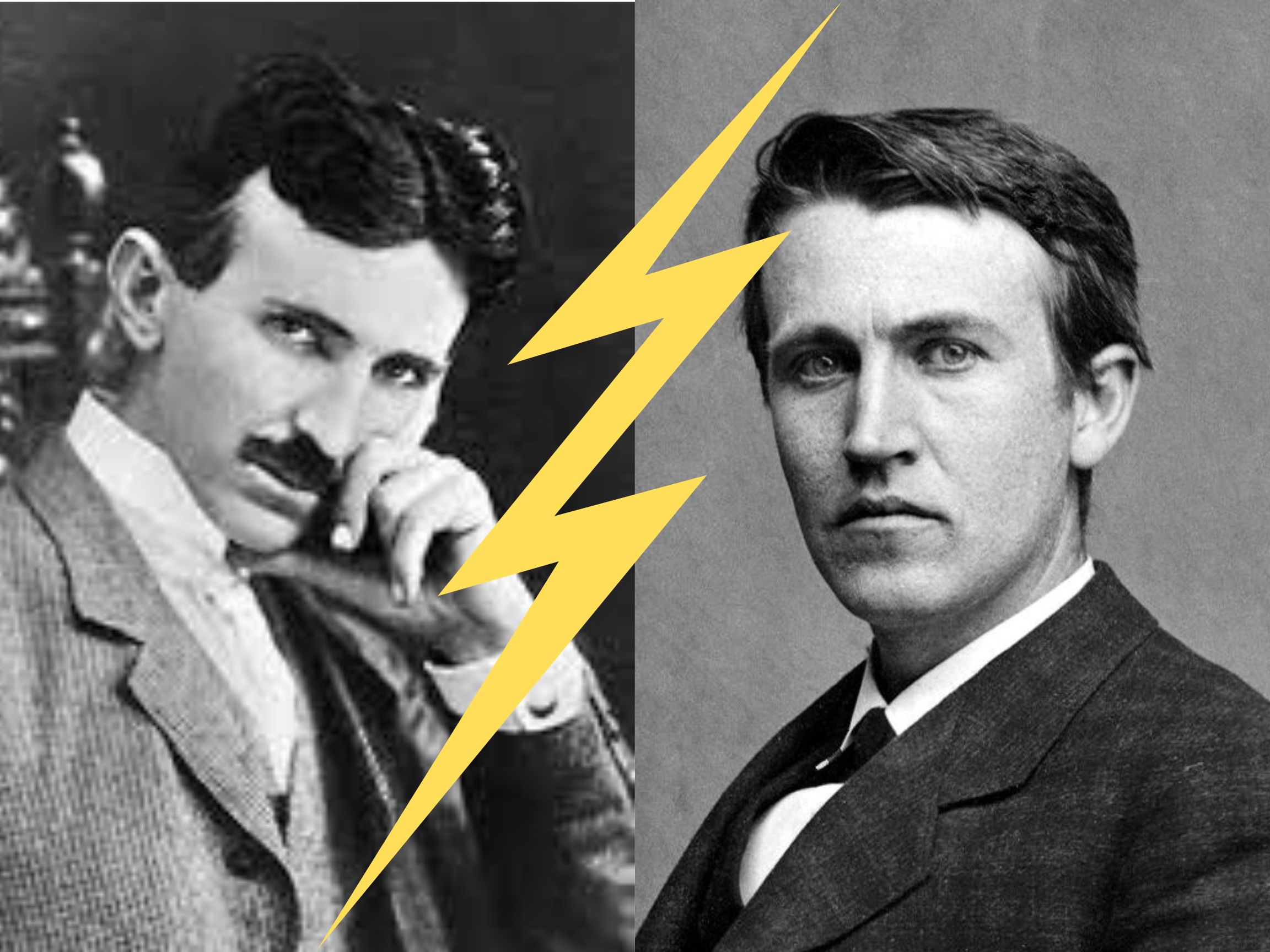
The introduction of alternating current ignited one of the most famous technological rivalries in history: the “War of the Currents.” It was a battle not just of engineering principles but of economic interests, public perception, and ethical considerations.
Edison’s Campaign Against AC
Thomas Edison, deeply invested in his DC system, saw AC as a direct threat to his empire. Rather than embracing the new technology, he launched a fierce public relations campaign to discredit AC, often resorting to sensationalism and fear-mongering.
Edison argued that AC was inherently dangerous, citing the high voltages used for transmission as a risk to public safety. His company, and his associates, publicly demonstrated the dangers of high-voltage AC by electrocuting animals, most famously an elephant named Topsy, to convince the public that AC was deadly. They also secretly supported the development of the electric chair for executions using AC, to further associate AC with death and danger. These tactics, while effective in generating fear, were highly unethical and ultimately proved futile against the technical advantages of AC.
AC’s Superiority and Public Acceptance
Despite Edison’s fervent opposition, the inherent advantages of AC were undeniable:
- Long-Distance Transmission: Transformers allowed AC to be transmitted at high voltages over hundreds of miles with minimal energy loss, making centralized power generation economical.
- Versatility: AC could be easily converted to DC where needed, and its polyphase nature was ideal for efficient industrial motors.
- Cost-Effectiveness: Fewer power stations and thinner wires for transmission meant lower infrastructure costs.
The turning point came with two landmark projects that decisively showcased AC’s superiority. In 1893, Westinghouse Electric successfully bid to light the World’s Columbian Exposition in Chicago using AC power, providing a dazzling display of its capabilities on a grand scale. This “City of Light” effectively demonstrated AC’s safety and effectiveness to millions.
The ultimate triumph was the harnessing of Niagara Falls. In 1895, Westinghouse, using Tesla’s AC generators, completed the monumental task of building the first large-scale hydroelectric power plant at Niagara Falls, transmitting power over 20 miles to Buffalo, New York. This project proved that AC could power entire cities efficiently and economically, ushering in a new era of industrialization and electrification.
The Enduring Legacy of Alternating Current
The victory of alternating current in the War of the Currents was absolute and transformative. Today, the world operates almost exclusively on an AC grid, a testament to the visionary work of Nikola Tesla and the strategic genius of George Westinghouse.
Powering the Modern World
Alternating current is the backbone of modern civilization. From the smallest electronic gadgets to the largest industrial complexes, AC power flows through our homes, offices, factories, and transportation systems. The principles Tesla laid out over a century ago—polyphase systems, induction motors, and the fundamental role of transformers—remain the core tenets of our electrical infrastructure.
The ability to transmit power efficiently over vast distances has enabled urbanization, industrial growth, and rural electrification, fundamentally changing human geography and economic development. Without AC, the concept of a national or even continental power grid would be economically unfeasible, limiting the scale and reach of electrification dramatically.
Future Challenges and Innovations
While AC remains dominant, the electrical landscape continues to evolve. Modern challenges include the integration of renewable energy sources (like solar and wind, which often generate DC or variable AC), the need for smart grids to optimize power distribution, and the increasing demand for energy efficiency.
Innovations in power electronics are leading to renewed interest in high-voltage direct current (HVDC) for very long-distance, point-to-point transmission, or for undersea cables, where DC can sometimes be more efficient than AC. However, these applications are typically niche, working in conjunction with the established AC grid rather than replacing it. The fundamental reliability, cost-effectiveness, and versatility of AC ensure its continued central role in our global energy system.
In conclusion, while many minds contributed to the understanding of electricity, Nikola Tesla stands as the primary architect of the alternating current system that made widespread electrification possible. Supported by George Westinghouse’s entrepreneurial drive, AC overcame fierce opposition to become the undisputed champion of the electrical age, shaping the technological world we inhabit today. The legacy of AC is not just a historical footnote but a living, breathing testament to human ingenuity and the power of revolutionary ideas.
aViewFromTheCave is a participant in the Amazon Services LLC Associates Program, an affiliate advertising program designed to provide a means for sites to earn advertising fees by advertising and linking to Amazon.com. Amazon, the Amazon logo, AmazonSupply, and the AmazonSupply logo are trademarks of Amazon.com, Inc. or its affiliates. As an Amazon Associate we earn affiliate commissions from qualifying purchases.