
The annual rhythm of tax season often brings with it a familiar mix of anticipation and apprehension. For millions, TurboTax has become synonymous with navigating this complex landscape, offering a streamlined path to filing federal and state returns. However, with multiple versions – Free, Deluxe, Premier, and Self-Employed – the initial question isn’t whether to use TurboTax, but rather, “Which TurboTax is right for me?” Selecting the appropriate version is a critical financial decision that can impact not only the accuracy of your return but also the deductions you claim, the taxes you pay (or get refunded), and even the cost of the software itself. This guide delves into the nuances of each TurboTax offering, helping you align your unique financial profile with the perfect tax preparation tool, ensuring a stress-free and financially optimized tax season.
Understanding Your Tax Profile: The First Step to Selection
Before even looking at the features of each TurboTax product, the most crucial step is to objectively assess your personal and financial situation from the past year. Your income sources, deductions, investments, and business activities dictate the complexity of your tax return, and consequently, the TurboTax version best suited for your needs.
Basic Filers: Simple Returns and Standard Deductions
If your financial life is relatively straightforward, you likely fall into the basic filer category. This typically includes individuals who primarily receive income from a W-2 form, take the standard deduction, have no dependents, don’t own a home, and don’t have investments or business income. Your tax situation is uncomplicated, requiring a direct approach to reporting income and deductions. For these filers, the focus is often on speed and minimizing costs, as the primary goal is simply to get the basic information accurately filed.
Growing Complexity: Homeowners, Dependents, and Itemized Deductions
As life progresses, so too does financial complexity. If you own a home, you’re likely dealing with mortgage interest, property taxes, and potentially other related deductions. Having dependents introduces child tax credits or credits for other qualifying relatives. Charitable contributions, medical expenses exceeding a certain threshold, or specific unreimbursed employee expenses might lead you to consider itemizing your deductions rather than taking the standard amount. These scenarios, while common, add layers of calculation and require more guidance to ensure all eligible write-offs are captured.
Investment and Rental Income: Navigating Capital Gains and Losses
For those whose financial portfolio extends beyond basic savings accounts, investment income becomes a significant factor. This includes income from stock sales, mutual funds, bonds, exchange-traded funds (ETFs), and even newer assets like cryptocurrency. Reporting capital gains and losses accurately, especially if you have numerous transactions or wash sales, can be intricate. Similarly, owning rental properties introduces rental income, expenses, depreciation, and often unique tax forms like Schedule E. These situations demand specialized tools and guidance to ensure compliance and optimize your tax position.
Self-Employed and Small Business Owners: Schedule C and Business Deductions
The rise of the gig economy and independent contracting has expanded the ranks of the self-employed. If you receive 1099-NEC forms, operate as a sole proprietor, freelancer, independent contractor, or run a small business, your tax situation is inherently more complex. You’re responsible for not only reporting your business income but also tracking and deducting a myriad of business expenses (home office, supplies, travel, marketing, health insurance premiums, etc.), calculating self-employment taxes, and often making quarterly estimated tax payments. This category requires robust features designed to maximize business deductions and handle specific business tax forms like Schedule C.
Key Features and Pricing Tiers: A Detailed Comparison
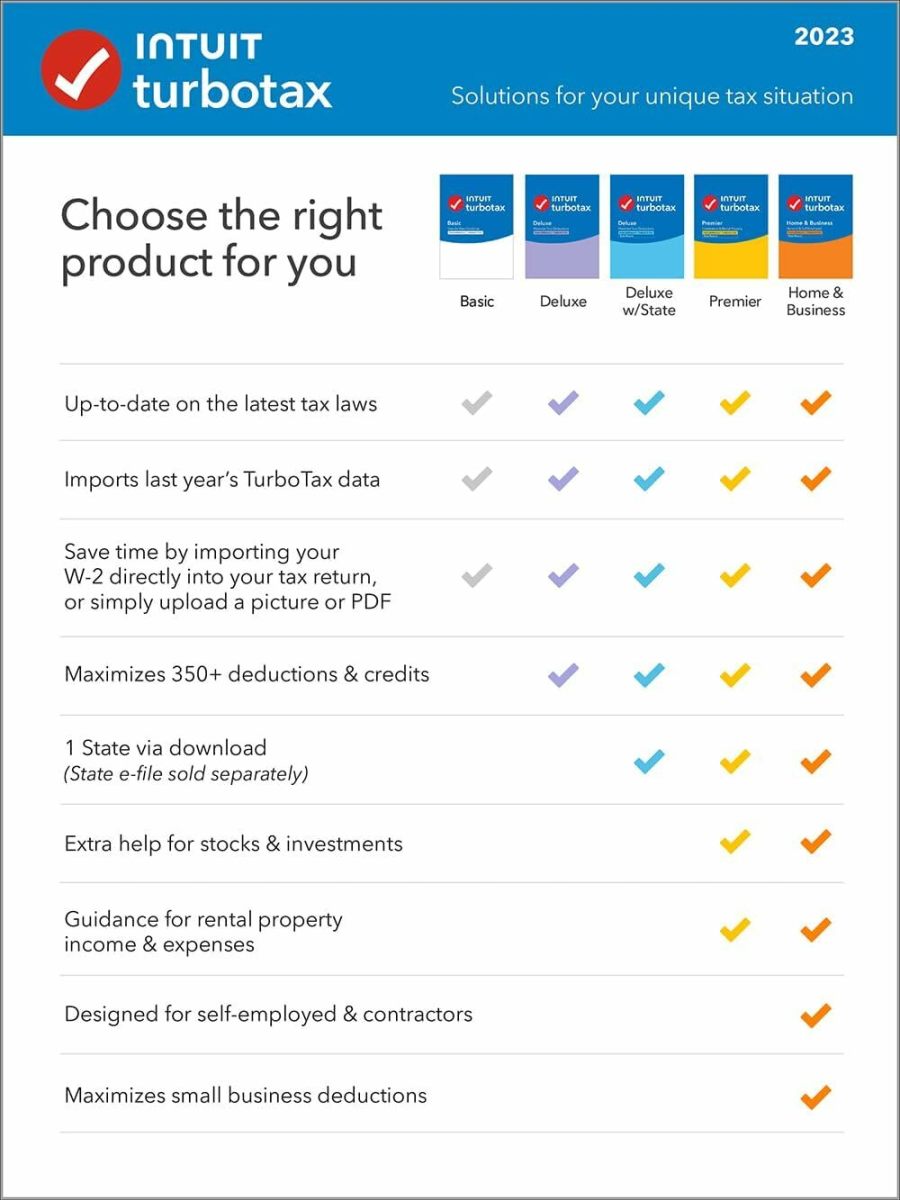
Once you’ve identified your tax profile, it’s time to match it with the TurboTax product that offers the right blend of features and support. Understanding what each tier provides is essential for making an informed decision that balances cost with comprehensive coverage.
TurboTax Free Edition: For the Simplest Situations
As the name suggests, the TurboTax Free Edition is designed for the most straightforward tax returns. It allows users to file Form 1040, report W-2 income, claim the standard deduction, and account for student loan interest and education credits. It’s ideal for single filers or couples with no dependents, no homeownership, no investments, and no self-employment income. While the federal filing is typically free, be aware that state filing often incurs an additional fee, making it “free” for federal only in most cases. This edition provides a clean, user-friendly interface for those with minimal financial complexities.
TurboTax Deluxe: The Most Popular Choice for Mainstream Filers
TurboTax Deluxe is the most popular paid version, catering to a broad segment of taxpayers whose situations are a step beyond basic but not overly complex. This version is a must-have for homeowners, as it guides you through deducting mortgage interest, property taxes, and other associated costs. It also handles charitable donations, medical expenses, and other common itemized deductions, ensuring you maximize your write-offs. Deluxe is excellent for families with dependents, helping to navigate child tax credits and other family-related tax benefits. It includes smart tools to help you search for hundreds of deductions and credits, ensuring you don’t miss any opportunities to reduce your tax liability.
TurboTax Premier: Optimizing Investments and Rental Properties
If your financial journey includes investments beyond basic savings, TurboTax Premier is the appropriate choice. This tier is specifically designed to handle stocks, bonds, mutual funds, cryptocurrency, and other complex investment income, guiding you through the often-confusing world of capital gains and losses, wash sales, and cost basis calculations. Premier also provides comprehensive support for rental property owners, assisting with income reporting, expense tracking, depreciation calculations, and the necessary Schedule E. For those with Schedule K-1 forms from partnerships, S corporations, or trusts, Premier offers the specialized guidance needed to accurately report these earnings.
TurboTax Self-Employed: Empowering Small Business Success

The most comprehensive of the individual TurboTax products, TurboTax Self-Employed is tailored for freelancers, independent contractors, sole proprietors, and small business owners. It’s built to simplify the complexities of Schedule C (Profit or Loss from Business) and Schedule SE (Self-Employment Tax). This version includes specialized tools to help you identify and maximize industry-specific deductions, track business income and expenses, and calculate estimated quarterly taxes to avoid penalties. It offers robust guidance for navigating home office deductions, vehicle expenses, business travel, and health insurance premiums. For those in the gig economy, it simplifies income reporting from platforms like Uber, Lyft, Etsy, and Airbnb, making it an indispensable tool for managing business finances come tax time.
Additional Considerations Beyond the Core Product
While selecting the right product tier is paramount, several other factors can influence your overall TurboTax experience and its financial implications. These considerations help refine your choice and ensure you’re getting the best value and support.
State Tax Filing: An Often-Overlooked Cost
It’s common for taxpayers to focus solely on federal filing, but state taxes are a crucial component for most. While TurboTax’s paid federal versions typically offer state tax preparation, it usually comes with an additional fee per state. Even the Free Edition often charges for state filing. If you’ve lived or worked in multiple states during the tax year, or have income from different states, this cost can accumulate. Always factor in state filing fees when comparing the overall cost of different TurboTax products and considering alternative methods, as they can significantly impact your total outlay.
Audit Support and Expert Help: Peace of Mind
For many, the fear of an IRS audit is a significant stressor. TurboTax offers varying levels of audit support, from basic guidance on how to respond to an IRS notice (included with most paid versions) to full-blown audit defense, which is often an add-on service. For those with highly complex returns, significant self-employment income, or prior audit experiences, the peace of mind offered by expert audit defense might be well worth the extra investment. Additionally, TurboTax Live options (discussed below) provide direct access to tax experts who can review your return or even prepare it for you, offering an added layer of assurance.
Ease of Use and User Experience
A significant appeal of TurboTax across all its versions is its intuitive, interview-style interface. The software guides you step-by-step through your return, asking simple questions and populating the correct forms based on your answers. While all versions are designed for user-friendliness, the higher tiers incorporate more specialized wizards and explanations for complex scenarios, ensuring that even nuanced financial situations are handled with relative ease. Features like importing W-2s, 1099s, and prior year’s data further streamline the process, saving time and reducing the chances of manual entry errors.
Maximizing Value and Support: Beyond the Software Selection
Choosing the right TurboTax software is just the beginning. To truly maximize your financial outcomes and minimize stress, consider how to leverage the additional support options and best practices.
TurboTax Live: On-Demand Expert Assistance
TurboTax Live fundamentally changes the DIY tax prep landscape by integrating human expertise directly into the software. There are generally two main Live tiers:
- Live Assisted: This option allows you to prepare your return yourself, but gives you unlimited access to credentialed tax experts (CPAs or Enrolled Agents) via on-screen chat or one-way video. They can answer specific questions, offer guidance, and even review your return before you file, providing a crucial second pair of eyes.
- Live Full Service: This is the ultimate hands-off approach. You hand over your tax documents to a dedicated tax expert who then prepares and files your return for you, essentially acting as your personal tax accountant. This option is invaluable for those with highly complex returns, time constraints, or simply a preference for professional preparation without leaving the TurboTax platform.
While these Live options come at a higher price point, the value of expert assurance and potential for identifying additional deductions or credits can often outweigh the cost, especially for those with intricate financial profiles.
The Importance of Accurate Data Entry
No matter how sophisticated the tax software, its accuracy is entirely dependent on the information you provide. Before you even open TurboTax, gather all necessary documents: W-2s, 1099s (NEC, INT, DIV, B, R, K), mortgage interest statements (1098), charitable donation records, medical expense receipts, business income and expense records, and any other relevant financial statements. Double-check all figures before inputting them. Misplaced decimals, transposed numbers, or forgotten income sources can lead to errors that trigger IRS inquiries or result in you paying more tax than necessary – or receiving a smaller refund.
Leveraging Deductions and Credits
One of TurboTax’s greatest strengths is its ability to guide you through potential deductions and credits. However, being proactive can yield even better results. Before you start, have a basic understanding of common deductions and credits applicable to your situation (e.g., student loan interest, child and dependent care credit, retirement contributions, energy-efficient home improvements). The software will prompt you, but knowing what to look for can help you ensure you haven’t overlooked any eligible expenses or activities that could lower your taxable income. The more organized you are with your financial records throughout the year, the easier it will be to identify and substantiate these valuable tax benefits.

Conclusion
Choosing the “right” TurboTax version is a highly personal financial decision, one that directly correlates with the complexity of your income, expenses, and overall financial life. From the simplicity of the Free Edition for basic W-2 filers to the robust capabilities of Self-Employed for entrepreneurs and Premier for investors, TurboTax offers a spectrum of tools designed to meet diverse needs.
The ultimate goal is not just to file your taxes, but to do so accurately, efficiently, and with confidence, ensuring you leverage every eligible deduction and credit. By honestly assessing your tax profile, understanding the core features of each tier, considering additional support options like TurboTax Live, and committing to meticulous data entry, you can transform the daunting task of tax preparation into a streamlined process that truly optimizes your financial well-being. Make an informed choice, and set yourself up for a financially sound and stress-free tax season.
aViewFromTheCave is a participant in the Amazon Services LLC Associates Program, an affiliate advertising program designed to provide a means for sites to earn advertising fees by advertising and linking to Amazon.com. Amazon, the Amazon logo, AmazonSupply, and the AmazonSupply logo are trademarks of Amazon.com, Inc. or its affiliates. As an Amazon Associate we earn affiliate commissions from qualifying purchases.