
In the rapidly evolving landscape of sustainable transport, Tesla has transitioned from a niche luxury manufacturer to a dominant force in global technology. When consumers ask, “Which Tesla model is the best?” they are rarely just asking about leather quality or trunk space; they are inquiring about the state of the art in automotive silicon, battery density, and software-defined architecture. Tesla vehicles are essentially high-performance computers on wheels, and determining which model is “best” requires a deep dive into the technological specifications that differentiate the lineup.
To understand which Tesla reigns supreme, we must analyze the fleet through the lens of technical innovation, hardware longevity, and software integration.

1. The Core Architecture: Understanding the Evolution of Tesla’s Hardware
At the heart of every Tesla is its hardware suite, which dictates the vehicle’s capacity for autonomous driving and its overall efficiency. Unlike traditional internal combustion engine (ICE) vehicles, where the engine is the primary point of differentiation, a Tesla’s value is largely determined by its processing power and battery chemistry.
The Transition to Hardware 4 (HW4)
The current gold standard in Tesla’s tech stack is Hardware 4 (HW4), the latest iteration of the company’s Full Self-Driving (FSD) computer. While older models utilized HW3, the newer Model S and Model X, followed by the refreshed Model 3 “Highland” and newer Model Y builds, feature significantly upgraded cameras and a more powerful processor. HW4 offers higher-resolution cameras with greater dynamic range, allowing the vehicle’s neural networks to perceive the environment with much higher fidelity. For a tech-focused buyer, the “best” model is arguably whichever one currently ships with the most advanced sensors, as this ensures the longest possible lifecycle for future software features.
Battery Chemistry: LFP vs. Long Range NMC
Tesla utilizes different battery chemistries depending on the model and trim level, and the “best” choice depends on how the user interacts with the tech. The standard range models (specifically the Model 3 and Model Y Rear-Wheel Drive) often utilize Lithium Iron Phosphate (LFP) batteries. LFP tech is robust; it can be charged to 100% daily without significant degradation, making it the superior choice for tech-savvy commuters who want a low-maintenance battery cycle. Conversely, the Long Range and Performance variants use Nickel Manganese Cobalt (NMC) cells. While these should typically be kept between 20% and 80% for longevity, they offer higher energy density, providing the massive acceleration and range that defines Tesla’s performance benchmarks.
2. Autopilot and FSD: Software as the Ultimate Differentiator
Tesla’s primary technological advantage lies in its software-defined nature. The “best” Tesla is often defined by how effectively it runs the latest iterations of Full Self-Driving (Supervised).
Vision-Only Approach vs. Legacy Sensors
In recent years, Tesla made the bold technological pivot to “Tesla Vision,” removing ultrasonic sensors (USS) and radar in favor of a purely camera-based system. The best Tesla models today are those that have successfully integrated this vision-only approach with high-speed processing. The Model 3 Highland, for instance, represents the peak of this integration, featuring a streamlined sensor suite that relies on the “Occupancy Network”—a sophisticated AI model that maps the 3D environment in real-time using nothing but video feeds. This transition highlights Tesla’s philosophy that AI software, not expensive hardware sensors like LiDAR, is the key to solving autonomy.
Real-Time Processing and Neural Networks
Tesla’s FSD software has moved toward “End-to-End Neural Nets,” where the vehicle learns to drive by watching millions of video clips of human drivers rather than following hard-coded rules. The Model S and Model X, equipped with the most powerful onboard computers, currently offer the highest computational throughput for these tasks. When evaluating which model is best, one must consider the “inference speed” of the onboard AI—how quickly the car can make a decision when a pedestrian steps into the road. In this category, the newer flagship models with HW4 hold a clear technical edge.
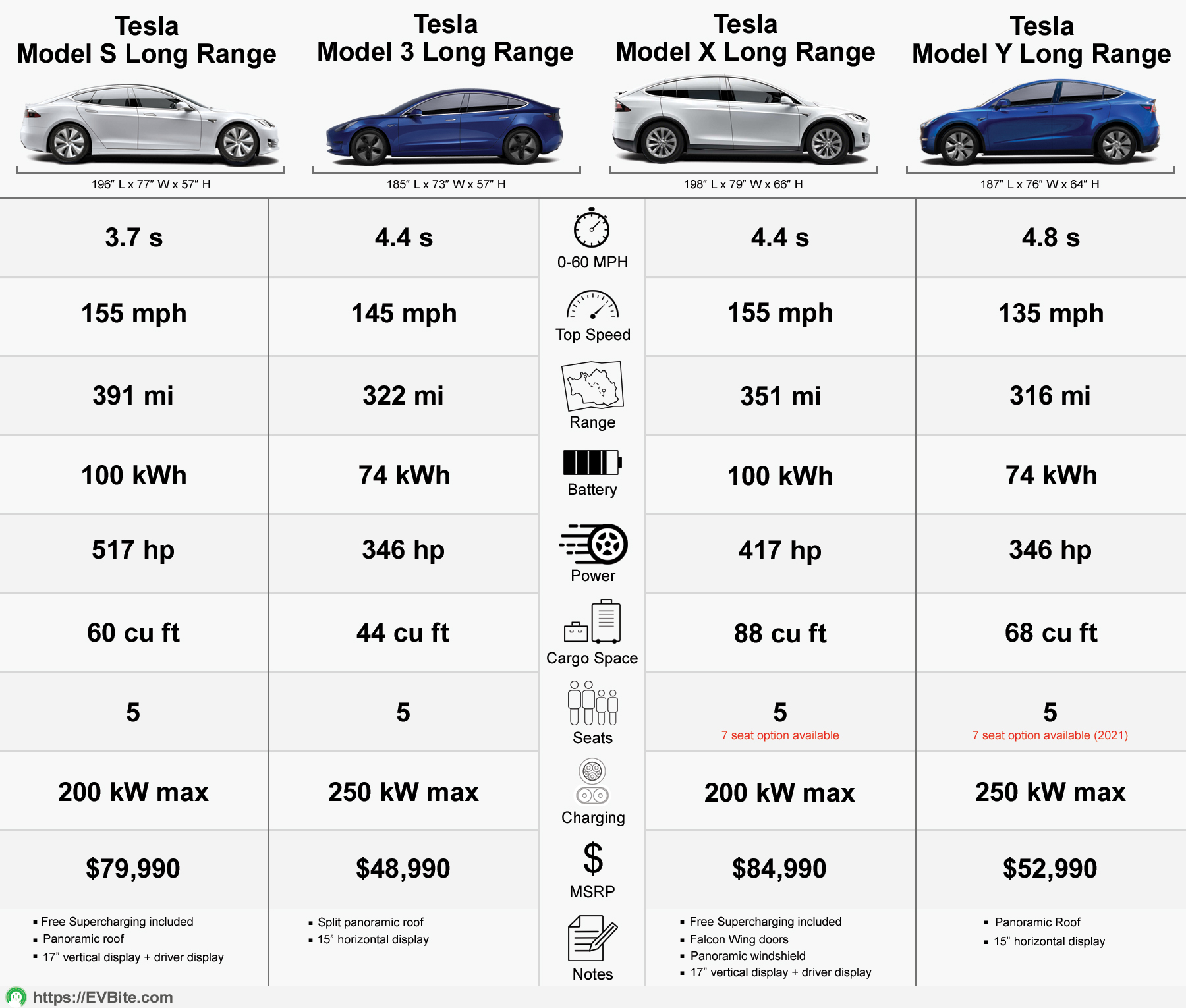
3. Performance Engineering: Comparing the S, 3, X, and Y Ecosystems
When we look at the physical engineering and drivetrain technology, the “best” Tesla is often the one that pushes the boundaries of physics through electrical engineering.
Model S Plaid: The Peak of Tri-Motor Tech
From a purely technical standpoint, the Model S Plaid is the pinnacle of EV engineering. It features a tri-motor setup with carbon-sleeved rotors—a feat of engineering that prevents the copper from expanding at high RPMs. This allows the Plaid to maintain its power curve all the way to its top speed, a technical challenge that many other EV manufacturers have yet to solve. For those who prioritize the absolute limits of electric propulsion technology, the Model S remains the “best” Tesla.
Model 3 and Model Y: Efficiency and Thermal Management
While the Model S represents power, the Model 3 and Model Y represent the peak of efficiency. These models utilize a “Heat Pump” system that revolutionized EV thermal management. By scavenging waste heat from the battery and powertrain to warm the cabin, these vehicles maintain range in cold climates far more effectively than earlier EV iterations. Furthermore, the Model Y utilizes “megacastings”—massive single-piece aluminum casts for the front and rear of the vehicle. This reduces the part count by dozens, lowering weight and increasing structural rigidity, which is a massive leap forward in automotive manufacturing technology.
4. The Connected Cabin: User Experience and Infotainment Innovation
A Tesla is not just a car; it is a mobile data center. The cabin experience is driven by the Media Control Unit (MCU), which handles everything from climate control to high-end gaming.
The MCU-Z Processor and Gaming Capabilities
The current flagship models (S and X) utilize the AMD Ryzen-based MCU-Z, which provides processing power comparable to a PlayStation 5. This allows for “Tesla Theater” and “Tesla Arcade” to run AAA gaming titles like Cyberpunk 2077 directly on the car’s screen. For the user who views their car as a third living space or a mobile office, the Model S or Model X is the “best” choice due to the secondary rear display and the superior processing power of its infotainment system.
Over-the-Air (OTA) Updates and Future-Proofing
The defining tech feature of any Tesla model is its ability to improve over time via Over-the-Air (OTA) updates. This means the “best” model today will technically be a better car a year from now. However, this relies on the underlying hardware architecture. The Model 3 Highland has introduced a more refined interior with ambient lighting and ventilated seats that are software-controlled, creating a more immersive digital environment. The integration of the Tesla App, which allows for “Phone Key” functionality and remote cabin conditioning, remains the industry standard for the “Internet of Things” (IoT) in the automotive sector.
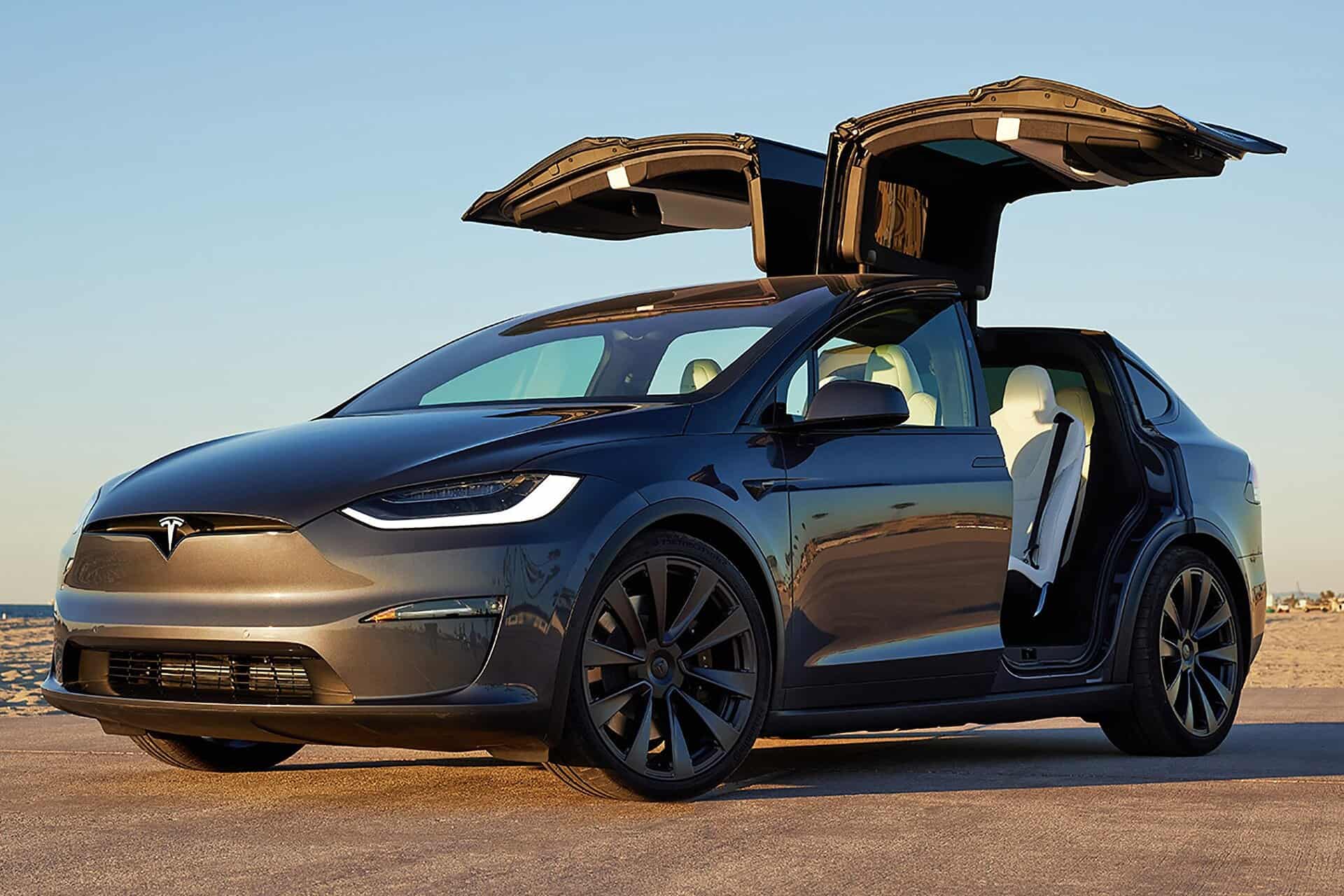
5. Verdict: Which Model Wins the Tech Race?
Identifying the “best” Tesla depends on which technological frontier you value most.
- For the Absolute Tech Enthusiast: The Model S Plaid is the winner. Between its tri-motor carbon-sleeved architecture, its 17-inch cinematic display, and its sheer computational power, it represents the current ceiling of what Tesla can achieve.
- For the Efficiency Purist: The Model 3 (Highland) is the best. It is the most aerodynamic Tesla ever made, featuring the latest refinements in noise reduction (acoustic glass) and a highly optimized version of Tesla Vision. It is the most “evolved” version of the Tesla platform.
- For the AI and Autonomy Focused: Any model currently shipping with Hardware 4 (HW4) is the best choice. As Tesla continues to train its neural networks, having the highest-resolution “eyes” and the fastest “brain” will be the primary factor in how well the car handles future iterations of FSD.
In conclusion, the “best” Tesla is not a static title; it is a moving target that follows the company’s latest hardware cycles. However, by focusing on the underlying technology—the silicon, the battery chemistry, and the AI integration—it becomes clear that Tesla’s strength lies in its ability to turn hardware into a platform for continuous software innovation. Whether you choose the raw power of the Model S or the refined efficiency of the Model 3, you are investing in a piece of technology that is fundamentally designed to outlast and out-think the traditional automobile.
aViewFromTheCave is a participant in the Amazon Services LLC Associates Program, an affiliate advertising program designed to provide a means for sites to earn advertising fees by advertising and linking to Amazon.com. Amazon, the Amazon logo, AmazonSupply, and the AmazonSupply logo are trademarks of Amazon.com, Inc. or its affiliates. As an Amazon Associate we earn affiliate commissions from qualifying purchases.