
Despite the rapid ascent of digital wallets, peer-to-peer payment apps, and cryptocurrency, the traditional paper check remains a fundamental tool in the world of personal and business finance. Whether you are setting up a direct deposit for a new job, authorizing an automated clearing house (ACH) payment for your mortgage, or simply paying a contractor who prefers physical payment, you must be able to navigate the string of numbers printed at the bottom of a check.
The confusion often arises because a check contains multiple sets of digits, each serving a distinct purpose within the global financial infrastructure. Identifying which of these is your account number—and understanding what the other numbers represent—is essential for maintaining financial accuracy and protecting your assets.

Decoding the Anatomy of a Paper Check
To the untrained eye, the bottom of a check looks like a cryptic string of numbers and strange symbols. These characters are printed using Magnetic Ink Character Recognition (MICR) technology. This specialized ink allows high-speed processing machines at banks and clearinghouses to read the information even if there are stamps or signatures covering them.
The Routing Number: Your Bank’s Digital Address
The first set of numbers on the left side of the MICR line is the American Bankers Association (ABA) routing transit number. Think of the routing number as the “zip code” for your financial institution. It identifies the specific bank or credit union where your account is held.
A routing number is always nine digits long. If the number you are looking at has more or fewer than nine digits, it is not the routing number. This sequence is used by the Federal Reserve and other financial networks to direct funds to the correct institution. For large national banks, routing numbers may vary depending on the state where the account was originally opened, making it vital to check the specific number on your check rather than assuming a general one for the entire bank.
The Account Number: Your Unique Financial Fingerprint
The account number is the second major sequence found at the bottom of the check, usually positioned to the right of the routing number. This is the most critical piece of information for personal finance management, as it identifies your specific individual or business account within the bank’s internal system.
Unlike the routing number, which is shared by thousands of other customers at the same bank, your account number is unique to you. It typically ranges from 8 to 12 digits, though some institutions may use slightly shorter or longer sequences. It is often separated from the routing number and the check number by a special MICR symbol that looks like a dash or a vertical colon.
The Check Number: Tracking Your Transactions
The third set of numbers, generally located at the far right of the MICR line (and also in the top right corner of the check), is the check number. This is a short sequence, usually three or four digits, used for record-keeping.
The check number does not have any bearing on where the money is going or which account it is coming from; its sole purpose is to help you and your bank track individual transactions. If you need to stop payment on a specific check, the bank will ask for this number to identify exactly which piece of paper should be voided.
How to Identify Your Account Number Accurately
While the general rule is that the routing number comes first and the account number comes second, there are variations in check design that can lead to errors. Misidentifying these numbers can lead to rejected payments, late fees, or funds being deposited into the wrong account.
The Standard Layout of the MICR Line
In the vast majority of personal checks issued in the United States, the layout follows a strict pattern:
-
Routing Number: 9 digits, flanked by a specific transit symbol.
-
Account Number: 8 to 12 digits, followed by an “on-us” symbol.
-
Check Number: Matches the number in the upper right-hand corner.
However, on business checks, the check number sometimes appears before the routing number at the beginning of the line. If you are looking at a check and see a three-digit number followed by a nine-digit number, the nine-digit number is still your routing number, and the digits following it will be your account number.
Distinguishing Between the Routing and Account Numbers
If you are ever unsure which is which, look for the symbols. The routing number is always enclosed by the transit symbol (a vertical bar with two dots). The account number is usually followed by a symbol that looks like a bracket or a dash.
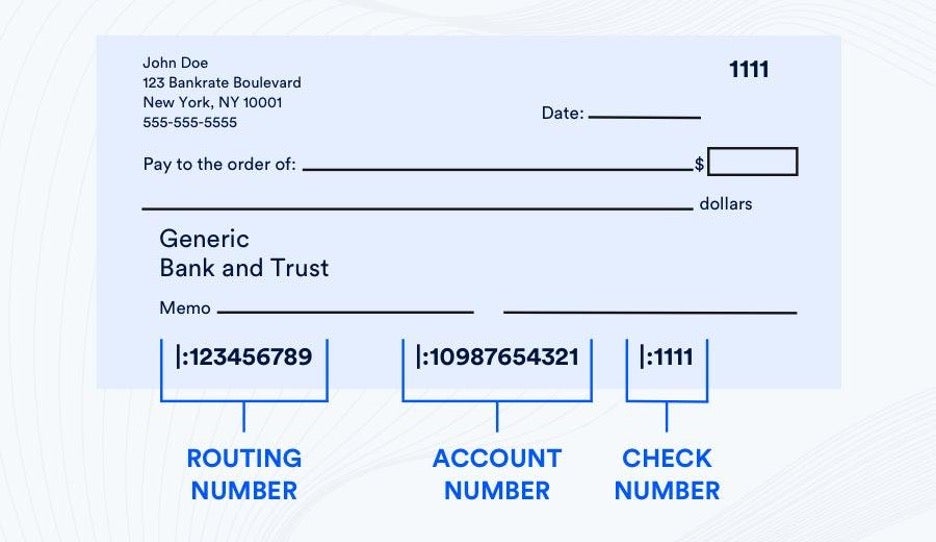
Another foolproof method is to count the digits. If you see a nine-digit sequence, it is almost certainly the routing number. Your account number will likely be the longer sequence adjacent to it. If you are using an online banking portal, you can often cross-reference the account number displayed in your app with the numbers on your check to ensure you have identified the correct section.
Special Cases: Business Checks vs. Personal Checks
Business checks are often larger and contain more “voucher” information. Because business accounts may have multiple sub-accounts for payroll, taxes, or operations, the MICR line might include additional internal codes. In these cases, the account number is still the middle sequence, but it may be helpful to consult the “voided check” provided by your bank’s business services department to confirm which digits are necessary for ACH transfers.
Why Understanding Your Account Number Matters for Financial Management
Identifying your account number isn’t just about writing checks; it is a fundamental requirement for modern financial integration. As you build your personal or business financial ecosystem, these numbers act as the bridge between different platforms.
Setting Up Direct Deposits and Automated Payments
When you start a new job, the HR department will require your routing and account numbers to set up direct deposit. If you provide the check number by mistake, the transaction will fail. Similarly, when setting up automated payments for utilities, insurance, or credit cards, using the account number ensures that the funds are pulled directly from your liquid assets, often helping you avoid the convenience fees associated with credit card payments.
Wire Transfers and ACH Payments
In the world of investing and high-value transactions, such as real estate closings, you will often need to initiate a wire transfer. This process requires extreme precision. A single digit error in the account number can result in funds being held in a “suspense account” at a bank, leading to days of bureaucratic hurdles to reclaim the money. Understanding the difference between your “paper check” account number and your “wire transfer” account number is also vital, as some banks use different internal numbers for different types of transfers.
Avoiding Costly Errors in Financial Transactions
Inaccurate account information is a leading cause of “Returned Items” in the banking world. If an ACH payment is attempted with the wrong account number, the bank will return the request to the sender. This usually results in a “Returned Item Fee” from your bank and a “Late Fee” or “NSF Fee” from the merchant you were trying to pay. By mastering the layout of your check, you protect your credit score and your cash flow from these unnecessary expenses.
Security Protocols for Your Bank Account Information
Your account number and routing number together are the keys to your financial “front door.” In the wrong hands, this information can be used to create fraudulent checks or unauthorized electronic withdrawals.
Protecting Your Account Number from Fraud
Identity thieves often look for discarded checks or bank statements to harvest account numbers. Unlike a credit card, which can be easily cancelled and replaced with a new number without changing your entire financial life, changing a bank account number is a major disruption. It requires moving all direct deposits, updating all automated bill pays, and closing the old account entirely. To prevent this, never leave your checkbook in an unsecured location and always shred cancelled checks or old statements.
The Role of MICR Ink in Security
The reason checks use MICR ink isn’t just for speed; it’s for security. The magnetic signature of the ink is difficult to replicate with standard home printers. When a bank processes a check, their machines verify the magnetic signal. While modern “image capture” (taking a photo of a check on a smartphone) has reduced the reliance on magnetic reading, the MICR line remains the gold standard for verifying the authenticity of a physical document.
Best Practices for Physical Check Storage and Disposal
If you still use paper checks, consider “High-Security Checks” which include holograms, heat-sensitive ink, and intricate background patterns that make it impossible to alter the account number or the payee name. When disposing of checks, use a cross-cut shredder. Simply tearing a check in half is not enough to protect your account number from determined fraudsters.
Modern Alternatives and the Future of the Paper Check
The financial landscape is shifting toward a “checkless” society, but the data contained on the check is more relevant than ever. Even in a digital-first world, the routing and account number system remains the backbone of the global economy.
Digital Banking and E-Checks
An “e-check” is essentially a digital version of the MICR line. When you pay a bill online using your “checking account” option, you are creating a digital check. The merchant’s system asks for exactly what is on your physical check: the routing number and the account number. This allows for a direct transfer of wealth without the need for a physical piece of paper to move through the mail.

Why the MICR Line Persists in a Digital World
You might wonder why we still use a system developed in the 1950s. The reason is interoperability. Every bank in the United States is programmed to understand the 9-digit routing and 8-to-12-digit account number format. This standardization allows a small credit union in rural Montana to seamlessly send money to a massive investment firm in New York City.
As you navigate your financial journey—whether you are scaling a side hustle or managing a household budget—being able to glance at a check and immediately identify your account number is a small but vital piece of financial literacy. It ensures that your money goes where it is supposed to, when it is supposed to, with the highest level of security possible.
aViewFromTheCave is a participant in the Amazon Services LLC Associates Program, an affiliate advertising program designed to provide a means for sites to earn advertising fees by advertising and linking to Amazon.com. Amazon, the Amazon logo, AmazonSupply, and the AmazonSupply logo are trademarks of Amazon.com, Inc. or its affiliates. As an Amazon Associate we earn affiliate commissions from qualifying purchases.