
The landscape of television consumption has undergone a radical transformation over the last decade. The transition from linear, hardware-dependent cable infrastructure to software-driven Over-the-Top (OTT) platforms has redefined how we interact with media. For consumers looking to “cut the cord,” the question of which live TV streaming service is best no longer hinges solely on channel lineups. Instead, the decision rests on technical infrastructure, user interface (UI) sophistication, device ecosystem compatibility, and the robustness of cloud-based features.
As high-speed internet becomes a utility and video compression technologies like HEVC (High Efficiency Video Coding) and AV1 evolve, the gap between traditional broadcast quality and streaming reliability has closed. Choosing the best service requires an analytical look at the underlying technology that powers these platforms.
The Technical Infrastructure of Modern Cord-Cutting
To understand which service reigns supreme, one must first understand the technical requirements of live streaming. Unlike on-demand content (like Netflix), live TV requires massive real-time bandwidth management to prevent latency—the “spoiler effect” where a neighbor’s cheers are heard before a goal appears on your screen.
Latency and Stream Protocols
Most live TV services utilize HLS (HTTP Live Streaming) or MPEG-DASH protocols. The “best” service is often the one that has optimized its Content Delivery Network (CDN) to reduce the buffer delay. YouTube TV and FuboTV have made significant strides in “low latency” modes, reducing the lag from the actual broadcast source to under 30 seconds, a feat that was technically challenging just a few years ago.
Resolution and Bitrate
While 1080p is the standard for most networks, the bitrate—the amount of data processed per second—determines the actual visual clarity. A service with a high bitrate will show fewer compression artifacts during high-motion scenes, such as live sports. Furthermore, the push toward 4K streaming is a major differentiator. YouTube TV and FuboTV lead the pack here, offering dedicated 4K feeds for specific sporting events, provided the user has the hardware (like a Chromecast with Google TV or a Roku Ultra) to decode the signal.
Comparative Analysis of the Industry Leaders
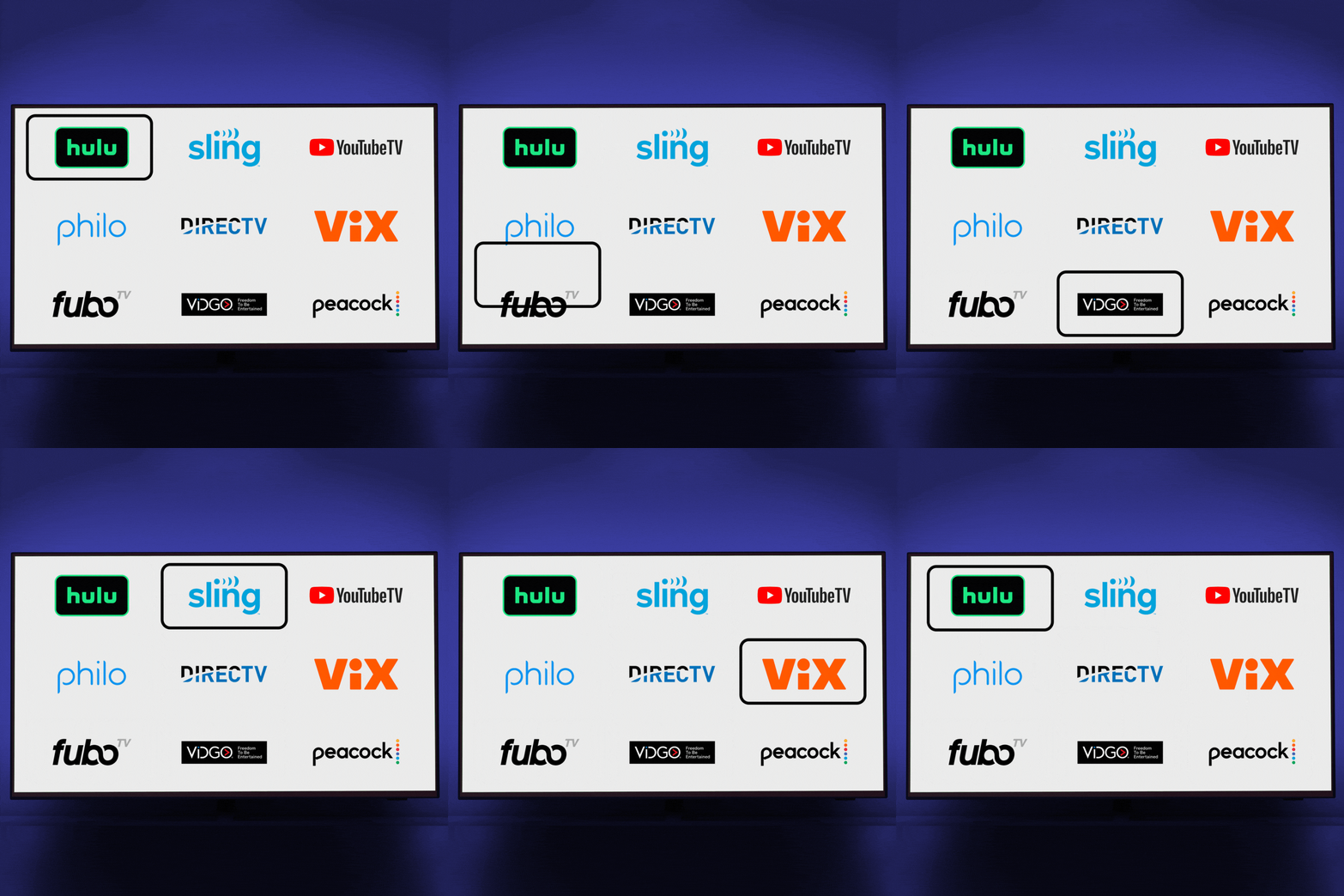
When evaluating the software and feature sets of the primary players, four names dominate the conversation: YouTube TV, Hulu + Live TV, FuboTV, and Sling TV. Each approaches the technical challenge of live delivery from a different architectural philosophy.
YouTube TV: The Gold Standard of UI and Scalability
YouTube TV is widely considered the technical benchmark for live streaming. Its primary advantage lies in Google’s global server infrastructure. This allows for a near-instantaneous channel-switching experience, mimicking the feel of traditional “flipping” better than any competitor.
Technically, YouTube TV excels in its Cloud DVR implementation. It offers unlimited storage with a nine-month expiration period, handled entirely on the server side. This means users don’t have to worry about local storage or managing “tuners.” From a software perspective, its “Key Plays” feature uses machine learning to identify significant moments in a sports broadcast, allowing viewers to catch up quickly through AI-generated highlights.
Hulu + Live TV: Ecosystem Integration
Hulu + Live TV takes a different approach by bundling its live service with its massive Video on Demand (VOD) library and Disney+ / ESPN+. From a technical standpoint, Hulu’s interface is more cinematic but can sometimes feel heavy on lower-powered hardware like older Smart TVs.
One of Hulu’s strengths is its recommendation engine. By leveraging user data across its entire ecosystem, it provides a highly personalized “Home” tab. However, it lacks the multi-view capabilities found in its rivals, which may be a drawback for power users who want to monitor multiple feeds simultaneously.
FuboTV: The Sports-Tech Innovator
FuboTV has positioned itself as a technology-first platform for sports enthusiasts. It was one of the first to implement “Multiview” on Apple TV hardware, allowing users to watch up to four live feeds on a single screen. This requires significant processing power on the client side and a robust delivery system to sync four high-bitrate streams without crashing the application.
Fubo also integrates real-time gambling data and interactive stats overlays directly into the video player. This “interactive TV” layer is built using proprietary metadata triggers that sync with the live broadcast, providing a level of engagement that traditional cable cannot replicate.
Sling TV: The Modular Efficiency Play
Sling TV, owned by Dish Network, is the “budget” option, but its technical merit lies in its modularity. It uses a smaller app footprint designed to run smoothly on even the most basic streaming sticks. Sling’s AirTV integration is a unique technical hybrid; it allows users to connect an Over-the-Air (OTA) antenna to a specialized box that transcodes local broadcast signals and injects them directly into the Sling app interface. This “local-cloud hybrid” model is a sophisticated solution for users in areas where streaming rights for local affiliates are restricted.
Cloud DVR and User Experience Metrics
The transition from physical hard drives in set-top boxes to Cloud DVR is perhaps the greatest technical leap in the streaming era. The “best” service is often defined by how it handles this virtual storage.
Data Management and Reliability
A high-quality Cloud DVR must handle “conflicts”—multiple shows airing at once—without the limitations of physical tuners. YouTube TV and Hulu + Live TV have mastered this by virtualizing the recording process. Instead of “recording” a unique copy for every user, the system essentially creates a pointer to a master file on their servers, saving massive amounts of data and ensuring that a recording never “fails” due to a local power outage or signal loss.
Search and Discovery Algorithms
In an era of “infinite choice,” the search functionality of a streaming service is a critical software component. The best services utilize Natural Language Processing (NLP) within their search bars. For example, typing “NFL” should not only bring up live games but also upcoming recordings, related talk shows, and VOD content. Google’s influence on YouTube TV gives it a clear edge here, as its search algorithm is significantly more intuitive than the rigid category-based searches found in older apps.
Hardware Synergy and Device Optimization
A streaming service is only as good as the device it runs on. The technical performance of these apps varies wildly between platforms like Amazon Fire TV, Roku, Apple TV, and Android TV.
Optimization for Performance
The best services invest in “Native” app development rather than “Web-wrapper” apps. Native apps are written specifically for the operating system (e.g., Swift for tvOS, Kotlin for Android TV), allowing them to access the hardware’s GPU for smoother animations and faster video decoding.
For instance, FuboTV on Apple TV feels significantly more responsive than on a low-end Roku stick because it leverages the A-series chips in Apple’s hardware to handle its complex Multiview interface. When choosing a service, users must consider their “hardware stack.” If you are deep in the Amazon ecosystem, Sling and Hulu are highly optimized for Fire TV’s voice search and Alexa integration.
Remote Access and Mobile Parity
The technical challenge of “TV Everywhere” involves managing geo-fencing and IP-based location tracking. The best services manage this seamlessly. If a user moves from their living room to a mobile device on a 5G network, the transition should be fluid. This requires the service to dynamically adjust the bitrate and resolution via Adaptive Bitrate Streaming (ABR) to prevent buffering as signal strength fluctuates.
Security, Privacy, and the Future of Streaming
As we look toward the future, the “best” service will also be the one that prioritizes digital security and privacy. Streaming services collect vast amounts of telemetry data—what you watch, how long you watch, and even which ads you skip.
Account Security and DRM
Digital Rights Management (DRM) is the invisible layer that protects content from piracy while ensuring it plays smoothly on authorized devices. The most advanced services use Widevine L1 or FairPlay DRM to ensure 4K content is secure. Additionally, the implementation of Multi-Factor Authentication (MFA) is becoming a standard tech requirement to prevent “account cracking,” which has plagued the streaming industry.
The Rise of AI and Personalization
The next frontier in determining the best service is the integration of Generative AI. We are beginning to see AI-driven “virtual channels” and personalized highlight reels. Imagine a service that uses AI to summarize a news broadcast you missed or creates a custom “channel” of highlights based specifically on your fantasy football roster. The platforms that successfully integrate these AI tools into their tech stack will define the next generation of television.

Conclusion: The Technical Verdict
Determining which live TV streaming service is best is an exercise in matching technical needs with platform capabilities. For the user who demands the most stable, “no-fuss” experience with the best search and DVR, YouTube TV is the clear winner from a software engineering perspective.
For the sports enthusiast who requires advanced viewing modes and high-bitrate 4K feeds, FuboTV offers the most robust specialized toolkit. Meanwhile, those looking for a cohesive, all-in-one content ecosystem will find Hulu + Live TV’s integration of VOD and live assets technically superior.
Ultimately, the “best” service is the one that disappears into the background. It is the platform where the latency is invisible, the UI is intuitive, and the transition from hardware to software is seamless. As the tech continues to evolve, the winner will be the service that best leverages AI, cloud infrastructure, and cross-platform optimization to provide a viewing experience that makes the old days of cable feel like ancient history.
aViewFromTheCave is a participant in the Amazon Services LLC Associates Program, an affiliate advertising program designed to provide a means for sites to earn advertising fees by advertising and linking to Amazon.com. Amazon, the Amazon logo, AmazonSupply, and the AmazonSupply logo are trademarks of Amazon.com, Inc. or its affiliates. As an Amazon Associate we earn affiliate commissions from qualifying purchases.