
In an increasingly data-driven world, the ability to quickly and accurately compare quantities is more critical than ever. While often associated with elementary education, fractions remain a fundamental concept that underpins various scientific, engineering, and financial disciplines. Yet, for many, the task of determining “which fraction is bigger” can be surprisingly daunting, especially when dealing with complex numerators and denominators. This is where the specialized “Which Fraction Is Bigger Calculator” emerges as an indispensable technological aid, transforming a manual, error-prone process into a swift, precise, and often educational experience. Far from being a mere convenience, this digital tool represents a nuanced application of technology designed to enhance mathematical understanding and operational efficiency across diverse user groups.
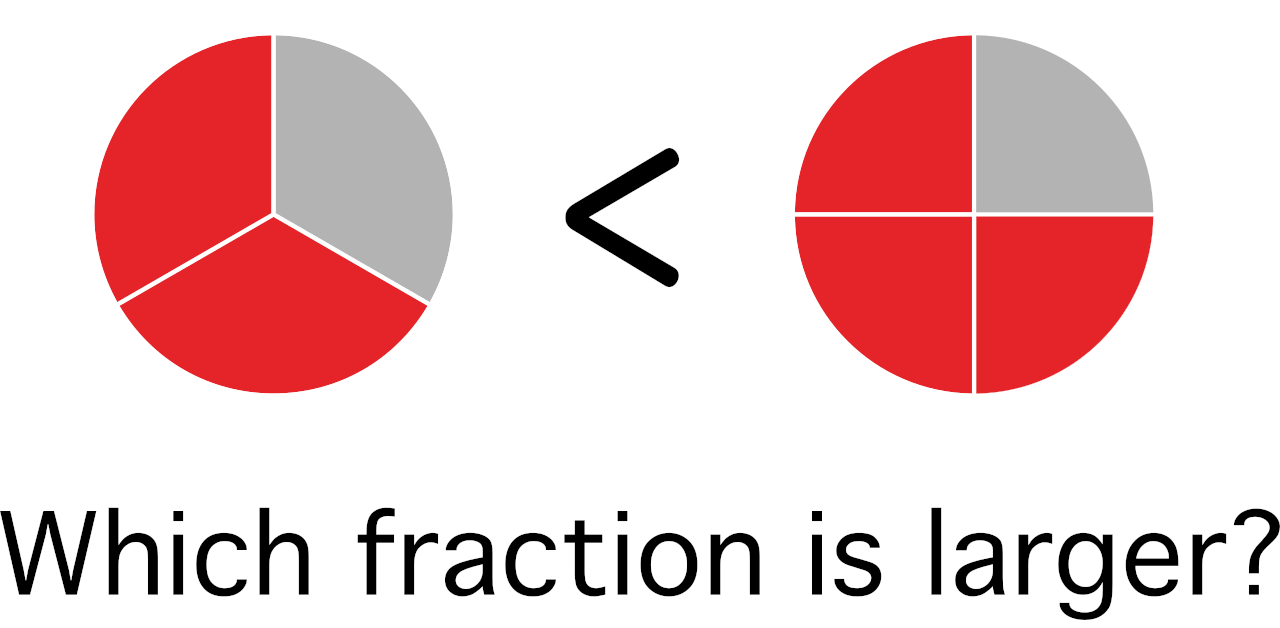
The Ubiquity of Fractions and the Need for Comparison Tools
Fractions are not abstract mathematical constructs confined to textbooks; they are pervasive in everyday life. From cooking recipes and carpentry measurements to understanding financial ratios and scientific formulas, fractions provide a concise way to express parts of a whole. However, their inherent structure, comprising a numerator and a denominator, can complicate direct visual or intuitive comparison. This complexity underscores the critical role that dedicated digital tools play in demystifying these mathematical entities.
The Fundamental Challenge of Fraction Comparison
Comparing fractions traditionally involves a series of steps that can be cumbersome and prone to arithmetic errors. Common methods include finding a common denominator, converting fractions to decimals, or using cross-multiplication. Each method requires a solid grasp of fundamental arithmetic operations, including multiplication, division, and identifying least common multiples. For students learning these concepts, the process can be slow and frustrating. For professionals needing quick comparisons, the time investment can be inefficient. The cognitive load associated with these manual calculations often detracts from understanding the underlying principles, turning a learning opportunity into a computational chore.
Consider comparing 7/13 and 11/19. Without a calculator, one would need to find the least common multiple of 13 and 19 (which is 247) and then convert both fractions: 7/13 becomes 133/247, and 11/19 becomes 143/247. Only then can it be determined that 11/19 is larger. This multi-step process, while mathematically sound, highlights the efficiency gap that technology aims to fill.
Bridging the Gap with Digital Solutions
The “Which Fraction Is Bigger Calculator” precisely addresses this challenge by automating the comparison process. It leverages computational power to execute the necessary mathematical transformations instantaneously, providing an immediate and accurate answer. This technological intervention not only saves time but also reduces the potential for human error. For educators, such a tool can serve as a validation mechanism for student work or as a quick reference during lesson planning. For students, it provides an immediate feedback loop, helping them verify their manual calculations and understand the correct outcome without waiting for a teacher’s review. In a professional context, where quick decisions are often based on fractional or ratio comparisons, these calculators ensure data integrity and operational speed. The utility extends beyond mere calculation; it fosters an environment where the focus shifts from the drudgery of computation to the interpretation and application of mathematical concepts.
Deconstructing the “Which Fraction Is Bigger” Calculator: How It Works
At its core, a “Which Fraction Is Bigger” calculator is a prime example of an application designed for a singular, well-defined mathematical problem. Its elegance lies in simplifying complex operations into a user-friendly interface. Understanding its internal mechanisms provides insight into effective software design for mathematical utilities.
Core Algorithms: Common Denominators and Cross-Multiplication
The most common algorithms employed by these calculators mirror the manual methods but execute them with unparalleled speed and precision.
- Common Denominator Method: This approach involves finding the least common multiple (LCM) of the two denominators. Once the LCM is identified, both fractions are converted into equivalent fractions with this common denominator. Comparing the numerators of these new fractions then directly reveals which original fraction is larger. For example, to compare 1/3 and 2/5, the LCM of 3 and 5 is 15. The calculator converts 1/3 to 5/15 and 2/5 to 6/15, quickly showing that 2/5 is larger.
- Cross-Multiplication Method: This is often considered the most straightforward method for direct comparison. To compare a/b and c/d, the calculator computes (a * d) and (b * c). If (a * d) > (b * c), then a/b > c/d. If (a * d) < (b * c), then a/b < c/d. If (a * d) = (b * c), then a/b = c/d. This method bypasses the need for finding a common denominator, making it computationally efficient, especially for fractions with large, prime denominators. For example, comparing 7/13 and 11/19: 7 * 19 = 133 and 13 * 11 = 143. Since 133 < 143, it immediately confirms that 7/13 < 11/19.
Sophisticated calculators might choose between these algorithms dynamically based on the input fractions to optimize performance or provide both as step-by-step explanations.
User Interface and Experience Design for Mathematical Tools
The effectiveness of any digital tool hinges significantly on its user interface (UI) and user experience (UX). For a fraction calculator, this means an intuitive input mechanism and clear, unambiguous output. A well-designed calculator typically features:
- Clearly labeled input fields for numerators and denominators.
- Support for mixed numbers and improper fractions, sometimes with automatic conversion features.
- A prominent “Calculate” or “Compare” button.
- Immediate display of results, often highlighting the larger fraction or stating the relationship (greater than, less than, equal to).
- In some advanced versions, a visual representation of the fractions (e.g., pie charts or bar graphs) can further enhance comprehension, especially for younger learners.
The UX goal is to minimize cognitive load, allowing users to focus on the mathematical problem rather than struggling with the tool itself.
Input Flexibility and Output Clarity
A robust fraction comparison calculator should anticipate various input formats. Users might enter proper fractions, improper fractions, or even mixed numbers (e.g., “1 1/2”). The calculator’s underlying logic needs to parse these inputs correctly, converting mixed numbers to improper fractions before applying the comparison algorithms. Output clarity is equally vital. Beyond simply stating “Fraction A is bigger,” an ideal calculator might also display the common denominator, the converted fractions, or the cross-multiplication products, thereby providing transparency into the calculation process. Some tools go a step further, offering simplified versions of fractions or decimal equivalents to give users multiple perspectives on the comparison. This rich output transforms the tool from a black-box answer provider into an interactive learning assistant.
Beyond the Basic Comparison: Advanced Features and Educational Impact
While the core function of comparing fractions is valuable on its own, many calculators integrate advanced features that elevate their utility, particularly in educational settings. These enhancements transform a simple utility into a powerful pedagogical resource.
Step-by-Step Solutions: Learning Through Automation
One of the most impactful features for educational purposes is the provision of step-by-step solutions. Instead of just giving the answer, these calculators walk the user through each stage of the comparison process. This can include:
- Identifying the method used (e.g., common denominator).
- Calculating the common denominator (LCM).
- Converting both fractions to equivalent fractions with the common denominator.
- Comparing the new numerators.
- Stating the final conclusion.

This detailed breakdown is invaluable for students struggling to grasp the manual process. It allows them to understand how the answer is derived, reinforcing their learning and building confidence in their own abilities. For teachers, it provides a consistent, accurate example that can be used for demonstration or review.
Visual Aids and Interactive Learning
Visual representation is a potent tool in mathematics education, especially for abstract concepts like fractions. Advanced fraction calculators often incorporate graphical elements to make comparisons more intuitive. This might involve:
- Fraction Bars: Representing each fraction as a shaded portion of a bar, allowing for direct visual comparison of lengths.
- Pie Charts: Depicting fractions as slices of a circular pie, helping users visualize the “part of a whole” concept.
- Number Lines: Plotting fractions on a number line to illustrate their relative positions and magnitudes.
These interactive visual aids cater to different learning styles and significantly enhance comprehension, particularly for visual learners. By seeing the fractions side-by-side in a graphical format, users can often intuitively understand the comparison before even looking at the numerical result, solidifying their conceptual understanding.
Applications in K-12 and Higher Education
The “Which Fraction Is Bigger Calculator” finds extensive application across various educational levels:
- Elementary and Middle School: As a foundational tool for learning fraction comparison, providing immediate feedback and detailed steps. It can supplement classroom instruction and support homework completion.
- High School: For reinforcing foundational skills, especially when fractions appear in more complex algebraic expressions or scientific formulas.
- Higher Education and Professional Training: While the core concept is basic, quick and accurate fraction comparison remains useful in fields like engineering (e.g., comparing material ratios), finance (e.g., stock splits, debt-to-equity ratios), and data science (e.g., probability comparisons). The efficiency offered by such a calculator frees up cognitive resources for higher-level problem-solving.
Choosing the Right Fraction Calculator: What to Look For
With numerous online tools and apps available, selecting the most effective “Which Fraction Is Bigger Calculator” requires careful consideration. Not all calculators are created equal, and discerning the best fit depends on specific user needs and priorities.
Accuracy and Reliability
Foremost, any mathematical tool must be unequivocally accurate. The calculator should consistently provide correct comparisons, regardless of the complexity or nature of the input fractions (positive, negative, proper, improper, mixed numbers). Reliability extends to consistent performance; the tool should operate smoothly without glitches or errors, even under varying network conditions for online versions. Reputable sources, clear methodologies (e.g., mentioning the algorithms used), and positive user reviews often indicate a reliable calculator.
Accessibility and Platform Compatibility
In today’s multi-device environment, accessibility is key. A good fraction calculator should be:
- Web-based: Accessible via any modern web browser on desktops, laptops, tablets, and smartphones.
- App-based: Available as a dedicated application for iOS and Android, offering offline functionality and often a more integrated user experience.
- Responsive: Its interface should adapt seamlessly to different screen sizes, ensuring usability on any device.
- Inclusive: Designed with accessibility features for users with disabilities, such as screen reader compatibility and clear contrast ratios.
The ease with which users can access and utilize the tool across their preferred devices directly impacts its overall utility and reach.
Privacy and Data Security Considerations
While a simple fraction calculator typically doesn’t handle sensitive personal data, it’s still prudent to consider privacy and data security, especially for educational institutions or organizations that might integrate such tools.
- No Data Collection: Ideally, a calculator of this type should not collect any user data.
- Secure Connection: For online tools, ensure the website uses HTTPS to encrypt communication, even for basic interactions.
- Transparent Policies: If any data collection occurs (e.g., for analytics), it should be clearly communicated through a privacy policy.
These considerations, while perhaps less critical than for financial or personal identity tools, contribute to a trustworthy and professional user experience, particularly important in educational contexts where student privacy is paramount.
The Future of Computational Aids in Mathematics
The “Which Fraction Is Bigger Calculator,” while a specialized tool, is emblematic of a broader trend in educational technology and computational aids. The future promises even more sophisticated and integrated solutions that will further enhance mathematical understanding and application.
AI and Machine Learning in Educational Tools
The integration of Artificial Intelligence (AI) and Machine Learning (ML) is poised to revolutionize educational software. For tools like a fraction calculator, AI could enable:
- Adaptive Learning: The calculator could identify common errors made by a user and provide targeted exercises or explanations.
- Natural Language Processing (NLP): Users could input fractions using natural language (e.g., “Is seven-thirteenths greater than eleven-nineteenths?”), making the interaction more intuitive.
- Predictive Analytics: AI could analyze user performance to predict areas where they might struggle, offering proactive support.
These advancements would move beyond mere computation to truly personalized and intelligent tutoring systems.
Personalized Learning Paths
Future mathematical tools will likely play a more significant role in facilitating personalized learning paths. By tracking a student’s interactions and performance, a “Which Fraction Is Bigger Calculator” could, for instance, be part of a larger system that recommends specific modules, practice problems, or supplementary materials tailored to their individual needs and pace. This shifts the paradigm from a one-size-fits-all approach to highly individualized instruction, optimizing learning outcomes.
The Evolving Role of Calculators
The evolution of tools like the fraction comparison calculator underscores a crucial shift: calculators are no longer just devices for finding answers. They are becoming interactive learning environments, diagnostic tools, and integral components of comprehensive educational ecosystems. They empower users to explore mathematical concepts more deeply, confirm their understanding, and free up mental energy to tackle more complex problem-solving. As technology continues to advance, we can expect these computational aids to become even more sophisticated, intuitive, and seamlessly integrated into the fabric of learning and professional practice, continually simplifying the complex and amplifying human potential in mathematics.
aViewFromTheCave is a participant in the Amazon Services LLC Associates Program, an affiliate advertising program designed to provide a means for sites to earn advertising fees by advertising and linking to Amazon.com. Amazon, the Amazon logo, AmazonSupply, and the AmazonSupply logo are trademarks of Amazon.com, Inc. or its affiliates. As an Amazon Associate we earn affiliate commissions from qualifying purchases.