
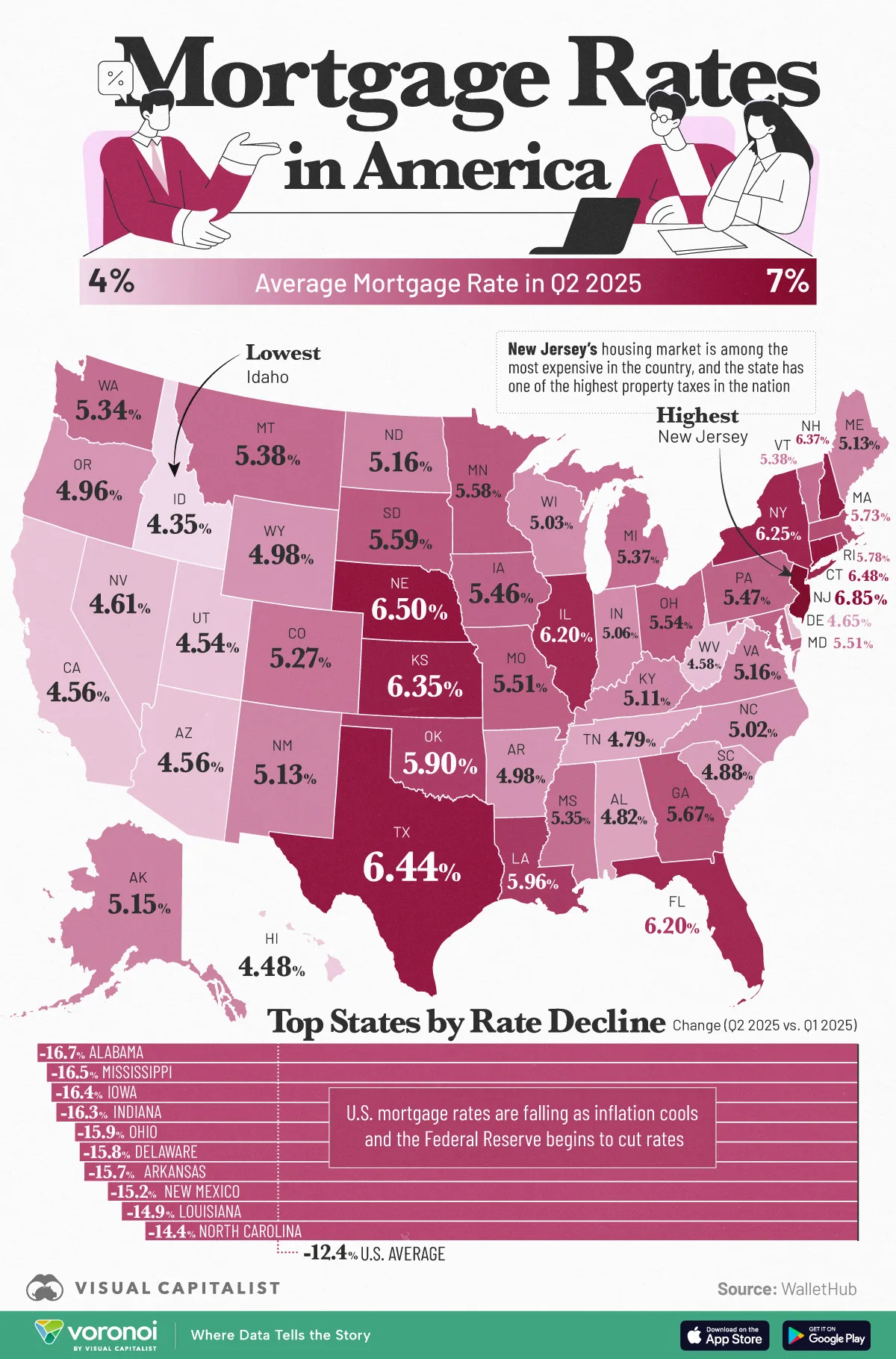
The trajectory of mortgage rates has become the most scrutinized metric in the global financial landscape. After a decade of historically low borrowing costs, the sharp ascent that began in 2022 sent shockwaves through the real estate market, leaving prospective homeowners and seasoned investors alike asking the same question: when will the pressure subside? As we look toward 2025, the answer lies at the intersection of Federal Reserve policy, labor market resilience, and the technical mechanics of the bond market.
Predicting mortgage rates is not an exact science, but by analyzing the primary economic drivers, we can construct a data-driven roadmap for the 2025 lending environment. The consensus among economists suggests a transition away from the “higher for longer” era toward a more stabilized, albeit elevated, “new normal.”
The Federal Reserve’s Influence and the Path to Normalization
The single most significant driver of mortgage rates is the Federal Reserve’s monetary policy. While the Fed does not directly set mortgage rates, its control over the federal funds rate dictates the broader cost of credit across the economy. To understand where rates will be in 2025, we must first understand the Fed’s dual mandate: maintaining price stability and maximizing sustainable employment.
The Inflation Glide Path
By the start of 2025, the aggressive rate hikes of the previous years are expected to have fully permeated the economy. Most forecasts suggest that inflation, as measured by the Consumer Price Index (CPI) and the Personal Consumption Expenditures (PCE) index, will be hovering much closer to the Fed’s 2% target. If inflation remains “sticky” or experiences a rebound, the Fed will be forced to keep rates restrictive, which would keep mortgage rates in the 7% range. However, the prevailing sentiment is that of a cooling trend. As inflation settles, the “real” interest rate (the nominal rate minus inflation) becomes more restrictive, providing the Fed with the justification to begin a series of methodical cuts.
The Pivot from “Higher for Longer” to “Neutral”
By 2025, the central bank’s narrative is expected to shift from “how high do we need to go?” to “where is the neutral rate?” The neutral rate is the interest rate that neither stimulates nor restrains economic growth. Most economists estimate this to be significantly lower than current levels but higher than the zero-bound rates seen during the 2010s. For mortgage borrowers, this shift is critical. A move toward a neutral policy stance suggests that the volatility that defined the 2023-2024 period will likely give way to a more predictable downward trend, potentially settling mortgage rates in the high 5% to mid-6% range by mid-2025.
The Relationship Between the 10-Year Treasury Yield and Mortgage Spreads
To pinpoint where mortgage rates will land, one must look beyond the Federal Reserve and toward the secondary bond market, specifically the 10-Year Treasury yield. Traditionally, there is a strong correlation between the 10-Year Treasury and the 30-year fixed-rate mortgage.
Understanding the Mortgage Spread
Historically, the “spread” between the 10-year Treasury yield and the average 30-year mortgage rate is approximately 170 to 200 basis points (1.7% to 2.0%). During periods of high economic uncertainty or market volatility, this spread widens as investors demand a higher premium for the risk associated with mortgage-backed securities (MBS). In recent years, we have seen this spread balloon to over 300 basis points, which is one reason mortgage rates remained high even when Treasury yields dipped.
Projections for Spread Compression in 2025
One of the most optimistic arguments for lower mortgage rates in 2025 is the potential for spread compression. As the economy stabilizes and the Federal Reserve stops shrinking its balance sheet (a process known as quantitative tightening), the demand for mortgage-backed securities is expected to normalize. If the spread returns to its historical average of 200 basis points, and the 10-Year Treasury yield settles around 3.5% to 4.0%, we could see 30-year mortgage rates fall into the 5.5% to 6.0% range without the Fed needing to slash the federal funds rate back to zero.
Housing Market Inventory and the “Lock-In Effect”
The supply side of the housing market will play a pivotal role in how rates behave in 2025. For the past two years, the market has been paralyzed by the “lock-in effect,” where homeowners with 3% or 4% mortgage rates are unwilling to sell and take on a new loan at 7%. This has led to a historic shortage of existing home inventory.
Breaking the Inventory Deadlock
By 2025, the “lock-in effect” is expected to lose some of its grip. Life events—such as career changes, growing families, and retirements—eventually outweigh the desire to hold onto a low interest rate. As mortgage rates drift toward the low 6% range, the psychological gap between current rates and new rates narrows. This “tipping point” is expected to unlock a wave of inventory in 2025. Increased inventory typically moderates home price appreciation, which in turn reduces the total loan amount required by buyers, slightly easing the pressure on the lending market.

The Role of New Construction
Homebuilders have become the unexpected heroes of the mortgage market by offering “rate buydowns.” In 2025, we expect this trend to continue. If market rates are at 6.5%, builders may use their profit margins to offer permanent or temporary buydowns to 5.5% for new buyers. This creates a dual-tier market where “effective” mortgage rates for new builds are lower than the headline rates for existing homes, further influencing the national average.
Expert Forecasts: The Numbers for 2025
Leading financial institutions and housing authorities have begun releasing their long-term outlooks. While there is variance, the general direction is a gradual descent.
Mortgage Bankers Association (MBA) Outlook
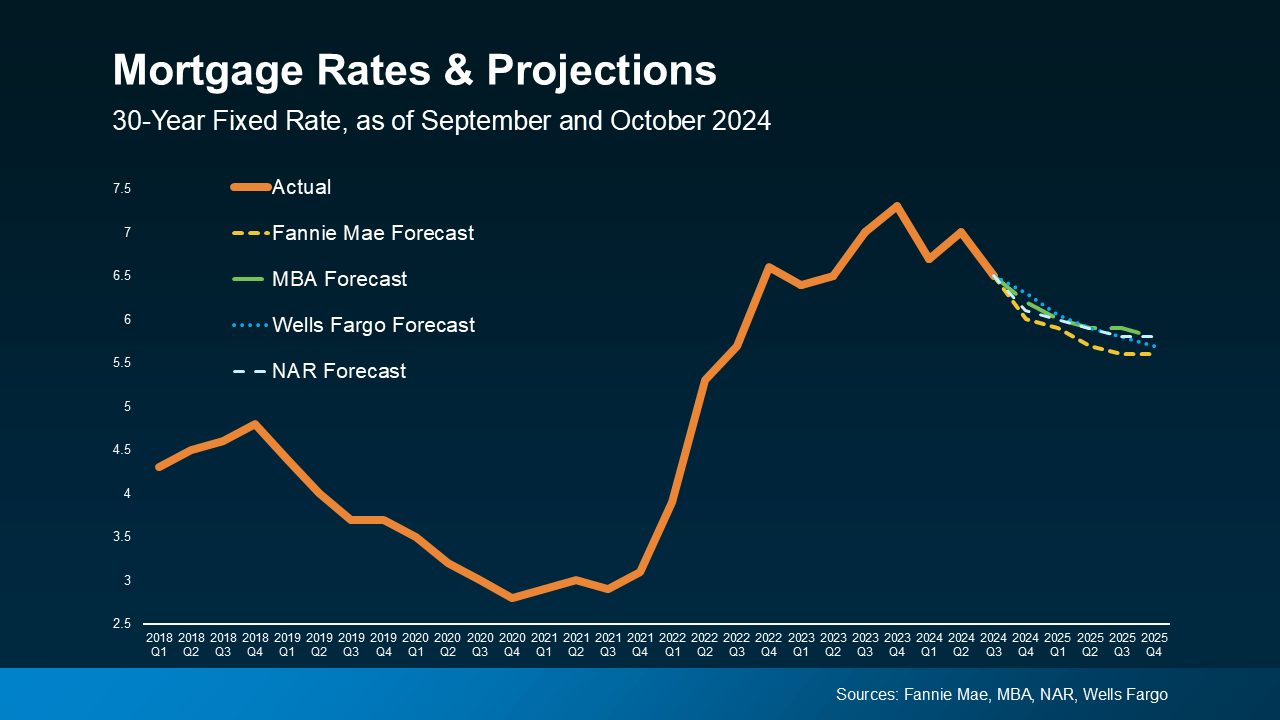
The MBA has been one of the more optimistic voices, forecasting that mortgage rates will likely descend throughout 2024 and settle into a steady state by 2025. Their models suggest that as the economy slows to a sustainable pace, the 30-year fixed rate could average around 5.8% to 6.1% by the second quarter of 2025.
Fannie Mae and Freddie Mac Projections
Government-sponsored enterprises (GSEs) like Fannie Mae tend to be more conservative. Their 2025 projections generally place the 30-year fixed rate in the 6.2% to 6.5% range. They cite the continued strength of the labor market as a “floor” that prevents rates from falling too far too fast. If unemployment remains low, consumer spending stays high, which prevents the kind of economic cooling that usually triggers a rapid drop in interest rates.
The “Wild Card” Factors
Geopolitical instability and domestic fiscal policy remain the primary “wild cards” for 2025. Increased government spending and high national debt levels can put upward pressure on Treasury yields, as investors require higher returns to fund the deficit. If 2025 sees significant fiscal expansion, it could counteract the Fed’s efforts to lower rates, keeping mortgage costs higher than the fundamentals would otherwise suggest.
Strategic Advice for Homebuyers and Investors in 2025
Navigating the mortgage market in 2025 will require a shift in strategy from the “panic-buying” of 2021 or the “wait-and-see” approach of 2023.
The “Date the Rate, Marry the House” Philosophy
For many homebuyers, 2025 may be the year to move forward. If rates settle in the low 6s, the risk of waiting for 4% or 5% rates—which may not return for decades—outweighs the benefit of building equity now. Buyers in 2025 should focus on the purchase price and the long-term value of the property, with the understanding that if rates drop further in 2026 or 2027, a refinance remains a viable option.
Adjustable-Rate Mortgages (ARMs) vs. Fixed-Rate Loans
In a declining rate environment, ARMs often become less attractive, but in 2025, they may still serve a purpose for short-term holders. However, with the yield curve potentially un-inverting (returning to a state where long-term rates are higher than short-term rates), the spread between an ARM and a 30-year fixed loan may narrow, making the stability of the fixed-rate loan the more prudent choice for the average consumer.
Investment Implications
For real estate investors, 2025 will be a year of recalibrating “Cap Rates” and “Cash-on-Cash” returns. The era of cheap debt is over, and the successful investors of 2025 will be those who can find value in a 6% interest rate environment. This involves looking for markets with strong rental growth that can outpace the cost of debt. Additionally, the potential for lower rates toward the end of 2025 means that projects started in early 2025 could be refinanced into more favorable terms shortly after completion.
Final Outlook: The New Reality
As we move toward 2025, the mortgage market is moving away from the extremes. We are leaving behind the extreme lows of the pandemic era and the extreme volatility of the inflation-fighting era. The most likely scenario for mortgage rates in 2025 is a range between 5.75% and 6.5%.
While this may seem high compared to the 3% rates of 2021, it is important to remember that the 50-year historical average for mortgage rates is roughly 7.7%. A rate in the low 6% range represents a balanced, sustainable middle ground. It is a rate that allows for moderate home price growth without triggering an affordability crisis, and it provides a healthy return for the investors who provide the liquidity for the American housing market. For those planning their financial future, 2025 should be viewed as the year of stabilization—a time to make moves based on long-term goals rather than timing a market that has finally found its footing.
aViewFromTheCave is a participant in the Amazon Services LLC Associates Program, an affiliate advertising program designed to provide a means for sites to earn advertising fees by advertising and linking to Amazon.com. Amazon, the Amazon logo, AmazonSupply, and the AmazonSupply logo are trademarks of Amazon.com, Inc. or its affiliates. As an Amazon Associate we earn affiliate commissions from qualifying purchases.