
The Chicago Marathon is more than a feat of physical endurance; it is a massive logistical and technological undertaking that transforms the city into a hyper-connected corridor of data and high-definition imagery. For the millions of viewers tuning in from around the globe, the question of “where to watch” has evolved far beyond simple television channel listings. Today, watching the marathon is an immersive, multi-platform experience powered by sophisticated streaming infrastructure, real-time telemetry, and cloud-based distribution networks.
As digital consumption habits shift, the technological framework behind the Chicago Marathon has adapted to provide low-latency, high-bitrate content across various devices. Whether you are tracking a specific runner through a mobile app or analyzing the elite field via a global OTT (Over-The-Top) stream, the technology involved represents the cutting edge of sports broadcasting and digital engagement.

Streaming Infrastructure: How High-Bitrate Video and Low Latency Redefine the Viewer Experience
The traditional broadcast model, once limited to local linear television, has been superseded by a complex ecosystem of digital streams. For viewers looking for where to watch the Chicago Marathon, the primary gateways are now digital platforms like NBCChicago.com, the NBC Chicago app, and specialized endurance sports streaming services like FloTrack.
The Shift from Linear TV to OTT Platforms
The transition from traditional cable to OTT platforms has necessitated a significant upgrade in encoding technology. To ensure that the fast-paced movement of elite runners remains crisp, broadcasters employ advanced H.264 or H.265 (HEVC) video codecs. These codecs allow for high-definition delivery while managing bandwidth efficiency. In a live environment like a marathon, where cameras are moving on motorcycles and through dense urban “canyons,” maintaining a steady bitrate is a technological challenge.
Modern streaming setups utilize Adaptive Bitrate Streaming (ABR). This technology detects a viewer’s internet speed in real-time and adjusts the video quality accordingly, preventing the dreaded buffering icon. For an event that spans several hours, the stability of these digital streams is paramount to maintaining viewer retention.
Optimizing Global Feeds through Content Delivery Networks (CDNs)
Because the Chicago Marathon attracts an international audience, the “where to watch” question is answered by the deployment of Content Delivery Networks (CDNs). When a viewer in London or Tokyo accesses the live feed, they are not pulling data directly from a server in Chicago. Instead, the data is cached on edge servers located closer to their physical location.
This distributed architecture minimizes latency, ensuring that the “live” broadcast is as close to real-time as possible. For sports fans, even a 30-second delay can result in social media spoilers. By leveraging global CDNs like Akamai or Cloudflare, broadcasters can synchronize the experience for millions of concurrent users, regardless of their geographical distance from the finish line at Grant Park.
Interactive Fan Engagement: The Role of Mobile Apps and Real-Time Data
For many spectators, the most critical way to “watch” the marathon is through the official Bank of America Chicago Marathon mobile app. This piece of software serves as a secondary screen, providing a level of granular detail that a standard video broadcast cannot replicate.
Precision GPS and the Science of Runner Tracking
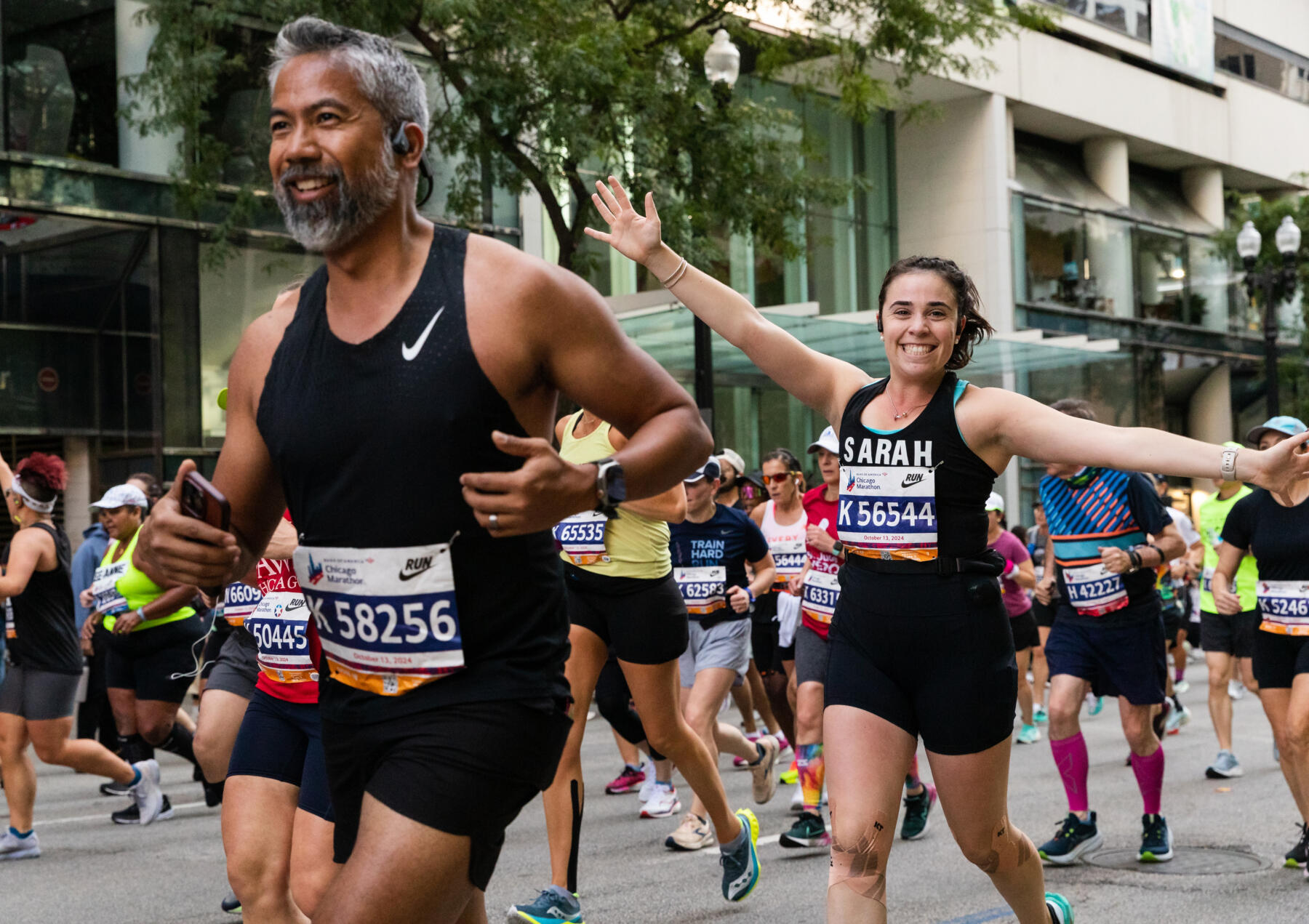
The app’s tracking feature is a marvel of IoT (Internet of Things) integration. While individual runners do not carry GPS units provided by the race, the system utilizes timing mats placed at specific intervals (5K, 10K, halfway, etc.). As a runner’s RFID (Radio Frequency Identification) chip crosses these mats, data is instantly transmitted to a central database.
The software then uses predictive algorithms to estimate a runner’s current location between mats based on their previous pace. For the viewer, this appears as a smooth icon moving along a digital map of the city. The tech stack required to process the data pings of 45,000+ runners simultaneously and serve that data to hundreds of thousands of app users requires robust back-end scalability and efficient API management.
Gamification and Social Integration
Modern marathon apps have integrated social features that allow viewers to send “digital cheers” or track multiple runners in a “favorites” list. These features rely on real-time database synchronization. When a spectator hits a “cheer” button, that interaction is processed through a cloud-based server and can even be displayed on large LED screens along the course. This convergence of the digital and physical worlds changes the definition of “watching” from a passive activity to an interactive one.
Cloud Computing and AI: Managing Massive Data Streams
Behind the scenes of the “where to watch” platforms lies a massive cloud infrastructure. The sheer volume of data generated—from high-definition video feeds to biometric data from elite athletes—requires more than just standard server racks.
AI-Driven Highlight Generation and Real-Time Analytics
Broadcasters are increasingly using Artificial Intelligence (AI) to enhance the viewing experience. AI algorithms can monitor the live feed to automatically identify key moments, such as a lead change or a world-record pace attempt. These clips are then instantly tagged with metadata and distributed as “highlights” to social media platforms and news outlets.
Furthermore, AI-driven analytics provide viewers with deeper insights. Predictive modeling can analyze a runner’s pace over the first 20 miles and forecast their finishing time with remarkable accuracy. This data is often overlaid on the screen as a “ghost” pace line, giving viewers a visual representation of how the current leaders compare to historical course records.
Scalability: Handling Peak Traffic
The Chicago Marathon experiences extreme spikes in digital traffic, particularly during the first hour of the race and when the leaders approach the finish line. To prevent website crashes or app failures, the infrastructure utilizes “auto-scaling” cloud services. As the number of concurrent viewers increases, the system automatically spins up additional virtual servers to handle the load. This elasticity is what allows a local broadcast to scale into a global media event without a hitch.
The Future of Remote Spectating: 5G, VR, and Immersive Video
As we look at the trajectory of how people watch the Chicago Marathon, several emerging technologies are poised to redefine the experience further. The rollout of 5G networks is perhaps the most significant catalyst for change.
5G’s Impact on Mobile Reporting and On-Course Cameras
Historically, live video from the course relied on expensive microwave links or satellite trucks. With 5G “network slicing,” broadcasters can now reserve a dedicated portion of the cellular spectrum for video transmission. This allows for more “roving” cameras and high-quality feeds from areas of the course that were previously difficult to cover. For the viewer, this means more camera angles and a more comprehensive view of the race’s middle miles.
Augmented Reality (AR) Overlays and Biometric Feedback
The next frontier for the marathon spectator is the integration of biometric data. Imagine watching the race through an AR-enabled app where you can point your phone at a group of runners and see their names, current heart rates, and oxygen saturation levels hovering above them in real-time. This level of data integration is already being piloted in professional cycling and is a logical next step for major marathons.
Additionally, Virtual Reality (VR) offers the possibility of “virtual grandstands.” A viewer in a different country could put on a VR headset and experience the atmosphere of the finish line in 360-degree high-definition video, feeling as though they are standing in Grant Park.

Conclusion: A Digital Symphony
When people ask where to watch the Chicago Marathon, the answer is no longer a single location or channel. It is a digital symphony of interconnected technologies. From the H.265 encoders that compress video for global delivery to the RFID chips that track thousands of individual journeys, the marathon is a showcase of tech innovation.
The shift toward mobile-first, data-rich viewing experiences reflects a broader trend in the tech industry: the demand for personalization and real-time interaction. As cloud computing becomes more powerful and 5G becomes more ubiquitous, the barrier between the athlete on the pavement and the spectator on the screen will continue to thin. The Chicago Marathon remains a premier example of how technology can take a simple footrace and turn it into a globally accessible, data-driven spectacle. Whether you are a casual fan or a data-obsessed runner, the tools available to watch and engage with the race are more powerful than ever before, ensuring that every mile is captured, analyzed, and shared with the world in an instant.
aViewFromTheCave is a participant in the Amazon Services LLC Associates Program, an affiliate advertising program designed to provide a means for sites to earn advertising fees by advertising and linking to Amazon.com. Amazon, the Amazon logo, AmazonSupply, and the AmazonSupply logo are trademarks of Amazon.com, Inc. or its affiliates. As an Amazon Associate we earn affiliate commissions from qualifying purchases.