
Embarking on the journey of stock market investing can feel like stepping into a vast, complex wilderness. The sheer volume of information, coupled with the allure of potential gains and the fear of losses, often leaves aspiring investors feeling overwhelmed and unsure of where to begin. Yet, with a structured approach, a solid understanding of fundamental principles, and a commitment to continuous learning, navigating the stock market can become a powerful avenue for wealth creation and financial independence. This comprehensive guide is designed to demystify the process, providing a clear roadmap for anyone looking to make their first foray into stock investing.
Understanding the Fundamentals Before You Begin
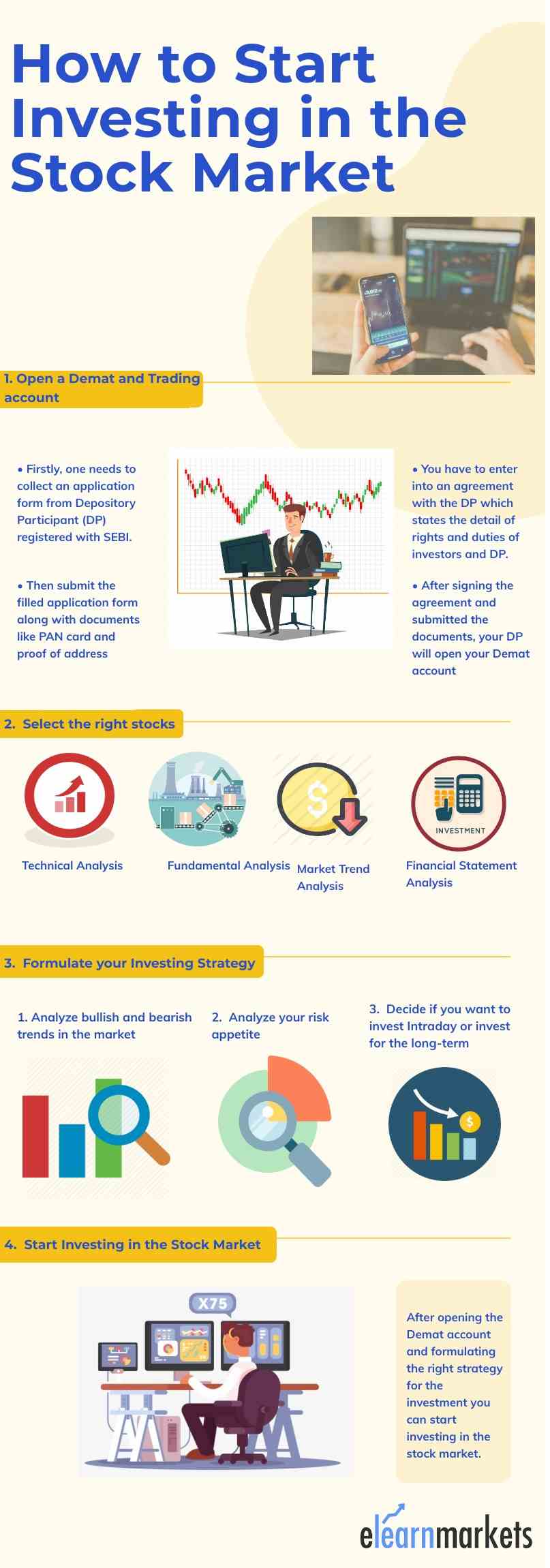
Before you even consider opening a brokerage account, it’s crucial to grasp the basic concepts that underpin the stock market. A solid theoretical foundation will empower you to make informed decisions and approach investing with confidence rather than trepidation.
What is Stock Investing?
At its core, investing in stocks means buying a small piece of ownership, called a “share,” in a publicly traded company. When you own a stock, you become a shareholder, entitling you to a claim on the company’s earnings and assets, albeit proportional to the number of shares you hold. Companies issue stocks to raise capital, which they then use to fund operations, expand, or develop new products. As a shareholder, your investment can grow in two primary ways: through capital appreciation (when the stock price increases) and through dividends (a portion of the company’s profits paid out to shareholders). This ownership stake means your financial fortunes are, to some extent, tied to the performance and success of the companies you invest in.
Why Invest in Stocks?
The primary motivation for most people to invest in stocks is the potential for significant long-term growth and wealth accumulation. Historically, the stock market has outperformed other asset classes like bonds or savings accounts over extended periods, offering a potent hedge against inflation. While past performance is no guarantee of future results, the compounding effect of returns over decades can transform modest initial investments into substantial wealth. Beyond wealth creation, investing in stocks allows you to participate in the economic growth of innovative companies, indirectly supporting industries and advancements that shape our world. It’s a proactive step towards securing your financial future, whether for retirement, a down payment on a home, or funding your children’s education.
Assessing Your Risk Tolerance and Financial Goals
Every investment decision should begin with an honest assessment of your personal financial situation, risk tolerance, and investment goals. Risk tolerance refers to your psychological and financial capacity to endure potential losses in your portfolio without panic selling or significant distress. Are you comfortable with the potential for your investments to fluctuate in value, or do you prefer more stable, albeit slower, growth? Your financial goals, such as saving for retirement in 30 years versus a down payment in 5 years, will dictate the appropriate level of risk and the types of investments suitable for your portfolio. A younger investor with a long time horizon might embrace more aggressive, growth-oriented stocks, while someone nearing retirement might prioritize capital preservation and income generation. Understanding these personal parameters is paramount to building a sustainable and psychologically comfortable investment strategy.
Laying the Groundwork: Essential Steps Before Investing
Before you commit any capital to the stock market, there are critical preparatory steps that will safeguard your financial health and provide a stable foundation for your investment journey. Skipping these can lead to unnecessary stress and potentially derail your long-term financial plans.
Build an Emergency Fund
The absolute first step for any aspiring investor is to establish a robust emergency fund. This is a pool of readily accessible cash—typically held in a high-yield savings account—sufficient to cover 3 to 6 months of essential living expenses. The purpose of an emergency fund is to act as a financial safety net, protecting you from unexpected life events like job loss, medical emergencies, or unforeseen home repairs. Without an emergency fund, a sudden financial setback might force you to liquidate your investments prematurely, potentially locking in losses and disrupting your long-term growth strategy. This fund ensures your investment capital remains untouched, allowing it to continue growing.
Pay Down High-Interest Debt
High-interest debt, such as credit card balances or personal loans, can be a formidable obstacle to wealth creation. The interest rates on such debts often far exceed the average returns one might expect from the stock market. For example, if you’re paying 18% interest on a credit card, paying down that debt effectively yields a guaranteed 18% “return” on your money, which is incredibly difficult to achieve consistently in the stock market. Therefore, prioritizing the elimination of high-interest debt frees up cash flow and removes a significant drag on your financial progress, making it a more prudent allocation of capital than investing. Student loans and mortgages, which typically carry lower interest rates, can often be managed alongside a disciplined investment strategy.
Define Your Investment Goals and Timeline
Clarity on your investment goals is crucial. Are you investing for retirement, a child’s college education, a future down payment on a house, or simply to grow your wealth over time? Each goal will have a different time horizon and may warrant a different investment approach. A longer time horizon (e.g., 20+ years for retirement) allows for greater risk-taking and riding out market fluctuations, whereas a shorter timeline (e.g., 3-5 years for a house down payment) suggests a more conservative approach with less volatile assets. Clearly defining these goals and their respective timelines will help you select appropriate investments, set realistic expectations, and stay committed to your strategy through market ups and downs.
Educate Yourself
The stock market is dynamic and complex, and continuous education is key to long-term success. Before you invest a single dollar, commit to learning the basics of investing. Read reputable books on personal finance and investing, follow trusted financial news sources, listen to podcasts from experienced investors, and consider taking online courses. Understand fundamental concepts like diversification, asset allocation, compounding, market cycles, and valuation metrics. Be wary of “get rich quick” schemes and instead focus on building a foundational knowledge that promotes informed, disciplined decision-making. The more you understand, the less intimidating the market becomes, and the better equipped you’ll be to navigate its challenges.
Choosing the Right Investment Vehicle and Platform
Once your financial groundwork is solid, the next practical step is selecting the appropriate platform and type of investment for your needs. The vast array of options available can be confusing, but understanding the basics will simplify your choice.
Brokerage Accounts: Types and Selection
To buy and sell stocks, you’ll need a brokerage account. These accounts are offered by financial institutions that act as intermediaries between you and the stock exchange. There are generally two main types:
-
Traditional Brokerage Accounts: These are taxable accounts where you can invest in various securities.
-
Retirement Accounts (e.g., 401(k), IRA): These offer significant tax advantages for long-term savings, but contributions and withdrawals are subject to specific rules.
Within these types, you’ll encounter:
-
Full-Service Brokers: Offer personalized advice, financial planning, and a wide range of products, typically at a higher cost. Suitable for those who prefer hands-on guidance.
-
Discount Brokers: Provide a platform for self-directed investing with lower fees (often zero commission on stock trades) and various research tools. Ideal for investors who prefer to manage their own portfolios.
-
Robo-Advisors: Automated platforms that manage your investments based on algorithms, often at a low cost. They typically create diversified portfolios of ETFs based on your risk tolerance and goals, making them excellent for beginners.
Choosing the right type depends on your comfort with self-direction, your need for professional advice, and your budget for fees.
Understanding Different Investment Options
While the goal is to invest in “stocks,” this isn’t limited to buying individual company shares. Several pooled investment vehicles allow for immediate diversification:
-
Individual Stocks: Buying shares of specific companies (e.g., Apple, Amazon). This offers the highest potential for growth but also the highest risk if not properly diversified. Requires significant research.
-
Exchange-Traded Funds (ETFs): A basket of stocks (or other assets) that trades like a single stock. ETFs often track an index (e.g., S&P 500) or a specific sector. They offer instant diversification, lower fees than mutual funds, and flexibility. Highly recommended for beginners.
-
Mutual Funds: Professionally managed portfolios of stocks (or other assets). While diversified, they often have higher expense ratios and management fees than ETFs. They are bought and sold at the end of each trading day based on their Net Asset Value (NAV).
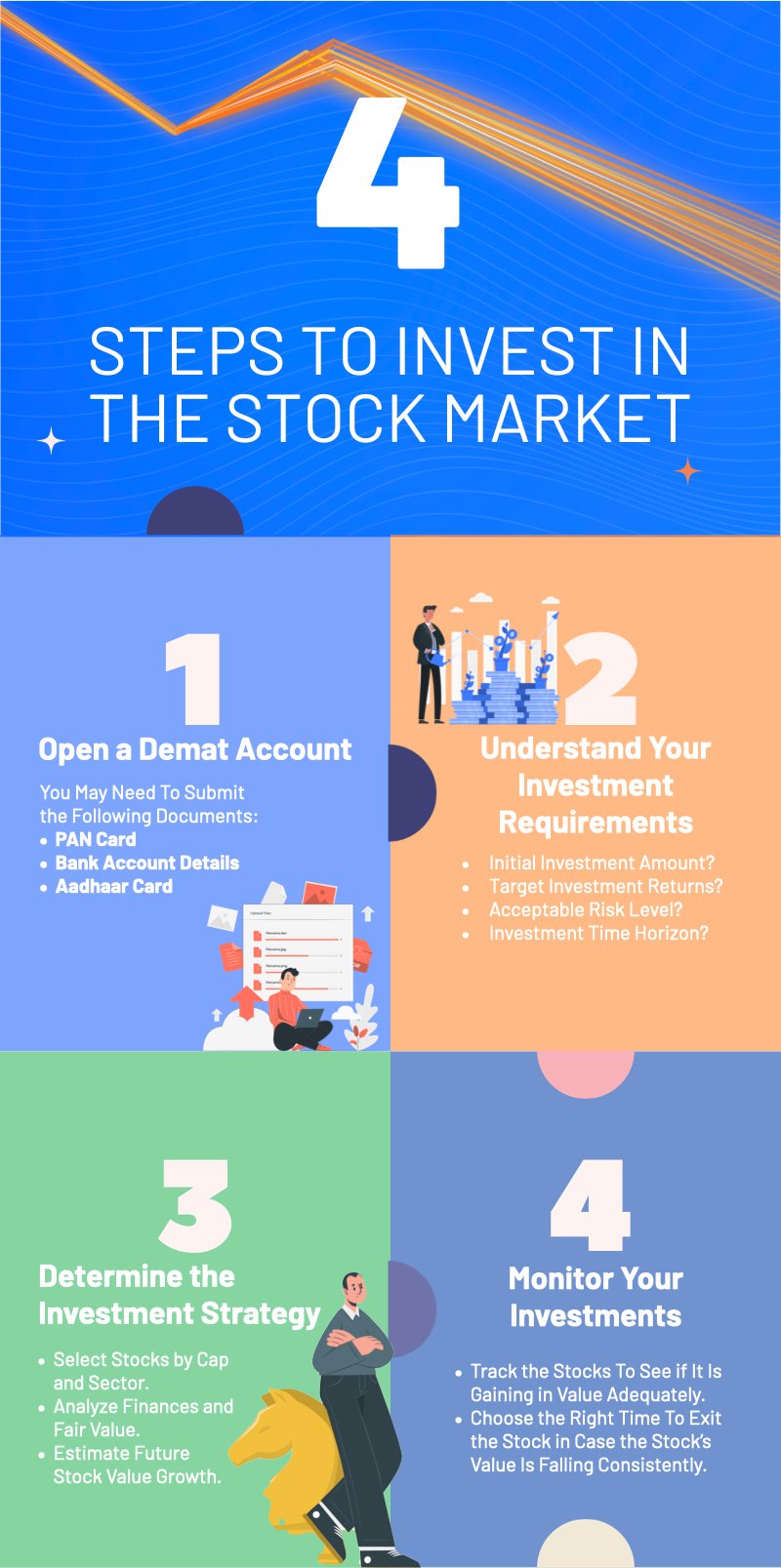
For most beginners, starting with broad market ETFs or mutual funds is advisable, as they provide instant diversification and reduce the risk associated with picking individual stocks.
Key Factors When Choosing a Brokerage
When selecting a brokerage, consider these critical factors:
-
Fees and Commissions: Look for brokerages with zero-commission stock and ETF trades. Be aware of other potential fees like account maintenance, inactivity fees, or fees for specific services.
-
User Interface and Ease of Use: Especially for beginners, a platform that is intuitive, easy to navigate, and provides clear information is invaluable.
-
Research and Educational Tools: Does the brokerage offer robust research reports, market analysis, educational articles, and webinars? These resources can significantly aid your learning and decision-making.
-
Customer Service: Access to responsive and knowledgeable customer support can be crucial when you have questions or encounter issues.
-
Investment Options: Ensure the brokerage offers the types of investments you want (individual stocks, ETFs, mutual funds, etc.).
-
Minimum Deposit: Some brokerages have minimum deposit requirements, though many now offer accounts with no minimum, making them accessible to new investors.
Take the time to compare a few reputable brokers, read reviews, and even try out their demo accounts if available, before making your final decision.
Building Your First Stock Portfolio
With your account established and your foundational knowledge in place, you’re ready to start building your portfolio. The initial steps involve strategic allocation and a commitment to diversification.
Starting Small and Diversifying
You don’t need a large sum of money to begin investing. Many brokerages allow you to start with small amounts, even offering fractional shares, which enable you to buy portions of expensive stocks. The key is to start consistently. Regular, small investments over time can grow significantly due to dollar-cost averaging, a strategy where you invest a fixed amount at regular intervals, regardless of market fluctuations. This practice naturally leads to buying more shares when prices are low and fewer when prices are high, averaging out your purchase price over time.
Diversification is perhaps the most crucial concept for new investors. It means spreading your investments across various companies, industries, and asset classes to reduce risk. The adage “don’t put all your eggs in one basket” is particularly relevant here. If one investment performs poorly, a diversified portfolio ensures that other investments might compensate for those losses. For beginners, investing in broad market ETFs (like an S&P 500 ETF) or diversified mutual funds is an excellent way to achieve immediate and significant diversification with minimal effort.
Understanding Core Investment Strategies
As you gain experience, you might explore different strategies, but understanding the basics is vital:
-
Index Investing: This passive strategy involves investing in funds (ETFs or mutual funds) that track a specific market index. It’s lauded for its simplicity, low costs, and historical outperformance of actively managed funds for many investors.
-
Value Investing: Seeks to identify stocks that are trading below their intrinsic value, often characterized by strong fundamentals but temporarily out of favor with the market.
-
Growth Investing: Focuses on companies with above-average growth potential, often younger companies in rapidly expanding industries. These stocks can be more volatile.
-
Dividend Investing: Aims to invest in companies that regularly pay out a portion of their profits to shareholders as dividends, providing a steady income stream.
For most beginners, a core strategy built around low-cost, diversified index funds or ETFs is the most prudent starting point.
Long-Term vs. Short-Term Trading
It’s important to distinguish between long-term investing and short-term trading.
-
Long-Term Investing: The focus of this guide, involves holding investments for many years (decades even) to benefit from compounding returns and to ride out market volatility. This approach emphasizes patience and a belief in the long-term growth of the economy.
-
Short-Term Trading: Involves frequent buying and selling of stocks, often within days or even hours, to profit from small price fluctuations. This is a highly speculative and risky endeavor, requiring significant time, research, and emotional resilience. It’s generally not recommended for beginners.
As a new investor, prioritize a long-term strategy. The power of compounding takes time to manifest its full potential.
Rebalancing and Monitoring Your Portfolio
Investing isn’t a one-time event; it’s an ongoing process. Your portfolio will naturally drift over time as different assets perform better or worse. Rebalancing involves periodically adjusting your portfolio back to your target asset allocation. For example, if stocks have done exceptionally well and now represent a larger percentage of your portfolio than you initially intended, you might sell some stock to buy more bonds (or other asset classes) to restore your original balance. This helps manage risk and ensures your portfolio remains aligned with your goals.
While constant monitoring can lead to emotional decisions, it’s wise to review your portfolio at least once a year. Check if your investments are still aligned with your financial goals, risk tolerance, and time horizon. This review is also an opportunity to adjust your strategy based on significant life changes or evolving market conditions.
Navigating Common Pitfalls and Staying Disciplined
The journey of investing is rarely a straight line upwards. There will be market downturns and periods of uncertainty. Successfully navigating these challenges requires discipline, a long-term perspective, and an awareness of common pitfalls.
Avoiding Emotional Decisions
One of the biggest threats to an investor’s success is emotional decision-making. The stock market is a roller coaster of emotions, from the euphoria of bull markets to the fear and panic of bear markets. Beginners often fall prey to buying when everyone else is excited (at market peaks) and selling when fear dominates (at market bottoms). This “buy high, sell low” trap is detrimental to wealth accumulation. Develop a disciplined investment plan and stick to it, regardless of short-term market noise. Remember that market corrections are a normal part of the economic cycle and often present opportunities for long-term investors to buy quality assets at reduced prices.
The Importance of Diversification
While already mentioned, the importance of diversification cannot be overstated. It is your primary defense against unforeseen risks. Even experienced investors cannot perfectly predict which companies or sectors will thrive. A well-diversified portfolio means that the poor performance of one or two investments won’t devastate your overall financial health. Beyond diversifying across individual stocks and industries, consider diversifying across different asset classes (e.g., stocks, bonds, real estate) and even geographical regions as your portfolio grows. This robust approach provides a cushion against various economic shocks.
Beware of Get-Rich-Quick Schemes
The internet is rife with promises of overnight riches from stock trading. These schemes often prey on new investors’ desires for quick gains and lack of experience. True wealth creation through stock investing is a long-term endeavor, built on patience, discipline, and consistent contributions. Be highly skeptical of anyone promising guaranteed high returns with little to no risk. If an investment opportunity sounds too good to be true, it almost certainly is. Focus on proven, sound investment principles rather than chasing speculative trends or hyped-up assets.
Continuous Learning and Adapting
The financial world is constantly evolving. New technologies emerge, economic conditions shift, and regulatory environments change. As an investor, it’s vital to commit to continuous learning. Stay informed about macroeconomic trends, understand the industries you’re invested in, and keep abreast of financial innovations. However, this doesn’t mean reacting to every news headline. Instead, it means building a deeper understanding that allows you to critically evaluate information and make well-reasoned decisions. Adapt your strategies as your financial situation changes (e.g., salary increases, family changes) and as you gain more experience, always anchoring your decisions in your defined goals and risk tolerance.
Starting your investment journey in stocks is a significant step towards financial empowerment. By understanding the fundamentals, laying solid groundwork, choosing the right tools, building a diversified portfolio, and maintaining discipline, you can confidently navigate the market and build substantial wealth over the long term. Remember, the best time to start investing was yesterday; the next best time is today.
aViewFromTheCave is a participant in the Amazon Services LLC Associates Program, an affiliate advertising program designed to provide a means for sites to earn advertising fees by advertising and linking to Amazon.com. Amazon, the Amazon logo, AmazonSupply, and the AmazonSupply logo are trademarks of Amazon.com, Inc. or its affiliates. As an Amazon Associate we earn affiliate commissions from qualifying purchases.