
The annual ritual of filing federal income taxes can often leave taxpayers with a crucial final question: “Where exactly do I send my payment?” While the digital age has revolutionized much of our financial lives, the process of remitting federal taxes still presents a variety of options, each with its own advantages and considerations. Understanding these methods is not merely about compliance; it’s about strategic financial management, ensuring your payments are timely, secure, and hassle-free. This guide delves deep into the various avenues available, empowering you to choose the best method for your personal or business financial situation.
Navigating the Digital Landscape: Online Payment Methods
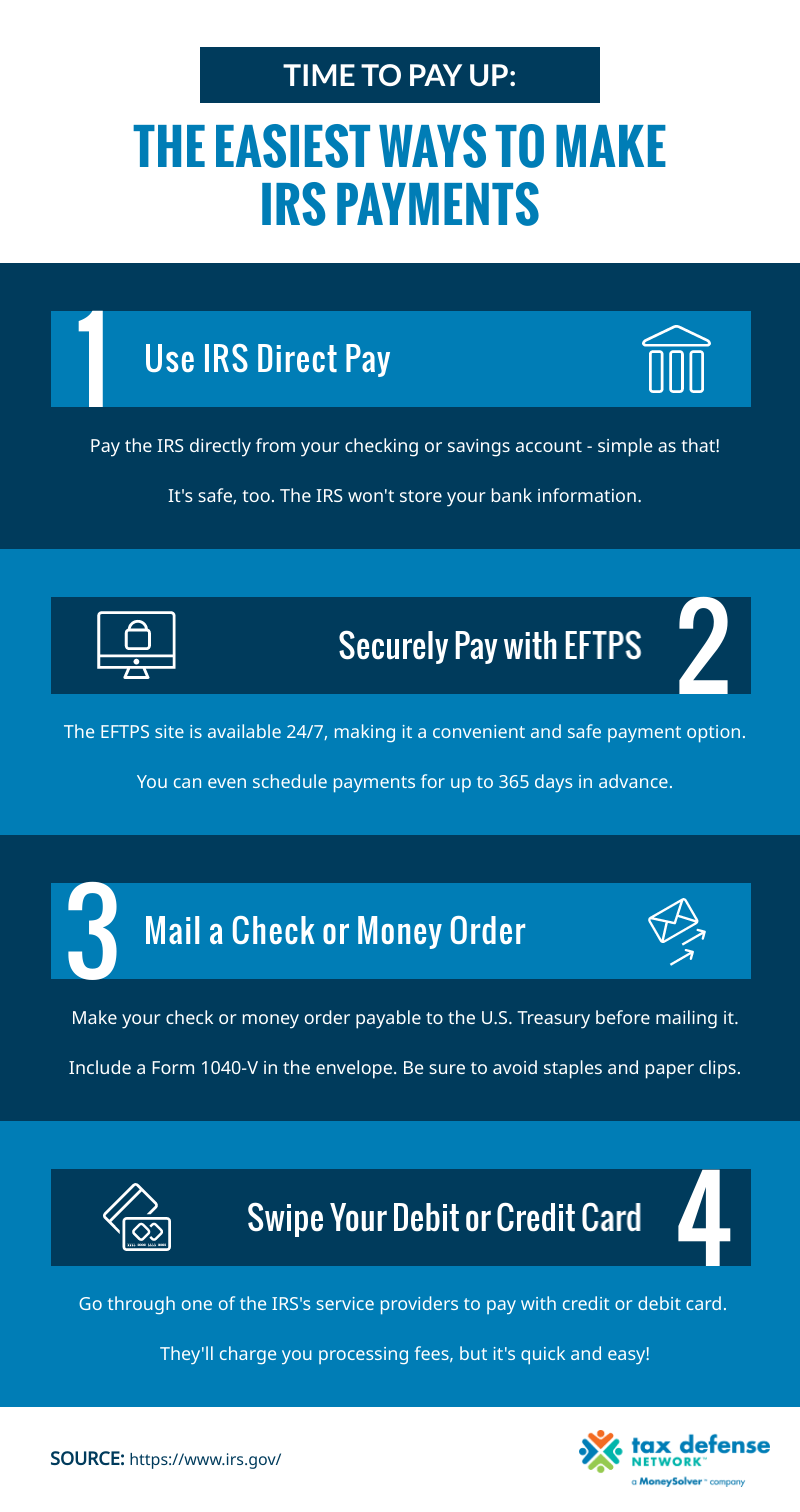
In an increasingly digital world, the Internal Revenue Service (IRS) has significantly expanded its online payment options, offering convenience, speed, and often, enhanced security. For many, these digital pathways represent the most efficient way to fulfill their tax obligations.
Direct Pay (IRS.gov)
IRS Direct Pay stands out as a free, secure, and user-friendly service allowing individuals to pay their tax bills or make estimated tax payments directly from their checking or savings account. This method utilizes the Automated Clearing House (ACH) system, which means funds are transferred electronically from your bank directly to the U.S. Treasury.
-
Advantages: It’s completely free, offers immediate confirmation, and allows payments to be scheduled up to 365 days in advance. You can also view your payment history for up to 180 days. This makes it an excellent choice for those who prefer to set and forget, or for quarterly estimated payments.
-
How to Use It: You’ll need your bank account number and routing number. For security, the IRS verifies your identity using information from a previous tax return, an estimated tax payment, or a tax transcript. It’s crucial to input correct information to avoid payment rejections and potential penalties.
Electronic Federal Tax Payment System (EFTPS)
EFTPS is a long-standing electronic payment system designed for both individuals and businesses. While Direct Pay is more suitable for one-off personal payments, EFTPS offers greater flexibility, especially for businesses, and allows users to schedule payments up to 365 days in advance.
-
For Individuals: It’s ideal for those who make frequent estimated tax payments or need a robust system to manage their tax liabilities proactively. Once enrolled, you can pay via the EFTPS website or through a dedicated phone system.
-
For Businesses: EFTPS is a cornerstone for business tax compliance, handling payments for various federal taxes including income tax, employment tax, and excise tax. Businesses often find its scheduling features invaluable for cash flow management and avoiding last-minute rushes.
-
Enrollment: Unlike Direct Pay, EFTPS requires a registration process where you receive a Personal Identification Number (PIN) by mail. This multi-step process enhances security but requires forethought.
Third-Party Payment Processors
For taxpayers who prefer to use a debit card, credit card, or digital wallet (such as PayPal), the IRS partners with several approved third-party payment processors. These processors facilitate the transaction, charging a small fee for their service.
-
Fees vs. Convenience: While these methods offer unparalleled convenience and the potential to earn credit card rewards, the processing fees (which vary by processor and payment type) must be weighed against the benefits. For large payments, these fees can accumulate.
-
When to Consider: This option is particularly appealing if you need to defer payment for a short period, are close to a deadline, or wish to leverage credit card rewards programs. However, always ensure your credit card’s Annual Percentage Rate (APR) doesn’t negate any rewards gained, especially if you can’t pay off the balance immediately.
Tax Software Integration
Many popular tax preparation software programs (e.g., TurboTax, H&R Block, TaxAct) offer integrated payment solutions. After you’ve prepared your return, the software can often guide you through the process of making a direct debit from your bank account or linking to a third-party processor. This seamless integration can save time and reduce the chances of errors, as payment details are often pre-populated directly from your return.
The Traditional Path: Mail-In Payments
Despite the proliferation of digital options, mailing a check or money order remains a viable and necessary method for some taxpayers, particularly those who prefer not to conduct financial transactions online or those who face specific circumstances.
Payment by Check or Money Order
When mailing your payment, precision is paramount. Your check or money order should be made payable to the “U.S. Treasury.” Do not send cash through the mail.
-
What to Include: Crucially, you must write your name, address, daytime phone number, Social Security number (SSN) or Employer Identification Number (EIN), the tax year, and the related tax form number (e.g., “2023 Form 1040”) on the check or money order. This information ensures your payment is correctly attributed.
-
Payment Voucher: If you are filing Form 1040, you should include Form 1040-V, Payment Voucher. This voucher is designed to accompany your check and contains essential identifying information printed in a scannable format.
Locating the Correct IRS Mailing Address
Perhaps the most critical step when mailing a payment is ensuring it reaches the correct IRS processing center. The mailing address varies based on several factors:
-
Your Geographic Location: The state you live in often determines which IRS service center processes your return and payment.
-
The Type of Form You’re Filing: Different forms (e.g., Form 1040 for individual income tax, Form 1120 for corporate income tax, Form 941 for employer’s quarterly federal tax) may have distinct mailing addresses.
-
Whether You’re Sending a Payment With or Without Your Return: There are often separate addresses for payments submitted with a filed return versus payments sent on their own (e.g., estimated tax payments).
Always consult the instructions for your specific tax form or the IRS website (IRS.gov) for the most current and accurate mailing address. Using the wrong address can significantly delay processing and potentially lead to penalties.
Certified Mail Recommendations
For added peace of mind, especially when mailing significant payments, consider using certified mail with a return receipt from the U.S. Postal Service. This provides official proof of mailing and proof of delivery, which can be invaluable in the rare event of a dispute or if the IRS claims not to have received your payment.
When to Opt for Mail
While digital is often faster, mail might be preferred or necessary if:
-
You do not have a bank account or prefer not to link it online.
-
You are uncomfortable with online financial transactions.
-
You are submitting a payment that requires accompanying physical documentation not easily uploaded online.
Special Circumstances and Other Payment Options
Beyond the standard online and mail-in methods, the IRS provides solutions for various unique situations, from quarterly payments to financial hardship.
Estimated Tax Payments
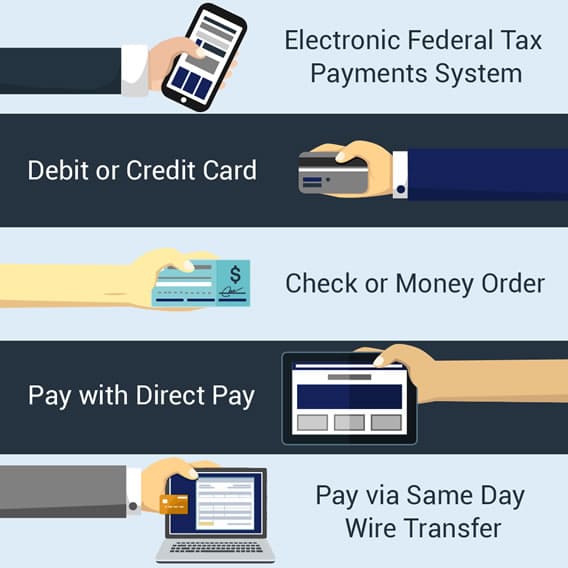
Many taxpayers, including self-employed individuals, independent contractors, and those with significant investment income, are required to pay estimated taxes quarterly. These payments ensure that tax liabilities are met throughout the year rather than in one lump sum at year-end. Both IRS Direct Pay and EFTPS are excellent choices for managing estimated tax payments, allowing for scheduling and consistent record-keeping. Using the correct payment voucher (Form 1040-ES for individuals) is essential if mailing.
Payment Plans and Agreements
If you owe taxes but cannot pay the full amount by the deadline, ignoring the problem is the worst approach. The IRS offers several options to help taxpayers manage their debt:
-
Short-Term Payment Plan: Allows up to 180 additional days to pay your tax liability in full, though interest and penalties still apply.
-
Installment Agreement: Allows you to make monthly payments for up to 72 months. You’ll still incur interest and penalties, but they may be lower than if you didn’t set up an agreement.
-
Offer in Compromise (OIC): This allows certain taxpayers to settle their tax debt with the IRS for a lower amount than what they originally owe. An OIC is typically approved when taxpayers can demonstrate that they cannot pay their full tax liability or doing so would cause significant financial hardship.
Exploring these options promptly can prevent further penalties and collections actions.
Cash Payments
While not encouraged for security reasons, it is possible to pay federal taxes with cash through IRS retail partners. These are third-party services like PayNearMe or MoneyGram that allow taxpayers to make payments in person at designated retail locations. You must first obtain a payment barcode from the IRS website. This method typically incurs a fee and has daily limits.
International Payments
For U.S. citizens or residents living abroad, making federal tax payments requires special attention. While online methods like Direct Pay and EFTPS are generally available globally, some banks may have restrictions on international transfers. Wire transfers are also an option, but specific instructions (including routing numbers and account details for the U.S. Treasury) must be obtained directly from the IRS to ensure the payment is correctly received and credited.
Key Considerations for Every Taxpayer
Regardless of the payment method you choose, several overarching principles ensure a smooth and financially responsible tax payment process.
Understanding Payment Due Dates
Missing a tax payment deadline can result in penalties and interest. Key dates include:
-
April 15: Generally the deadline for filing and paying individual income taxes for the previous year.
-
January 15, April 15, June 15, September 15: Quarterly estimated tax payment deadlines.
-
October 15: Extended filing deadline for those who requested an extension (payment is generally still due April 15).
Always be aware of these dates and mark them on your calendar. If a due date falls on a weekend or holiday, it automatically shifts to the next business day.
Verifying Your Payment
After making a payment, it’s prudent to verify that the IRS has received and processed it.
-
Online Methods: IRS Direct Pay provides an immediate confirmation number. EFTPS offers a payment history. Retain these confirmations.
-
Mail-In Payments: Certified mail receipts are your proof of delivery.
-
IRS Account: You can often view your tax account balance and payment history by accessing your online IRS account (though it may take a few weeks for mailed payments to reflect).
The Importance of Record Keeping
Maintain meticulous records of all tax payments. This includes confirmation numbers, bank statements showing debits, certified mail receipts, and copies of checks or money orders. Store these records digitally and/or physically in a secure location for at least three years from the date you filed your original return or two years from the date you paid the tax, whichever is later. These records are invaluable if there’s ever a question about a payment.
Avoiding Common Payment Pitfalls
-
Incorrect Amounts: Double-check your calculations before submitting payment.
-
Wrong Addresses: As discussed, verify the IRS mailing address carefully.
-
Missed Deadlines: Penalties for late payment can accrue quickly.
-
Insufficient Funds: Ensure your bank account has sufficient funds if using direct debit to avoid bounced payment fees and IRS penalties.
Strategic Financial Planning Beyond the Payment
Paying federal taxes is more than just a transaction; it’s an integral part of personal and business financial health.
Integrating Tax Payments into Your Budget
Proactive budgeting for tax liabilities, especially estimated taxes, prevents financial strain. Setting aside a portion of each paycheck or business revenue specifically for taxes ensures funds are available when due, avoiding last-minute scrambling or reliance on credit.
The Impact of Payment Methods on Personal Finance
Choosing a payment method can have subtle financial implications. While credit card rewards might seem appealing, the accompanying processing fees and potential interest charges if the balance isn’t paid immediately can quickly outweigh any benefits. Direct debit from a bank account, while less glamorous, is often the most cost-effective solution. Consider your cash flow, existing debt, and financial goals when deciding.
Seeking Professional Guidance
When in doubt, especially with complex tax situations, consulting a qualified tax professional (such as a CPA or Enrolled Agent) is a wise investment. They can help you determine the correct payment amounts, advise on the best payment methods for your specific circumstances, and assist with setting up payment plans if needed.
Paying your federal taxes correctly and on time is a civic duty and a financial imperative. By understanding the diverse payment options and incorporating best practices into your financial planning, you can navigate the tax landscape with confidence and precision, ensuring your payments are always sent to the right place, at the right time.
aViewFromTheCave is a participant in the Amazon Services LLC Associates Program, an affiliate advertising program designed to provide a means for sites to earn advertising fees by advertising and linking to Amazon.com. Amazon, the Amazon logo, AmazonSupply, and the AmazonSupply logo are trademarks of Amazon.com, Inc. or its affiliates. As an Amazon Associate we earn affiliate commissions from qualifying purchases.