
Navigating the landscape of federal tax payments can feel like a complex endeavor for many individuals and businesses. Beyond simply calculating what you owe, understanding the various methods and correct destinations for your payment is paramount to ensuring compliance, avoiding penalties, and maintaining peace of mind. In an era where financial transactions are increasingly digitized, the Internal Revenue Service (IRS) offers a range of options, from traditional mail to cutting-edge electronic platforms. This comprehensive guide aims to demystify the process, providing a professional, insightful, and engaging roadmap for successfully submitting your federal tax payments. By equipping you with the knowledge of where to send your funds and how, we empower you to confidently meet your tax obligations and manage your financial health effectively.
Understanding Your Federal Tax Obligations
Before delving into the “how” and “where” of sending your payment, a foundational understanding of your tax obligations is essential. This context ensures you’re not just making a payment, but making the right payment for the right reason, at the right time.
Who Needs to Pay Federal Taxes?
Virtually every American who earns income is subject to federal taxes. This includes wages from employment, self-employment income, investment gains, rental income, and various other forms of earnings. The obligation extends to U.S. citizens and resident aliens, even those living abroad, under the U.S. tax system’s global income taxation principle. Businesses, regardless of size or structure, also have distinct federal tax responsibilities, including income tax, employer taxes, and excise taxes, among others. Understanding your specific taxpayer status – whether an individual, a sole proprietor, a partner in a partnership, or a corporate entity – dictates the forms you file and, consequently, the payment methods available and addresses to which you might send payments.
Types of Federal Taxes and Key Deadlines
Federal taxation encompasses several categories, each with its own set of rules and deadlines. The most common include:
- Income Tax: Paid by individuals and corporations on their earnings. For most individuals, this is filed annually, typically by April 15th (or the next business day if April 15th falls on a weekend or holiday).
- Estimated Tax: If you receive income not subject to withholding (e.g., self-employment income, interest, dividends, rent), you might need to pay estimated tax quarterly throughout the year. The deadlines are generally April 15, June 15, September 15, and January 15 of the following year.
- Employer Taxes: Businesses with employees are responsible for withholding income, Social Security, and Medicare taxes from employee wages and remitting them to the IRS. These payments often have frequent, sometimes daily or weekly, deposit schedules.
- Excise Tax: Taxes imposed on certain goods, services, or activities, often paid by businesses.
Missing these deadlines can result in penalties and interest, underscoring the importance of meticulous financial planning and calendar management. Proactive understanding of your specific tax types and their associated due dates is the first line of defense against potential financial setbacks.
Navigating Payment Methods for Federal Taxes
The IRS has significantly expanded its payment options over the years, offering convenience and security through various channels. Choosing the right method often depends on your comfort level with technology, the immediacy of the payment, and your need for confirmation.
Electronic Payment Options: Speed and Security
For most taxpayers, electronic payments are the preferred method due to their speed, accuracy, and instant confirmation. These options reduce the risk of lost mail and often streamline record-keeping.
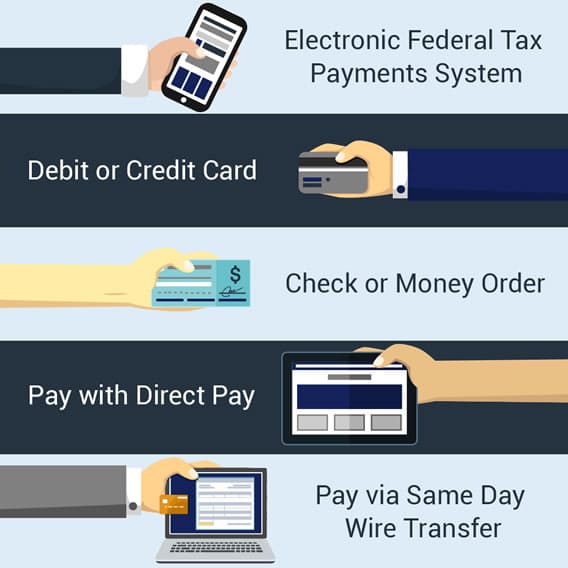
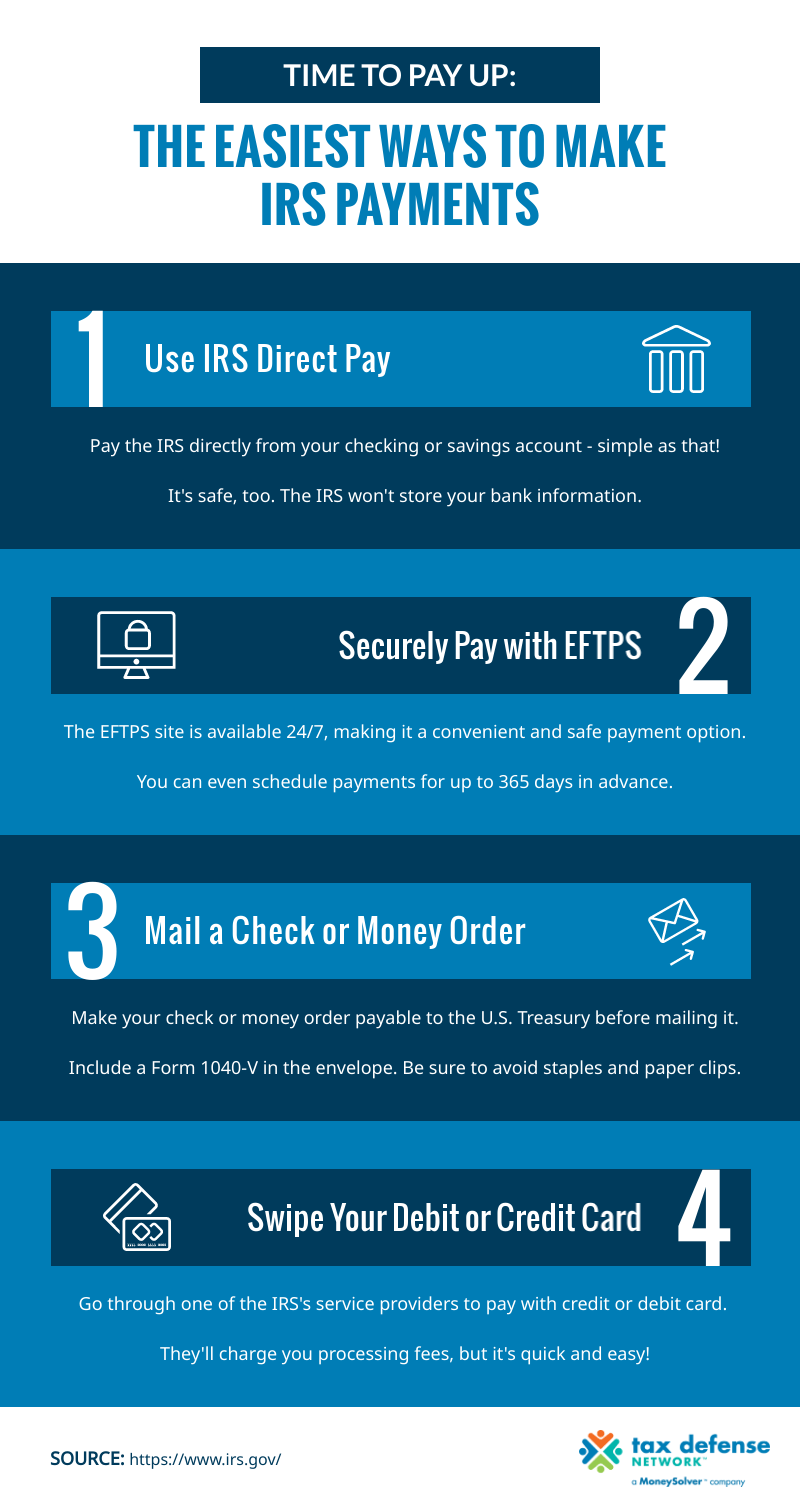
- IRS Direct Pay: This free service allows you to pay directly from your checking or savings account. It’s available for various tax forms (1040, 1040-ES, 1040-V, etc.) and offers email confirmation for your payment. It’s user-friendly and doesn’t require pre-registration.
- Electronic Federal Tax Payment System (EFTPS): A free service provided by the U.S. Department of the Treasury, EFTPS is ideal for individuals and businesses who make regular tax payments, especially estimated taxes or business payroll taxes. It requires enrollment prior to first use, which can take several business days. Once enrolled, you can schedule payments up to 365 days in advance and review your payment history.
- Debit Card, Credit Card, or Digital Wallet: Through third-party payment processors, you can pay your federal taxes using a debit card, credit card, or digital wallet (like PayPal). While convenient, these services typically charge a processing fee, which varies by provider and payment type. It’s crucial to factor these fees into your payment decision.
Paying by Mail: The Traditional Approach
While electronic payments are gaining dominance, paying by mail remains a viable and necessary option for some taxpayers, particularly those who prefer physical documentation or cannot access electronic services.
- Check or Money Order: If mailing your payment, you must send a check or money order made payable to the “U.S. Treasury.” Do not send cash through the mail. Ensure your payment includes your name, address, daytime phone number, Social Security number (or Employer Identification Number for businesses), the tax year, and the related tax form or notice number.
- Payment Voucher (Form 1040-V): When mailing a check or money order for your Form 1040 taxes, you should always include a completed Form 1040-V, Payment Voucher. This voucher helps the IRS correctly credit your payment to your account. Without it, processing can be delayed, or your payment might be misapplied.
Step-by-Step Guide to Mailing Your Payment
For those opting for the mail, precision is key. A small error can lead to significant delays or misapplication of your payment, potentially triggering unnecessary IRS inquiries or penalties.
Essential Information for Your Check/Money Order
Before sealing that envelope, double-check that your check or money order contains all the necessary details. This includes:
- Payable to: “U.S. Treasury”
- Amount: Clearly written in both numeric and word form.
- Your Information: Your full name and current address.
- Identification Number: Your Social Security Number (SSN) for individuals, or Employer Identification Number (EIN) for businesses. If filing jointly, use the SSN of the primary taxpayer listed first on your return.
- Tax Year: The year for which the payment is being made (e.g., “2023 Income Tax”).
- Form Number: The related tax form (e.g., “Form 1040”).
- Signature: Your signature on the check.
Attach your payment securely to the front of your tax return, usually by folding it over the payment voucher or attaching it with a paperclip. Do not staple.
Correct Mailing Addresses (Based on Form and Location)
Perhaps the most critical piece of information for mailed payments is the correct mailing address. The IRS uses different addresses based on the type of form you are filing and your geographic location (the state you live in). Sending your payment to the wrong address can cause significant delays in processing.
- IRS.gov is Your Definitive Source: The most reliable place to find the current mailing address for your specific tax form and state is directly on the IRS website (IRS.gov). Navigate to the “Where to File” section for individual or business returns.
- Examples of Common Addresses (illustrative, always verify on IRS.gov):
- For Form 1040 with a payment, residents of certain states (e.g., Florida, Georgia, North Carolina) might send to: Internal Revenue Service, P.O. Box 931000, Atlanta, GA 31193-1000.
- Residents of other states (e.g., California, Hawaii, Nevada) might send to: Internal Revenue Service, P.O. Box 7704, San Francisco, CA 94120-7704.
- Different addresses exist for those filing without a payment, specific business returns (Form 1120, 1065), or certain forms like Form 1040-ES for estimated taxes.
- Crucial Reminder: Always double-check the IRS website or your tax form’s instructions for the most up-to-date and specific mailing address that applies to your situation. Addresses can change from year to year.
Important Considerations for Mail Payments
- Postmark Date: The IRS generally considers your payment made on the date it is postmarked. To ensure timely payment, mail your return and payment well in advance of the deadline. Consider sending it a week or more before to account for potential postal delays.
- Certified Mail (Recommended): For added security and proof of mailing, consider sending your payment via Certified Mail with a Return Receipt. This provides a legal record of when your payment was mailed and when it was received by the IRS. While an extra cost, it can be invaluable in resolving any disputes regarding timely payment.
- Keep Copies: Always make and retain copies of your completed tax return, payment voucher, and the check or money order itself. This documentation is vital for your financial records and for resolving any discrepancies.
Common Pitfalls and How to Avoid Them
Even with the best intentions, taxpayers can sometimes stumble. Being aware of common issues allows for proactive prevention and quick resolution.
Late Payment Penalties and Interest
The IRS levies penalties for failing to pay on time, even if you file your return on time. The penalty for failure to pay is 0.5% of the unpaid taxes for each month or part of a month that taxes remain unpaid, capped at 25% of your unpaid tax. Additionally, interest accrues on underpayments from the due date of the tax until it is paid in full. The interest rate is variable and can add up quickly. If you anticipate being unable to pay your full tax liability by the deadline, it’s always better to file on time and pay what you can, then explore payment options like an Offer in Compromise or an installment agreement with the IRS.
Underpayment and Estimated Taxes
A common pitfall for self-employed individuals, freelancers, and those with significant investment income is underestimating or failing to pay estimated taxes throughout the year. If you don’t pay enough tax through withholding or estimated payments, you could face an underpayment penalty. To avoid this, generally aim to pay at least 90% of your current year’s tax liability or 100% of your previous year’s tax liability (110% if your Adjusted Gross Income was over $150,000). Regularly reviewing your income and adjusting your estimated payments is a sound financial practice.
Seeking Professional Assistance
Tax laws are complex and constantly evolving. If you find yourself overwhelmed, unsure about your payment obligations, or dealing with a complicated financial situation, seeking advice from a qualified tax professional (e.g., a Certified Public Accountant or Enrolled Agent) is a wise investment. They can help ensure accurate filings, optimize your tax strategy, and guide you through payment processes, potentially saving you money and stress in the long run.
Ensuring Your Payment is Successfully Processed
Submitting your payment is only part of the equation; ensuring its successful processing and proper application to your account is the critical final step.
Record Keeping Best Practices
Diligent record-keeping is your ultimate safeguard. For every tax payment, maintain:
- Copies of all submitted forms: Including your tax return and any payment vouchers.
- Proof of payment: Confirmation emails for electronic payments, scanned copies of checks, or certified mail receipts.
- Bank statements: Showing the debit for the payment.
- Correspondence from the IRS: Keep track of any notices or letters you receive.
Organize these documents systematically, either physically in a dedicated folder or digitally in a secure cloud storage solution. This comprehensive record will be invaluable if any questions arise from the IRS regarding your payment.
Verifying Payment Status
After submitting your payment, it’s prudent to verify that it has been received and processed by the IRS.
- IRS Direct Pay/EFTPS: These platforms often provide immediate confirmation numbers and allow you to view your payment history.
- IRS “View Your Tax Account” online: You can create an account on IRS.gov to view your tax account information, including payment history, within a few weeks of your payment being processed.
- Bank Statement: For mailed checks, monitor your bank statement to see when the check clears.
Allow sufficient time for processing – it can take several weeks for mailed payments to appear on your IRS account.

What to Do If There’s an Issue
If you discover an error, receive an IRS notice stating you haven’t paid, or your payment isn’t reflected on your account after a reasonable processing period:
- Gather Your Records: Have all your payment documentation ready.
- Contact the IRS: Use the phone number provided on any notice you received, or the general IRS customer service line. Be prepared to provide your SSN/EIN, the tax year, payment date, and method.
- Respond to Notices Promptly: Ignoring IRS notices can escalate issues and lead to further penalties. Address them immediately, providing any requested information.
Successfully managing your federal tax payments requires a combination of timely action, attention to detail, and a clear understanding of the available options. By leveraging electronic payment methods when possible, meticulously following instructions for mailed payments, and maintaining diligent records, you can confidently fulfill your tax obligations, contributing to your overall financial well-being and peace of mind.
aViewFromTheCave is a participant in the Amazon Services LLC Associates Program, an affiliate advertising program designed to provide a means for sites to earn advertising fees by advertising and linking to Amazon.com. Amazon, the Amazon logo, AmazonSupply, and the AmazonSupply logo are trademarks of Amazon.com, Inc. or its affiliates. As an Amazon Associate we earn affiliate commissions from qualifying purchases.