
Selling a car is more than just a transaction; it’s a significant financial event that requires strategic planning to maximize your return. Whether you’re upgrading, downsizing, or simply need to free up capital, understanding the various avenues available and their financial implications is crucial. This guide delves into the most effective strategies for selling your car for cash, focusing on how to secure the best possible financial outcome while navigating the process smoothly and securely. We’ll explore the nuances of valuation, the pros and cons of different selling platforms, and the essential financial and legal safeguards to ensure a successful sale.

Understanding Your Car’s True Financial Value
Before you even consider listing your vehicle, an accurate understanding of its market value is paramount. This initial step sets the foundation for your pricing strategy and ultimately dictates the cash you can expect to receive. Overpricing can deter potential buyers, while underpricing leaves money on the table.
Factors Influencing Resale Value
Several critical elements collectively determine your car’s resale value. The make, model, and year are foundational, with certain brands and models holding their value better than others due to reputation, reliability, and demand. Mileage is a primary indicator of wear and tear; lower mileage generally commands a higher price. The car’s overall condition, encompassing both mechanical integrity and cosmetic appearance, significantly impacts its appeal and value. This includes the engine, transmission, brakes, tires, as well as paintwork, interior cleanliness, and any dents or scratches. Features and optional extras, such as advanced safety systems, premium infotainment, or luxury packages, can enhance value. Finally, market demand for your specific vehicle type in your local area plays a crucial role, influenced by economic conditions, fuel prices, and seasonal trends.
Utilizing Valuation Tools and Resources
Leveraging professional valuation tools is essential for an objective assessment. Websites like Kelley Blue Book (KBB), Edmunds, and NADAguides offer comprehensive valuation services based on real-time market data, your car’s specific details, and its condition. These tools provide different valuations, such as trade-in value, private party value, and retail value, helping you understand the financial spectrum of your car’s worth. It’s advisable to check multiple sources to get a well-rounded estimate. Furthermore, looking at comparable listings on popular sales platforms can give you a practical sense of what similar vehicles are currently selling for in your local market.
The Impact of Condition on Cash Offers
The physical and mechanical condition of your car directly translates into cash offers. A well-maintained vehicle with a clean history will naturally command a higher price. Consider whether minor repairs, such as fixing small dents, paint scratches, or replacing worn-out tires, could significantly boost your car’s appeal and, consequently, its financial return. This often involves a cost-benefit analysis: will the investment in repair yield a greater return in the final sale price? Major overhauls, however, might not always provide a positive return on investment, especially if the repair cost approaches or exceeds the potential increase in value. A detailed service history and records of maintenance can also add substantial value, demonstrating responsible ownership and proactive care.
Direct Sales: Maximizing Your Cash Return
Selling your car privately is often the path to the highest cash payout. While it demands more effort and time, the financial rewards can be significantly greater than trading it in or selling to an instant cash offer service.
Private Party Sale: The Highest Potential Payout
A private party sale involves selling your car directly to an individual buyer, bypassing dealerships or middlemen. This method allows you to set your own price, negotiate directly, and retain the profit margin that a dealer would otherwise take. The primary advantage is the potential for a higher selling price, often thousands more than a trade-in offer. However, it comes with its own set of demands: you’re responsible for advertising, responding to inquiries, arranging test drives, negotiating, and handling all paperwork. This process can be time-consuming and requires a degree of financial acumen and interpersonal skill. Security concerns, such as dealing with strangers and ensuring secure payment, also need careful management.
Navigating Online Marketplaces and Classifieds
The internet has revolutionized private car sales, offering powerful platforms to connect sellers with a vast pool of potential buyers. Autotrader, Craigslist, Facebook Marketplace, and eBay Motors are among the most popular online marketplaces.
-
Autotrader offers a professional platform with advanced search filters, reaching serious buyers.
-
Craigslist provides a free and widely accessible platform, though it can attract more casual inquiries and require more vigilance against scams.
-
Facebook Marketplace leverages social networks, making it easy to list and share with local communities.
-
eBay Motors is ideal for unique or classic cars, reaching a national and international audience.
When using these platforms, high-quality photos, a detailed and honest description, and a clear asking price are crucial for attracting legitimate interest. Be prepared to answer questions and provide additional information, always prioritizing your financial safety and personal security throughout the process.
Preparing Your Car for a Private Sale to Secure Top Dollar
To achieve the highest possible cash offer from a private sale, presenting your car in its best light is non-negotiable. This involves a multi-pronged approach:
-
Detailing and Cleaning: A thorough interior and exterior clean, including waxing, vacuuming, and addressing any odors, can significantly enhance curb appeal. This small investment often yields a substantial return in buyer perception.
-
Minor Repairs: Address any small, inexpensive repairs that are noticeable, such as replacing a broken light, fixing a loose trim piece, or topping off fluids. These details contribute to the perception of a well-maintained vehicle.
-
Gathering Documentation: Compile all service records, maintenance history, and original owner’s manuals. A transparent history builds trust and demonstrates the car’s financial integrity.
-
Pre-Sale Inspection: Consider having a pre-sale inspection by a trusted mechanic. This can identify any underlying issues you might want to address or disclose, preventing surprises during a buyer’s inspection and building confidence in your asking price. An honest presentation often leads to a quicker and more financially satisfying sale.
Expedited Sales: Balancing Speed and Cash Value
For sellers prioritizing speed and convenience over maximizing every dollar, several expedited selling options exist. These methods typically offer a quicker transaction but often at a slightly reduced cash payout compared to a private sale.
Instant Cash Offer Services and Dealership Trade-ins
Companies like CarMax, Vroom, and Carvana have popularized the “instant cash offer” model. You provide details about your car online, and they give you an immediate offer, often valid for several days. If you accept, they handle the pick-up and payment, making the process incredibly streamlined. These services are excellent for sellers who need fast cash and want to avoid the complexities of private sales. Similarly, dealership trade-ins offer convenience; you can sell your old car and purchase a new one in a single transaction. While the trade-in value might be lower than a private sale, the financial benefit can sometimes be realized through a reduction in sales tax on the new vehicle purchase (depending on state laws).

The Financial Trade-offs of Convenience
The primary trade-off with expedited sales is the difference in cash received. While you gain significant convenience – no advertising, no dealing with individual buyers, no paperwork hassle – you generally accept a lower financial offer. These services and dealerships need to make a profit, so their offers will naturally be below market retail value. The decision to opt for an expedited sale often boils down to a personal financial calculation: how much is your time and peace of mind worth? If you need cash quickly due to a financial emergency, or if you simply don’t have the time or inclination for a private sale, the convenience factor can outweigh the smaller cash payout. It’s an important aspect of personal financial planning to consider.
Weighing Pros and Cons of Dealer Offers Against Market Value
When considering a dealer offer (either through trade-in or a direct purchase), it’s crucial to understand how it compares to your car’s true market value. Dealers assess vehicles based on their potential resale profit, which includes reconditioning costs, overhead, and profit margin. Therefore, their “cash” offer will almost always be less than the private party value you might achieve.
-
Pros of Dealer Offers: Speed, simplicity, avoiding buyer negotiations, potential sales tax savings on a new purchase, and avoiding potential post-sale liabilities.
-
Cons of Dealer Offers: Lower cash payout compared to a private sale, less control over the selling price, and limited negotiation room.
To make an informed financial decision, always get a firm cash offer from at least one instant cash service or dealership, then compare it with your estimated private party value. This comparison helps you quantify the financial difference and decide if the convenience justifies the reduced cash sum.
Alternative Avenues for Generating Cash from Your Car
Beyond the traditional private sale or dealership routes, several other options exist for selling your car for cash, each catering to specific situations and vehicle types. These methods can be particularly useful when conventional sales are challenging.
Selling to Car Buying Services for Quick Liquidity
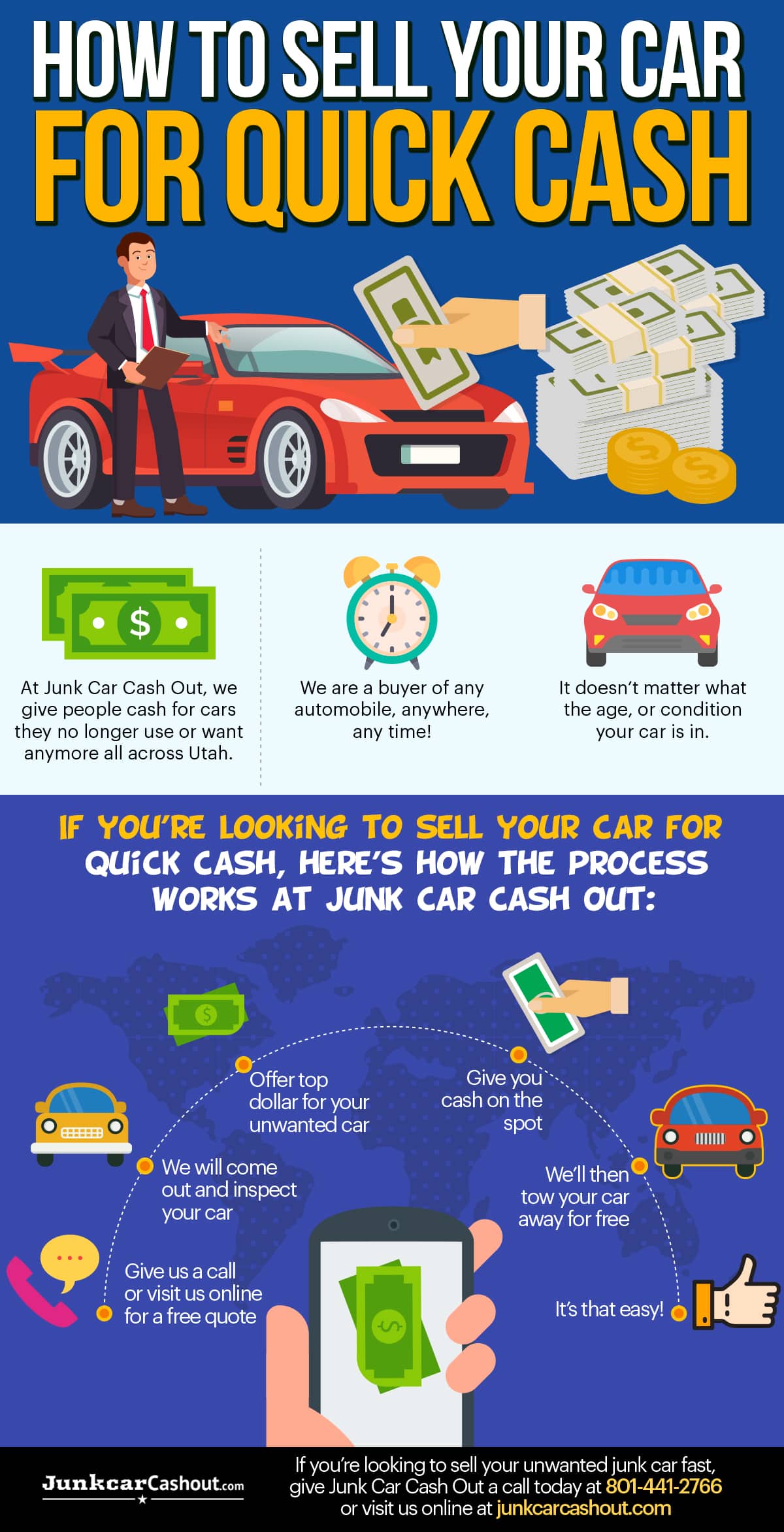
Dedicated “we buy cars for cash” services often specialize in purchasing vehicles that might be difficult to sell through other channels – perhaps older models, cars with high mileage, or those needing significant repairs. While their cash offers are typically lower than private party sales, they provide an incredibly fast and straightforward way to convert your vehicle into liquidity. These services are excellent for sellers who need immediate cash and are not concerned with maximizing every last dollar. They handle all the paperwork and usually offer free pick-up, simplifying the process immensely for the seller. It’s a pragmatic financial solution for quick asset disposal.
Auto Auctions: A Niche for Specific Vehicles
Auto auctions can be a viable option for certain types of vehicles, such as classic cars, luxury vehicles, or even salvage-title cars. For classic or rare vehicles, an auction can create a competitive bidding environment that potentially drives up the cash price beyond what a private sale might achieve. For damaged or non-running cars, salvage auctions can provide a better return than simply scrapping the vehicle. However, selling at auction comes with its own financial considerations: there are often listing fees, seller’s premiums, and transportation costs. The final selling price is also subject to the whims of the bidders on the day, meaning the cash return can be unpredictable. This method is best suited for sellers with specific types of cars and a willingness to accept potential variability in the financial outcome.
Parting Out for Maximum Component Value (If Vehicle is Salvage)
If your vehicle is severely damaged, non-functional, or considered a write-off, parting it out for its individual components can sometimes yield more cash than selling it whole as scrap. High-value parts like the engine, transmission, catalytic converter (due to precious metals), wheels, and interior components can be sold individually to mechanics, enthusiasts, or auto recyclers. This is an extremely labor-intensive process, requiring mechanical knowledge, storage space, and significant time to list and sell each part. While it offers the potential for a higher cumulative cash return compared to a low-ball scrap offer, the effort involved is substantial. This option is typically considered a last resort for vehicles with no viable resale value as a complete unit and where the seller has the time and expertise to undertake the endeavor.
Financial and Legal Considerations for a Smooth Sale
Regardless of the selling method chosen, a clear understanding of the financial and legal aspects is paramount. Protecting yourself from fraud, ensuring a legitimate transfer of ownership, and being aware of potential tax implications are critical steps to a successful and financially secure sale.
Essential Paperwork and Title Transfer Procedures
Proper documentation is the bedrock of a legally sound car sale. The most crucial document is the vehicle title, which proves ownership. You must ensure the title is free of any liens (e.g., from a car loan) before you can transfer it. If you have a loan, you’ll need to pay it off, and the lender will send you the clear title. Upon sale, you’ll endorse the title over to the new owner. Additionally, a bill of sale is highly recommended, even if not legally required in your state. This document details the transaction, including the buyer’s and seller’s information, the vehicle’s details (VIN, make, model, year), the agreed-upon cash price, and the date of sale. It serves as a financial and legal record, protecting both parties. Always keep a copy for your records. Remember to notify your state’s Department of Motor Vehicles (DMV) of the sale to avoid future financial liabilities associated with the vehicle.
Safeguarding Your Financial Transaction
When exchanging your car for cash, protecting your financial interests is crucial. Never accept personal checks; they can bounce, leaving you without your car or money. Cashier’s checks or bank checks are safer options, but even these can be fraudulent. The safest way to accept payment for a private sale is to meet the buyer at your bank and have the bank verify the cashier’s check’s authenticity or, even better, have the buyer perform a wire transfer directly from their bank to yours while you are both present. For smaller amounts, verifiable digital payment services might be an option, but always be wary of payment reversal scams. If you accept physical cash, verify its authenticity, especially for large sums. Under no circumstances should you release the car or its title until you have confirmed receipt of the full, legitimate payment.
Understanding Tax Implications of Selling Your Vehicle
The tax implications of selling your car can vary significantly by jurisdiction and the nature of the sale. In most cases, if you sell your personal car for less than you paid for it (which is common due to depreciation), you won’t owe capital gains tax. However, if you sell a car for more than its original purchase price (e.g., a classic car appreciating in value), you might be subject to capital gains tax on the profit. Some states also have specific rules regarding sales tax on private vehicle transactions; for instance, some might require the buyer to pay sales tax on the purchase, or if you’re trading in, the trade-in value might reduce the taxable amount of your new vehicle purchase. It’s always wise to consult with a tax professional or your state’s revenue department to understand your specific obligations and avoid any unexpected financial surprises after the sale. Proper financial record-keeping of the purchase price, maintenance costs, and selling price is essential for tax purposes.
Selling your car for cash is a multi-faceted process that, with careful planning and an understanding of the available options, can be financially rewarding. Whether you prioritize maximizing your cash return through a private sale or opt for the speed and convenience of an expedited service, arming yourself with knowledge about valuation, market dynamics, and essential financial and legal safeguards will ensure a smooth, secure, and profitable transaction. By approaching the sale with a strategic mindset, you can effectively convert your vehicle into liquid assets, funding your next financial goal or need.
aViewFromTheCave is a participant in the Amazon Services LLC Associates Program, an affiliate advertising program designed to provide a means for sites to earn advertising fees by advertising and linking to Amazon.com. Amazon, the Amazon logo, AmazonSupply, and the AmazonSupply logo are trademarks of Amazon.com, Inc. or its affiliates. As an Amazon Associate we earn affiliate commissions from qualifying purchases.