
The S&P 500 index stands as a cornerstone of the global financial markets, representing the performance of 500 of the largest publicly traded companies in the United States. For investors seeking broad market exposure, diversification, and a track record of long-term growth, the S&P 500 often serves as an attractive investment benchmark. However, unlike individual stocks or bonds, you cannot directly “invest in the S&P 500” itself. Instead, investors gain exposure to this influential index through various financial products designed to mirror its performance. Understanding these vehicles, the platforms available, and the critical considerations involved is paramount for anyone looking to harness the power of this market bellwether.
This article will delve into the practicalities of investing in the S&P 500, exploring the popular instruments, the best platforms for different investor profiles, and the essential factors to consider before allocating your capital. Our aim is to provide a comprehensive, insightful, and actionable guide for both novice and experienced investors alike.
Understanding the S&P 500 as an Investment Vehicle
Before diving into “where” to invest, it’s crucial to grasp “what” you’re investing in and “why” it holds such significance in the investment landscape.
What is the S&P 500?
The S&P 500, or Standard & Poor’s 500, is a stock market index that tracks the performance of 500 large companies listed on stock exchanges in the United States. It is a market-capitalization-weighted index, meaning companies with larger market values have a greater impact on the index’s overall performance. Maintained by S&P Dow Jones Indices, it is widely regarded as one of the best gauges of large-cap U.S. equities and a leading indicator of the U.S. stock market’s health. The companies included span diverse sectors, from technology giants like Apple and Microsoft to financial powerhouses like JPMorgan Chase and consumer staples brands like Procter & Gamble, offering inherent diversification across the American economy.
Why Invest in the S&P 500?
Investing in the S&P 500 offers several compelling advantages for a well-rounded portfolio:
- Broad Diversification: By holding 500 companies across 11 major sectors, an S&P 500 investment inherently diversifies your risk. This means you’re not overly reliant on the performance of a single company or industry.
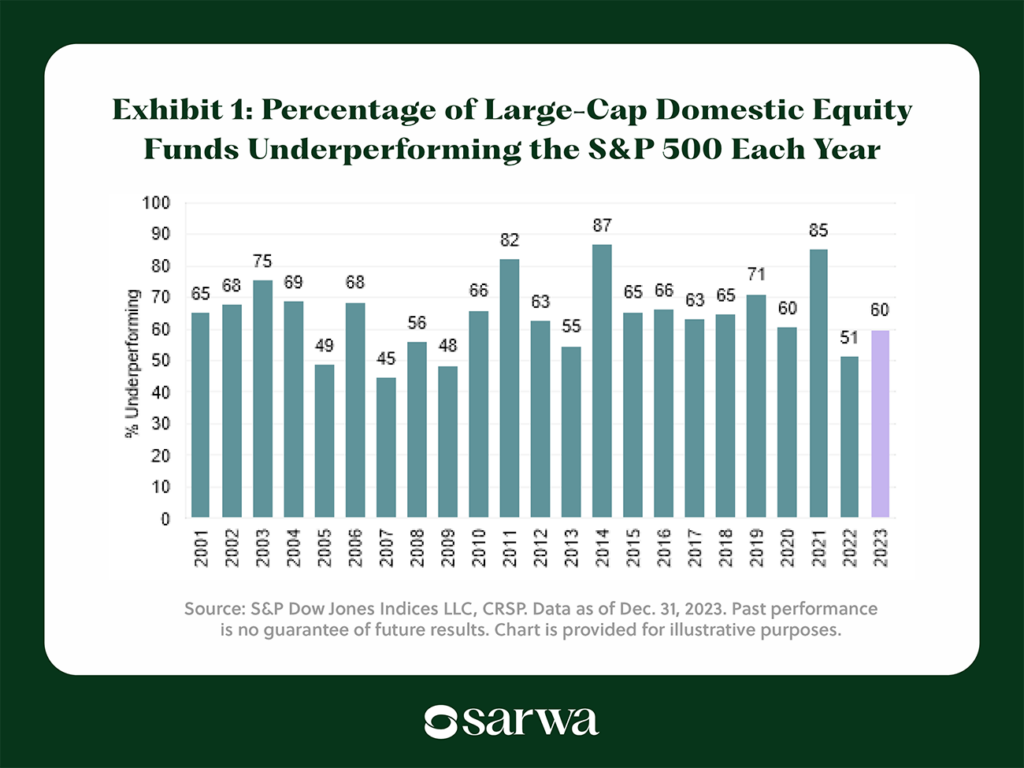
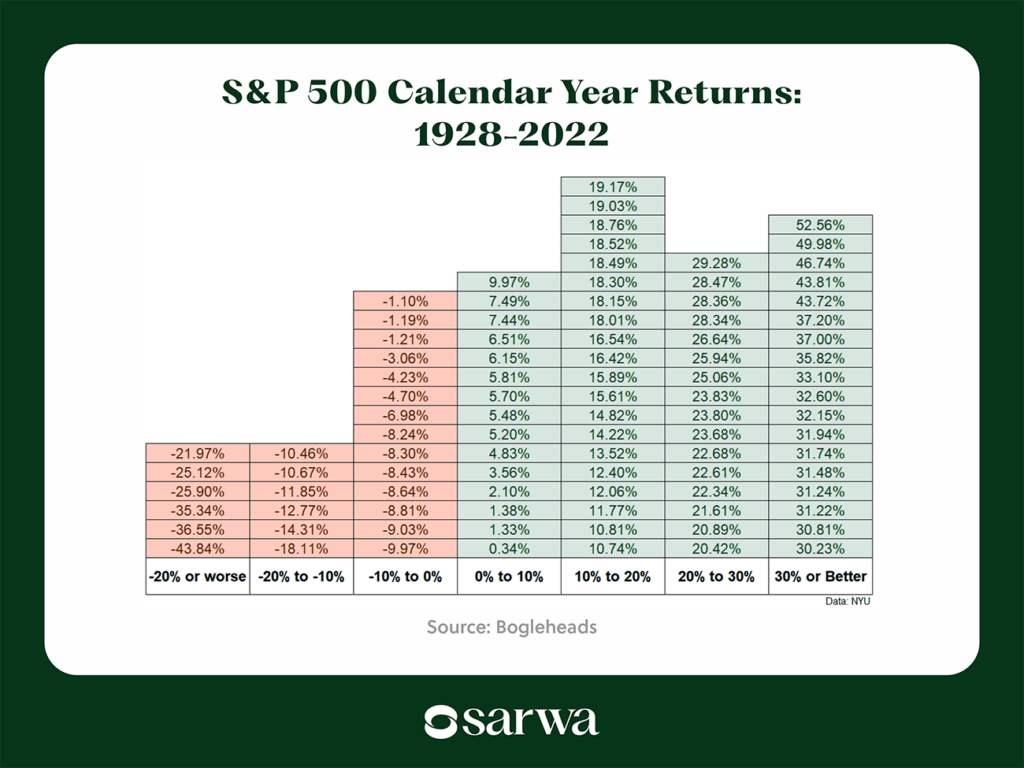
- Long-Term Growth Potential: Historically, the S&P 500 has delivered impressive long-term returns, averaging around 10% annually over several decades, though past performance is not indicative of future results. It represents the collective growth and innovation of America’s largest corporations.
- Passive Investing Benefits: Investing in an S&P 500 fund is a form of passive investing. It eliminates the need for individual stock picking, frequent trading, and extensive research, often leading to lower fees and less stress compared to actively managed strategies.
- Ease of Access: Gaining exposure to the S&P 500 is incredibly straightforward, thanks to a proliferation of low-cost funds and user-friendly investment platforms.
- Lower Idiosyncratic Risk: While market risk remains, the risk associated with a single company’s poor performance (idiosyncratic risk) is significantly mitigated when you hold 500 companies.
The Difference Between Investing in the Index vs. Individual Stocks
It’s important to reiterate that you cannot directly buy “the S&P 500.” The index itself is merely a theoretical basket of stocks used to measure market performance. When people talk about investing in the S&P 500, they are referring to purchasing shares of investment vehicles that track the index. This distinction is crucial as it guides your choice of investment product. Unlike buying individual stocks, where you pick specific companies, investing in an S&P 500 tracker means you own a tiny slice of all 500 companies in the index, proportional to their market capitalization.
Popular Investment Vehicles for S&P 500 Exposure
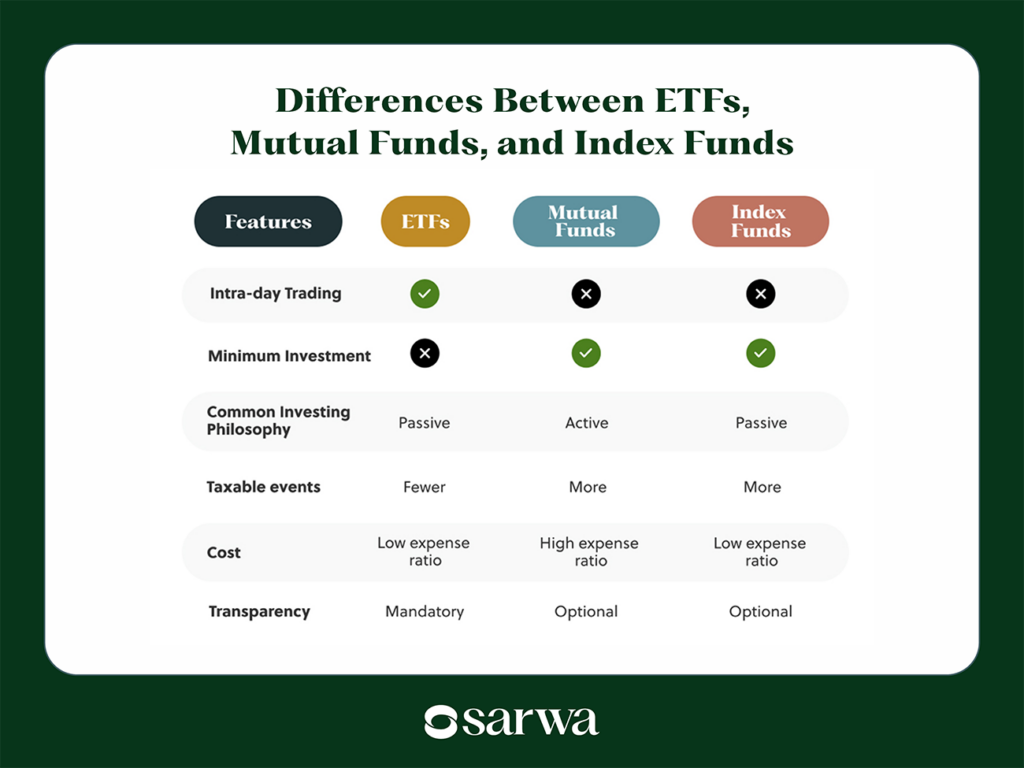
To invest in the S&P 500, you will typically choose between two primary types of funds: Exchange-Traded Funds (ETFs) and Index Mutual Funds. Both offer similar exposure but have distinct structural differences.
S&P 500 Exchange-Traded Funds (ETFs)
ETFs are investment funds that hold a basket of assets—in this case, the stocks that make up the S&P 500—and trade on stock exchanges like individual stocks. They offer a highly efficient and flexible way to gain S&P 500 exposure.
- How They Work: An S&P 500 ETF aims to replicate the performance of the index by holding all or a representative sample of its constituent stocks. When you buy a share of an S&P 500 ETF, you are buying a small portion of this diversified portfolio.
- Advantages:
- Low Expense Ratios: Most S&P 500 ETFs have extremely low expense ratios (annual fees), often ranging from 0.03% to 0.09%, which means more of your money stays invested and compounds over time.
- Liquidity: ETFs can be bought and sold throughout the trading day at market prices, similar to stocks.
- Diversification: Instant diversification across 500 large U.S. companies.
- Tax Efficiency: ETFs are often more tax-efficient than traditional mutual funds due to their creation/redemption mechanism.
- Examples: Some of the most popular S&P 500 ETFs include:
- SPDR S&P 500 ETF Trust (SPY): One of the oldest and largest ETFs, known for its high liquidity.
- iShares Core S&P 500 ETF (IVV): Another popular option from BlackRock, often with a slightly lower expense ratio than SPY.
- Vanguard S&P 500 ETF (VOO): Known for its extremely low expense ratio and strong association with Vanguard’s investor-friendly philosophy.
S&P 500 Index Mutual Funds
Index mutual funds, particularly those tracking the S&P 500, are another excellent option. They are professionally managed funds that pool money from multiple investors to invest in a specific portfolio designed to mirror an index.
- How They Work: Similar to ETFs, an S&P 500 index mutual fund aims to replicate the index’s performance. The main difference is in how they are traded. Mutual funds are bought and sold directly from the fund company at their Net Asset Value (NAV) once per day, after the market closes.
- Advantages:
- Automatic Rebalancing: Fund managers handle the rebalancing to ensure the fund continues to accurately track the S&P 500.
- Convenience for Regular Investing: Often preferred for automated investing strategies like dollar-cost averaging, especially in retirement accounts where fractional shares are common.
- Diversification: Provides the same broad diversification as S&P 500 ETFs.
- Disadvantages:
- Higher Expense Ratios (sometimes): While many S&P 500 index mutual funds now offer very low expense ratios, some older or actively managed “S&P 500” funds might still carry higher fees. Always check the expense ratio.
- Trading Restrictions: You can only buy or sell shares once per day at the closing NAV, which lacks the intra-day liquidity of ETFs.
- Examples:
- Vanguard 500 Index Fund Admiral Shares (VFIAX): A highly regarded and very low-cost option.
- Fidelity 500 Index Fund (FXAIX): Another excellent choice with a minimal expense ratio.
- Schwab S&P 500 Index Fund (SWPPX): A competitive option from Charles Schwab.
Robo-Advisors and Automated Investing Platforms
For investors who prefer a hands-off approach, robo-advisors offer a streamlined path to S&P 500 exposure. These digital platforms use algorithms to build and manage diversified portfolios based on your risk tolerance and financial goals, often including S&P 500 ETFs or mutual funds as core components.
- How They Work: You typically answer a series of questions about your financial situation, goals, and risk appetite. The robo-advisor then constructs a portfolio, automatically invests your funds, and periodically rebalances it.
- Benefits:
- Simplicity: Ideal for beginners or those who prefer automated management.
- Low Minimums: Many platforms allow you to start with small amounts.
- Automatic Rebalancing and Tax-Loss Harvesting (some platforms): Enhances efficiency without manual intervention.
- Examples:
- Betterment: Offers diversified portfolios with S&P 500 exposure as a core component.
- Wealthfront: Similar to Betterment, with a focus on sophisticated portfolio construction.
- Fidelity Go/Schwab Intelligent Portfolios: Robo-advisor offerings from traditional brokerages.
Choosing the Right Investment Platform and Account Type
Once you’ve decided on the investment vehicle (ETF or mutual fund), the next step is to choose where to open an account and what type of account best suits your financial goals.
Discount Brokerages (DIY Investing)
For most self-directed investors, a discount brokerage firm is the go-to choice. These platforms offer low-cost or commission-free trading of ETFs and often have their own proprietary S&P 500 index mutual funds.
- Pros: Maximum control, low fees, wide selection of investment products, powerful research tools.
- Cons: Requires you to make all investment decisions yourself.
- Examples:
- Fidelity: Offers a comprehensive suite of products, including its own low-cost S&P 500 index funds and ETFs.
- Vanguard: Renowned for its low-cost index funds and ETFs, a favorite among passive investors.
- Charles Schwab: Another major player with a robust platform, diverse offerings, and competitive pricing.
- M1 Finance: Combines elements of DIY investing with automated portfolio management, allowing you to build “pies” of ETFs (including S&P 500 ETFs) and individual stocks.
Full-Service Brokerages and Financial Advisors
If you require personalized financial planning, comprehensive wealth management, and hands-on guidance, a full-service brokerage or independent financial advisor might be more suitable. They can help integrate S&P 500 investments into a broader financial strategy.
- Pros: Personalized advice, holistic financial planning, emotional support during market volatility.
- Cons: Typically involves higher fees (e.g., AUM fees, commission on trades), which can eat into long-term returns.
- When Appropriate: For individuals with complex financial situations, high net worth, or those who simply prefer to delegate investment management.
Retirement Accounts (Tax-Advantaged Investing)
Investing in the S&P 500 within tax-advantaged retirement accounts can significantly boost your long-term returns due to deferred or tax-free growth.
- 401(k) / 403(b): If your employer offers a retirement plan, check if it includes an S&P 500 index fund or a total market fund that largely overlaps with the S&P 500. This is often the first place to invest, especially if there’s an employer match.
- Individual Retirement Accounts (IRAs):
- Traditional IRA: Contributions may be tax-deductible, and earnings grow tax-deferred until retirement. You can open a Traditional IRA at any brokerage and invest in S&P 500 ETFs or mutual funds.
- Roth IRA: Contributions are made with after-tax dollars, but qualified withdrawals in retirement are tax-free. Roth IRAs are excellent vehicles for S&P 500 growth due to the tax-free distributions later on.
- Health Savings Accounts (HSAs): For those with high-deductible health plans, HSAs offer a triple tax advantage (tax-deductible contributions, tax-free growth, tax-free withdrawals for qualified medical expenses). Many HSAs offer investment options, including S&P 500 funds, once a certain cash balance is maintained.
Taxable Brokerage Accounts
For investments outside of retirement accounts, a standard taxable brokerage account provides flexibility without contribution limits or withdrawal restrictions (though capital gains and dividends are taxable). This is suitable for shorter-term goals or simply investing beyond your retirement account capacities.
Key Considerations Before Investing
While the S&P 500 is a popular and generally sound long-term investment, several factors warrant careful consideration.
Expense Ratios and Fees
The single most important factor when choosing an S&P 500 fund is its expense ratio. This annual fee, expressed as a percentage of your investment, directly reduces your returns. Over decades, even a difference of a few basis points (0.01%) can amount to tens of thousands of dollars. Always opt for the lowest expense ratio possible, ideally below 0.10% for an S&P 500 index fund or ETF.
Tracking Error
Tracking error measures how closely a fund’s performance matches that of its underlying index. While most S&P 500 funds have minimal tracking error, it’s worth noting, particularly for less popular or newer funds. Lower tracking error indicates a more efficient replication of the index.
Liquidity (for ETFs)
For ETFs, liquidity refers to how easily shares can be bought and sold without significantly impacting the price. Highly liquid ETFs (like SPY, IVV, VOO) have tight bid-ask spreads, ensuring you can execute trades close to the market price. This is less of a concern for buy-and-hold investors but important for those who might trade more frequently.
Dollar-Cost Averaging
Consider implementing a dollar-cost averaging strategy, especially if you’re new to investing or want to mitigate market timing risk. This involves investing a fixed amount of money at regular intervals (e.g., $200 every month), regardless of market fluctuations. This strategy allows you to buy more shares when prices are low and fewer when prices are high, potentially reducing your average cost over time.
Your Investment Horizon and Risk Tolerance
Investing in the S&P 500 should generally be viewed as a long-term strategy (5+ years, ideally much longer). While diversified, it is still an equity investment and thus subject to market volatility and downturns. Ensure your investment horizon aligns with the inherent risks and rewards of the stock market, and that your risk tolerance is suitable for equity exposure.
Diversification Beyond the S&P 500
While the S&P 500 offers excellent diversification within large-cap U.S. equities, a truly holistic portfolio might consider diversification beyond it. This could include exposure to international stocks (developed and emerging markets), small-cap and mid-cap U.S. equities, and fixed income (bonds) to further reduce overall portfolio volatility and capture different growth drivers. The S&P 500 should be a core holding, but perhaps not your only holding.
Getting Started: A Step-by-Step Guide
Ready to begin your S&P 500 investment journey? Here’s a simple roadmap to follow:
1. Define Your Financial Goals
Before investing, clarify what you’re saving for: retirement, a down payment, a child’s education, or simply wealth building. Your goals will influence your account type and overall investment strategy.
2. Choose Your Investment Vehicle
Decide whether an S&P 500 ETF or an S&P 500 index mutual fund is best for you. ETFs offer intra-day trading and potentially higher tax efficiency, while mutual funds can be simpler for automated, periodic investments. For most long-term investors, either is an excellent choice, with the lowest expense ratio often being the tie-breaker.
3. Select a Brokerage or Platform
Based on your preference for DIY investing, automated management, or personalized advice, choose a brokerage firm (e.g., Fidelity, Vanguard, Schwab) or a robo-advisor (e.g., Betterment). Prioritize low fees, a user-friendly interface, and access to the funds you want.
4. Open and Fund Your Account
Complete the application process for your chosen account type (e.g., Roth IRA, taxable brokerage). Link your bank account and initiate an initial deposit. Many platforms allow electronic transfers, often taking a few business days to clear.
5. Place Your Investment Order
Once your funds have settled, navigate to the investing section of your platform. Search for your chosen S&P 500 ETF (by ticker symbol like VOO) or mutual fund (by ticker symbol like FXAIX) and place a buy order for the desired amount or number of shares. For ETFs, you’ll specify the number of shares; for mutual funds, usually a dollar amount.
6. Monitor and Rebalance (Periodically)
While S&P 500 investing is largely passive, it’s good practice to periodically check your portfolio’s performance. For comprehensive portfolios, rebalancing (adjusting asset allocations back to target weights) might be necessary, but for a standalone S&P 500 fund, ongoing maintenance is minimal. Remember to continue contributing regularly if possible, embracing dollar-cost averaging.
Investing in the S&P 500 provides a powerful, diversified, and historically rewarding way to participate in the growth of the U.S. economy. By understanding the available investment vehicles, choosing the right platform, and adhering to sound investment principles, you can effectively leverage this foundational index to build long-term wealth. Consistency, patience, and a focus on minimizing fees are your best allies on this journey.
aViewFromTheCave is a participant in the Amazon Services LLC Associates Program, an affiliate advertising program designed to provide a means for sites to earn advertising fees by advertising and linking to Amazon.com. Amazon, the Amazon logo, AmazonSupply, and the AmazonSupply logo are trademarks of Amazon.com, Inc. or its affiliates. As an Amazon Associate we earn affiliate commissions from qualifying purchases.