
In the realm of personal finance, travel is often viewed as a discretionary expense that can quickly erode a well-structured budget. However, for the financially savvy individual, the objective is not to eliminate travel, but to optimize the cost-to-value ratio. Finding the cheapest flights is less about luck and more about applying the principles of market analysis, arbitrage, and strategic asset management. By treating airfare as a volatile commodity, travelers can leverage specific tools and methodologies to secure the lowest possible prices, ensuring that their capital is preserved for higher-yield investments or more frequent experiences.

The Economics of Airfare: Understanding Price Volatility
To find the cheapest flights, one must first understand the underlying economic principles that dictate airline pricing. Unlike retail goods with fixed margins, airline seats are “perishable inventory.” Once a flight departs, any empty seat represents a total loss of potential revenue. This reality creates a high-stakes environment where airlines utilize sophisticated algorithms to fluctuate prices based on demand, seasonality, and competitor behavior.
The Dynamic Pricing Model
Airlines employ dynamic pricing, a strategy where costs shift in real-time. This is driven by “Yield Management,” a process of maximizing revenue from a fixed, time-limited resource. For the budget-conscious traveler, this means that the price of a ticket is rarely a reflection of the flight’s objective value, but rather a reflection of what the market is willing to pay at a specific moment. Understanding that prices are in constant flux allows a traveler to approach booking with the mindset of a day trader—watching for “dips” in the market and avoiding “peaks” during high-demand periods like holidays or major sporting events.
Timing the Market vs. Time in the Market
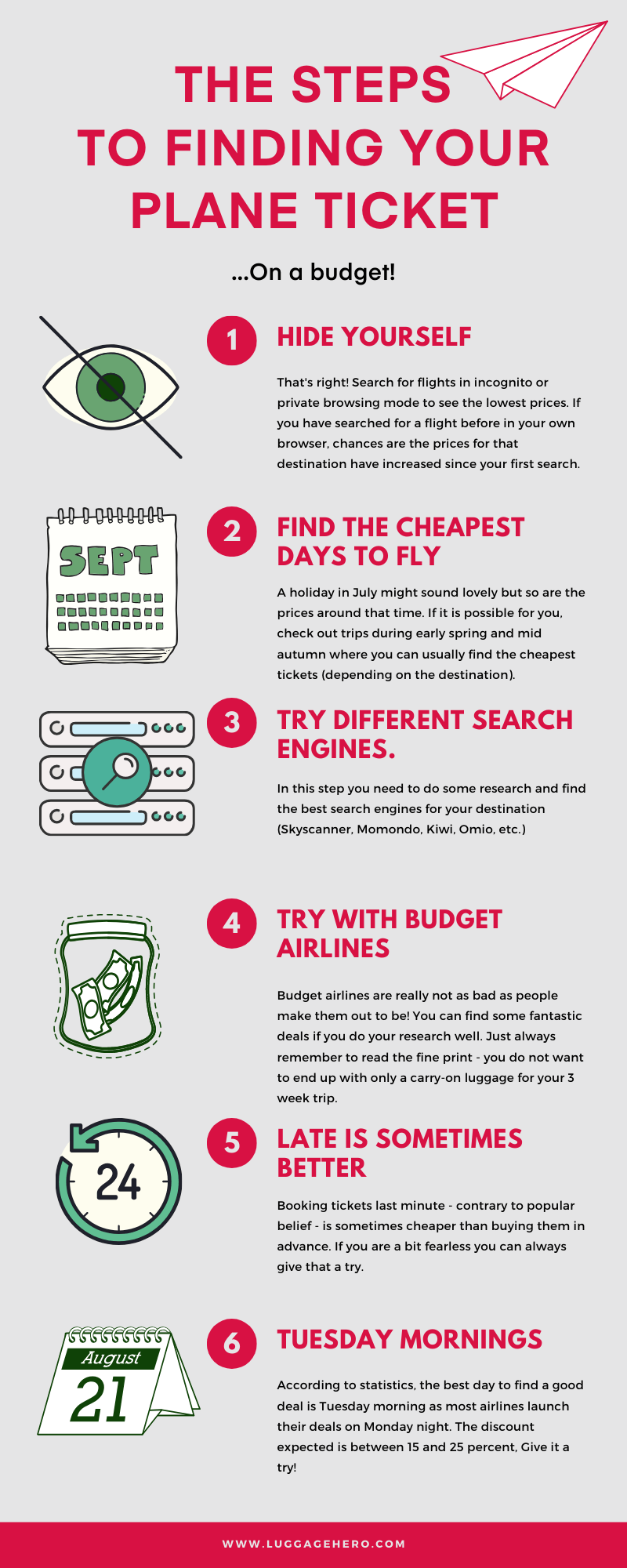
In investing, “time in the market” usually beats “timing the market.” In airfare, the opposite is often true. There is a “Goldilocks window” for booking: too early, and the airline hasn’t begun to discount unsold inventory; too late, and you are penalized by “close-in” pricing designed to exploit business travelers with last-minute needs. Generally, for domestic travel, the financial sweet spot lies between one and three months before departure. For international routes, the window expands to three to six months. Monitoring these windows is a fundamental step in disciplined financial planning for travel.
Financial Tools and Platforms for Comparative Analysis
Just as an investor uses a terminal to track stock performance, a traveler must use robust digital tools to audit the airfare market. The goal is to gain a macro view of available options before narrowing down to the most cost-effective micro-transaction.
Aggregators as Budgeting Assistants
Platforms like Google Flights, Skyscanner, and Kayak act as powerful search engines that aggregate data from hundreds of airlines and online travel agencies (OTAs). Google Flights, in particular, is an essential tool for the financially minded because of its “Explore” feature. If your goal is to minimize expenditure rather than reach a specific destination, the Explore map allows you to see the cheapest places to fly from your home airport within a specific timeframe. This “destination-agnostic” approach is one of the most effective ways to reduce travel overhead, as it allows the market to dictate the destination based on the lowest available price.
Utilizing Price Tracking for Cash Flow Management
One of the most powerful features of modern booking tools is the ability to set price alerts. By opting into notifications for specific routes, you remove the emotional impulse to buy and replace it with data-driven decision-making. When a price drops below a historical average, the tool alerts you, allowing you to execute the purchase at an optimal price point. This disciplined approach ensures that you are never overpaying for a flight simply because you lacked the patience to wait for a market correction.
Travel Hacking: Leveraging Credit and Points as Assets
For those deeply embedded in personal finance, the most efficient way to find “cheap” flights is to stop paying for them with cash altogether. “Travel hacking” is the practice of using credit card rewards, frequent flyer miles, and loyalty programs to subsidize or entirely cover the cost of airfare.

Strategic Credit Card Churning and Sign-up Bonuses
The fastest way to accumulate the capital necessary for free flights is through credit card sign-up bonuses. Many premium financial products offer 50,000 to 100,000 points after a minimum spending requirement is met. These points often carry a valuation of 1.5 to 2.0 cents per point when redeemed for travel, effectively providing $750 to $2,000 in travel credit. By strategically opening cards that align with your existing organic spending, you convert your daily liabilities (groceries, utilities, insurance) into travel assets.
Transfer Partners and Redemption Valuation
The true mastery of travel finance lies in the use of transfer partners. Rather than booking through a bank’s travel portal, savvy users transfer their points to airline partners where the redemption value can be significantly higher. For example, 60,000 points might buy a $600 flight on a portal, but those same points transferred to an international carrier could secure a business-class seat worth $4,000. This represents a massive return on investment (ROI) and is the ultimate “cheap flight” strategy, as it maximizes the utility of every point earned.
Arbitrage and Alternative Routes: Reducing Overhead
Financial arbitrage involves taking advantage of price differences between two or more markets. In the context of airfare, this involves looking beyond the standard “Point A to Point B” search to find hidden value in the global transit network.
Hidden City Ticketing and Its Risks
“Hidden City” ticketing is a controversial but effective strategy for reducing costs. This occurs when a flight with a layover in your desired destination is cheaper than a direct flight to that destination. For example, if you want to fly from New York to Charlotte, you might find that a flight from New York to Orlando with a stop in Charlotte is significantly cheaper. You simply deplane at the layover. While this can save hundreds of dollars, it requires a deep understanding of airline terms of service and carries risks, such as the inability to check luggage or the potential for the airline to flag your frequent flyer account. From a purely financial standpoint, it is a high-risk, high-reward maneuver.
The “Budget Hub” Strategy
Another form of geographical arbitrage is flying into “budget hubs” rather than major international airports. In Europe, for instance, flying into London or Frankfurt may be expensive, but flying into a secondary hub served by low-cost carriers (like Dublin or Lisbon) and then taking a separate, $30 flight to your final destination can slash your total costs in half. This “repositioning” strategy requires more logistical planning but is a hallmark of those who prioritize capital preservation.
Maximizing the ROI of Your Travel Spend
Ultimately, finding the cheapest flights is about more than just the sticker price; it is about the total financial impact of the journey. To truly optimize your travel finances, you must consider the ancillary costs that often go unnoticed.
Avoiding “Fee Creep” and Budget Leakage
Low-cost carriers (LCCs) like Spirit, Ryanair, or Frontier often bait travelers with incredibly low base fares, only to recoup their margins through baggage fees, seat selection charges, and boarding passes. A $20 flight can quickly become a $120 flight if you are not disciplined. A financial professional looks at the “all-in” cost. Sometimes, paying $150 for a legacy carrier that includes a carry-on and a snack is more cost-effective than the “cheaper” LCC once all fees are accounted for. Always calculate the total cost of ownership for your seat before hitting the “buy” button.
The Opportunity Cost of Indirect Travel
In any financial analysis, time is a critical variable. A flight that saves you $100 but includes two 8-hour layovers may actually be a poor financial decision if those 16 hours could have been spent generating income or if the layover requires additional spending on food and hotels. True cheap travel balances the cash outlay with the opportunity cost of your time. By using the strategies outlined—leveraging technology, mastering the points economy, and understanding market volatility—you can ensure that your travel experiences enhance your life without compromising your long-term financial goals.
aViewFromTheCave is a participant in the Amazon Services LLC Associates Program, an affiliate advertising program designed to provide a means for sites to earn advertising fees by advertising and linking to Amazon.com. Amazon, the Amazon logo, AmazonSupply, and the AmazonSupply logo are trademarks of Amazon.com, Inc. or its affiliates. As an Amazon Associate we earn affiliate commissions from qualifying purchases.