
In the intricate world of personal and business finance, certain fundamental pieces of information act as critical keys to unlock and manage your money. Among these, the banking routing number stands out as an indispensable identifier. Often overlooked until explicitly needed, this nine-digit code is far more than just a sequence of numbers; it’s the bedrock upon which most domestic financial transactions are built. Whether you’re setting up direct deposit for your paycheck, paying bills online, or facilitating a critical wire transfer, knowing precisely where and how to locate your bank’s routing number is a basic yet vital financial literacy skill.

This comprehensive guide will demystify the banking routing number, explaining its purpose, highlighting its various applications, and—most importantly—providing clear, actionable steps on where to find it. We’ll delve into the traditional methods, explore modern digital solutions, and touch upon crucial best practices to ensure your financial dealings are always smooth, secure, and accurate.
Understanding the Banking Routing Number
Before embarking on the quest to find your routing number, it’s crucial to grasp what it truly represents and why it holds such significance in the financial ecosystem. It’s not merely a random set of digits but a carefully structured identifier that ensures funds reach their intended destination.
What Exactly Is It?
A banking routing number, officially known as an ABA (American Bankers Association) routing transit number, is a nine-digit code that identifies the specific financial institution on which a payment is drawn. Established in 1910 by the ABA, its primary purpose was to facilitate the processing of paper checks. In simpler terms, it acts like an address label for your bank, directing funds to the correct financial entity within the vast network of U.S. banks. Each bank, or even specific branches or divisions of larger banks, can have one or more unique routing numbers assigned to them by the ABA. This ensures that when money moves electronically, it arrives at the correct institution before being directed to a specific account.
The Core Purpose: Facilitating Transactions
The routing number is the engine behind a multitude of financial operations that are commonplace in our daily lives. Its fundamental role is to enable the secure and accurate transfer of funds between different banks. The most prominent systems leveraging routing numbers include:
- ACH (Automated Clearing House) Transfers: This is the electronic network responsible for processing a vast array of transactions, including direct deposits, automatic bill payments, and person-to-person transfers. Your routing number tells the ACH network which bank to send or pull money from.
- Wire Transfers: For faster, often higher-value transfers, wire transfers also rely on routing numbers for domestic transactions, ensuring funds are routed to the correct receiving bank.
- Check Processing: While much banking has gone digital, physical checks still use the routing number to identify the paying bank, allowing the recipient’s bank to properly process the check.
Without an accurate routing number, these critical financial arteries would be clogged, leading to delays, rejected transactions, and significant headaches for both individuals and businesses.
Differentiating Routing Numbers from Account Numbers
A common point of confusion for many is distinguishing between a routing number and an account number. While both are essential for financial transactions, they serve distinct purposes:
- Routing Number: Identifies your bank (e.g., “This money goes to Bank of America”).
- Account Number: Identifies your specific account at that bank (e.g., “Within Bank of America, this money goes to John Doe’s checking account #123456789”).
You will almost always need both your bank’s routing number and your specific account number to complete most financial transactions. Think of the routing number as the street address and the account number as the specific apartment number within that building.
Essential Scenarios Where You’ll Need Your Routing Number
Understanding the utility of your routing number extends beyond mere definition; it’s about recognizing when and why you’ll be asked for it. Knowing these common scenarios prepares you to provide the information promptly and accurately, preventing delays in your financial life.
Setting Up Direct Deposits
Perhaps the most frequent interaction individuals have with their routing number is when setting up direct deposit. Whether it’s for your regular paycheck from an employer, Social Security benefits, pension payments, or tax refunds, direct deposit forms invariably require both your bank’s routing number and your individual account number. Providing this information ensures that your funds are electronically transferred from the payer’s bank directly into your designated account, bypassing physical checks and significantly speeding up access to your money. For businesses, setting up direct deposit for employee payroll is a critical application, streamlining operations and improving employee satisfaction.
Initiating Online Bill Payments and Transfers
In the age of digital finance, paying bills online has become the norm. When you authorize a utility company, credit card issuer, or loan servicer to automatically debit your account, or when you manually push funds from your bank’s online portal to pay a bill, your routing number is often a required piece of information for setting up the payment account. Similarly, transferring funds between your accounts at different institutions (e.g., moving money from a checking account at one bank to a savings account at another) often involves an ACH transfer that necessitates both banks’ routing numbers. For business finance, setting up vendor payments or making inter-company transfers online relies heavily on the correct routing numbers.
Domestic Wire Transfers
For transactions requiring faster settlement, such as closing on a home or making a large business payment, domestic wire transfers are frequently used. While more expensive than ACH transfers, wires offer near-instantaneous fund availability. To send or receive a domestic wire transfer, you will need the full name and address of the beneficiary, their account number, and, crucially, their bank’s routing number. It’s imperative to double-check this information, as incorrect wire details can lead to significant delays, fees, and even potential loss of funds if sent to the wrong account. For international wires, the SWIFT/BIC code often replaces or supplements the routing number, a distinction we’ll explore later.
Tax Refunds and Other Government Disbursements
The IRS, state tax authorities, and other government agencies increasingly prefer and promote direct deposit for tax refunds and various benefit payments. When filing your taxes, whether through a tax preparation software or with the help of a professional, you’ll be prompted to provide your bank’s routing number and account number if you opt for direct deposit. This not only accelerates the receipt of your refund but also minimizes the risk of lost or stolen paper checks. For businesses, receiving government grants or reimbursements might also involve providing these details for direct electronic payments.
Practical Ways to Locate Your Routing Number
Now that you understand its importance, let’s turn our attention to the practical aspect: finding your routing number. Fortunately, banks make this information readily accessible through several convenient channels.
The Classic Method: Your Checkbook
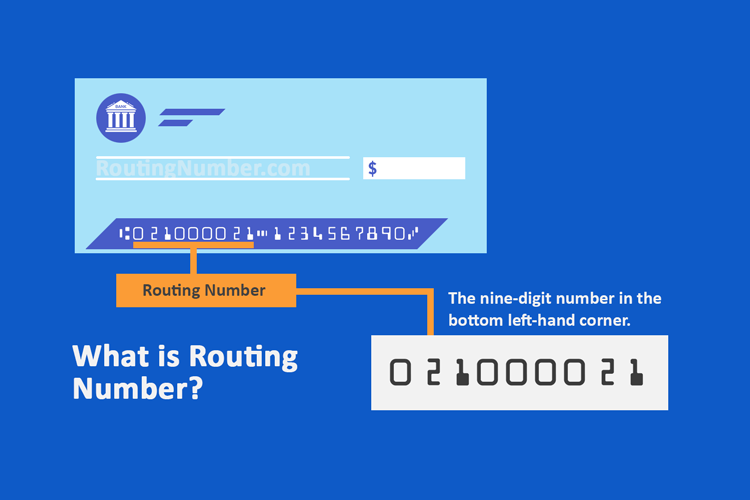
For many, the most traditional and reliable place to find a routing number is on a physical check. Look at the bottom of a personalized check. You will typically see three sets of numbers printed in magnetic ink characters (MICR). From left to right, these usually represent:
- Routing Number: The first nine digits.
- Account Number: The next set of digits, which can vary in length.
- Check Number: The final set, matching the check number in the upper right corner.
It’s important to note that the order can occasionally vary, especially if you have an older check design or a specialty check. Always confirm the exact location with your bank or by cross-referencing with another method if you’re unsure. Starter checks from the bank, however, might sometimes omit the routing number or provide a temporary one, so it’s always best to use a personalized check if available.
Digital Convenience: Online Banking Portals and Mobile Apps
In today’s digital age, your routing number is usually just a few clicks or taps away. Almost all banks provide this information within their online banking platforms and mobile applications.
- Online Banking: After logging into your bank’s website, navigate to the details section for your checking or savings account. You’ll often find the routing number clearly displayed alongside your account number. Some banks might have a specific section labeled “Account Details,” “Direct Deposit Info,” or “Statements & Documents.”
- Mobile Apps: Similar to online banking, most mobile banking apps include an “Account Details” or “Show Routing & Account Number” feature within the individual account view. Some apps might even offer a quick link to “Direct Deposit Information” that provides both numbers.
These digital methods are generally the quickest and most convenient ways to access your routing number securely from anywhere.
Paper Trails: Bank Statements
If you still receive paper bank statements, or if you access them digitally through your bank’s website, your routing number is typically printed on them. Look near the top of the statement, usually in the section that lists your account details, name, and address. Digital statements, often available as PDFs within your online banking portal, will also contain this information, providing a secure and readily accessible record. Keep in mind that statements might sometimes show different routing numbers if your bank has multiple for various regions or purposes, so always verify you’re using the correct one for your specific transaction.
When All Else Fails: Contacting Your Bank Directly
If you’ve exhausted the above options or are simply uncomfortable navigating digital platforms, contacting your bank directly is a reliable solution.
- Customer Service: Call your bank’s customer service number (usually found on their website, the back of your debit card, or a bank statement). After verifying your identity, a representative will be able to provide you with the correct routing number for your account.
- Visiting a Branch: A quick visit to any local branch of your bank can also yield the information. A teller will be able to assist you in locating the correct routing number for your specific account.
Always ensure you have appropriate identification ready when contacting your bank to verify your identity.
Navigating Potential Challenges and Best Practices
While finding a routing number is usually straightforward, there are nuances and potential pitfalls to be aware of. Adhering to best practices can save you from costly mistakes and frustrating delays.
Beware of Bank-Specific Variations
It’s not uncommon for larger financial institutions to have multiple routing numbers. These variations can be due to:
- Geographic Region: A national bank might use different routing numbers for accounts opened in different states or regions.
- Account Type: Some banks might have a specific routing number for checking accounts versus savings accounts, or for consumer accounts versus business accounts.
- Transaction Type: There can even be different routing numbers for ACH transfers versus wire transfers, especially for international transactions where SWIFT codes come into play.
Always confirm that the routing number you use is correct for your specific account and the type of transaction you are performing. When in doubt, verify with your bank.
The Pitfalls of Incorrect Routing Numbers
Using an incorrect routing number can lead to a host of problems:
- Rejected Transactions: Most commonly, payments or transfers will simply be rejected and returned to the sender, leading to delays and potentially missed deadlines.
- Fees: Banks might impose fees for rejected transactions or for the time and effort involved in recovering incorrectly routed funds.
- Fraud Risk: In rare, more severe cases, an incorrect routing number combined with other erroneous details could potentially send funds to an unintended recipient, making recovery difficult or impossible, though sophisticated fraud is less likely with a mere routing number error.
The golden rule is always to double-check, and if possible, triple-check, the routing number before authorizing any transaction, especially for large sums.
Security Considerations When Sharing Your Routing Number
While a routing number isn’t as sensitive as a full credit card number or a Social Security number, it’s still a piece of financial information that should be handled with care. Coupled with your account number, it can be used to initiate ACH transactions.
- Be Mindful of Who You Share With: Only provide your routing and account numbers to trusted entities (employers, utility companies, government agencies, legitimate financial institutions).
- Secure Platforms: When entering this information online, ensure the website uses secure, encrypted connections (look for “https://” in the URL and a padlock icon).
- Phishing Scams: Be wary of unsolicited emails or calls asking for your banking details. Banks will never ask for your full routing and account numbers via email or over the phone unless you initiated the contact.
Your bank account security hinges on responsible information handling.
Verifying Your Routing Number
If you’re ever uncertain about your routing number, beyond calling your bank, there are online tools available. Websites like the ABA’s official lookup tool or reputable banking information aggregators can help you verify a routing number by inputting your bank’s name and location. However, for absolute certainty regarding your specific account, always consult your bank directly.
The Routing Number in the Modern Financial Landscape
The routing number, despite its century-old origins, remains critically relevant in an increasingly digital and interconnected financial world. It plays a pivotal role in enabling seamless money movement and integration with modern financial tools.
Its Role in Financial Aggregation Tools and Budgeting Apps
Many popular personal finance management tools and budgeting apps, such as Mint, YNAB (You Need a Budget), or Quicken, allow users to link their bank accounts to track spending, monitor balances, and categorize transactions. While some of these tools may use direct API integrations, others might still rely on secure connections that, in part, utilize routing and account numbers for initial setup or specific functionalities like linking external accounts for transfers. For businesses, integrating bank accounts with accounting software like QuickBooks often requires similar details to facilitate reconciliation and automate payment processes. The routing number serves as the foundational identifier that allows these powerful digital tools to connect with and understand your banking relationships.
Routing Numbers vs. SWIFT/IBAN for International Transfers
It’s crucial to understand that while routing numbers govern domestic (U.S.) transfers, they are generally not used for international transactions. For sending or receiving money across borders, different identifiers come into play:
- SWIFT/BIC (Society for Worldwide Interbank Financial Telecommunication / Bank Identifier Code): This is the international equivalent of a routing number. It’s an 8-11 character code that identifies a specific bank in international wire transfers. Every bank participating in international transfers has a unique SWIFT code.
- IBAN (International Bank Account Number): Primarily used in Europe and other regions, an IBAN is an alphanumeric code that combines a country code, bank code, and account number into a single, internationally recognized identifier. It streamlines international transactions by minimizing errors.
If you are planning an international transfer, you will need the recipient’s SWIFT/BIC code and potentially an IBAN, not their U.S. routing number. Your own bank will also have a SWIFT code that international senders will need to transfer funds to your account.

The Future of Transaction Identifiers
As financial technology continues to evolve, the underlying mechanisms for identifying banks and accounts are also adapting. While the nine-digit routing number has proven remarkably resilient, innovations like real-time payment systems (e.g., FedNow) and open banking initiatives are introducing new layers of identification and authentication. However, even these advanced systems often build upon or interact with existing infrastructure, meaning the fundamental concept of a unique bank identifier like the routing number will likely remain relevant, perhaps evolving in its application rather than disappearing entirely. For the foreseeable future, understanding and correctly using your banking routing number will remain an indispensable skill for navigating your financial life with confidence and precision.
In conclusion, the banking routing number is a small but mighty piece of information, central to virtually all electronic financial transactions within the United States. By understanding its purpose, recognizing when it’s needed, and knowing the various ways to locate it, you empower yourself to manage your personal and business finances more effectively, securely, and without unnecessary hurdles. Make it a point to know where to find your bank’s routing number, and keep it secure—it’s a fundamental step towards financial fluency.
aViewFromTheCave is a participant in the Amazon Services LLC Associates Program, an affiliate advertising program designed to provide a means for sites to earn advertising fees by advertising and linking to Amazon.com. Amazon, the Amazon logo, AmazonSupply, and the AmazonSupply logo are trademarks of Amazon.com, Inc. or its affiliates. As an Amazon Associate we earn affiliate commissions from qualifying purchases.