
In the modern financial landscape, the seamless movement of money is the backbone of both personal and business economies. Whether you are setting up a direct deposit for a new job, paying your monthly mortgage via an automated clearing house (ACH) transfer, or sending funds to a relative across the country, you will inevitably be asked for two specific pieces of information: your account number and your bank routing number.
While most people are familiar with their account number—the unique identifier for their specific pot of money—the routing number often remains a bit more mysterious. Formally known as an ABA Routing Transit Number (RTN), this nine-digit code is essential for the U.S. banking system to direct funds to the correct financial institution. Understanding where to find this number and how it functions is a fundamental aspect of financial literacy and effective money management.

Understanding the Bank Routing Number and Its Financial Significance
Before diving into where to find these digits, it is crucial to understand what they represent within the framework of personal and business finance. The routing number system was developed by the American Bankers Association (ABA) in 1910. Its primary purpose was to provide a standard way to identify specific financial institutions, making the processing of paper checks more efficient.
What is an ABA Routing Number?
An ABA routing number is a nine-digit code used to identify a financial institution in a transaction. Think of it as a “mailing address” for your bank. Just as a zip code helps the postal service narrow down a location to a specific neighborhood, the routing number tells the Federal Reserve and other banks exactly which institution is responsible for the funds in a transaction.
In the niche of personal finance, the routing number is the gateway to automated banking. Without it, the electronic networks that handle trillions of dollars in transactions daily would be unable to function. It ensures that when you hit “send” on a payment, the money doesn’t just go to “a bank,” but specifically to your bank.
The Anatomy of the Nine-Digit Code
The nine digits are not random. They are structured to provide specific information to financial processing systems:
- The first four digits: These represent the Federal Reserve routing symbol, indicating the physical location of the bank or the Federal Reserve district it belongs to.
- The next four digits: These identify the specific financial institution or bank.
- The ninth digit: This is a “check digit,” calculated using a complex formula involving the first eight digits. It serves as a verification tool to ensure the number was entered correctly and hasn’t been corrupted during transmission.
Easy Ways to Locate Your Routing Number
Locating your routing number is generally straightforward, provided you know where to look. Depending on whether you prefer physical documents or digital tools, there are several reliable methods to retrieve this information.
Checking Your Physical Paper Checks
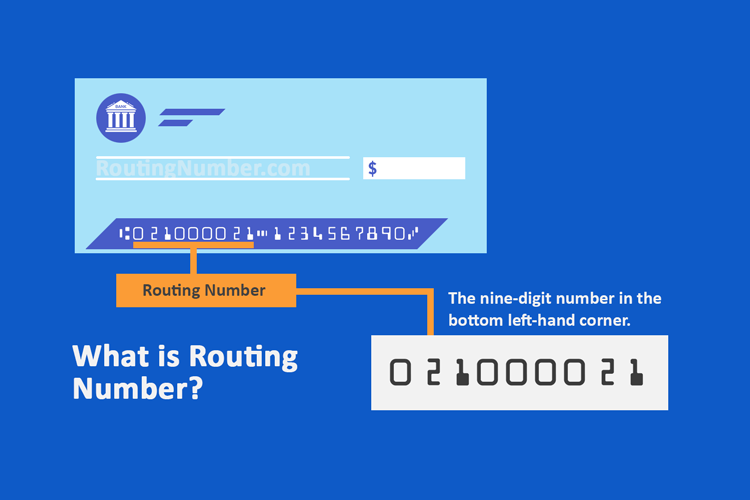
For those who still use traditional paper checks, the routing number is hiding in plain sight. If you look at the bottom of one of your checks, you will see a string of numbers printed in a specialized font known as MICR (Magnetic Ink Character Recognition).
- The first set of numbers (left side): This is almost always your nine-digit routing number. It is usually flanked by a specific symbol that looks like a colon with a vertical line.
- The middle set of numbers: This is typically your account number.
- The final set of numbers (right side): This corresponds to the individual check number.
It is important to note that you should use a check, not a deposit slip, to find this number. Some banks use different routing numbers for deposit slips than they do for electronic transfers or check processing.
Utilizing Online Banking and Mobile Apps
In the era of digital finance, most consumers manage their money through mobile apps or web browsers. Most financial institutions make the routing number easily accessible within these platforms. After logging in, navigate to the “Account Details” or “Account Information” section.
Usually, when you click on a specific account (like your primary checking account), the app will display the full account number and the routing number together. This is often the most accurate way to find the number, as banks may have different routing numbers for different types of transactions, such as domestic wire transfers versus ACH transfers.
Reviewing Monthly Bank Statements
Your monthly bank statement—whether received via mail or downloaded as a PDF—is a legal record of your financial activity. Almost all statements list the routing number in the header or the account summary section. If you are applying for a loan or setting up a high-yield savings account, having your statement handy is a professional way to verify all your banking details simultaneously.
Visiting the Official Bank Website
If you do not have access to your checks or your online account, you can often find the routing number on the bank’s public-facing website. Many large national banks have a dedicated “Routing Numbers” page. Because large institutions may have different routing numbers based on the state where the account was opened, these websites usually feature a searchable table or a drop-down menu where you can select your state to find the correct digits.
When and Why You Need Your Routing Number
The routing number is not just a passive identifier; it is a functional tool used in various financial scenarios. Knowing when to use it is key to managing your cash flow and ensuring your financial obligations are met on time.
Setting Up Direct Deposits and Automated Payments
For most individuals, the most common use of a routing number is for direct deposit. By providing your employer with your routing and account numbers, your paycheck is moved electronically from the company’s business account into your personal checking account. This eliminates the “float” time associated with paper checks and provides immediate access to your income.
Similarly, for recurring bills like utilities, car payments, or insurance, using your routing number to set up ACH transfers is often more secure and reliable than using a debit card, which can expire or be canceled due to fraud.
Wire Transfers vs. ACH Transfers
It is a common mistake in personal finance to assume that one routing number fits all purposes. In reality, many banks use a specific routing number for ACH transfers (used for payroll and bill pay) and a different one for wire transfers (used for large, real-time settlements like real estate closings).
Wire transfer routing numbers are part of a more immediate settlement system and often involve higher fees. Before initiating a wire transfer, always confirm with your bank whether you should use the standard routing number found on your checks or a specialized wire routing number.
Tax Filings and Government Benefits
When filing your taxes with the IRS, providing your routing number allows for a faster tax refund. The government can deposit your overpayment directly into your account, often weeks faster than mailing a physical check. The same applies to Social Security benefits and other government assistance programs. Accuracy here is paramount; a single digit error can lead to significant delays in receiving your funds.
Security and Fraud Prevention in the Digital Age
Sharing banking information always comes with a degree of risk. However, in the realm of financial tools and money management, the routing number is considered “low-risk” compared to other data, though it still requires careful handling.
Is Sharing Your Routing Number Safe?
Generally, sharing your routing number along with your account number is safe for legitimate business purposes, such as giving it to your employer’s HR department or your utility company. These numbers are printed on every check you write, meaning they are technically “public” every time you pay a local vendor with a check.
However, a routing number alone cannot be used to withdraw money from your account. A fraudster would also need your account number and, in many cases, authorization or a forged signature. Despite this, you should never provide these numbers over the phone or via email unless you initiated the contact with a verified, trusted institution.
Common Scams Involving Banking Information
The most common scam involves “phishing” for banking details. You might receive an email that looks like it is from your bank, claiming there is an issue with your account and asking you to “verify” your routing and account numbers. Legitimate banks will never ask for this information via email. Always log in directly through the bank’s official portal or app to manage your sensitive data.
Troubleshooting Common Issues and FAQs
Even with the right tools, financial logistics can sometimes become confusing. Here are some of the most common questions regarding routing numbers in the context of business and personal finance.
Can a Bank Have More Than One Routing Number?
Yes. Large national or regional banks often have multiple routing numbers. These may be divided by geographic region (e.g., a different number for New York vs. California) or by the type of transaction (ACH vs. Wire). Additionally, if your bank has merged with another institution, you might see “old” routing numbers that are still active during a transition period. Always use the number associated with the branch or state where you originally opened the account unless instructed otherwise by the bank.
What Happens if You Use the Wrong Number?
If you provide an incorrect routing number for a transaction, several things can happen. Most commonly, the transaction will simply fail or “bounce” back. If you were expecting a direct deposit, the funds would return to the sender, and you would have to wait for the error to be corrected and the transfer re-initiated.
In some cases, if the routing number is correct but the account number is wrong, the money could theoretically end up in someone else’s account. While banks have verification protocols to prevent this, it can be a legal nightmare to recover the funds. Precision is the best policy in all matters of financial data entry.

Is a Routing Number the Same as a SWIFT Code?
In the world of international finance, no. A routing number is specific to the United States. If you are receiving money from an international source, the sender will likely ask for your SWIFT (Society for Worldwide Interbank Financial Telecommunication) code or an IBAN (International Bank Account Number). While your US bank will have a SWIFT code, it is separate from the nine-digit ABA routing number used for domestic transactions.
By mastering these details, you empower yourself to navigate the financial system with confidence. The routing number may be a simple nine-digit code, but it is the essential “address” that ensures your hard-earned money arrives exactly where it needs to be.
aViewFromTheCave is a participant in the Amazon Services LLC Associates Program, an affiliate advertising program designed to provide a means for sites to earn advertising fees by advertising and linking to Amazon.com. Amazon, the Amazon logo, AmazonSupply, and the AmazonSupply logo are trademarks of Amazon.com, Inc. or its affiliates. As an Amazon Associate we earn affiliate commissions from qualifying purchases.