
In the evolving landscape of digital finance, Cash App has emerged as more than just a tool for splitting dinner bills. It has evolved into a comprehensive financial ecosystem, offering features that range from stock trading and Bitcoin purchasing to high-yield savings and tax filing. However, the utility of these features is entirely dependent on your ability to efficiently move capital into the platform. Understanding the various channels for depositing money is essential for anyone looking to optimize their personal finance workflow.
Whether you are transitioning toward a cashless lifestyle or looking for a secondary account to manage discretionary spending, knowing where and how to deposit funds—and the strategic implications of each method—is the first step toward financial fluidity.
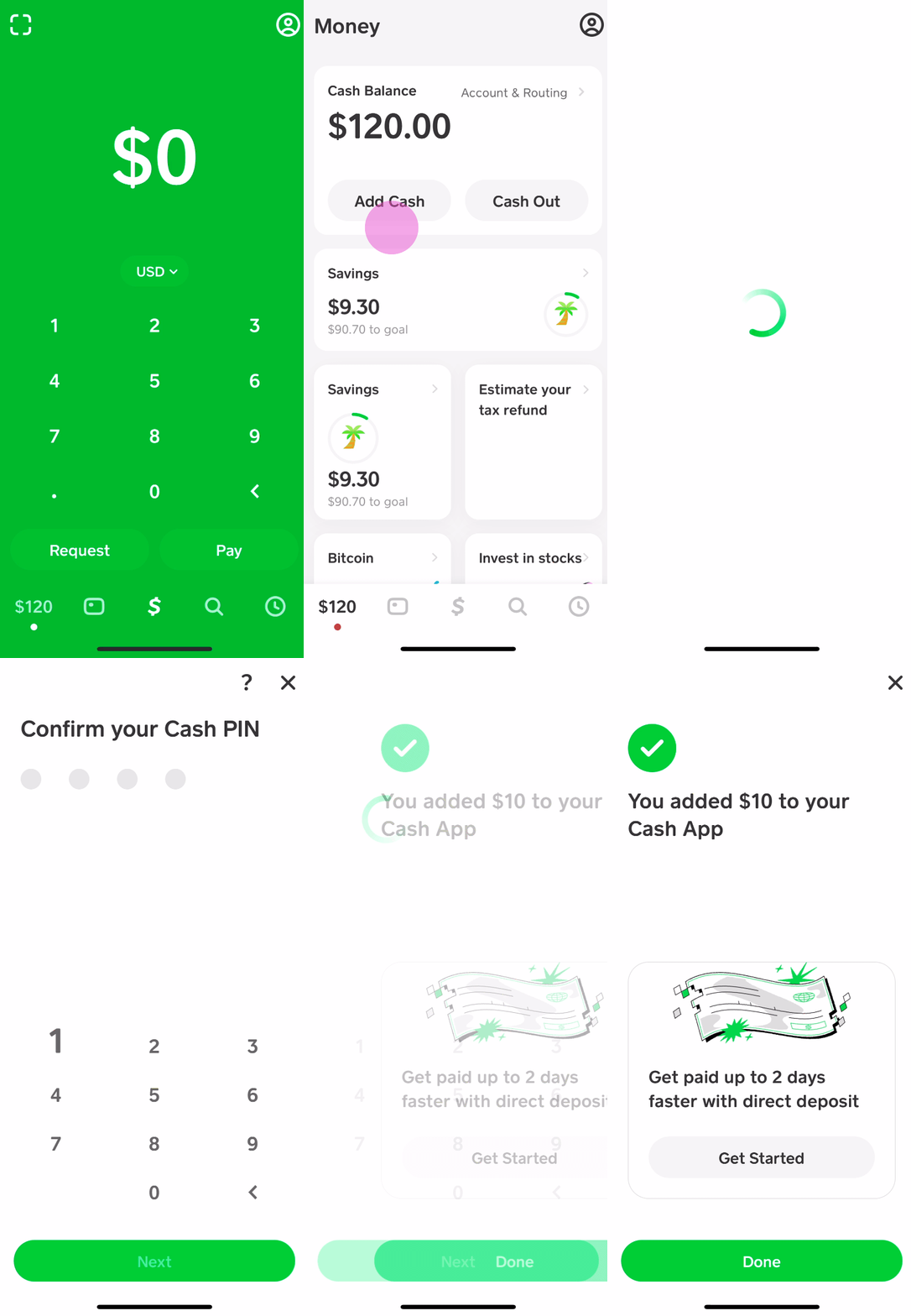
Digital Integration: Funding Through Linked Accounts and Direct Deposits
The most seamless way to interact with Cash App is through the integration of existing traditional banking infrastructure. By bridging the gap between legacy banks and digital wallets, users can automate their finances and ensure they always have liquidity for immediate transactions or investment opportunities.
Linking Bank Accounts and Debit Cards
The primary mechanism for funding a Cash App balance is through a linked debit card or bank account. This process utilizes the Automated Clearing House (ACH) network or real-time payment rails to move money. When you link a debit card, deposits are typically instantaneous, allowing for immediate access to funds.
From a strategic standpoint, using a linked bank account is ideal for larger, non-urgent transfers. While debit card transfers are fast, linking a bank account via the Plaid integration offers a secure way to move funds without the limitations sometimes imposed by individual card issuers. For users focused on budgeting, setting up a recurring transfer from a primary checking account into Cash App can serve as an automated “allowance” for monthly spending, helping to compartmentalize funds and prevent overspending.
Maximizing the Benefits of Direct Deposit
For many users, Cash App serves as a primary financial hub. Setting up direct deposit is one of the most effective ways to fund the account. By providing your employer with the routing and account numbers found in the “Money” tab, you can have your paycheck deposited directly into your Cash App balance.
There are significant financial incentives for choosing this method. Cash App often provides access to direct deposit funds up to two days earlier than traditional banks. Furthermore, enabling a certain threshold of direct deposits—typically $300 or more per month—unlocks additional perks, such as free ATM withdrawals and the ability to use the “Overdrive” feature, which offers a small buffer for overdrawing the account without incurring fees. This makes direct deposit not just a deposit method, but a strategic move to lower the overall cost of banking.
Receiving Peer-to-Peer Payments
While not a “deposit” in the traditional sense of moving your own money, receiving payments from other users is a core way the balance grows. For freelancers, side-hustlers, or small business owners, the $Cashtag system functions as a streamlined invoicing tool. Because these funds land in the Cash App balance instantly, they can be immediately diverted into the app’s “Savings” feature or used to purchase fractional shares of stock, facilitating a high velocity of capital.
The Physical-to-Digital Bridge: Depositing Paper Money
One of the most unique features of Cash App, particularly for those who operate in cash-heavy environments or are underbanked, is the ability to deposit physical currency into the digital wallet. This feature, known as “Paper Money” deposits, bridges the gap between physical cash and the digital economy.
Utilizing the Retail Partner Network
Cash App has partnered with a vast network of national retailers to facilitate cash deposits. This turns thousands of storefronts into de facto bank branches. Major participating retailers include:
-
Walmart (Customer Service Desk or Money Center)
-
7-Eleven
-
Walgreens and Duane Reade
-
Rite Aid
-
Dollar General
-
Family Dollar
-
Sheetz and Kum & Go
To initiate a deposit, users navigate to the “Money” tab and select “Paper Money.” This generates a map of nearby locations and a unique barcode. When you arrive at the retailer, you simply ask the cashier to scan the barcode. Once the cash is handed over, the funds are typically available in your Cash App balance within minutes.
Understanding Fees and Limits for Cash Deposits
While physical deposits offer unparalleled convenience, they come with specific financial parameters that users must account for. Most retailers charge a flat fee—usually $1—per deposit transaction. This is significantly lower than the fees associated with many prepaid debit cards or check-cashing services, making it a cost-effective option for managing physical currency.
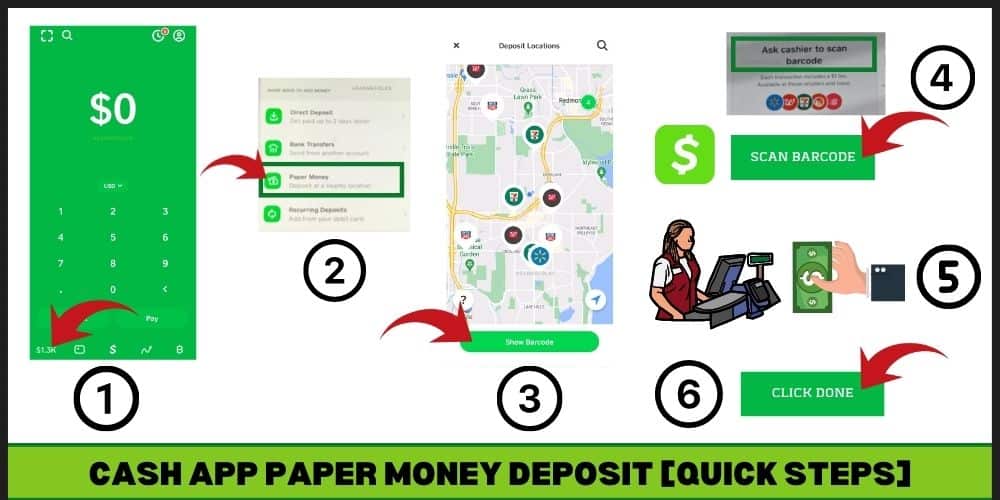
There are also regulatory and security limits on these transactions. Generally, users are limited to depositing $500 per transaction, $1,000 per rolling 7-day period, and $4,000 per rolling 30-day period. For users who frequently handle large amounts of cash, it is important to plan these deposits strategically to avoid hitting these caps during critical times.
Internal Asset Liquidation: Converting Investments to Cash
In a modern financial ecosystem, your “balance” isn’t just what is in your checking account; it includes your liquid assets. Cash App allows users to deposit money into their usable balance by liquidating internal investments, such as Bitcoin or equities.
Selling Stocks and Bitcoin
If you have used Cash App’s investment features, those assets represent potential liquidity. When you sell a stock or a portion of your Bitcoin holdings, the proceeds are immediately deposited into your Cash App balance (after the trade settles).
This is a powerful tool for dynamic wealth management. For example, during a market upswing, a user might choose to take profits on a specific stock. By selling that asset, the “money” is deposited back into the core balance, where it can then be used to pay for daily expenses via the Cash Card or moved into a dedicated savings folder. This seamless transition between an investment account and a spending account reduces the “friction” often found in traditional brokerage firms, where moving money to a spendable account can take several business days.
Tax and Strategy Implications
From a personal finance perspective, it is important to remember that converting assets into a cash deposit is a taxable event. Selling Bitcoin or stocks for a profit triggers capital gains taxes. Therefore, while this is a valid way to “deposit” money into your spendable balance, it should be done with an understanding of the year-end tax implications. High-volume traders often keep a portion of their liquidated deposits in a separate “Savings” goal within the app specifically to cover future tax liabilities.
Optimization: Managing Limits and Security
The effectiveness of any deposit method is limited by the status of your account. To fully utilize Cash App as a financial tool, users must navigate the verification process and implement robust security measures.
Increasing Deposit and Transaction Limits
An unverified Cash App account operates under significant restrictions. To increase your limits for depositing and sending money, you must complete the identity verification process. This involves providing your full legal name, date of birth, and the last four digits of your Social Security Number.
Once verified, the limits on how much you can receive and hold in your balance are significantly raised, and in some cases, the “receive” limit is removed entirely. For users looking to use Cash App for significant financial activity—such as receiving a full salary via direct deposit or managing business revenue—verification is a non-negotiable step.
Security Protocols for Funded Accounts
As you deposit more money into the platform, the importance of digital security scales accordingly. Cash App provides several layers of protection that users should activate:
-
Security Lock: Enabling this requires your PIN or biometric data (TouchID/FaceID) for every payment or cash-out transaction.
-
Notification Alerts: Setting up instant alerts for every transaction ensures that you are notified the moment a deposit is made or funds are moved.
-
Two-Factor Authentication (2FA): Ensure that the email and phone number linked to your account are secured with 2FA to prevent unauthorized access to your account settings.

Strategic Use of the Cash App Balance
Once you have mastered the art of depositing money, the focus shifts to how that money works for you. The Cash App “Cash Card” is a Visa debit card that allows you to spend your balance at any merchant that accepts Visa. The real value, however, lies in “Boosts.” These are instant rewards that provide discounts at specific retailers, such as coffee shops, grocery stores, or gas stations.
By strategically depositing funds—perhaps through a combination of a small portion of a paycheck and occasional retail cash deposits—users can ensure they have enough balance to take advantage of these Boosts. Over a year, the savings generated by using a funded Cash App balance for targeted spending can represent a significant “return on investment” that exceeds the interest rates offered by traditional savings accounts.
In conclusion, knowing where to deposit money on Cash App is about more than just finding a nearby convenience store or linking a bank account. It is about understanding the different pathways—digital, physical, and asset-based—that allow you to fund your financial life. By leveraging direct deposits for speed, retail locations for accessibility, and asset liquidation for flexibility, you can transform Cash App from a simple payment app into a high-functioning command center for your personal finances.
aViewFromTheCave is a participant in the Amazon Services LLC Associates Program, an affiliate advertising program designed to provide a means for sites to earn advertising fees by advertising and linking to Amazon.com. Amazon, the Amazon logo, AmazonSupply, and the AmazonSupply logo are trademarks of Amazon.com, Inc. or its affiliates. As an Amazon Associate we earn affiliate commissions from qualifying purchases.