
In an era of rising costs, the decision to purchase a vehicle often comes with significant financial implications. While the allure of a brand-new car fresh off the lot is undeniable, the shrewd financial choice for many lies in the vast and dynamic used car market. Buying used can represent substantial savings, allowing you to sidestep the steepest depreciation curve that new vehicles experience in their first few years. However, finding the right used car “near me” isn’t merely about convenience; it’s a strategic financial endeavor that demands careful planning, diligent research, and an astute understanding of market dynamics.
This guide will navigate the financial landscape of used car acquisition, empowering you to make an economically sound decision that secures reliable transportation without compromising your financial well-being. We’ll explore budgeting, financing, the various purchasing avenues, and the critical due diligence required to protect your investment, all through the lens of personal finance.
Navigating the Used Car Market: Financial Prudence First
Before you even begin to browse listings or visit dealerships, the foundational step in any major purchase, especially an automobile, is establishing a clear financial framework. This initial planning prevents overspending, minimizes future financial strain, and ensures your new-to-you vehicle is an asset, not a liability.
Setting a Realistic Budget and Understanding Total Cost of Ownership
Your budget isn’t just the sticker price; it’s the total cost of ownership (TCO) over the lifespan of the vehicle. Many prospective buyers focus solely on the initial purchase price or monthly payment, neglecting a host of other expenses that significantly impact their personal finances.
-
Purchase Price: This is the most obvious. Determine the maximum amount you are willing and able to spend. Consider the “20/4/10 rule” as a guideline: put down at least 20%, finance for no more than 4 years, and ensure your car expenses (payment, insurance, maintenance) don’t exceed 10% of your gross income.
-
Sales Tax, Registration, and Title Fees: These government-mandated charges vary by state and can add hundreds, if not thousands, of dollars to the upfront cost. Factor them into your budget.
-
Insurance Premiums: A crucial and often underestimated expense. The make, model, year, and condition of a car, along with your driving record and location, heavily influence insurance rates. Get quotes for specific models before committing to a purchase. Older, less expensive cars might have lower collision coverage costs, but parts for certain models could be pricier.
-
Maintenance and Repairs: Used cars, by definition, have more mileage and wear. Allocate a contingency fund for potential repairs, especially if the vehicle is older or has higher mileage. A pre-purchase inspection (PPI) can mitigate surprises, but ongoing maintenance (oil changes, tires, brakes) is inevitable.
-
Fuel Costs: Consider the vehicle’s fuel efficiency. While a larger SUV might be appealing, its impact on your monthly fuel budget could be substantial compared to a compact sedan.
-
Hidden Costs: Parking fees, tolls, car washes, and even potential interest on financing all contribute to the TCO.
By evaluating the TCO comprehensively, you gain a realistic picture of the financial commitment, allowing you to choose a vehicle that truly aligns with your long-term financial goals.
Financing Your Used Car: Loans, Interest Rates, and Down Payments
Unless you’re paying cash, understanding financing is paramount. The terms of your loan directly impact the total amount you will pay for the car.
-
Check Your Credit Score: Your creditworthiness is the primary determinant of the interest rate you’ll be offered. A higher score typically translates to lower rates, saving you significant money over the loan’s term. Get a free credit report well in advance to identify and dispute any errors.
-
Compare Loan Offers: Don’t default to dealership financing. Shop around with banks, credit unions, and online lenders before you visit a seller. A pre-approved loan gives you a benchmark and strengthens your negotiating position, allowing you to focus on the car’s price rather than the payment. Credit unions often offer competitive rates.
-
Understand Interest Rates: Even a seemingly small difference in the annual percentage rate (APR) can amount to hundreds or thousands of dollars over the life of the loan. Use online calculators to see how different rates affect your total payout.
-
Make a Substantial Down Payment: A larger down payment reduces the amount you need to borrow, thus lowering your monthly payments and the total interest paid. It also creates immediate equity, protecting you from being “upside down” (owing more than the car is worth) if the car depreciates faster than expected.
The Value Proposition: Depreciation and Resale Potential
The financial wisdom of buying a used car largely rests on the concept of depreciation. New cars typically lose 20-30% of their value in the first year alone, and continue to depreciate rapidly thereafter. By purchasing a used car, you’re letting the previous owner absorb the brunt of this initial loss.
-
Leveraging Depreciation: A 2-3 year old car often offers the best value proposition – it’s past its steepest depreciation curve, but usually still has many reliable miles left and potentially some remaining manufacturer’s warranty.
-
Identifying Models with Good Resale Value: While depreciation is a given, some vehicles hold their value better than others. Research models known for reliability and strong resale value (e.g., certain Honda, Toyota, Subaru models). This is a forward-looking financial consideration; if you plan to sell the car later, its resale value will directly impact your next car-buying budget.
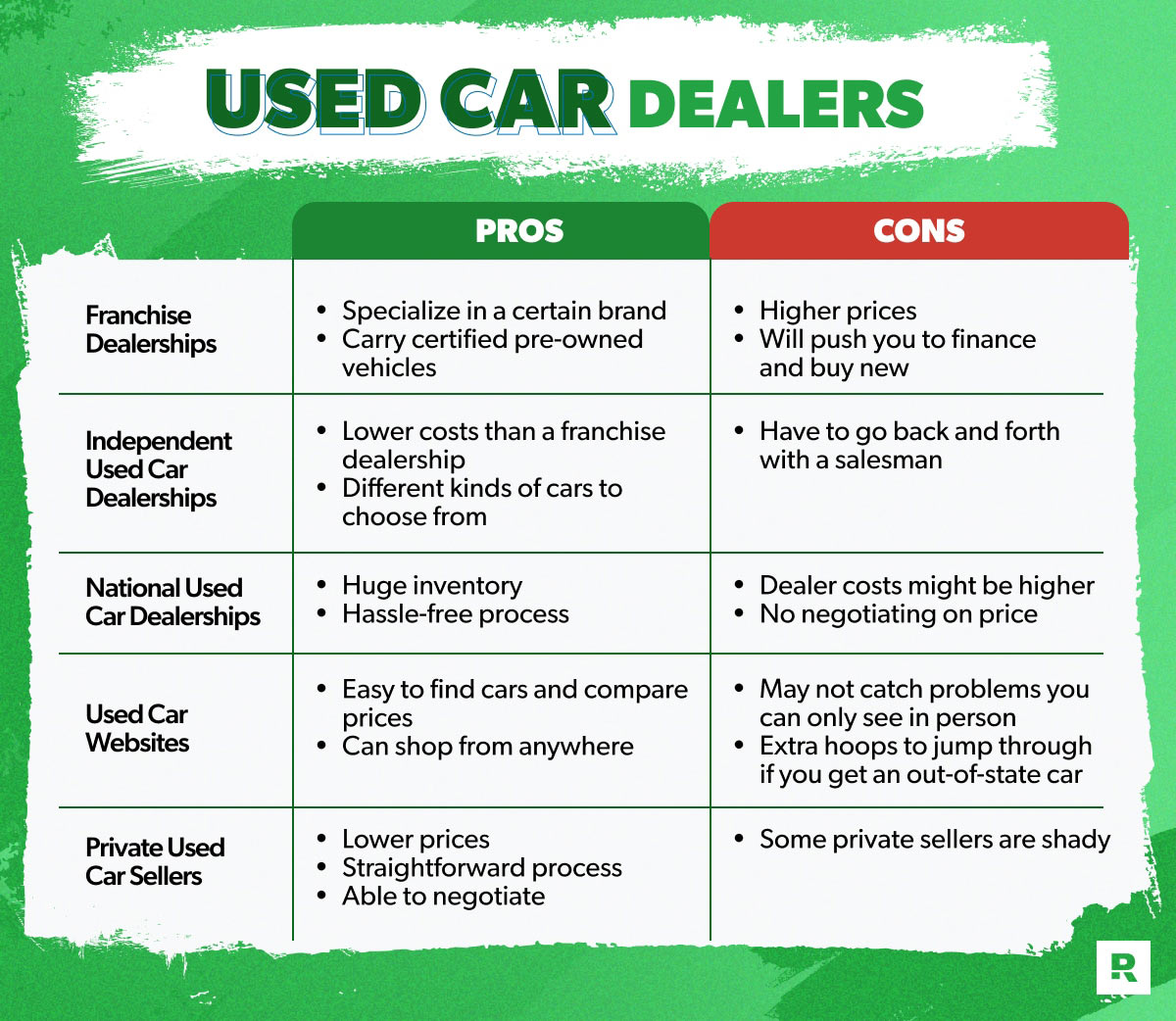
Key Avenues for Finding Your Used Car: A Financial Comparison
The “near me” aspect of your search can encompass various channels, each with distinct financial advantages and disadvantages. Understanding these differences will help you choose the most financially appropriate route.
Dealerships: Convenience vs. Cost
Dealerships, whether independent used car lots or franchise dealerships selling certified pre-owned (CPO) vehicles, offer a structured buying experience.
-
Pros:
-
Certified Pre-Owned (CPO) Programs: Franchise dealerships offer CPO vehicles that undergo rigorous inspections and come with extended warranties from the manufacturer. This offers significant financial peace of mind, as major repairs are covered, reducing unexpected expenses.
-
Financing Options: Dealerships often have relationships with multiple lenders, simplifying the loan application process. They might even offer competitive rates, though it’s still crucial to compare with your pre-approved loan.
-
Trade-ins: You can conveniently trade in your old vehicle, reducing your tax burden in some states and simplifying the sale process.
-
Consumer Protections: Dealerships are subject to various consumer protection laws, offering more recourse if issues arise.
-
-
Cons:
-
Higher Prices: The convenience, inspections, and overhead mean dealership prices are generally higher than private party sales.
-
Upselling: Be prepared for attempts to sell extended warranties, paint protection, and other add-ons that can inflate the total cost. Carefully evaluate the financial value of each.
-
Negotiation Required: While prices are often negotiable, it requires skill and research to ensure you’re getting a fair deal.
-
Private Sellers: Maximizing Savings, Minimizing Guarantees
Buying from a private individual often offers the greatest potential for cost savings.
-
Pros:
-
Lower Prices: Without the overhead of a dealership, private sellers typically list cars at lower prices, offering more room for negotiation.
-
Direct Negotiation: You’re dealing directly with the owner, which can sometimes provide insights into the car’s history and maintenance habits that a dealership might not offer.
-
-
Cons:
-
“As-Is” Sales: Most private sales are “as-is,” meaning once you buy it, any problems become your financial responsibility. There’s no warranty or recourse.
-
More Legwork: You’re responsible for arranging inspections, managing paperwork, and potentially navigating payment methods (e.g., cashier’s checks).
-
Higher Risk: Without the protections of a dealership, the risk of misrepresentation or undisclosed issues is higher. Be wary of financial scams involving fake escrow services or requests for unusual payment methods.
-
Online Marketplaces & Aggregators: Expanding Your Financial Reach
Websites like AutoTrader, CarGurus, Edmunds, and even local platforms like Craigslist or Facebook Marketplace aggregate listings from both dealerships and private sellers, vastly expanding your search “near me” and beyond.
-
Pros:
-
Vast Inventory: Access to a huge selection of vehicles, allowing for easy comparison of prices, features, and mileage.
-
Price Transparency: Many sites provide market value tools, helping you assess if a listing is fairly priced.
-
Convenience: Filter by location, price, make, model, and other criteria from the comfort of your home.
-
-
Cons:
-
Logistics: You still need to arrange physical inspections and test drives, which might involve travel.
-
Scams: Be vigilant for fraudulent listings, particularly on less regulated platforms. Never send money or personal information without verifying the seller and vehicle in person. This is a significant financial fraud risk.
-
Auctions & Wholesalers: High Risk, High Reward for the Savvy Investor
Car auctions (public or dealer-only) and wholesalers can offer the lowest prices, but come with significant risks, making them suitable only for experienced buyers with a strong financial buffer.
-
Pros:
- Potentially Rock-Bottom Prices: Vehicles are often sold significantly below market value, especially repossessions or fleet vehicles.
-
Cons:
-
“As-Is” Sales with Limited Inspection: You often have minimal time to inspect vehicles, and test drives are usually not allowed. This significantly increases the financial risk of hidden problems.
-
Specialized Knowledge Required: A deep understanding of car mechanics and market values is essential to avoid purchasing a money pit.
-
Buyer’s Fees: Auction houses charge buyer’s fees, which add to the final cost.
-
Due Diligence: Protecting Your Investment
Once you’ve identified a potential vehicle, a thorough due diligence process is critical to protect your financial investment and avoid future costly surprises.
Pre-Purchase Inspection (PPI): A Crucial Financial Safeguard
Never skip a Pre-Purchase Inspection by an independent, trusted mechanic. This is arguably the most important step in buying a used car.
-
Why It’s Non-Negotiable: A PPI can uncover existing mechanical problems, signs of past accidents, or deferred maintenance issues that a seller might not disclose or even be aware of. The small cost of a PPI (typically $100-$200) pales in comparison to the potential repair costs of a major undisclosed issue (e.g., transmission, engine problems that can run into thousands).
-
Finding an Independent Mechanic: Choose a mechanic who has no affiliation with the seller. This ensures an unbiased assessment of the vehicle’s condition and an honest appraisal of any needed repairs, which you can then use as leverage in negotiations.
Vehicle History Reports (CarFax, AutoCheck): Uncovering Hidden Liabilities
These reports provide a comprehensive history of the vehicle, offering crucial financial insights.
-
What They Reveal: Accident history, flood damage, salvage titles, odometer rollbacks, service records, and ownership changes. These details directly impact the car’s value, safety, and future maintenance costs.
-
Impact on Value: A vehicle with a salvaged title (declared a total loss by an insurance company) will be significantly cheaper but can be challenging to insure, difficult to finance, and prone to recurring problems, making it a very risky financial bet for most buyers. Odometer discrepancies are outright fraud and can lead to severe financial penalties for the seller.
-
Cost vs. Peace of Mind: While there’s a fee for these reports, the information they provide is invaluable in avoiding a financially disastrous purchase. Some dealerships provide them free; for private sales, insist on seeing one or purchase it yourself.
Test Driving and Negotiation: Securing the Best Deal
The test drive is your opportunity to evaluate the car’s performance and comfort, while negotiation is where you secure the best financial terms.
-
Evaluate Performance: Pay attention to how the car drives – brakes, steering, acceleration, transmission shifts, and any unusual noises or smells. Take it on various road conditions (city, highway) and try to replicate your typical driving scenarios.
-
Leverage Information: Use any findings from the PPI or vehicle history report to negotiate the price. If the mechanic identified $500 worth of necessary repairs, ask for a corresponding reduction in price.
-
Don’t Be Afraid to Walk Away: If the seller isn’t willing to meet your price or address your concerns, be prepared to walk away. There are always other vehicles available, and patience is a virtue in financial decision-making.
Finalizing the Purchase: Legal & Financial Steps
The final stage involves a meticulous review of paperwork and understanding ongoing financial commitments.
Understanding Warranties and Guarantees
-
Dealership Warranties: Dealerships may offer their own limited warranties, separate from CPO programs. Understand what’s covered, for how long, and if there’s a deductible.
-
Certified Pre-Owned (CPO) Benefits: These typically come with manufacturer-backed warranties that can extend beyond the original factory warranty, offering robust financial protection against major mechanical failures.
-
Extended Service Contracts: These are often upsold at dealerships. Carefully weigh their cost against the likelihood of needing repairs, the vehicle’s reliability record, and your personal risk tolerance. They are essentially an insurance policy and don’t always provide good financial value.
-
“As-Is” Sales: Reiterating, most private sales are “as-is,” meaning you assume all risks.
Paperwork and Title Transfer: Ensuring Legal Ownership
-
Bill of Sale: Ensure it accurately reflects the sale price, mileage, and condition, and is signed by both parties.
-
Title Transfer: This is crucial for establishing legal ownership. Ensure the title is properly signed over to you. Understand your state’s specific requirements for title transfer and registration to avoid penalties.
-
Proof of Insurance: You’ll need proof of insurance before you can drive the car off the lot or register it.
Insurance Considerations: An Ongoing Expense
As mentioned in budgeting, insurance is an ongoing financial commitment.
-
Impact on Premiums: Factors like the car’s age, safety features, repair costs for its parts, and even the likelihood of theft for that model all influence your premiums.
-
Comparing Quotes: Get multiple insurance quotes for specific vehicles you’re considering before purchase. A car that’s cheap to buy might be expensive to insure, negating some of your initial savings.

Conclusion
Buying a used car near you is more than a simple transaction; it’s a significant financial decision that can profoundly impact your personal budget. By approaching the process with financial prudence – setting a realistic budget, understanding the total cost of ownership, carefully evaluating financing options, and performing rigorous due diligence – you transform a potentially stressful purchase into a strategic investment. A smart used car acquisition not only provides reliable transportation but also represents a responsible stewardship of your financial resources, ensuring your vehicle serves as an asset that supports your financial journey, rather than a drain on your wealth.
aViewFromTheCave is a participant in the Amazon Services LLC Associates Program, an affiliate advertising program designed to provide a means for sites to earn advertising fees by advertising and linking to Amazon.com. Amazon, the Amazon logo, AmazonSupply, and the AmazonSupply logo are trademarks of Amazon.com, Inc. or its affiliates. As an Amazon Associate we earn affiliate commissions from qualifying purchases.