
The democratization of the financial markets has transformed the way individuals interact with wealth creation. Only a few decades ago, buying shares required a personal relationship with a stockbroker, high commission fees, and a significant amount of starting capital. Today, the landscape is entirely different. Whether you are looking to invest five dollars or five hundred thousand, the “where” of buying shares is a decision that dictates your costs, your tools, and ultimately, your long-term success.
Choosing the right platform is the first critical step in an investor’s journey. The modern investor is spoiled for choice, ranging from legacy institutions with decades of history to agile, mobile-first fintech startups. This guide explores the various avenues available for purchasing shares, the criteria for selecting a platform, and the nuances of different account types.
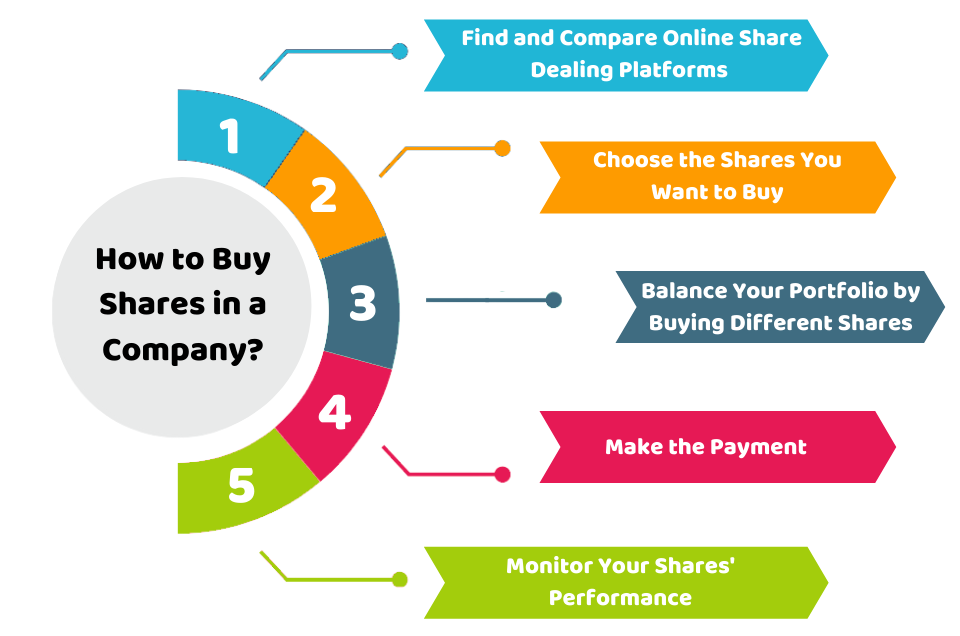
Choosing the Right Investment Platform: The Brokerage Landscape
The primary gateway to the stock market is a brokerage firm. These entities act as the middleman between you and the stock exchanges, such as the New York Stock Exchange (NYSE) or the Nasdaq. While all brokers provide access to the market, they vary significantly in their service models.
Full-Service Brokers vs. Discount Brokers
Full-service brokers are the traditional titans of the industry. Firms like Morgan Stanley or Merrill Lynch offer a high-touch experience that includes personalized investment advice, retirement planning, and tax coordination. However, this expertise comes at a premium, often in the form of higher commissions or a percentage of assets under management (AUM). These are best suited for high-net-worth individuals who prefer a hands-off approach and value professional guidance over cost savings.
On the other hand, discount brokers have become the standard for the retail investor. Platforms like Charles Schwab, Fidelity, and Vanguard have eliminated most trading commissions, allowing users to buy and sell shares for free. While they may not provide a dedicated personal advisor for every client, they offer robust research tools, vast educational libraries, and sophisticated trading platforms that empower the individual to make their own decisions.
Mobile Trading Apps and Digital-Native Platforms
In recent years, a new category of “neobrokers” has emerged, designed specifically for the smartphone generation. Apps like Robinhood, Public, and eToro have revolutionized the user experience by simplifying the interface and lowering the barrier to entry. These platforms often feature fractional shares, which allow investors to buy a portion of a high-priced stock (like Berkshire Hathaway or Amazon) for as little as $1. This makes the answer to “where to buy shares” much more accessible for those just starting their financial journey.
Key Factors to Consider When Selecting a Brokerage
With dozens of reputable platforms available, narrowing down the choice requires an analysis of your specific needs as an investor. A platform that is perfect for a day trader might be overwhelming or unnecessarily expensive for a long-term “buy and hold” investor.
Fee Structures and Hidden Costs
The headline “zero-commission” does not always mean a platform is free. It is essential to look under the hood at the fee schedule. Some brokers charge for wire transfers, account inactivity, or paper statements. Furthermore, many mobile-first apps generate revenue through “Payment for Order Flow” (PFOF). While this allows for commission-free trades, it can sometimes result in slightly less favorable execution prices. For the average long-term investor, these micro-differences are negligible, but for high-volume traders, they can add up.
Available Markets and Asset Classes
Not all platforms provide the same level of market access. If you are interested in buying shares of international companies listed on the London, Tokyo, or Hong Kong exchanges, you need a broker with global reach, such as Interactive Brokers. Additionally, consider whether you want to branch out into other asset classes. Many modern platforms allow you to manage shares, Exchange-Traded Funds (ETFs), bonds, and even cryptocurrencies within a single dashboard.
Research, Tools, and Educational Resources
The quality of a broker’s research can be a major differentiator. Premium platforms often provide access to institutional-grade analyst reports, real-time data feeds, and advanced charting software. If you are a fundamental investor, you will want a platform that provides deep dives into balance sheets and earnings transcripts. If you are a technical analyst, you will prioritize platforms with customizable indicators and fast execution speeds.
The Step-by-Step Process of Opening an Account
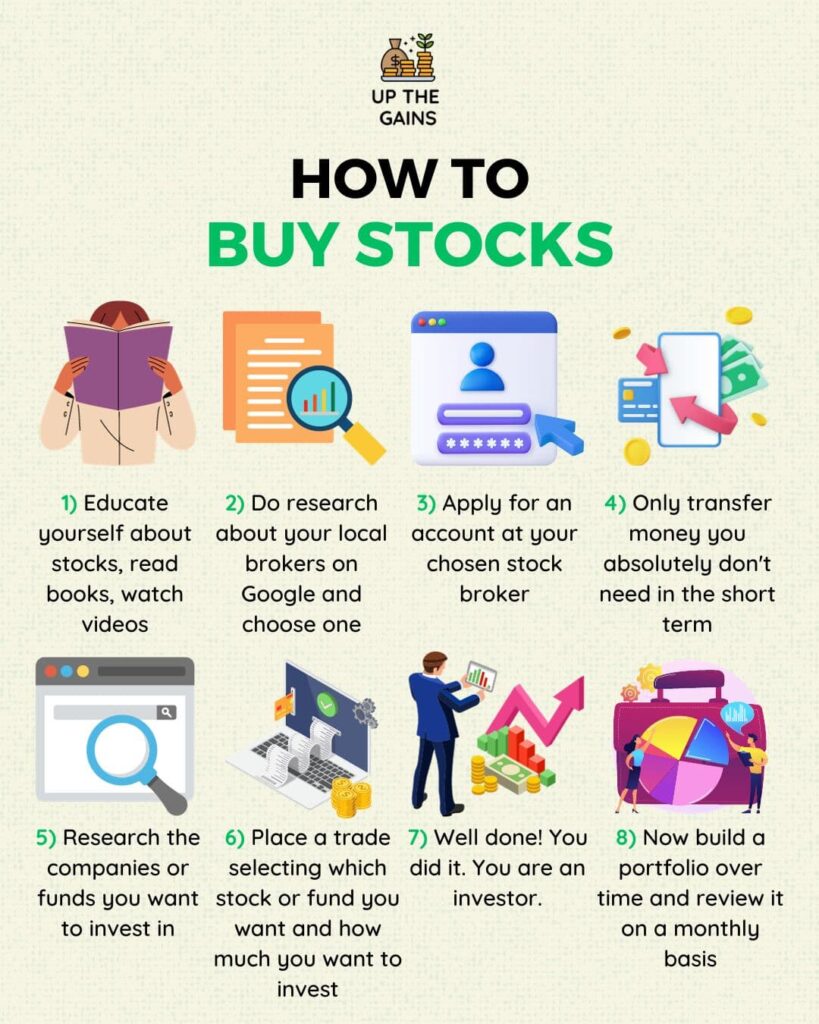
Once you have identified where to buy your shares, the process of getting started is relatively uniform across the industry, thanks to standardized financial regulations.

Identity Verification and KYC Requirements
To comply with “Know Your Customer” (KYC) and Anti-Money Laundering (AML) laws, every legitimate brokerage will require personal information. You will typically need to provide your Social Security number (or equivalent national ID), proof of residence, and a valid government-issued photo ID. This process is now largely digital and can often be completed in minutes via a smartphone app.
Funding Your Account and Linking Banks
After your identity is verified, you must fund the account. Most investors link their primary checking or savings account via ACH transfer. Some platforms offer “instant buying power,” allowing you to trade immediately while your funds are still in transit from the bank. It is also worth checking if the broker supports recurring transfers, which is a vital feature for those practicing dollar-cost averaging.
Understanding Different Types of Investment Accounts
The “where” of buying shares also involves deciding which type of account to open. This decision has significant implications for your tax liability and when you can access your money.
Tax-Advantaged Retirement Accounts
For many, the best place to buy shares is within a tax-advantaged shell. In the United States, this includes Individual Retirement Accounts (IRAs) and Roth IRAs. The primary benefit here is the tax treatment: contributions might be tax-deductible, or withdrawals might be tax-free in retirement. Because these accounts are designed for long-term wealth building, they are often the most efficient vehicles for holding shares over several decades.
Standard Taxable Brokerage Accounts
If you want the flexibility to withdraw your money at any time without penalty, a standard taxable brokerage account is the way to go. While you will owe capital gains tax on any profits and taxes on dividends received, there are no limits on how much you can contribute annually. This is the ideal “where” for goals that are closer in time, such as saving for a house down payment or building a general wealth fund outside of retirement.
Managed Accounts and Robo-Advisors
If you are unsure which specific shares to buy, you might consider a robo-advisor like Betterment or Wealthfront. These platforms use algorithms to build and rebalance a diversified portfolio of shares (usually through ETFs) based on your risk tolerance. This represents a “where” that sits between a self-directed brokerage and a full-service advisor, providing automated management at a low cost.
Best Practices for Executing Your First Trade
Finding a place to buy shares is the logistical hurdle; executing the trade effectively is the strategic one. Once your account is funded and your platform is chosen, how you enter the market matters.
Market Orders vs. Limit Orders
When you are ready to buy, you will encounter different order types. A “Market Order” instructs the broker to buy the shares immediately at the best available current price. This guarantees the trade happens quickly but does not guarantee the price. A “Limit Order” allows you to set a maximum price you are willing to pay. The trade will only execute if the shares hit that price. For volatile stocks, limit orders are generally recommended to avoid “slippage” or paying more than intended.
Building a Diversified Portfolio
The ultimate goal of knowing where to buy shares is to build a resilient financial future. Avoid the temptation to “all-in” on a single “hot” stock. Professional investors advocate for diversification—spreading your capital across different sectors (tech, healthcare, energy) and geographic regions. Many investors find that buying shares of an index fund, which holds hundreds of companies simultaneously, is the most effective way to capture market growth while mitigating the risk of any single company failing.
The Importance of Long-Term Thinking
Regardless of which platform you choose, the most successful investors share a common trait: patience. The stock market is a volatile environment in the short term, but it has historically been one of the greatest engines of wealth creation over long periods. By choosing a reputable, low-cost platform and consistently contributing to a diversified portfolio, you transition from being a consumer to being an owner in the global economy.
In conclusion, the question of where to buy shares has never had more high-quality answers. Whether you prioritize the sophisticated tools of a legacy broker, the convenience of a mobile app, or the tax efficiency of a retirement account, the key is to start. The compounding of returns is most effective when given time, and selecting your platform is the foundational act that sets that process in motion.
aViewFromTheCave is a participant in the Amazon Services LLC Associates Program, an affiliate advertising program designed to provide a means for sites to earn advertising fees by advertising and linking to Amazon.com. Amazon, the Amazon logo, AmazonSupply, and the AmazonSupply logo are trademarks of Amazon.com, Inc. or its affiliates. As an Amazon Associate we earn affiliate commissions from qualifying purchases.