
For the modern professional or the fiscally conscious individual, travel represents one of the largest discretionary expenses in a household budget. However, in the world of personal finance, the cost of a plane ticket or a concert pass is rarely a fixed value. Instead, it is a fluctuating asset governed by complex algorithms, supply-side economics, and market psychology. Understanding where to buy cheap tickets is not merely about finding a “deal”; it is about mastering travel arbitrage—the art of leveraging market inefficiencies to secure the highest value for the lowest capital outlay.
To optimize your financial health, travel spending must be approached with the same rigor as an investment portfolio. This means moving beyond casual searches and adopting a systematic strategy that utilizes financial tools, timing, and platform selection to minimize costs without sacrificing the quality of the experience.
The Economics of Airfare: Understanding Dynamic Pricing Models
The foundation of finding cheap tickets lies in understanding how airlines and ticketing platforms price their inventory. Unlike retail goods with static price tags, tickets are priced using “yield management” systems. These are sophisticated AI-driven models designed to extract the maximum amount of money each passenger is willing to pay.
How Airlines Use Predictive Analytics
Airlines categorize seats into different “buckets” or fare classes. A single row on an airplane might contain three people who paid three entirely different prices for the exact same service. The goal of the airline’s financial department is to sell out the cheapest seats first to build a baseline of occupied inventory, then slowly increase prices as the departure date approaches and the remaining seats become more valuable to last-minute business travelers.
From a money-management perspective, your goal is to be in the first wave of buyers. However, being too early can sometimes be as detrimental as being too late. If an airline has not yet gauged the demand for a specific route, they may set the initial price high. The “sweet spot” occurs when the airline’s predictive analytics indicate a surplus of inventory, triggering a temporary price drop to stimulate demand.
The Myth of Incognito Mode vs. Real-Time Market Demand
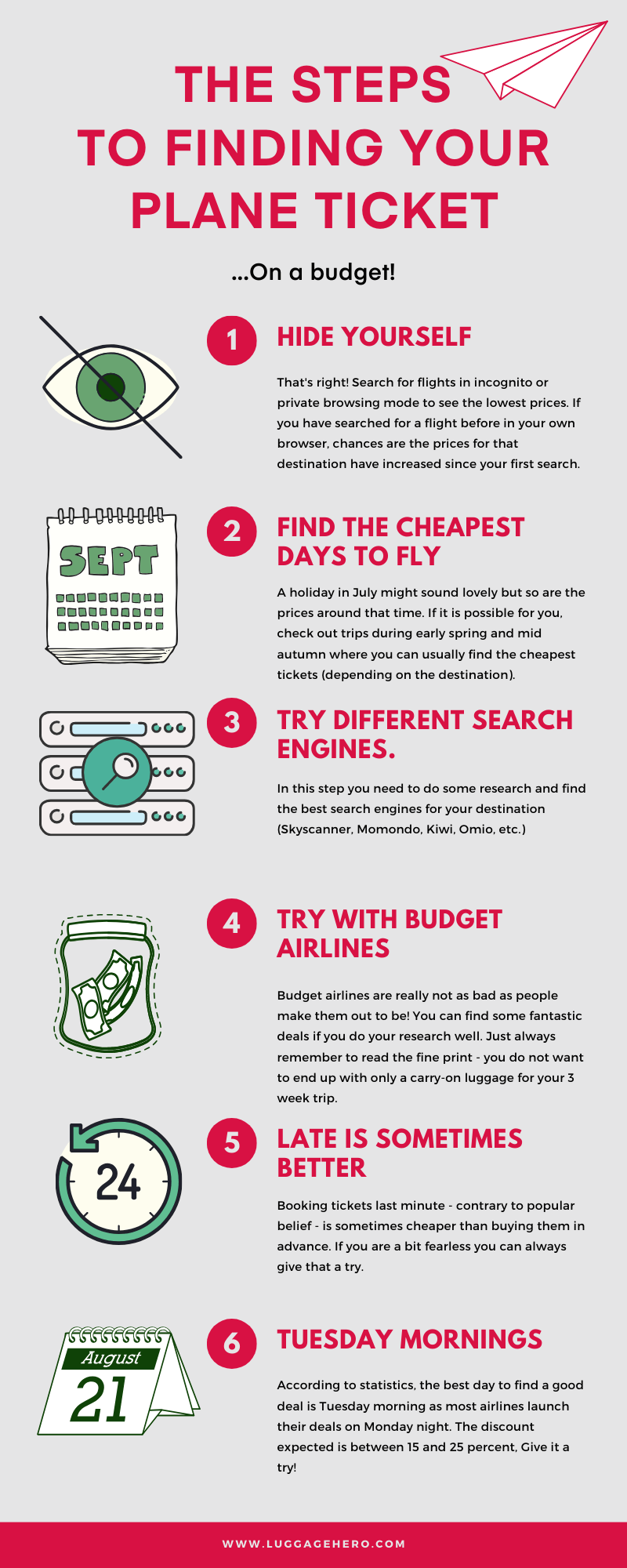
There is a persistent myth in personal finance circles that clearing your browser cookies or using incognito mode will lower ticket prices. While digital security is important, the reality of airline pricing is more tied to global distribution systems (GDS) and route-specific demand.
Rather than focusing on browser settings, savvy spenders should focus on “positioning flights” and “open-jaw” tickets. This is a form of geographical arbitrage. For example, if a flight from New York to London is expensive, it may be significantly cheaper to fly from New York to Dublin and take a low-cost carrier for the final leg. By breaking the journey into separate financial transactions, you can often save 30% to 50% on the total cost of transit.
Maximizing Financial Tools for Travel Savings
In the realm of online income and personal finance, the tools you use to purchase your tickets are just as important as the price of the ticket itself. Viewing a ticket purchase as a standalone transaction is a missed opportunity for capital growth.
Leveraging Credit Card Rewards and Points
The most effective way to “buy” cheap tickets is to not use cash at all, or to use cash in a way that generates a return on investment (ROI). Travel hacking, a staple of modern financial planning, involves using high-yield credit card rewards to offset costs.
For those looking to optimize their side hustles or business finances, selecting a card that offers 3x to 5x points on travel expenditures creates a feedback loop. If you purchase a $1,000 ticket and receive 5,000 points, and those points are valued at 2 cents each when redeemed, you have effectively received a $100 rebate on your purchase. When searching for where to buy cheap tickets, your first stop should always be your own rewards portal. Portals like Chase Ultimate Rewards or Amex Travel often offer exclusive rates or the ability to “pay with points” at a fixed valuation, providing a floor for your travel expenses.
Cash-Back Portals and Browser Extensions
Beyond credit cards, the integration of cash-back ecosystems can further drive down the net cost of a ticket. Platforms like Rakuten or TopCashback often have partnerships with major booking sites like Expedia, Priceline, and Booking.com.
By layering these tools, a consumer can achieve a “triple-stack” of savings:
-
A discounted base fare found through an aggregator.
-
Cash-back earned through a referral portal (typically 1–10%).
-
Points earned on the credit card used for the transaction.
When these three layers are combined, the “cheap ticket” becomes an asset that contributes to your overall net worth by preserving your liquid capital.

Strategic Booking Windows and Market Timing
Timing is the most critical variable in the cost-saving equation. In finance, market timing is often discouraged, but in the ticketing world, it is essential. The price of a ticket is a function of time, and there are specific windows where the probability of a price drop is highest.
The Goldilocks Window: When to Buy
Extensive data analysis from financial groups suggests that for domestic flights, the “Goldilocks Window” is typically 1 to 3 months before departure. For international travel, this expands to 2 to 8 months. Booking outside of these windows usually results in paying a “convenience premium” (for last-minute flyers) or a “certainty premium” (for those booking a year in advance).
Furthermore, the day of the week you choose to fly—not necessarily the day you book—impacts the price. Flying on Tuesdays or Wednesdays is almost always cheaper than flying on Sundays or Mondays, as you are avoiding the peak demand of both weekend vacationers and Monday-morning corporate travelers. In terms of business finance, shifting a meeting by 24 hours can often save a company thousands of dollars in travel overhead.
Seasonal Fluctuations and Off-Peak Arbitrage
True financial discipline involves traveling against the grain. Buying tickets for a summer destination in the dead of winter, or visiting a financial hub like London during a period of low corporate activity, allows you to capitalize on decreased demand. This is known as off-peak arbitrage. While others are paying premium prices for peak-season “Veblen goods” (goods for which demand increases as the price increases due to status), the savvy investor buys the “trough” of the seasonal cycle.
Alternative Platforms and Secondary Markets
Knowing where to buy cheap tickets also requires a deep dive into the different types of vendors available in the digital marketplace. Not all booking sites are created equal; some are meta-search engines, while others are online travel agencies (OTAs) or consolidators.
Consolidators vs. Direct Booking: A Cost-Benefit Analysis
Consolidators are firms that buy tickets in bulk from airlines at wholesale prices and resell them to the public. Platforms like Skyscanner, Momondo, and Kayak are excellent for identifying these wholesale rates. However, there is a financial risk-reward trade-off.
Buying through a third-party OTA often yields the lowest price, but it comes with reduced liquidity and flexibility. If a flight is canceled, the “cost” of dealing with a third-party customer service agent may outweigh the initial savings. From a business finance perspective, it is often better to book directly with the airline if the price difference is less than 5%, as the direct relationship provides better protection of the principal investment.
Exploring Hidden City Ticketing and Its Financial Risks
For those looking for extreme discounts, “hidden city” ticketing (utilizing sites like Skiplagged) is a controversial but effective strategy. This involves booking a flight with a layover in your actual destination and simply getting off the plane there. For example, a flight from New York to Dallas might be $300, but a flight from New York to Los Angeles with a layover in Dallas might be $150.
While this offers immediate cash savings, it carries “institutional risk.” Airlines frown upon this practice, and frequent use can result in the loss of loyalty points or being flagged by the carrier. In the context of long-term financial planning, one must weigh the immediate $150 saving against the potential loss of long-term travel benefits and status.
Long-Term Wealth Management Through Smarter Spending
Ultimately, the search for cheap tickets is an exercise in resource allocation. Every dollar saved on a transaction is a dollar that can be redirected toward an income-generating asset, such as an index fund or a high-yield savings account.
Budgeting for Travel as a Line Item
To maintain financial health, travel should be treated as a dedicated line item in your budget, funded by “found money” from side hustles or automated transfers. By using the strategies mentioned above—such as credit card churning and strategic timing—you can lower the “burn rate” of your travel fund.
If you travel twice a year and save $400 on each trip through diligent research and tool usage, that $800, if invested at a 7% annual return, would grow to over $30,000 in 20 years. This perspective shifts “buying a cheap ticket” from a simple chore into a significant component of your retirement and wealth-building strategy.

The Compound Effect of Travel Savings
The true value of knowing where to buy cheap tickets lies in the compounding effect of fiscal discipline. By utilizing technology to track prices (through tools like Google Flights alerts or Hopper), leveraging the banking system’s reward structures, and understanding the underlying economics of the travel industry, you transform yourself from a passive consumer into an active market participant. In the world of money and finance, information is the ultimate currency, and in the ticketing market, that information translates directly into cold, hard savings.
aViewFromTheCave is a participant in the Amazon Services LLC Associates Program, an affiliate advertising program designed to provide a means for sites to earn advertising fees by advertising and linking to Amazon.com. Amazon, the Amazon logo, AmazonSupply, and the AmazonSupply logo are trademarks of Amazon.com, Inc. or its affiliates. As an Amazon Associate we earn affiliate commissions from qualifying purchases.