
Despite the rapid rise of digital payment platforms and mobile banking apps, the traditional paper check remains a vital instrument in the modern financial landscape. Whether you are setting up a direct deposit for a new career, linking your bank account to an investment platform, or paying a vendor who requires a physical paper trail, understanding how to read a check is a fundamental pillar of personal finance.
To the untrained eye, the string of numbers at the bottom of a check may look like a random assortment of digits. However, these numbers are part of a highly standardized system designed to facilitate the seamless movement of trillions of dollars through the global economy. This guide will help you identify exactly where your account number is located, explain what the other numbers mean, and provide insights into why this information is crucial for your financial health.

The Anatomy of a Check: Understanding the MICR Line
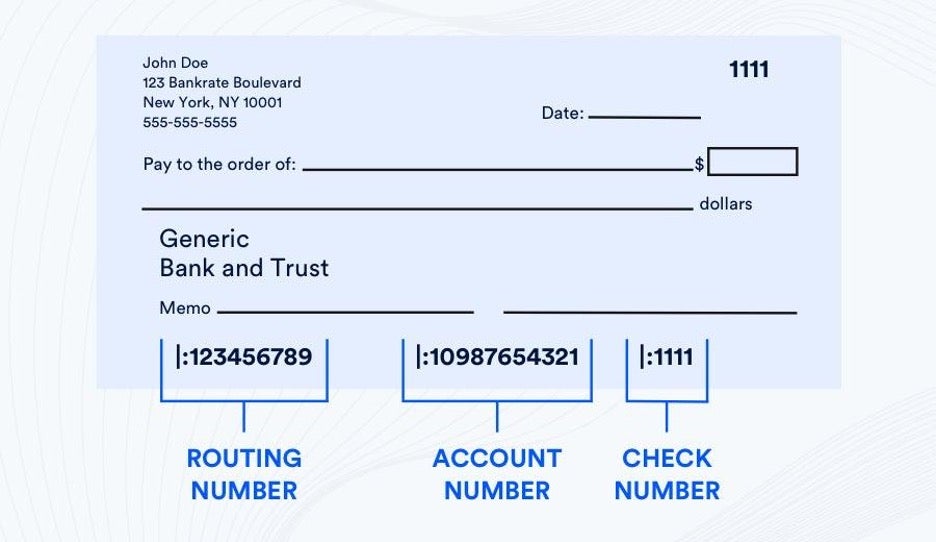
Every standard personal or business check features a line of numbers and special symbols printed along the bottom edge. This is known as the MICR line, which stands for Magnetic Ink Character Recognition. Banks use specialized machines to read this magnetic ink, allowing for the automated processing of checks.
To find your account number, you must first understand the three distinct sets of numbers that comprise this line.
The Routing Transit Number (RTN)
The first set of numbers on the far left of the MICR line is the routing number, often referred to as the ABA (American Bankers Association) routing transit number. This is a nine-digit code that identifies your specific financial institution. Think of it as a “zip code” for your bank. In the United States, every bank has at least one routing number that tells the Federal Reserve and other banks exactly where to send or request funds. It is always nine digits long and is typically flanked by a unique symbol that looks like a vertical dash with two dots.
The Account Number
The second set of numbers—usually located in the middle or toward the right of the MICR line—is your unique bank account number. While routing numbers are shared by every customer at a particular bank branch or region, your account number is specific to you. It identifies your individual checking or savings account.
Depending on your bank, this number can range from 8 to 12 digits (though some institutions use fewer or more). On most checks, the account number is positioned between the routing number and the check number. It is often followed by a symbol that resembles a colon or a bracket, which serves as a separator for the sorting machines.
The Check Number
The third and shortest set of digits is the check number. This number serves as a tracking mechanism for your personal records. You will notice that this number also appears in the top-right corner of the check. By including it in the MICR line at the bottom, banks can ensure that the specific check being processed matches the sequence in your checkbook. This helps prevent the duplicate processing of the same check and allows you to track your spending in a ledger.
Why Identifying Your Account Number is Essential for Personal Finance
Knowing where to find your account number is about more than just reading a piece of paper; it is about managing your liquidity and financial connectivity. In the world of personal finance, your account and routing numbers are the “keys” to your vault.
Setting Up Direct Deposits
One of the most common reasons you will need to find your account number is to set up a direct deposit. When you start a new job, the payroll department will ask for a voided check or your account details. By providing the routing number (to find the bank) and the account number (to find you), your employer can electronically transfer your salary directly into your account. This eliminates the “float” time associated with physical checks and ensures your money is available for investing or spending immediately.
Linking External Investment and Savings Accounts
If you are focused on building wealth, you likely have accounts across multiple platforms—perhaps a high-yield savings account (HYSA) at an online bank and a brokerage account for your stocks and ETFs. To move money between these entities via ACH (Automated Clearing House) transfers, you must provide your account and routing numbers. Accuracy is paramount here; a single transposed digit can lead to a “Return to Sender” error or, in rare cases, the funds being deposited into the wrong account.
Automating Recurring Bill Payments
Many utility companies, mortgage lenders, and insurance providers offer discounts if you pay via direct debit from a checking account rather than a credit card. This is because banks charge lower transaction fees for ACH transfers than credit card processors. To take advantage of these savings and ensure you never miss a due date, you will need to pull your account number from your check to authorize the merchant to withdraw funds periodically.
Security Best Practices for Protecting Your Account Information
Because your account and routing numbers are the primary identifiers for your money, they are highly sensitive. If an unauthorized individual gains access to these numbers, they could potentially initiate fraudulent ACH withdrawals or create “washed” checks. Protecting this data is a critical component of modern financial security.
Safeguarding Physical Checkbooks
Treat your checkbook like cash. Never leave it in your car, and avoid carrying it with you unless you specifically plan to use it. If you have old checkbooks for closed accounts, do not simply throw them in the trash. Use a cross-cut shredder to destroy the MICR line specifically, as this is the information identity thieves covet most.
The Risks of “Voided Checks”
When a service provider asks for a “voided check,” they are looking for a physical verification of your account and routing numbers to prevent data entry errors. To do this safely, write “VOID” in large, bold letters across the front of the check in permanent ink. Ensure the word covers the signature line and the amount box, but do not scribble over the MICR line at the bottom, as the recipient still needs to be able to read those numbers to input them into their system.
Monitoring for Unauthorized ACH Activity
In the digital age, you should be checking your bank statements at least once a week. Look for any “ACH Out” or “Direct Debit” transactions that you did not authorize. While credit cards offer robust fraud protection under the Fair Credit Billing Act, protections for checking accounts (governed by the Electronic Fund Transfer Act) have stricter timelines. You must report unauthorized electronic transfers quickly—usually within 60 days of your statement being sent—to limit your liability.
Beyond the Paper: Managing Account Numbers in a Digital World
As we move toward a “cashless” society, the physical check is slowly being replaced by digital equivalents. However, the underlying architecture—the account and routing number—remains the same. Understanding how these translate to digital tools is essential for modern money management.
Finding Numbers via Mobile Apps and Web Portals
If you do not have a physical checkbook, you can almost always find your account and routing numbers by logging into your bank’s secure portal. Usually, these are found under “Account Details” or “Direct Deposit Information.” Many banks now offer a “Digital Voided Check” or a “Direct Deposit Form” in PDF format, which contains all the necessary numbers in a professional layout for your employer or creditors.
The Rise of E-Checks and Virtual Transfers
An e-check is essentially a digital version of a paper check. When you pay a bill online using your account and routing number, you are performing an e-check transaction. This uses the same ACH network that physical checks eventually enter after they are scanned by a bank. The advantage of the e-check is speed and reduced paper waste, but the requirement for your account number remains constant.

The Future: Open Banking and Instant Payments
The financial industry is currently shifting toward “Open Banking” and “Real-Time Payments” (RTP). These systems aim to make transfers even faster than the current 1–3 day ACH window. Even in these advanced systems, your account number remains your primary financial address. As long as the current banking infrastructure exists, the numbers found at the bottom of your check will continue to be the most important digits in your financial life.
In summary, your account number is the heartbeat of your financial connectivity. By knowing exactly where it sits on a check—nestled between the routing number and the check number—you empower yourself to manage your money with confidence, accuracy, and security. Whether you are building an emergency fund, investing in the market, or simply paying your monthly bills, mastering these “old school” documents is a vital step in your personal finance journey.
aViewFromTheCave is a participant in the Amazon Services LLC Associates Program, an affiliate advertising program designed to provide a means for sites to earn advertising fees by advertising and linking to Amazon.com. Amazon, the Amazon logo, AmazonSupply, and the AmazonSupply logo are trademarks of Amazon.com, Inc. or its affiliates. As an Amazon Associate we earn affiliate commissions from qualifying purchases.