
In an era dominated by instantaneous digital transfers, cryptocurrencies, and contactless payments, the humble paper cheque remains a resilient and vital tool in the landscape of personal and business finance. Whether you are setting up a direct deposit for a new high-yield savings account, authorizing an automated clearing house (ACH) payment for a mortgage, or simply verifying your banking details for a business contract, the ability to accurately identify the numbers on a cheque is a fundamental skill in financial literacy.
Understanding the anatomy of a cheque is more than just a clerical necessity; it is about maintaining the integrity of your transactional data. The numbers printed at the bottom of your cheque serve as the “coordinates” for your wealth, guiding funds through the complex global banking infrastructure to ensure they land in the correct destination. This guide provides a comprehensive deep dive into locating your account number and understanding the specialized systems that keep your money moving safely.
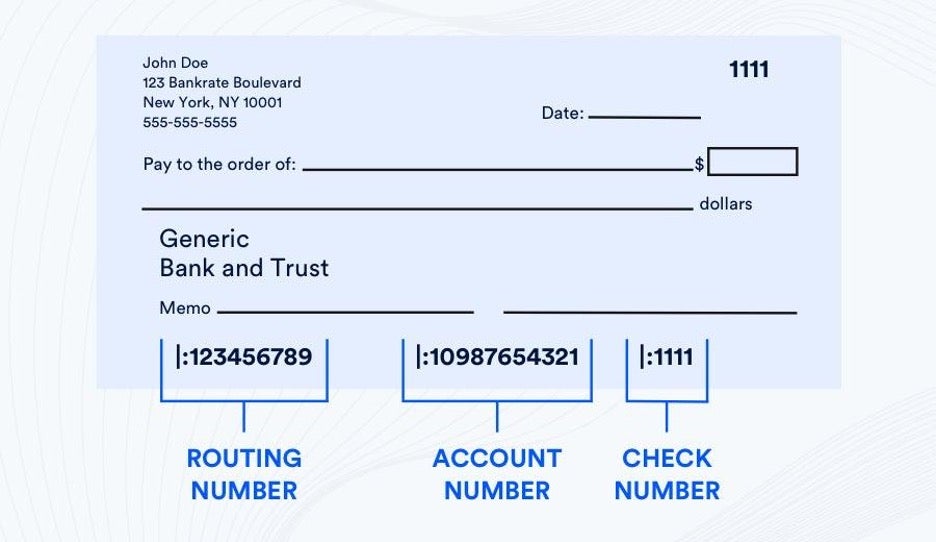
The Anatomy of a Cheque: Decoding the MICR Line
When you look at the bottom of a cheque, you will notice a string of numbers printed in a unique, slightly blocky font. This is known as the MICR (Magnetic Ink Character Recognition) line. This technology was developed in the late 1950s to allow computers to quickly and accurately process massive volumes of cheques. Within this line of digits, three distinct pieces of information are housed.
Identifying the Routing Number (ABA)
The first set of numbers on the far left of the MICR line is the routing transit number (RTN), often referred to as the ABA routing number. This nine-digit code acts as an address for your specific financial institution. Created by the American Bankers Association, this number tells the clearinghouse which bank holds the funds. In a financial context, the routing number identifies the “building,” while the account number identifies the “room” within that building. It is important to note that a single bank may have multiple routing numbers based on the geographical region where the account was opened.
Locating the Account Number
The account number is typically the second set of digits found at the bottom of the cheque, usually situated in the center or slightly to the right of the routing number. Unlike the routing number, which is nine digits long, account numbers vary in length depending on the internal systems of the financial institution. Most account numbers range from 8 to 12 digits.
On a standard personal cheque, the account number is often followed by a special symbol that resembles a colon or a vertical bar with a dot. This symbol is part of the MICR character set used to help the bank’s scanning equipment distinguish where one data field ends and the next begins. When providing your account number for financial documents, ensure you do not include the cheque number, which is often located immediately to the right of the account number.
The Cheque Number: The Final Sequence
The third component of the MICR line is the cheque number. This is a short sequence—usually three or four digits—that matches the number printed in the top right-hand corner of the cheque. Its primary purpose in personal finance management is tracking. It allows you to reconcile your bank statement and identify which specific payments have been cleared and which are still outstanding. When you are asked to provide your “banking details” for an electronic transfer, you should never include the cheque number; doing so could cause the transaction to fail or be misrouted.
Why Locating the Account Number Matters in Modern Finance
While you may rarely write a physical cheque in today’s digital-first economy, the information contained on that slip of paper remains the “gold standard” for linking accounts. The routing and account numbers are the primary keys used to unlock various financial services and tools.
Setting Up Direct Deposits and Automated Payments
For most professionals, the most common reason to locate an account number on a cheque is to complete a direct deposit authorization form. Employers require this information to route your salary directly into your checking or savings account. Similarly, when setting up “Autopay” for recurring liabilities—such as utility bills, student loans, or insurance premiums—using your account and routing numbers is often preferable to using a debit card. ACH transfers typically do not carry the “convenience fees” that some vendors charge for card processing, making it a more cost-effective strategy for long-term wealth management.

Integrating with Financial Technology (FinTech) Tools
The rise of FinTech has introduced a plethora of apps designed to help with budgeting, investing, and micro-saving. Platforms like Acorns, Mint, or Robinhood require a secure link to your primary funding source. While many of these apps now use third-party aggregators like Plaid to link accounts via online banking credentials, there are still instances where manual entry of the account and routing numbers is required for verification. Knowing exactly where these numbers are ensures that you can capitalize on these financial tools without technical delays.
Wire Transfers and Large-Scale Transactions
For significant financial milestones—such as paying a down payment on a home or moving large sums into a brokerage account—wire transfers are the industry standard. These transactions are time-sensitive and often irreversible. An error in a single digit of your account number can lead to a “funds held” status or, in worst-case scenarios, the misdirection of a substantial asset. Understanding how to read your cheque ensures that the data you provide to a title company or an escrow agent is 100% accurate, protecting your capital during high-stakes moves.
Security Best Practices for Your Banking Credentials
Your account number is a sensitive piece of financial data. In the wrong hands, it can be used to initiate unauthorized ACH withdrawals or create fraudulent cheques. Managing this information requires a professional approach to digital and physical security.
Safeguarding Your Physical Checkbook
Because a cheque contains all the information needed to access your funds (routing number, account number, name, and address), it is essentially a map to your liquid assets. You should store your checkbook in a secure, locked location. If you still receive paper statements that include images of cancelled cheques, ensure they are shredded rather than simply thrown in the trash. Financial identity theft often begins with “dumpster diving” for discarded documents containing MICR data.
Transitioning to Digital Verification
Many modern banks now offer a “voided cheque” feature within their mobile apps. Instead of finding a physical cheque and writing “VOID” across it to provide your details to a third party, you can download a digital PDF that contains your account and routing numbers in a professional format. This is not only more convenient but also more secure, as it eliminates the risk of a physical document being lost in the mail or intercepted.
Monitoring for “Micro-Deposits”
When you use your account number to link to a new financial service, the provider will often send two “micro-deposits” (usually less than $1.00) to your account to verify ownership. Monitoring your transaction history for these small amounts is a key part of financial oversight. Once you see these deposits, you log back into the service and enter the exact amounts. This process confirms that the account number you pulled from your cheque is correct and that you have active control over the account.

International Variations and the Future of Cheque Processing
It is worth noting that while the MICR system is standard in the United States, other regions use different formats. In Canada, for example, the transit number consists of five digits followed by a three-digit institution number. In the United Kingdom and much of Europe, the system has largely shifted toward the IBAN (International Bank Account Number) and SWIFT/BIC codes.
As we look toward the future, the physical cheque may eventually become a relic of the past. However, the data it carries—the routing and account numbers—will remain the foundation of the global financial system for the foreseeable future. These numbers are the DNA of your financial identity.
By mastering the layout of a cheque, you empower yourself to navigate the world of personal finance with confidence. Whether you are a young professional setting up your first payroll or an experienced investor moving capital between accounts, the precision of your financial data is the first line of defense in maintaining a healthy and secure economic life. Understanding where your account number is located is a small detail, but in the world of money, the details are where the real growth happens.
aViewFromTheCave is a participant in the Amazon Services LLC Associates Program, an affiliate advertising program designed to provide a means for sites to earn advertising fees by advertising and linking to Amazon.com. Amazon, the Amazon logo, AmazonSupply, and the AmazonSupply logo are trademarks of Amazon.com, Inc. or its affiliates. As an Amazon Associate we earn affiliate commissions from qualifying purchases.