
In an era dominated by instant transfers, mobile wallets, and contactless payments, the traditional paper check remains a cornerstone of the global financial system. Whether you are setting up a direct deposit for a new job, paying a contractor, or linking your bank account to an investment platform, you will invariably be asked for your routing and account numbers. For many, staring at a slip of paper covered in various sequences of digits can be confusing. Understanding exactly where to find your bank account number—and how to distinguish it from other identifiers—is a fundamental skill in personal and business finance.
The account number is the unique identifier for your specific cache of funds within a financial institution. While the routing number identifies the “mailbox” or the bank itself, the account number identifies the “envelope” inside that mailbox that belongs specifically to you. Locating this information accurately is essential to ensuring that your money moves to the right place without delay or error.
Understanding the Anatomy of a Check
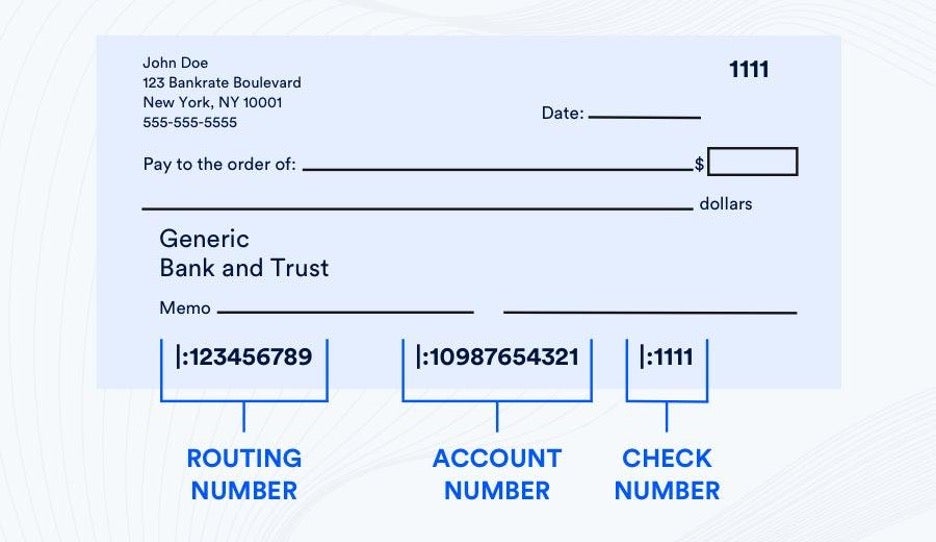
To the untrained eye, a check is a cluttered document. However, it is designed with a very specific hierarchy of information meant to be read by both humans and high-speed sorting machines. To find your bank account number, you must look at the very bottom of the check, where a string of digits is printed in a unique, blocky typeface. This is known as the MICR (Magnetic Ink Character Recognition) line.
The MICR Line
The MICR line is printed using a special magnetic ink or toner. This allows the high-speed processing equipment used by the Federal Reserve and private clearinghouses to read the information even if there are stamps, signatures, or cancelation marks over the numbers. The MICR line is divided into three distinct sections: the routing number, the account number, and the check number.
The Three-Part Sequence
When you look at the bottom of a personal check, you will typically see three sets of numbers.
-
The Routing Number: This is almost always the first set of nine digits on the left. It is flanked by a specific symbol that looks like a vertical bar and a colon. This number identifies the specific financial institution responsible for the funds.
-
The Account Number: This is the middle set of numbers. It varies in length depending on the bank but is usually between 8 and 12 digits.
-
The Check Number: This is the shortest set of numbers, usually found on the far right. It should match the number printed in the top right corner of the check.
It is important to note that while this is the standard layout for personal checks in the United States, some banks may slightly alter the sequence, particularly on business checks or “starter” checks issued when an account is first opened.
The Difference Between Routing and Account Numbers
Confusion between the routing number and the account number is one of the most common causes of failed financial transactions. In the context of personal finance and business operations, confusing these two can lead to rejected ACH transfers, late fees, and significant administrative headaches.
The Role of the Routing Number (ABA)
The routing transit number (RTN), often called the ABA routing number because it was developed by the American Bankers Association, is a nine-digit code. Think of it as the “address” of your bank. It tells the financial system which bank holds your money. Every bank has at least one routing number, though larger national banks may have dozens of different routing numbers based on the geographic region where the account was opened or the type of transaction being processed (e.g., wire transfers vs. paper checks).
The Specificity of the Account Number
The account number is the identifier for your specific relationship with the bank. While millions of people share the same routing number because they use the same bank, your account number is unique to you. It bridges the gap between the bank’s general vault and your specific balance. When you provide your account number for a “pull” transaction—such as a utility company withdrawing your monthly payment—that number tells the bank’s internal ledger exactly which sub-account to debit.
Visual Cues and Symbols
To help distinguish these numbers, the MICR line uses “transit” symbols. The routing number is always preceded and followed by a transit symbol (a dash over a colon). The account number is followed by an “on-us” symbol (a vertical line with a square). Learning to recognize these glyphs can help you identify your account number even on checks with non-standard layouts.
Why Locating Your Account Number Matters in Modern Banking
Even if you never write a physical check, the information contained on that slip of paper is vital for modern digital finance. The account number is the primary key for the Automated Clearing House (ACH) network, which handles the vast majority of electronic transfers in the U.S.
Setting Up Direct Deposits
For most employees, the first time they need to find their account number is when filling out a payroll form. Employers require the account number and routing number to transmit wages directly into a checking or savings account. An error in a single digit of the account number can result in your paycheck being “bounced” back to the employer’s bank, a process that can take several business days to resolve, leaving you without access to your funds.

Paying Bills via ACH
Many service providers, from mortgage lenders to insurance companies, offer discounts or increased convenience if you pay via direct bank withdrawal rather than a credit card. To set this up, you must provide your account number. This is often preferred in personal finance management because it avoids the interest rates and potential debt traps associated with credit cards, while also ensuring payments are made on time through automation.
Linking Digital Wallets and Investment Platforms
Fintech apps like Venmo, PayPal, and Robinhood require a linked bank account to move money in and out of their ecosystems. While some apps use third-party services like Plaid to log in to your bank directly, many still require the manual entry of an account number. In these instances, the checkbook remains the most reliable “source of truth” for your banking coordinates.
Security Protocols: Protecting Your Account Details
Because your bank account number is the key to your liquid assets, it must be treated with the highest level of security. If a malicious actor obtains both your routing and account numbers, they have the baseline information required to initiate fraudulent ACH withdrawals or create counterfeit checks.
Safeguarding Physical Checks
Physical checks are a security vulnerability. They contain your name, often your home address, your bank’s name, your routing number, and your full account number. If you must use paper checks, ensure they are stored in a locked drawer. When mailing checks, use secure drop boxes rather than leaving them in an unsecured residential mailbox where they can be “fished” by identity thieves.
The Risks of Check Fraud
“Check washing” is a common form of fraud where criminals use chemicals to erase the payee and dollar amount on a stolen check, leaving the original signature and account details intact. They then rewrite the check to themselves for a much larger amount. Because the MICR line (containing your account number) is still valid, the check may successfully clear the bank’s automated systems before you notice the discrepancy.
Digital Security and Account Numbers
When entering your account number online, ensure you are on a secure, encrypted connection (look for the “https” and the padlock icon). Never send your account number via unencrypted email or text message. If a financial institution or utility provider calls you and asks for your account number “for verification,” be wary. Legitimate institutions usually ask for the last four digits only, as they already have the full number on file.
Business Checks vs. Personal Checks: Key Variations
While the fundamentals remain the same, business checks often feature a different layout that can confuse those used to personal checkbooks. In the corporate world, checks are often printed on full-sized 8.5″ x 11″ sheets of paper, with the check itself occupying only the top or bottom third of the page.
The Position of the Check Number
On many business checks, the check number appears before the routing number in the MICR line. This is a significant departure from personal checks. If you are looking at a business check, the sequence might be: Check Number, then Routing Number, then Account Number.
Auxiliary On-Us Fields
Large corporations often use an “auxiliary on-us” field in the MICR line, which adds more numbers to the left of the routing number. This is typically used for internal tracking or to help the bank’s automated systems handle high volumes of payments. When you are asked for your account number for a business account, ensure you are not accidentally including these auxiliary digits or the check number itself.
The Evolution of Check Processing in the Digital Era
As we move toward a more digital-centric economy, the way we interact with account numbers is changing. The Check Clearing for the 21st Century Act (Check 21) allowed banks to process digital images of checks rather than the physical paper. This paved the way for mobile check deposits, where you take a photo of a check to deposit it.
Finding Account Info via Mobile Apps
If you do not have a physical checkbook, you can almost always find your account number through your bank’s mobile app or online banking portal. Usually, this is found under “Account Details” or by clicking on a specific account and selecting “Show Account Number.” Many banks also provide a digital “voided check” PDF that mimics the layout of a paper check, clearly labeling the routing and account numbers for your convenience.

The Transition to Real-Time Payments (RTP)
While the account number remains the primary identifier today, the rise of Real-Time Payments (RTP) and the FedNow service may eventually shift how we identify our accounts. In some systems, an “alias” such as a phone number or email address is linked to the account number, allowing for transfers without the need to expose the underlying banking digits. However, until these systems are universally adopted, the bank account number found on your check remains the most critical piece of data for navigating the world of personal and business finance.
By mastering the layout of your checks and understanding the function of the MICR line, you empower yourself to manage your finances with greater precision and security. Whether you are automating your savings or managing the cash flow of a growing business, that string of numbers at the bottom of your check is the vital link that keeps your financial life moving.
aViewFromTheCave is a participant in the Amazon Services LLC Associates Program, an affiliate advertising program designed to provide a means for sites to earn advertising fees by advertising and linking to Amazon.com. Amazon, the Amazon logo, AmazonSupply, and the AmazonSupply logo are trademarks of Amazon.com, Inc. or its affiliates. As an Amazon Associate we earn affiliate commissions from qualifying purchases.