
In the intricate world of personal finance, certain pieces of information act as critical keys to unlocking and managing your money. Among these, the routing number stands as a fundamental, yet often overlooked, identifier. It’s a sequence of digits that, while seemingly innocuous, underpins virtually every electronic transaction tied to your bank account. From receiving your paycheck via direct deposit to paying bills online, or sending money through wire transfers, your routing number is the digital address that guides funds to and from your financial institution.
Despite its pervasive importance, many individuals find themselves scrambling to locate this crucial number precisely when they need it most. Whether you’re setting up a new utility payment, configuring a payroll direct deposit, or preparing for a financial transfer, the momentary confusion of “Where is my routing number?” is a common hurdle. This article aims to demystify the routing number, explain its vital role in your financial life, and, most importantly, provide a comprehensive guide to finding it with ease and confidence. Understanding and knowing where to quickly access your routing number is not just about convenience; it’s a fundamental aspect of modern financial literacy and responsible money management.

Understanding the Routing Number: Your Bank’s Digital Fingerprint
At its core, a routing number, also known as an ABA (American Bankers Association) routing transit number, is a nine-digit code used to identify financial institutions in the United States. It’s essentially the street address for your bank in the vast postal system of the financial world, ensuring that funds transferred electronically arrive at the correct destination.
What Exactly is a Routing Number?
The concept of a routing number dates back to 1910, established by the American Bankers Association to facilitate the clearing of paper checks. Before the advent of widespread electronic banking, these numbers were crucial for sorting and directing checks between different banks. Today, while paper checks are less common, the routing number’s function has evolved and expanded, becoming indispensable for a broad array of electronic transactions.
Each of the nine digits in a routing number carries specific information, though the full breakdown isn’t necessary for the average user. What’s crucial to understand is that it uniquely identifies your specific bank or credit union, and sometimes even a particular branch or a specific type of transaction service offered by that institution. It’s distinct from your personal bank account number, which identifies your individual account within that institution. Think of it this way: the routing number gets the mail to the right building (your bank), and your account number directs it to your specific mailbox (your personal account) inside.
Why Do You Need It? Key Functions in Modern Finance
The applications for your routing number are extensive and touch nearly every aspect of digital money management. Without it, many of the conveniences we take for granted in personal finance would be impossible.
- Direct Deposit: This is perhaps the most common use. When your employer pays you directly into your bank account, they need your bank’s routing number to ensure your paycheck lands in the correct institution, along with your account number to direct it to your specific account. The same applies to government benefits, tax refunds, or other regular payments.
- Automatic Bill Payments (ACH Transactions): Many people set up recurring payments for utilities, loans, insurance premiums, or subscriptions directly from their bank account. These “Automated Clearing House” (ACH) transactions rely on your routing number to identify your bank.
- Electronic Funds Transfers (EFTs): This is a broad category that includes many forms of digital money movement, such as sending money between your own accounts at different banks, or transferring funds to another person’s account within the same country.
- Wire Transfers: For larger, time-sensitive, or international transfers, wire transfers are often used. While domestic wire transfers typically use your bank’s standard routing number, international wires often require a SWIFT/BIC code in addition to or instead of the domestic routing number, which we’ll touch on later.
- Tax Payments: When paying federal or state taxes electronically, your routing number is required to debit the funds from your account.
In essence, any time money moves digitally into or out of your bank account without using a physical check or a debit/credit card, your routing number is likely playing a pivotal role.
Differentiating from Account Numbers and Card Numbers
It’s vital not to confuse your routing number with other financial identifiers. Your account number is typically longer (often 10-12 digits) and specifically identifies your individual checking or savings account. Your debit or credit card number is a 16-digit number found on your card and is used for point-of-sale transactions or online purchases, entirely separate from your bank account’s routing information. Misplacing these numbers or providing the wrong one can lead to delayed transactions, returned payments, or, in severe cases, security risks. Always double-check which number is being requested for any given transaction.
The Quest: Finding Your Routing Number with Ease
Knowing how crucial your routing number is, the next logical step is to understand where to find it reliably. Fortunately, financial institutions make this information readily available through several channels.
Your Checkbook: The Most Traditional Spot
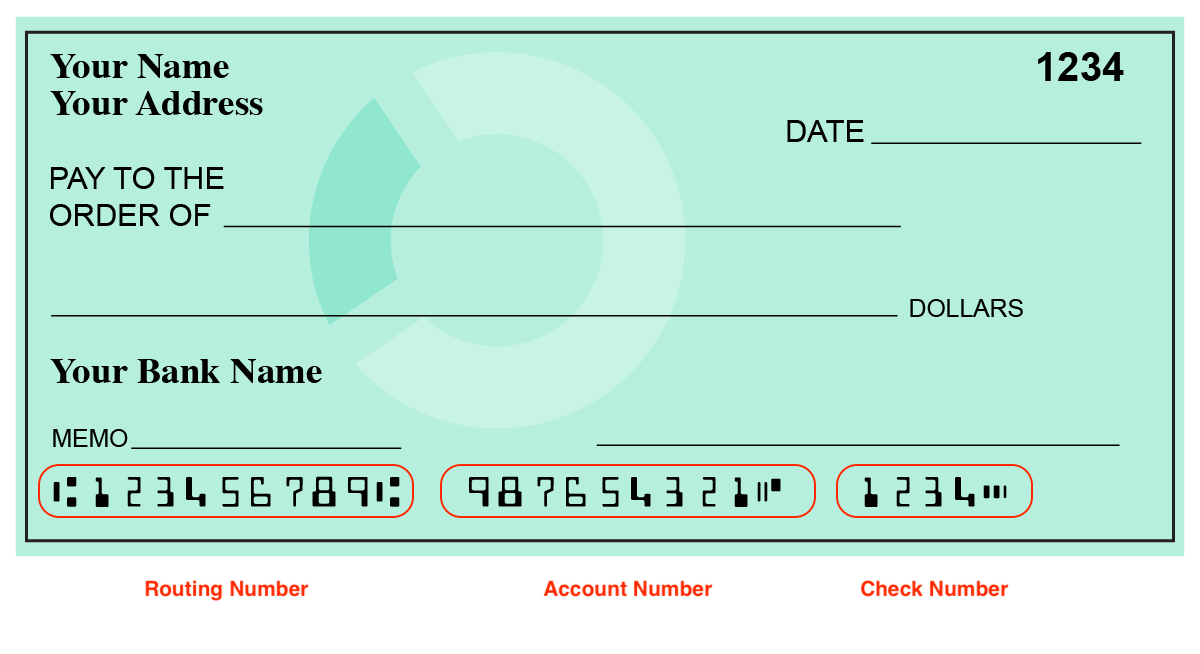
For those who still use paper checks, your checkbook is arguably the most straightforward place to find your routing number. Look at the bottom left-hand corner of any personalized check. You’ll typically see three sets of numbers, separated by special symbols.
- The first set of numbers (usually nine digits) on the far left is your routing number.
- The second set (often 10-12 digits) is your account number.
- The third set is the check number, which corresponds to the number in the upper right corner of the check.
Always verify that the routing number on your checks matches what your bank provides through other channels, especially if you’re using older checks or checks from a different account.
Online Banking & Mobile Apps: Digital Convenience
In today’s digital age, your online banking portal or mobile app is often the quickest and most convenient way to access your routing number.
- Online Banking: After logging into your bank’s website, navigate to your account details. This information is usually found under sections like “Account Summary,” “Account Information,” “Direct Deposit Information,” or “View Statements.” Many banks specifically label a section for “Routing Number” or “ABA Number.”
- Mobile Apps: Most banking apps provide similar functionality. Look for your account details, often accessible by tapping on a specific checking or savings account, then searching for a “Details” or “Information” tab. Some apps even have a dedicated “Direct Deposit” section that explicitly lists the routing number alongside your account number.
This method is highly recommended as it provides the most up-to-date information directly from your bank.
Bank Statements: A Reliable Paper Trail
Your monthly bank statements, whether paper or electronic, are another excellent source for your routing number.
- Paper Statements: On physical statements, the routing number is commonly printed at the bottom, near your account number, or in a prominent location at the top or side of the statement, usually within the section detailing your account information.
- Electronic Statements (eStatements): If you’ve opted for paperless statements, you can access these through your online banking portal. Download a PDF version of your latest statement and examine it as you would a physical one. This is a secure and archived way to find the information if other digital methods aren’t immediately clear.
Official Bank Websites: Dedicated Information
Many banks dedicate specific pages on their public websites to help customers find their routing numbers. A quick search on your bank’s website for “routing number” or “direct deposit information” will often lead you to a page listing the correct number for various account types and services. Some banks even have a dedicated “Find Your Routing Number” tool where you input your state or account type. This can be particularly useful if you’re not yet a customer or if you need to confirm the number for a specific type of transaction (e.g., wires vs. ACH).
Contacting Your Bank Directly: When All Else Fails
If you’ve exhausted the digital and paper options or are still unsure, don’t hesitate to contact your bank directly.
- Customer Service Hotline: Call your bank’s customer service number (usually found on the back of your debit card or on their official website). Be prepared to verify your identity with personal information before they provide the routing number.
- Visit a Branch: For in-person assistance, visit your local branch. A teller will be able to provide the correct routing number and clarify any questions you might have.
While these methods might take slightly more time, they offer the highest level of assurance that you’re getting the correct and most up-to-date information.
Navigating Routing Number Variations and Security
While finding your primary routing number is straightforward, there are nuances to be aware of, particularly regarding variations and security.
Different Routing Numbers for Different Services?
In most cases, your bank will use one primary routing number for ACH transactions (like direct deposit and bill pay) for all accounts within a specific region. However, there are exceptions:
- Wire Transfers: Some larger banks use a different routing number specifically for wire transfers than they do for ACH transactions. This is less common now, but it’s always wise to confirm if you’re initiating a wire transfer. The bank’s wire transfer instructions will explicitly state the correct routing number to use.
- Specific Account Types: Very rarely, some institutions might have different routing numbers for specific account types (e.g., a dedicated savings account routing number vs. checking). Always verify directly with your bank if you have multiple account types and are unsure.
- Mergers and Acquisitions: If your bank has recently merged with another, or been acquired, their routing numbers might change over time, or they might temporarily operate with routing numbers from both legacy institutions. Your bank will usually communicate any such changes well in advance.
Branch vs. Main Office Routing Numbers
A common misconception is that each branch of a bank has a unique routing number. This is generally not true. Most large banks operate with a single routing number, or a few regional ones, that cover all their branches within a geographic area for standard ACH transactions. The routing number identifies the bank as an institution, not necessarily the individual branch where you opened your account. The main exception to this might be smaller, local credit unions or community banks, where the institution itself is geographically limited, and thus, its routing number serves for all its limited branches.
Security Best Practices: Protecting Your Financial Information
Your routing number, combined with your account number, can facilitate transactions. While it’s generally considered less sensitive than a debit card number or your social security number, it still requires careful handling.
- Be Cautious Online: Only enter your routing and account numbers on secure, trusted websites, typically your bank’s official portal or a reputable bill pay service. Look for “https://” in the URL and a padlock icon.
- Verify Requests: If someone asks for your routing number via email or an unsolicited call, be extremely wary. Scammers often attempt to phish for this information. Always verify the legitimacy of the request through official channels (e.g., call your bank directly using a number you know to be correct).
- Physical Security: Keep your checkbook and bank statements in a secure location. Shred old statements and voided checks before discarding them.
- Account Monitoring: Regularly review your bank statements and transaction history for any unauthorized activity. Early detection is key to mitigating potential fraud.
Beyond the Basics: Common Scenarios and FAQs
Understanding the ‘what’ and ‘where’ of your routing number is essential. Let’s explore some practical scenarios and frequently asked questions.
Setting Up Direct Deposit: A Step-by-Step Guide
Setting up direct deposit is one of the most frequent uses for your routing number.
- Obtain the Form: Your employer will provide a direct deposit form. This might be a physical paper form or an online portal.
- Gather Information: You’ll typically need your full legal name, your bank’s name, your account type (checking or savings), your full account number, and your bank’s routing number.
- Fill it Out Carefully: Double-check every digit. A single incorrect digit in either the routing or account number can cause significant delays or even send your pay to the wrong account.
- Attach Proof (Optional but Recommended): Some employers ask for a voided check or a direct deposit authorization letter from your bank as verification. This helps prevent errors.
- Submit: Return the completed form to your payroll department. It may take one or two pay cycles for direct deposit to take effect, so plan accordingly.
Initiating Online Bill Payments: What to Look For
When setting up online bill payments directly from your bank account (as opposed to using a credit/debit card), you’ll often encounter similar fields:
- Payee Name: The name of the company or individual you’re paying.
- Payee Bank Information: Sometimes, you’ll need the payee’s bank routing number and account number, especially for person-to-person transfers or less common billers. More often, for major utility or service providers, your bank’s bill pay system may already have their banking details on file.
- Your Account Information: For payments originating from your account, your bank already knows its own routing number. You just need to select the correct checking or savings account from which the funds should be drawn.
Always ensure you’re using your bank’s bill pay system or a trusted third-party service directly, rather than entering your banking details on an unfamiliar website.
International Transfers: When SWIFT/BIC Comes into Play
While domestic transfers rely on the ABA routing number, international transfers use a different system.
- SWIFT/BIC Code: For sending or receiving money internationally, you’ll typically need a SWIFT (Society for Worldwide Interbank Financial Telecommunication) code, also known as a BIC (Bank Identifier Code). This is an 8 or 11-character code that identifies your bank in the global financial network.
- Not the Same: It’s important to understand that your domestic ABA routing number is not interchangeable with a SWIFT/BIC code. If you’re expecting an international transfer, make sure you provide the correct SWIFT/BIC code for your bank, which can usually be found on your bank’s international transfer page, or by contacting customer service.
Troubleshooting: What If I Can’t Find It?
If you’ve searched diligently and still can’t locate your routing number, don’t panic.
- Review All Channels: Go back through the methods listed above. Did you check your online banking, your mobile app, a recent statement, and your bank’s public website?
- Contact Your Bank: This is your safest and most reliable fallback. Have your account information (but not your password or PIN) ready for verification. They are there to help you.
- Avoid Third-Party Sites: Be very cautious about using generic “find my routing number” websites that are not affiliated with your specific bank. While some legitimate aggregators exist, others can be outdated, incorrect, or even phishing traps. Always prioritize information directly from your financial institution.

Conclusion
The routing number, though a series of simple digits, is a cornerstone of modern financial operations. It acts as the digital traffic controller for your money, ensuring that your direct deposits arrive on time, your bills are paid accurately, and your electronic transfers reach their intended destination. While it might sometimes feel elusive, knowing where to find this vital piece of information is an essential skill in managing your personal finances effectively.
By utilizing your checkbook, leveraging the convenience of online banking and mobile apps, consulting your bank statements, or simply reaching out to your financial institution, you can quickly and confidently locate your routing number whenever it’s needed. Armed with this knowledge and adhering to basic security practices, you empower yourself to navigate the complexities of the financial world with greater ease, accuracy, and peace of mind, making your money work for you without unnecessary hurdles.
aViewFromTheCave is a participant in the Amazon Services LLC Associates Program, an affiliate advertising program designed to provide a means for sites to earn advertising fees by advertising and linking to Amazon.com. Amazon, the Amazon logo, AmazonSupply, and the AmazonSupply logo are trademarks of Amazon.com, Inc. or its affiliates. As an Amazon Associate we earn affiliate commissions from qualifying purchases.