
In the intricate world of personal finance, a few seemingly small pieces of information hold immense power. Among these, the routing number stands as a cornerstone, acting as a digital fingerprint for your financial institution. While many individuals are familiar with their account number, the routing number often remains a mystery until a specific transaction necessitates its discovery. Understanding where to locate this crucial nine-digit code on your check, its purpose, and its significance in various financial transactions is fundamental to navigating modern banking with confidence and security. This article delves into the specifics of routing numbers, guiding you through their identification and explaining why they are an indispensable part of your financial toolkit.

Understanding the Routing Number: Your Bank’s Digital Fingerprint
At its core, a routing number, also known as an ABA (American Bankers Association) routing transit number, is a nine-digit code used to identify a specific financial institution in the United States. Established in 1910, its primary purpose is to facilitate the processing of checks and other electronic transactions, ensuring that funds are directed to and from the correct bank or credit union. Think of it as the mailing address for your bank, enabling the seamless movement of money across the vast financial network.
The Purpose of This Nine-Digit Code
The routing number serves several vital functions in the financial ecosystem. Firstly, it ensures that when you write a check, the funds are debited from the correct bank account at the correct institution. Without this identifier, a check would merely be a piece of paper, unable to direct money accurately. Secondly, in an increasingly digital financial landscape, routing numbers are essential for electronic fund transfers. This includes direct deposits (like your paycheck or tax refund), automated bill payments, wire transfers, and linking external bank accounts for services like peer-to-peer payments or investment platforms. Each transaction relies on the routing number to precisely pinpoint the origin or destination bank, guaranteeing accuracy and efficiency.
Differentiating Key Financial Identifiers
It’s common for individuals to confuse their routing number with other financial identifiers. To avoid missteps, it’s crucial to understand the distinct roles of the routing number, account number, and check number.
- Routing Number: As discussed, this is the 9-digit code that identifies your bank. All accounts at a specific branch or institution will typically share the same routing number for most transactions.
- Account Number: This unique number identifies your specific account within that bank. While routing numbers are shared among many customers, your account number is exclusive to you and your particular checking, savings, or money market account. It’s usually longer than the routing number and can vary in length (often 10-12 digits).
- Check Number: This sequential number (usually 3-4 digits) identifies a specific check within your checkbook. It helps you track individual checks you’ve written and reconcile your bank statements. It changes with each check you use.
Understanding these distinctions is paramount for ensuring you provide the correct information for any given financial transaction, preventing delays or errors.
Locating Your Routing Number: A Visual Guide on Your Check
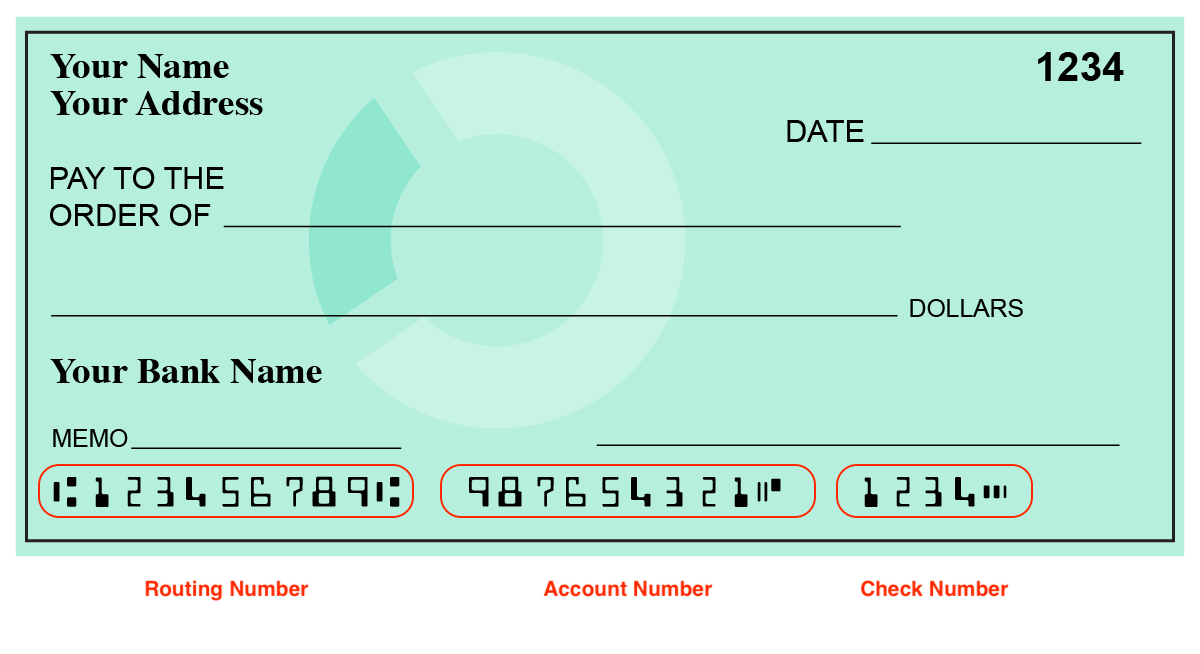
For most people, the most direct and reliable way to find their routing number is by looking at a physical check. Banks design checks with a standardized layout that makes these critical numbers easily identifiable, typically along the bottom edge.
The Anatomy of a Check’s MICR Line
The bottom of a standard check features a series of numbers printed in a special magnetic ink character recognition (MICR) font. This line is designed to be read quickly and accurately by automated check-processing machines. This MICR line is where you’ll find all three crucial identifiers: the routing number, your account number, and the check number.
On virtually every personal check issued by a U.S. bank, these numbers appear in a specific order from left to right:
- Routing Number: This will almost always be the first set of nine digits on the far left of the MICR line. It’s usually enclosed by special symbols that indicate its function to the processing machines.
- Account Number: Following the routing number, you’ll find your specific bank account number. This is typically the longest string of digits on the MICR line and is also enclosed by unique symbols.
- Check Number: The final set of digits on the right of the MICR line is the check number. This number will match the check number printed in the upper right-hand corner of the check.
Visual Cues and Common Variations
While the left-to-right order (routing number, account number, check number) is standard for most personal checks, there can be slight visual variations depending on the bank. Some banks might place slightly different symbols around the numbers, or the spacing might vary. However, the nine-digit length of the routing number, and its consistent position as the leftmost set of numbers on the MICR line, remains a reliable indicator.
It’s also worth noting that business checks might have a slightly different arrangement or additional information. However, the core principle of the routing number being a nine-digit code typically on the left side of the bottom number sequence still holds true. Always double-check and if in doubt, consult your bank’s official resources.
Why Your Routing Number Matters: Essential Financial Transactions
The routing number is not merely an obscure banking detail; it’s a critical component for a vast array of common financial activities. Understanding its importance ensures smoother, more efficient money management.
Facilitating Direct Deposits and Payments
Perhaps one of the most common uses for a routing number is setting up direct deposit. Whether it’s your paycheck, a tax refund, or government benefits, the routing number, combined with your account number, ensures that funds are electronically transferred directly into your chosen bank account. Similarly, when you set up recurring bill payments online or through an automated clearing house (ACH) system, your routing number directs the payment to the correct financial institution, while your account number specifies which of their customers’ accounts should be debited. Without this pair of identifiers, these automated conveniences would be impossible.
Enabling Electronic Fund Transfers (EFTs)
Beyond direct deposits, routing numbers are fundamental to all forms of electronic fund transfers (EFTs). This includes initiating wire transfers to send large sums of money domestically or internationally (though international wires often require additional SWIFT/BIC codes). It also covers linking accounts between different financial institutions, such as connecting your checking account to an investment brokerage, a peer-to-peer payment app (like Venmo or PayPal), or an online savings account at another bank. Each time money moves electronically between distinct banks, the routing number is the guide that ensures it arrives at the correct destination bank.
Important Note on Bank-Specific Routing Numbers
It’s important to be aware that some larger banks may have multiple routing numbers. This can happen for several reasons:
- Geographical Location: Different branches or regions of a large national bank might use different routing numbers.
- Transaction Type: A bank might have one routing number for ACH transfers (like direct deposits) and a different one for wire transfers.
- Acquisitions: When banks merge, the acquired bank’s routing numbers might initially remain separate before being consolidated.
Because of these variations, always verify the correct routing number for the specific transaction you intend to make. Using the wrong routing number can lead to delays, returned payments, or even funds being sent to the wrong account, which can be difficult to recover.
Beyond the Check: Alternative Ways to Find Your Routing Number
While a physical check is the most straightforward place to find your routing number, there are numerous other reliable methods, especially if you don’t have a checkbook handy or prefer digital access.
Your Online Banking Portal
Most modern banks provide easy access to your account information through their online banking platform or mobile app. After logging in securely, navigate to your account details or profile section. You’ll typically find your routing number prominently displayed alongside your account number for your checking and savings accounts. This is often the quickest and most convenient digital method.
Bank Statements
Your monthly or quarterly bank statements, whether physical or electronic, are another excellent source for your routing number. Look for the account summary section or the details provided for your specific account. The routing number is usually listed near your account number and other bank information at the top or bottom of the statement.
The Bank’s Official Website or Customer Service
If you can’t find your routing number through online banking or a statement, or if you need to confirm a specific routing number for a wire transfer, your bank’s official website is a reliable resource. Many banks have a dedicated “Contact Us,” “FAQs,” or “Routing Number” section where this information is published. Be cautious, however, to only use the official bank website and not third-party sites that might provide outdated or incorrect information.
Alternatively, a quick call to your bank’s customer service line can provide you with the correct routing number. When calling, be prepared to verify your identity with account details and personal information to ensure security.
Safeguarding Your Financial Information: Best Practices
While knowing where to find your routing number is essential, understanding how to protect all your financial information is equally crucial in preventing fraud and maintaining financial security.
When and How to Share Your Routing Number
Your routing number, by itself, is generally considered less sensitive than your account number because it only identifies your bank, not your specific account. However, when combined with your account number, it becomes a powerful tool that can be used to initiate transactions.
You typically need to provide your routing number and account number in situations like:
- Setting up direct deposit with your employer.
- Authorizing automated bill payments.
- Initiating wire transfers.
- Linking accounts to third-party financial apps or services.
Always ensure you are sharing this information through secure channels, such as encrypted online portals provided by trusted institutions or directly with your bank. Be wary of providing this information over unverified email or unsecured websites.

Protecting Your Checks and Digital Data
Physical checks should be treated like cash. Store your unused checks in a secure location, and shred any voided or old checks before discarding them. Never leave checks or bank statements lying around where unauthorized individuals could access them.
In the digital realm, practice strong cybersecurity habits:
- Use Strong, Unique Passwords: For all your online banking and financial accounts.
- Enable Two-Factor Authentication (2FA): Adds an extra layer of security to your logins.
- Monitor Your Accounts Regularly: Review your bank statements and transaction history for any unauthorized activity. Report discrepancies immediately.
- Be Skeptical of Phishing Attempts: Banks will rarely ask for your full account or routing number via unsolicited email or text message. Always verify the sender and URL before clicking links or providing information.
By understanding the significance of your routing number, knowing how to locate it accurately, and adhering to best practices for financial security, you can manage your money with greater confidence and peace of mind in today’s increasingly digital financial world.
aViewFromTheCave is a participant in the Amazon Services LLC Associates Program, an affiliate advertising program designed to provide a means for sites to earn advertising fees by advertising and linking to Amazon.com. Amazon, the Amazon logo, AmazonSupply, and the AmazonSupply logo are trademarks of Amazon.com, Inc. or its affiliates. As an Amazon Associate we earn affiliate commissions from qualifying purchases.