
The modern automotive landscape is no longer defined by internal combustion engines and simple assembly lines. Instead, it is defined by software integration, robotics, and the pursuit of extreme manufacturing efficiency. At the center of this transition is Tesla, a company that has redefined what it means to be an automaker. To answer the question of where Tesla automobiles are made is to explore a sophisticated global network of “Gigafactories”—facilities designed not just to assemble parts, but to function as integrated technological organisms.
Tesla’s manufacturing philosophy rests on the concept of the “machine that builds the machine.” By treating the factory itself as a high-tech product that requires constant iteration and software-driven optimization, Tesla has moved beyond traditional manufacturing. This article explores the technological hubs across the globe that power Tesla’s production, detailing the engineering marvels housed within their walls.
The Gigafactory Philosophy: More Than Just an Assembly Line
To understand where Tesla cars are made, one must first understand the “Gigafactory” concept. Unlike traditional automotive plants that source thousands of components from third-party vendors, Tesla’s Gigafactories are designed for deep vertical integration. This tech-first approach allows Tesla to control the hardware and software stacks of their vehicles from the ground up.
Vertical Integration and Software-Defined Manufacturing
In a typical Tesla factory, the level of vertical integration is staggering. While legacy automakers might rely on outside suppliers for seats, battery modules, and software interfaces, Tesla brings these processes in-house. This allows for rapid prototyping and deployment. If a sensor needs to be repositioned or a wiring harness simplified, the engineering team can implement the change in the production line in a matter of days rather than waiting for a supplier’s multi-month update cycle. This “software-defined” approach to hardware ensures that the factory operates more like a data center than a 20th-century workshop.
The Role of Robotics and Advanced Automation
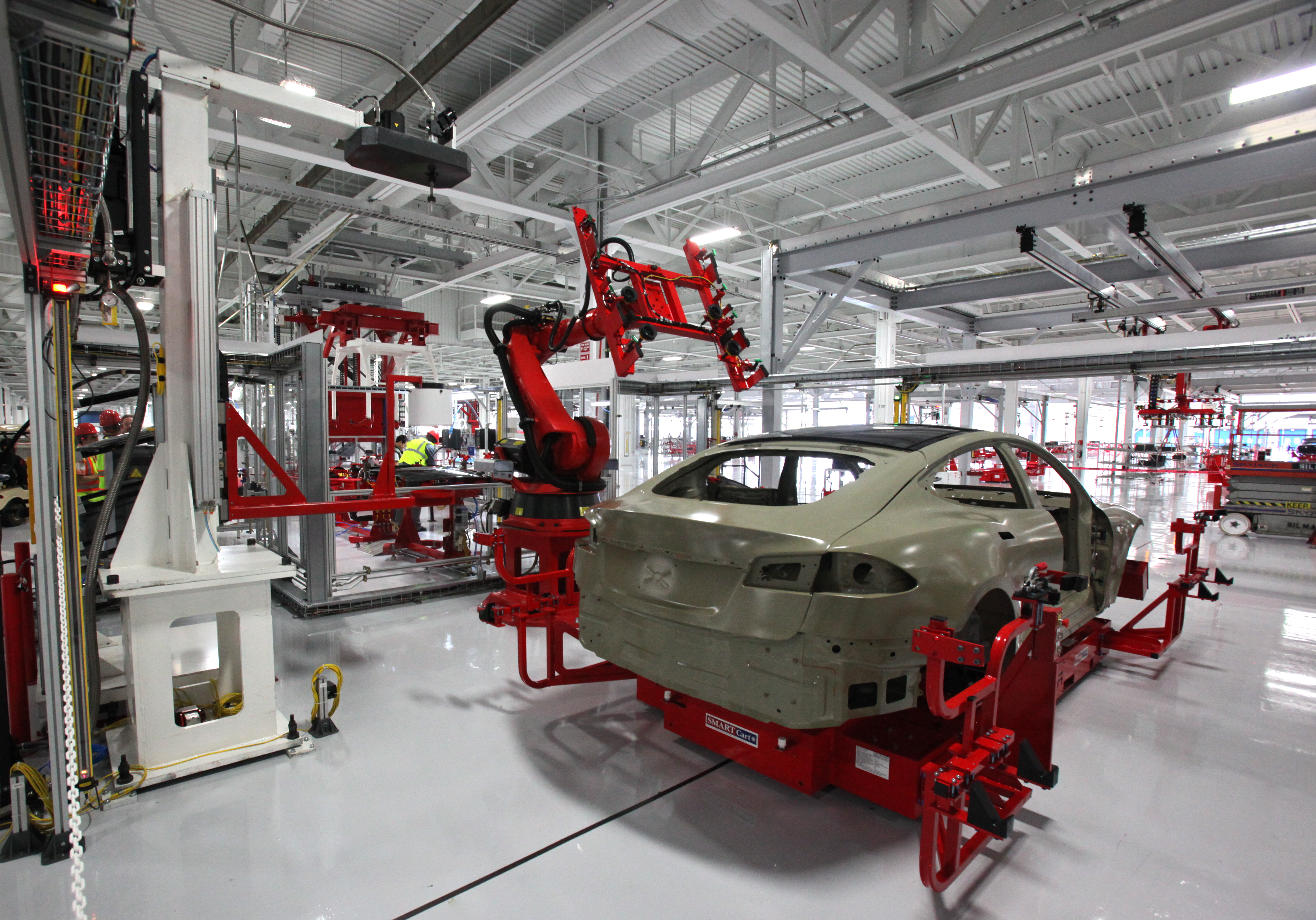
Tesla’s factories are among the most automated in the world. Utilizing high-precision industrial robots, the production lines are capable of performing complex tasks with sub-millimeter accuracy. From the “Godzilla” robots that move entire car bodies to the specialized micro-robotic arms that thread cooling tubes through battery cells, the technology used in these facilities represents the pinnacle of industrial AI. The integration of neural networks and vision-based systems allows these robots to adapt to variances on the assembly line, ensuring that high-throughput production does not sacrifice the technical integrity of the vehicle.
The Original Hub: Fremont and the Birth of High-Tech EVs
Located in the heart of Silicon Valley, the Fremont Factory serves as the historic cornerstone of Tesla’s manufacturing empire. Formerly a joint venture between GM and Toyota (NUMMI), Tesla transformed this site into a laboratory for advanced automotive engineering.
Overcoming “Production Hell” via Iterative Engineering
Fremont was the site of Tesla’s most significant technological trials, particularly during the ramp-up of the Model 3. This period, famously dubbed “production hell,” led to a radical reimagining of the assembly process. Tesla engineers realized that “too much” automation could sometimes be a bottleneck. This led to a hybrid approach where high-level robotics were augmented by human ingenuity in areas requiring complex tactile feedback. The lessons learned at Fremont—such as the implementation of the “tent” assembly line to increase throughput—paved the way for the streamlined designs of subsequent factories.
Integration of Battery Pack and Drive Unit Assembly
While most cars are assembled from parts shipped in, the Fremont facility handles a significant portion of the technical heavy lifting. This includes the high-precision stamping of aluminum and steel body panels and the complex marriage of the battery pack to the chassis. The factory utilizes a sophisticated automated guided vehicle (AGV) system that moves chassis through various stages of the build, synchronized by a central software brain that monitors every bolt torque and software flash in real-time.
Gigafactory Nevada and New York: Powering the Ecosystem
Tesla’s manufacturing footprint extends beyond vehicle assembly into the specialized production of the components that make an EV viable: batteries and power electronics.
Giga Nevada: The Heart of Battery Technology
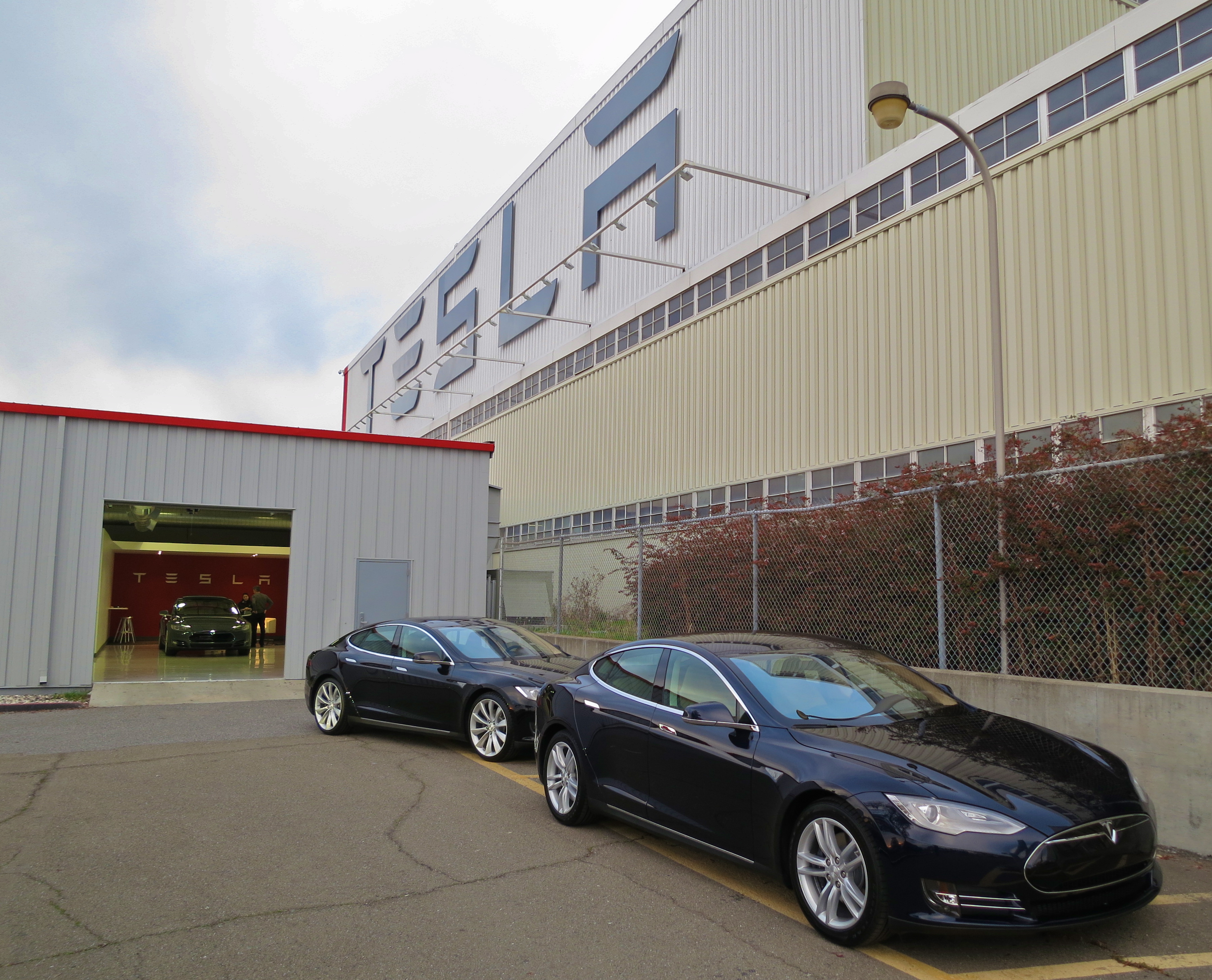
Gigafactory Nevada (Giga 1) is a massive facility dedicated to the mass production of lithium-ion battery cells, modules, and drive units. In partnership with Panasonic, Tesla has pioneered the 2170 cell chemistry here, which significantly improved the energy density and thermal stability of their battery packs. The technology housed in Giga Nevada is focused on chemical engineering and thermal management systems. By producing batteries on a “Giga” scale, Tesla has been able to leverage economies of scale to drive down the cost of energy storage, making long-range electric travel technologically feasible.
Giga New York: Advancing Solar and Supercharger Tech
Located in Buffalo, Giga New York focuses on the broader energy ecosystem. This facility is responsible for the production of Solar Roof tiles and the electronic components used in Tesla’s Supercharger network. The tech focus here is on power electronics and semiconductor integration. As the Supercharger network is a critical component of the Tesla user experience, the engineering work done in New York ensures that the hardware can handle high-voltage DC fast charging with minimal energy loss.
Global Expansion: Shanghai and Berlin as Tech Benchmarks
To achieve global scale, Tesla expanded into international markets, building factories that incorporated every lesson learned from the Fremont and Nevada facilities.
Giga Shanghai: Efficiency and Export Optimization
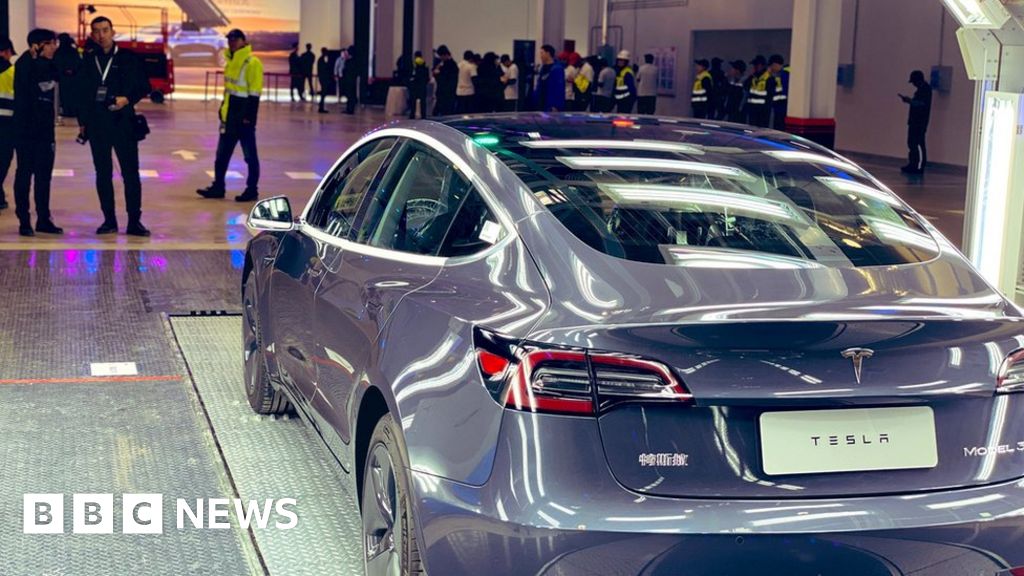
Gigafactory Shanghai was built in record time, but its true achievement lies in its efficiency. It serves as a blueprint for high-volume production, utilizing a more refined layout that minimizes the movement of parts. Giga Shanghai utilizes a sophisticated “circular” logistics model where components enter at one end and finished vehicles exit at the other, with almost no wasted space. The facility is a masterclass in industrial engineering, producing hundreds of thousands of Model 3 and Model Y vehicles with a degree of precision that has set a new standard for the company’s global quality control.
Giga Berlin-Brandenburg: Pioneering the Front and Rear Body Castings
Tesla’s first European factory, Giga Berlin, is perhaps its most technologically advanced. It is the primary site for the implementation of the “Giga Press” technology. Traditional car frames are made by welding together over 70 different pieces of metal. In Berlin, Tesla uses massive casting machines to create the entire front and rear underbody as single pieces of aluminum. This reduces weight, improves crash safety, and simplifies the assembly process. Furthermore, Giga Berlin features the most advanced paint shop in the world, utilizing multi-layer “color-shifting” application technology that was previously only available on low-volume luxury vehicles.
The Future of Production: Giga Texas and the Unboxed Process
The latest addition to the Tesla manufacturing fleet is Gigafactory Texas, located in Austin. This facility is not just a factory; it is the global headquarters and the site where Tesla is debuting its most radical manufacturing technologies.
Cybercell Production and 4680 Battery Integration
Giga Texas is the home of the 4680-battery cell production. This larger cell format is a technological breakthrough, offering five times the energy capacity and six times the power of previous cells. By integrating these cells into a “structural battery pack,” Tesla has turned the battery into a stressed member of the vehicle’s chassis. This removes the need for a separate floor structure, further reducing weight and increasing the vehicle’s structural integrity. The engineering required to manufacture these cells at scale involves high-speed dry-electrode coating technology, a process that eliminates the need for massive drying ovens and significantly reduces the factory’s environmental footprint.
The “Unboxed” Manufacturing Paradigm
Looking forward, Tesla’s “unboxed” process, expected to be fully realized in upcoming platforms, represents the ultimate evolution of the Gigafactory. Traditional assembly involves moving a car body down a long line and sticking parts into it. The unboxed process works by assembling different sections of the car (the sides, the floor, the front, the rear) simultaneously in separate sub-assembly areas. These sections are only “boxed” together at the very end. This allows for more people or robots to work on the vehicle at the same time without crowding, significantly increasing the “tech density” of the factory floor and reducing the cost of production by up to 50%.
Conclusion
The question of where Tesla automobiles are made is answered by a map that spans from California to Shanghai, and from Berlin to Texas. However, the “where” is arguably less important than the “how.” Each Tesla facility is a testament to the company’s commitment to engineering excellence and technological disruption.
By utilizing massive Giga Presses, pioneering new battery chemistries like the 4680, and implementing the unboxed assembly process, Tesla has turned manufacturing into a competitive advantage. These factories are the physical manifestation of a tech-first philosophy—places where software, robotics, and materials science converge to build the future of transport. As Tesla continues to iterate on its “machine that builds the machine,” the global network of Gigafactories will remain the primary engine of the electric vehicle revolution.
aViewFromTheCave is a participant in the Amazon Services LLC Associates Program, an affiliate advertising program designed to provide a means for sites to earn advertising fees by advertising and linking to Amazon.com. Amazon, the Amazon logo, AmazonSupply, and the AmazonSupply logo are trademarks of Amazon.com, Inc. or its affiliates. As an Amazon Associate we earn affiliate commissions from qualifying purchases.