
For many prospective car buyers, the journey begins with a simple question: “Where is the nearest dealership?” This inquiry traditionally leads to a search for franchised locations representing a particular automotive brand, offering a familiar landscape of sales lots, negotiation tables, and service bays. However, when the brand in question is Tesla, that simple search unveils a far more nuanced and strategically distinct approach to brand presence and customer engagement. Tesla, as a pioneer in electric vehicles and direct-to-consumer sales, has meticulously crafted an identity that challenges conventional automotive retail, redefining what a “dealership” means in the 21st century.
The Tesla Brand: Redefining Automotive Retail
Tesla’s entry into the automotive market wasn’t just about launching groundbreaking electric vehicles; it was about disrupting the entire ecosystem of car sales and ownership. At its core, Tesla’s brand strategy is built on control: control over product design, technology, charging infrastructure, and, crucially, the customer experience from initial interest to long-term service. This philosophy naturally led to the rejection of the traditional franchised dealership model, a move that has become a defining characteristic of the Tesla brand.
From Showrooms to Service Centers: A Distinct Model
Unlike legacy automakers who rely on a vast network of independent dealerships, Tesla operates its own retail and service infrastructure. What many might instinctively search for as a “dealership” often manifests in Tesla’s world as a “Tesla Store” or a “Service Center.” These facilities are wholly owned and operated by Tesla, ensuring a consistent brand experience across all touchpoints.
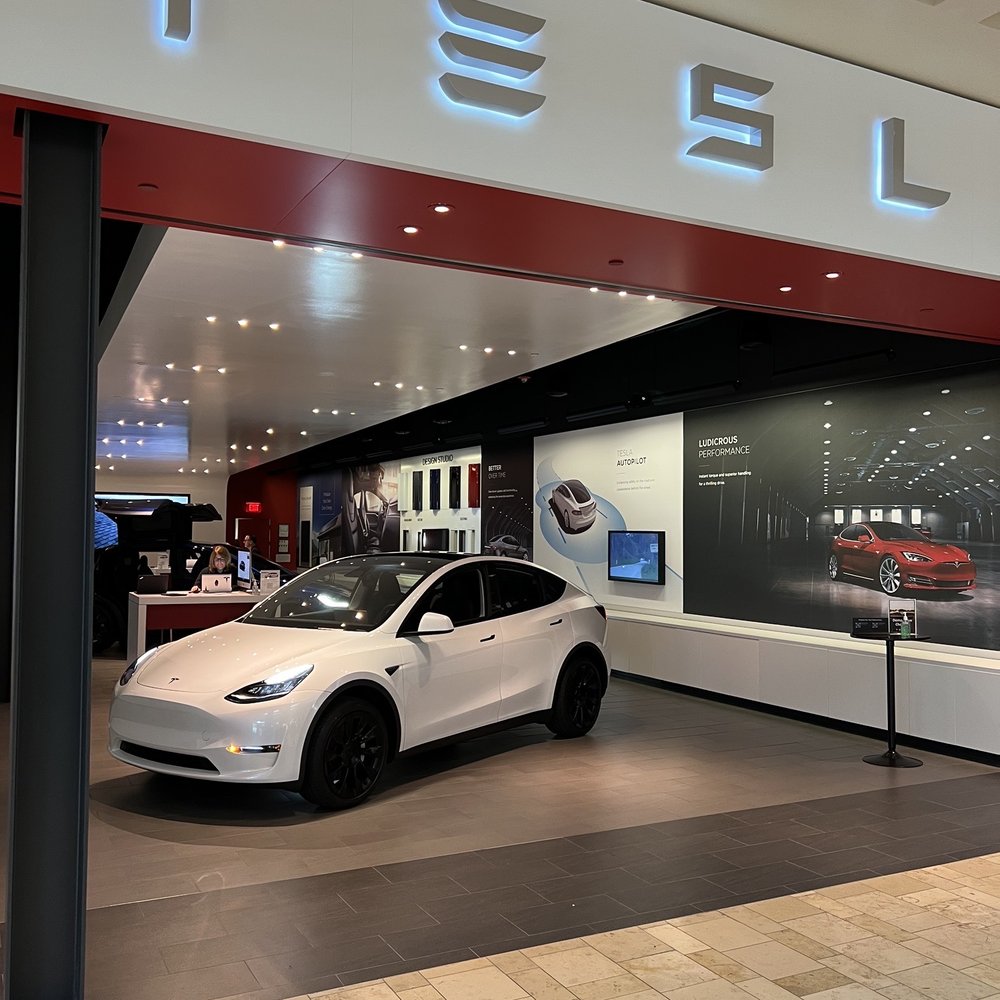
Tesla Stores, often strategically located in high-foot-traffic urban centers or upscale shopping malls, are more akin to tech showrooms than traditional car lots. Their primary purpose is to educate potential buyers about the technology, design, and benefits of Tesla vehicles, offer test drives, and facilitate the ordering process, which is predominantly done online. The focus is on immersive brand storytelling and customer education rather than high-pressure sales tactics. There are no commission-based salespeople, no haggling over prices, and typically no inventory to browse in the traditional sense. This controlled environment ensures that every interaction reflects Tesla’s premium, tech-forward brand identity.
Complementing these sales-focused stores are Tesla Service Centers. These are dedicated facilities for vehicle maintenance, repairs, and diagnostics. While some larger locations may combine a showroom with a service center, many are standalone operations designed to provide efficient and expert care for Tesla owners. This integration of sales and service under a single corporate umbrella allows Tesla to maintain strict quality control over both aspects of the customer journey, directly impacting brand perception and owner satisfaction.
The Digital-First Brand Experience
Integral to Tesla’s retail strategy is its digital-first approach. The company pioneered the online car-buying experience, allowing customers to configure, order, and even finance their vehicles entirely through its website or mobile app. This seamless digital interface is a cornerstone of the brand, appealing to a tech-savvy demographic that values efficiency and transparency.
Physical Tesla locations—whether stores or service centers—serve as crucial complements to this online ecosystem. They provide the necessary human interaction for test drives, expert consultation, vehicle delivery, and post-purchase support that cannot be replicated purely online. This hybrid model leverages the strengths of both digital convenience and tangible brand engagement, offering a modern alternative to the multi-step, often fragmented process of traditional car buying. It’s a carefully orchestrated dance between virtual and physical presence, all designed to reinforce Tesla’s image as an innovator in not just automotive engineering, but also in customer experience.
Locating Your Tesla Touchpoint: A Modern Customer Journey
For someone accustomed to finding a “Ford dealer” or “Toyota dealer,” locating a Tesla facility requires a slight shift in mindset and approach. The search isn’t for an independent franchisee but for a direct corporate outlet, optimized for specific functions.
Leveraging Technology for Proximity
The most straightforward and efficient way to find a Tesla location is through Tesla’s own digital platforms. The company’s official website features a comprehensive “Find Us” or “Locations” section, which allows users to search for Tesla Stores, Service Centers, and even Supercharger stations by zip code, city, or geographical region. This online tool is meticulously updated, providing detailed addresses, operating hours, contact information, and specific services offered at each site.
Similarly, the Tesla mobile app (essential for owners, but also useful for prospective buyers) often includes a map feature that highlights nearby Tesla facilities. This integration of location services within Tesla’s proprietary software underscores the brand’s commitment to technological solutions for every aspect of the ownership experience. For a brand that prides itself on innovation, leveraging advanced mapping and data to guide customers directly to its brand touchpoints is a natural extension of its identity.
Understanding Different Tesla Facilities
A key aspect of navigating the Tesla brand ecosystem is understanding the distinct roles of its various physical locations. Not every Tesla facility is designed to handle every customer need.
A Tesla Store or Gallery is primarily focused on sales and education. These are the places to see vehicles up close, learn about features, discuss configuration options, arrange a test drive, and place an order. While staff can answer general questions about service, they are not equipped to perform vehicle maintenance or repairs.
A Tesla Service Center, on the other hand, is dedicated to vehicle upkeep. This is where owners bring their Teslas for scheduled maintenance, diagnostics, software updates (if requiring physical intervention), and repairs. While some larger service centers might have a small display area for new vehicles, their core function is after-sales support. For emergency repairs or routine service, identifying the nearest Service Center is paramount.

Additionally, the Supercharger Network represents another critical physical presence for the Tesla brand. While not “dealerships” in any traditional sense, Supercharger stations are vital infrastructure touchpoints that reinforce the brand’s commitment to hassle-free EV ownership. They are places where owners connect with the brand’s ecosystem, often encountering other Tesla owners, fostering a sense of community. Understanding these distinctions ensures customers direct their inquiries and visits to the most appropriate Tesla brand representative or facility.
Brand Strategy Behind Proximity: Accessibility and Experience
Tesla’s strategic placement of its physical locations is not arbitrary; it’s a calculated element of its overall brand strategy, aiming to maximize accessibility while meticulously curating the customer experience.
Curating the Customer Interaction
By owning its retail spaces, Tesla gains unparalleled control over the brand narrative and customer interaction. The environment in a Tesla Store is designed to be inviting, modern, and educational, eschewing the often intimidating atmosphere of traditional car dealerships. Staff, referred to as Product Advisors, are trained to inform and guide, not to push sales. This fosters a low-pressure environment where potential buyers can explore the technology at their own pace, ask questions, and experience the vehicles without feeling rushed. This direct interaction model is crucial for a brand that is often introducing complex, cutting-edge technology to a mainstream audience. It allows Tesla to directly communicate its values of innovation, sustainability, and performance, ensuring that every touchpoint reinforces these core brand pillars. The test drive, a critical part of the purchase journey, is also tightly controlled, ensuring a consistent and high-quality introduction to the vehicle’s capabilities.
Service Excellence as a Brand Pillar
The “dealership” experience extends well beyond the initial purchase, particularly into service and support. Tesla views service excellence as a critical pillar of its brand promise. Service Centers are equipped with specialized tools and staffed by Tesla-trained technicians who are experts in the unique engineering of electric vehicles. This direct ownership model allows for rapid feedback loops between service operations and engineering, leading to continuous improvements in both vehicle design and maintenance protocols.
Furthermore, Tesla has innovated with mobile service, deploying “Tesla Rangers” who can perform many routine maintenance tasks and minor repairs at an owner’s home or workplace. This convenience factor significantly enhances the ownership experience and reinforces the brand’s commitment to customer satisfaction, effectively bringing the “service center” to the customer when possible. The existence and strategic placement of these service facilities directly contribute to reducing range anxiety and maintenance concerns, which are significant psychological barriers for potential EV adopters.
The Future of Tesla’s Brand Footprint
Tesla’s journey to redefine automotive retail is ongoing. As the company expands its global reach and vehicle production, the strategic evolution of its physical footprint remains a critical aspect of its brand strategy.
Expanding Physical Reach Strategically
As Tesla scales its operations, the expansion of its physical stores and service centers is a continuous process. This expansion is often highly strategic, targeting areas with growing EV adoption, high population density, or significant potential for market penetration. The goal isn’t necessarily to have a Tesla location on every corner like traditional dealerships, but rather to establish a presence that is sufficient to support sales growth and provide adequate service coverage. This involves a delicate balance: expanding enough to meet demand and enhance accessibility, while avoiding over-saturation that could dilute the brand’s exclusive feel or operational efficiency. Future growth will likely see Tesla continue to optimize location placements based on data analytics, traffic patterns, and demographic shifts, ensuring that each new “dealership” or service center serves a clear strategic purpose for the brand.
Evolution of the “Dealership” Concept for EV Brands
Tesla’s direct-sales model has profoundly impacted the automotive industry, prompting other EV startups to adopt similar strategies and even pushing legacy automakers to reconsider their own distribution networks. The concept of the “dealership” for EV brands is clearly evolving. Many new entrants are bypassing the traditional franchise model entirely, inspired by Tesla’s success. This trend highlights a broader industry shift towards digital integration, controlled brand experiences, and a greater emphasis on direct customer relationships. The ongoing legal battles in various states regarding direct sales vs. franchise laws underscore the disruptive power of Tesla’s approach and its lasting influence on how vehicles, particularly electric ones, are sold and serviced. This evolution suggests that future searches for “the nearest dealership” might increasingly lead to brand-owned experience centers rather than independent franchises, a testament to Tesla’s pioneering brand strategy.
Beyond the Dealership: Immersive Brand Engagement
While “dealerships” in the traditional sense are non-existent for Tesla, the brand has developed a much broader and more immersive ecosystem of physical and digital touchpoints that collectively engage customers.
Supercharger Network: A Critical Brand Infrastructure
Beyond the stores and service centers, the Supercharger network stands as a monumental physical manifestation of the Tesla brand. These charging stations are not just utilitarian points; they are vital arteries for Tesla owners, alleviating range anxiety and enabling long-distance travel. The distinctive Tesla-branded chargers, often located at convenient spots with amenities, reinforce the brand’s commitment to a seamless and integrated ownership experience. The reliability and ubiquitousness of the Supercharger network are powerful brand differentiators, a complete ecosystem that transcends the mere sale of a vehicle. It’s an infrastructure investment that directly enhances the value proposition and reinforces brand loyalty.

Community and Events: Fostering Brand Loyalty
Finally, the Tesla brand thrives on its passionate community. While not physical “dealerships,” owner events, online forums, and enthusiast groups play a significant role in fostering brand loyalty and creating a sense of belonging. Tesla occasionally hosts large-scale events for product reveals or owner gatherings, which serve as powerful brand-building opportunities, reinforcing the cult-like following that sets Tesla apart. This sense of shared identity and collective excitement contributes significantly to the overall brand experience, making ownership a lifestyle rather than just a transaction.
In conclusion, “where is the nearest Tesla dealership?” is a question that opens the door to understanding a revolutionary brand strategy. It’s not about finding a traditional sales lot, but about navigating a meticulously crafted ecosystem of direct-owned stores, service centers, and charging infrastructure, all designed to deliver a consistent, cutting-edge, and highly controlled brand experience that continues to reshape the automotive industry.
aViewFromTheCave is a participant in the Amazon Services LLC Associates Program, an affiliate advertising program designed to provide a means for sites to earn advertising fees by advertising and linking to Amazon.com. Amazon, the Amazon logo, AmazonSupply, and the AmazonSupply logo are trademarks of Amazon.com, Inc. or its affiliates. As an Amazon Associate we earn affiliate commissions from qualifying purchases.