
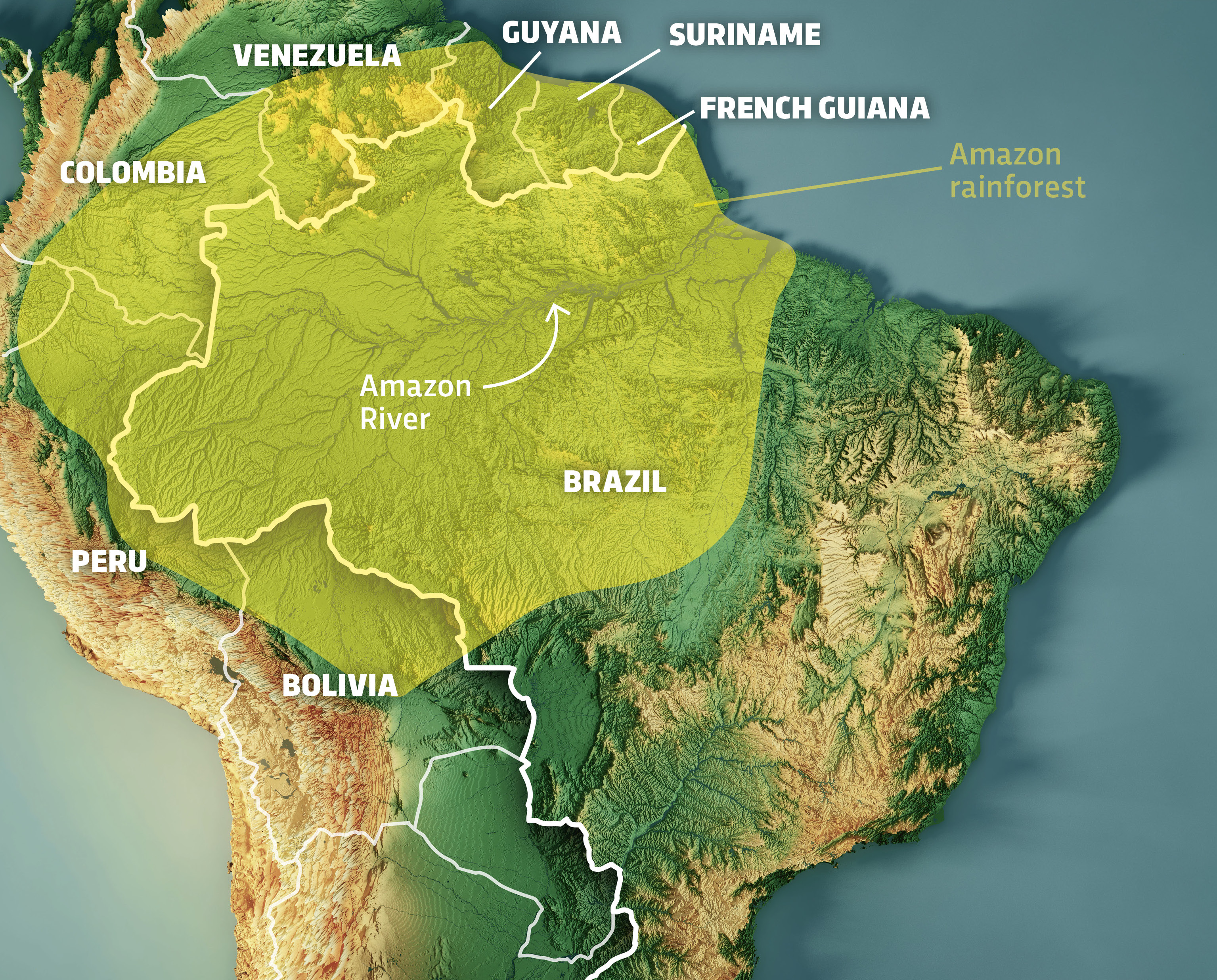
The Amazon Rainforest is no longer viewed merely through the lens of biological diversity or geographical wonder; in the modern era, it represents the world’s most significant repository of natural capital. When asking where the Amazon Rainforest in Brazil is located, one is effectively asking for the coordinates of the next frontier in global finance. Occupying approximately 60% of Brazil’s landmass, the Brazilian Legal Amazon encompasses nine distinct states: Acre, Amapá, Amazonas, Maranhão, Mato Grosso, Pará, Rondônia, Roraima, and Tocantins.
For the modern investor, entrepreneur, and financial strategist, these coordinates define a region where the “Green Economy” is transitioning from a theoretical concept to a multi-billion-dollar reality. Understanding the precise location and economic topography of this region is essential for navigating the emerging markets of carbon credits, sustainable bio-commodities, and ESG-driven (Environmental, Social, and Governance) investment portfolios.
1. The Strategic Economic Geography of the Brazilian Legal Amazon
The Brazilian Amazon is not a monolith. Its location across the northern and western regions of Brazil dictates its economic potential and the types of financial vehicles suited for each sub-region. To understand the investment landscape, one must look at the specific states that house this massive ecological asset.
The Central Hub: Amazonas and Pará
Amazonas and Pará are the two largest states in the region, serving as the primary engines for both traditional and emerging economies. Amazonas, with its capital Manaus, serves as a Free Trade Zone, bridging industrial manufacturing with high-density forest preservation. From a business finance perspective, this area represents a unique hybrid of tax-incentivized industrial growth and untapped potential for large-scale carbon sequestration projects.
The Transition Zones: Mato Grosso and Maranhão
Located on the southern and eastern edges of the rainforest, these states represent the “Arc of Deforestation,” which is ironically becoming a focal point for high-yield sustainable agricultural investments. This is where the financial world is testing the viability of “Regenerative Finance” (ReFi). Investors are increasingly looking at these locations to fund the conversion of degraded pastureland into productive, carbon-absorbing agroforestry systems.
Connectivity and Financial Infrastructure
The geographical isolation of the deep Amazon has historically been a barrier to entry. However, the rise of digital banking and satellite-linked fintech is closing this gap. Financial institutions are now able to provide micro-loans and investment capital to remote regions of Acre and Roraima, enabling local entrepreneurs to scale sustainable businesses that were previously cut off from the global capital market.
2. Natural Capital: Investing in the Carbon Markets of the North
Where the Amazon is located in Brazil is where the world’s most valuable voluntary carbon market is currently anchored. As global corporations strive for “Net Zero” targets, the physical trees of the Amazon have been transformed into digital assets known as carbon credits.
The Mechanics of Carbon Sequestration as an Asset Class
The location of the rainforest in the equatorial belt ensures year-round growth and high biomass density. This makes the Brazilian Amazon the most efficient “factory” for carbon removal on the planet. For the sophisticated investor, this creates a niche in “Avoided Deforestation” (REDD+) credits. By investing in the preservation of specific tracts of land in states like Pará, entities can generate tradable financial instruments that appreciate as global carbon prices rise.
Risk Management and Verification Tech
A key component of business finance in the Amazon is the verification of the asset. Modern financial tools now utilize “Proof of Preservation.” Through decentralized finance (DeFi) and blockchain, the physical location of the forest is mapped to digital tokens. This transparency allows international investors to fund preservation projects with the assurance that their capital is tied to a specific, GPS-verified hectare of the Brazilian Amazon.
The Institutional Shift Toward “Green Gold”
Sovereign wealth funds and private equity firms are increasingly allocating a percentage of their portfolios to “Real Assets” in the Amazon. The financial logic is simple: while fiat currencies may fluctuate and tech stocks may face volatility, the biological necessity of the Amazon rainforest ensures its long-term value. The geography of the Amazon is, in essence, the geography of future global stability.

3. The Bio-economy: Side Hustles and Scalable Online Income
Beyond institutional investing, the location of the Amazon Rainforest in Brazil offers a wealth of opportunities for individual entrepreneurs and small-to-medium enterprises (SMEs). The “Bio-economy” refers to the sustainable commercialization of biological resources, and it is currently one of the fastest-growing sectors for online income and sustainable side hustles.
Digital Marketplaces for Non-Timber Forest Products (NTFPs)
The Amazon is home to thousands of species that produce oils, resins, nuts, and fruits with high demand in the global wellness and cosmetic industries. Entrepreneurs are leveraging e-commerce platforms to bridge the gap between local harvesters in the Amazonian interior and high-end consumers in Europe and North America. This “drop-shipping” of sustainable raw materials has become a lucrative side hustle for those who can navigate the logistics and branding of “Amazon-sourced” products.
Eco-Tourism and the Digital Nomad Economy
The specific locations of Manaus and Belém are becoming hubs for “impact tourism.” This isn’t just about travel; it’s a business model. Small-scale investors are purchasing land for eco-lodges or carbon-neutral retreats. Furthermore, the expansion of high-speed satellite internet (such as Starlink) into the heart of the rainforest has allowed digital nomads to operate their online businesses while living in the most remote parts of the Brazilian Amazon, effectively moving “Silicon Valley” income into the local “Green Economy.”
Educational Content and Ethical Influence
There is a massive market for digital products—courses, documentaries, and eBooks—focused on the Amazon’s ecology and its role in climate change. Content creators who can provide “boots-on-the-ground” insights from the region’s specific locations are finding significant monetization opportunities through social media, speaking engagements, and consulting for ESG-focused firms.
4. ESG and Corporate Identity: Branding the Amazon
For corporations, the Brazilian Amazon is more than a location; it is a critical component of their corporate identity and brand strategy. How a company interacts with the Amazon can either skyrocket its valuation or lead to a total loss of investor confidence.
The Cost of Non-Compliance
In the modern financial landscape, being linked to deforestation in the Amazon is a significant financial risk. European and North American regulations are increasingly demanding “deforestation-free” supply chains. Consequently, companies are investing millions into mapping their supply chains back to the specific GPS coordinates in Brazil. This has created a massive demand for financial auditing services and supply-chain consulting.
Philanthropy as a Strategic Investment
Corporate Social Responsibility (CSR) budgets are being redirected toward the Amazon. This is not just “charity”; it is a strategic move to secure the “social license to operate.” By funding reforestation projects in the Amazonian “Arc of Deforestation,” brands can align their identity with the most pressing environmental issue of the 21st century, thereby attracting a more loyal, ethically-conscious consumer base.
The Rise of the “Amazonian Brand”
There is a growing movement to create a “Geographical Indication” (GI) for products from the Amazon, similar to Champagne in France. If a product can be verified to originate from a specific, sustainably managed location in the Brazilian Amazon, its market value increases exponentially. For business finance experts, this represents an opportunity to build premium brands around the prestige and rarity of Amazonian resources.

Conclusion: The Financial Map of the Future
Where is the Amazon Rainforest in Brazil located? It is located at the center of the 21st-century economic revolution. From the nine states that comprise the Brazilian Legal Amazon flows a new kind of wealth—one that values the standing forest over the cleared field.
For the investor, the region offers a diverse portfolio of carbon assets and green bonds. For the entrepreneur, it provides a frontier for the bio-economy and digital-native businesses. For the corporation, it is the ultimate test of ESG integrity. By understanding the economic geography of this region, one can move beyond viewing the Amazon as a distant wilderness and start seeing it as the most critical financial asset on the planet. The future of global finance is green, and that green is centered firmly in the heart of northern Brazil.
aViewFromTheCave is a participant in the Amazon Services LLC Associates Program, an affiliate advertising program designed to provide a means for sites to earn advertising fees by advertising and linking to Amazon.com. Amazon, the Amazon logo, AmazonSupply, and the AmazonSupply logo are trademarks of Amazon.com, Inc. or its affiliates. As an Amazon Associate we earn affiliate commissions from qualifying purchases.