
In an increasingly digital world, the humble Automated Teller Machine (ATM) might seem like an relic, yet its importance in our financial lives remains undeniable. Despite the proliferation of cashless payment methods, from contactless cards to mobile wallets, the need for physical currency persists for countless transactions, emergencies, and personal preferences. Understanding where to locate an ATM, how to use it efficiently, and how to navigate its associated financial implications is a fundamental aspect of modern personal finance. This guide delves into the evolving landscape of cash access, equipping you with the knowledge to confidently find and utilize ATMs, ensuring your money is always within reach.

The Enduring Role of Cash in a Digital Economy
While prophecies of a completely cashless society frequently emerge, cash continues to play a vital, often understated, role in global economies. From small businesses preferring cash transactions to individuals needing quick access to funds, the demand for physical currency ensures the ATM’s continued relevance. Understanding this dynamic helps frame why “where is an ATM?” remains a frequently asked, crucial question for financial autonomy.
The Persistent Need for Physical Currency
Even in technologically advanced nations, cash remains king for specific scenarios. Many small businesses, especially those in niche markets or informal sectors, operate predominantly on cash. Tips for service staff, payments to tradespeople, and transactions at street markets often require physical notes. Furthermore, cash offers a universally accepted means of payment, free from technological glitches, network outages, or device battery life concerns. For budgeting, some individuals find that physically handling cash helps them stay within spending limits more effectively than digital transactions, providing a tangible deterrent against impulse purchases. In times of emergency, such as power outages or system failures, cash can be the only viable means of acquiring necessities, underscoring its role as a critical contingency.
From Bank Branches to Global Networks
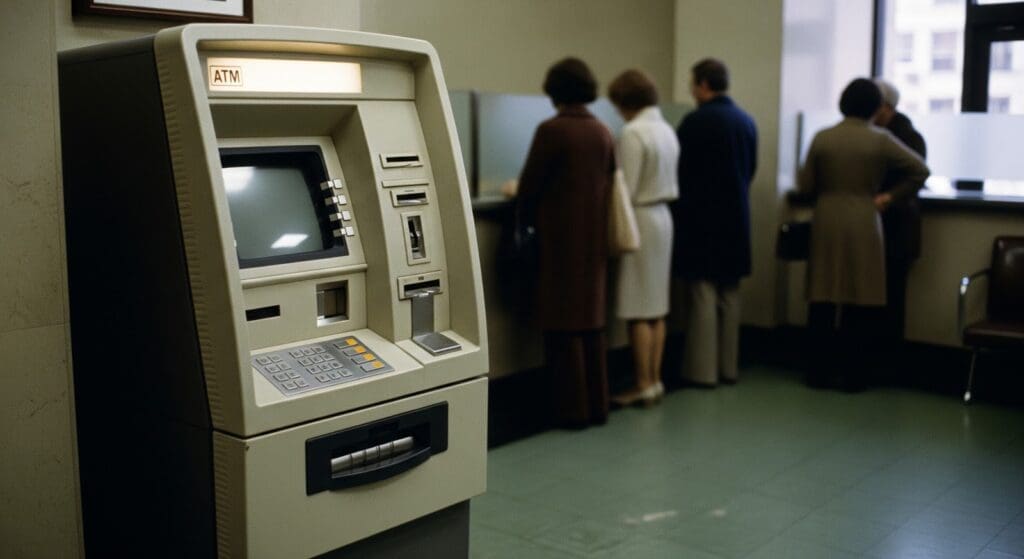
The ATM’s evolution mirrors the broader development of financial services. Initially, withdrawing cash meant a trip to a bank branch during specific hours. The advent of the ATM revolutionized this, offering 24/7 access to funds. What began as isolated machines primarily linked to a single bank’s network has blossomed into a sophisticated, interconnected global system. Major credit card networks like Visa (Plus) and Mastercard (Cirrus) facilitate international access, allowing cardholders to withdraw local currency from virtually anywhere in the world. This vast network, a testament to financial innovation, ensures that regardless of your bank or location, a cash point is often just a short distance away, significantly enhancing financial convenience and mobility for travelers and locals alike.
Navigating the Digital vs. Cash Divide
The juxtaposition of digital payments and cash isn’t necessarily a battle but rather a symbiotic relationship. While digital transactions offer unparalleled convenience, speed, and detailed record-keeping, cash provides privacy, immediacy, and often, a sense of control that digital alternatives cannot fully replicate. The question “where is an ATM?” often arises precisely at this intersection—when a digital-first individual encounters a cash-only situation, or when a planned digital transaction falls through. Financial literacy today involves not just mastering digital tools but also understanding when and how to leverage cash effectively, and by extension, knowing how to reliably access it. The ability to seamlessly switch between digital and physical money empowers individuals with greater financial flexibility and resilience in various economic circumstances.
Modern Strategies for Pinpointing Your Nearest ATM
In an age of omnipresent connectivity, finding an ATM has never been easier. Leveraging digital tools and established financial networks transforms what could once be a frustrating search into a quick, efficient process. Modern technology provides a suite of options, ensuring you’re never far from your funds.
Leveraging Banking Apps and Websites
Your primary financial institution is often your best resource for locating ATMs. Most banks and credit unions offer robust mobile applications and websites that include built-in ATM locators. These tools are typically highly accurate, providing real-time information on the nearest in-network ATMs, which is crucial for avoiding transaction fees. Many apps even integrate with mapping services, offering turn-by-turn directions. Beyond just location, some advanced banking apps might also indicate if an ATM offers specific services like cardless withdrawals, deposit capabilities, or is equipped for visually impaired users. Keeping your bank’s app handy and familiarizing yourself with its features can save you time and money, especially when traveling or in an unfamiliar area.
Utilizing Third-Party Locator Services
For those times when your bank’s network isn’t prominent, or if you’re traveling internationally, third-party locator services become invaluable. The major credit card networks, Visa (with its Plus network) and Mastercard (with its Cirrus network), both offer comprehensive global ATM locators on their respective websites. These services are particularly powerful as they show ATMs that accept cards from any bank within their network, significantly expanding your options. Similarly, services like Allpoint or Moneypass locate surcharge-free ATMs across multiple banking institutions, a boon for those looking to avoid additional costs. By inputting your current location or a desired address, these platforms can instantly map out nearby ATMs, often with details about their operating hours and accepted card types, simplifying your search considerably.
The Role of General Mapping Applications
Beyond dedicated financial tools, general mapping applications like Google Maps, Apple Maps, or Waze have become surprisingly effective ATM locators. A quick search for “ATM near me” or “bank” will typically yield a plethora of results, often pinpointing not just standalone ATMs but also those located within stores, gas stations, or bank branches. The advantage of these apps lies in their widespread usage and familiarity, making them a default go-to for many. They also provide practical details such as distance, estimated travel time, and user reviews, which can sometimes indicate the reliability or safety of a particular ATM location. While perhaps not as specialized as banking apps for fee information, their broad coverage and user-friendly interfaces make them a valuable tool in the quest to find cash.
Navigating ATM Networks and Associated Fees
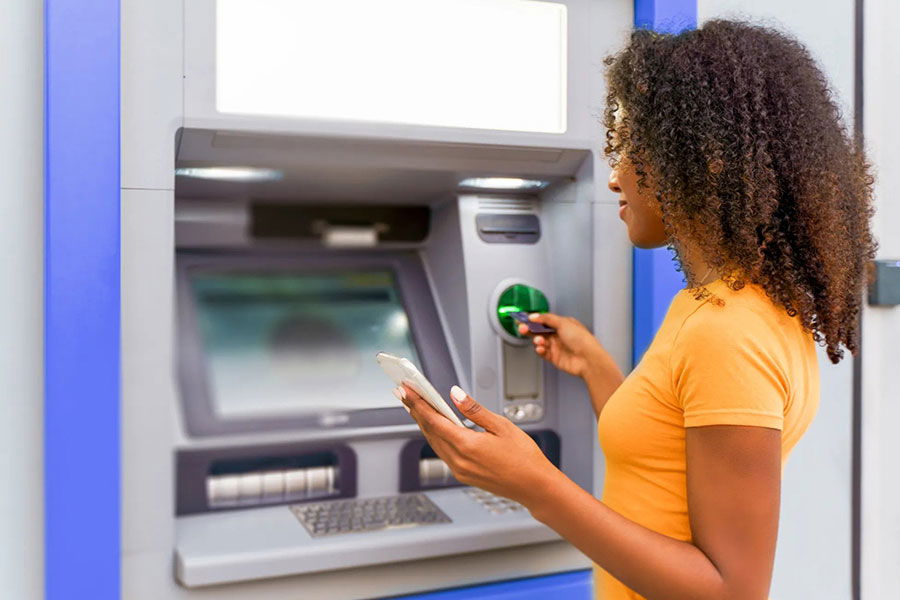
One of the most critical aspects of using an ATM, beyond simply finding one, is understanding the financial implications of your transaction. ATM fees can quickly erode your withdrawal amount, especially if you’re not careful about which machines you use. A smart approach to ATM usage involves strategic planning to minimize or entirely avoid these costs, thereby preserving your personal finances.
In-Network vs. Out-of-Network ATMs
The distinction between “in-network” and “out-of-network” ATMs is fundamental to fee avoidance. An in-network ATM is one owned or partnered with your specific bank or credit union. Transactions at these machines are typically free of charge for customers. Conversely, an out-of-network ATM belongs to a different financial institution or is operated by an independent company. Using an out-of-network ATM almost invariably incurs two types of fees: a surcharge from the ATM owner (often displayed prominently on the machine or screen) and a fee from your own bank for using a non-affiliated ATM. These fees can range from $2.00 to $5.00 per transaction, quickly adding up if you make frequent withdrawals. Many financial institutions, particularly online banks and credit unions, participate in large surcharge-free ATM networks like Allpoint or Moneypass, expanding your “in-network” options significantly beyond their own branches.
Understanding Surcharges and Foreign Transaction Fees
Surcharges are direct fees imposed by the owner of an ATM for its use, regardless of your bank affiliation. These are often unavoidable if you use an out-of-network machine that doesn’t belong to a surcharge-free network. Foreign transaction fees, however, are a separate consideration, primarily relevant when withdrawing cash while traveling internationally. These fees are charged by your own bank (and sometimes by the local ATM operator too) for currency conversion and processing international transactions. They are typically a percentage of the withdrawal amount, often 1-3%, in addition to any local ATM surcharge. To mitigate these, consider using a debit card from a bank that waives foreign transaction fees or a travel-specific credit card for purchases (though cash withdrawals on credit cards are usually treated as cash advances with high interest rates).
Strategies for Avoiding Unnecessary Costs
Proactive planning is the best defense against ATM fees. Firstly, always prioritize using in-network or surcharge-free ATMs identified through your bank’s app or network locators. When traveling, withdrawing larger sums less frequently can reduce per-transaction fees, though this carries a security risk. If you must use an out-of-network ATM, consider how urgent the cash need is versus the cost. Some checking accounts offer ATM fee reimbursements, either for a certain number of transactions per month or unlimited, particularly common with premium accounts or online-only banks. It’s always wise to check your bank’s fee schedule and explore account options that align with your ATM usage habits. Being aware of these strategies ensures that your cash access remains convenient and cost-effective, safeguarding your hard-earned money from avoidable charges.
Beyond Cash: The Multifunctionality and Future of ATMs
While primarily associated with cash withdrawals, the modern ATM has evolved into a versatile financial tool, capable of a much broader range of services. This expansion reflects ongoing innovations in banking technology and a growing demand for convenient self-service options, pushing the ATM’s role beyond simple cash dispensation.
Deposits, Transfers, and Bill Payments
Contemporary ATMs are far more than just cash dispensers. Many machines now offer advanced functionalities, transforming them into miniature bank branches. Users can typically deposit cash and checks directly into their accounts, often with immediate or next-day availability for funds. This eliminates the need to visit a teller for routine deposits, saving time and offering flexibility. Furthermore, some ATMs facilitate internal account transfers, allowing users to move money between their checking and savings accounts. More advanced models even support bill payments, enabling customers to pay utility bills, credit card statements, or even load prepaid cards directly from the machine, significantly streamlining personal financial management. These features underscore the ATM’s enhanced utility as a comprehensive self-service banking hub.
Cardless Transactions and Emerging Features
The push towards greater convenience and security has spurred the development of cardless ATM transactions. This technology allows users to withdraw cash using their smartphone, often by scanning a QR code on the ATM screen or entering a one-time code generated by their banking app. This eliminates the risk of card skimming and offers a seamless experience, especially if you’ve forgotten your physical card. Beyond cardless access, ATMs are beginning to integrate biometric authentication (like fingerprint or facial recognition), further enhancing security and ease of use. Other emerging features include personalized financial advice, the ability to open new accounts, or even video conferencing with a bank representative, pushing the boundaries of what a self-service machine can offer. These innovations promise a more secure, efficient, and integrated banking experience at the ATM.
The Future of ATM Technology and Financial Inclusion
The ATM’s future is intertwined with both technological advancement and the imperative of financial inclusion. As digital transformation accelerates, ATMs are likely to become even smarter, integrating more deeply with mobile banking platforms and artificial intelligence. They could offer highly personalized services, anticipate customer needs, and provide tailored financial insights. For communities lacking full-service bank branches, especially in rural or underserved areas, ATMs could become vital hubs for a wide array of financial services, bridging the gap between digital and physical banking. By continuously adapting to evolving user needs and technological capabilities, the ATM is poised to remain a critical component of the global financial infrastructure, ensuring accessible and convenient financial services for all, irrespective of their location or preferred banking method.
Safeguarding Your Finances: ATM Security and Best Practices
While ATMs offer unparalleled convenience, they also present potential security risks that users must be aware of. Protecting your personal information and funds requires vigilance and adherence to best practices. Understanding common threats and how to mitigate them is an essential component of responsible ATM usage and overall personal finance security.
Protecting Your PIN and Personal Information
Your Personal Identification Number (PIN) is the key to your account, and its security is paramount. Never write your PIN down, share it with anyone, or choose easily guessable combinations like birth dates or sequential numbers. When entering your PIN at an ATM, always cover the keypad with your free hand to prevent “shoulder surfing” – where criminals peek over your shoulder to see your entry. Be discreet and avoid discussing your banking details or transaction amounts in public spaces near ATMs. Remember that your bank will never ask you for your PIN over the phone, via email, or in text messages. Any such request is a red flag for a phishing attempt. By treating your PIN as a secret, you add a crucial layer of defense against unauthorized access to your funds.
Vigilance Against Skimming and Fraud
ATM skimming is a pervasive form of fraud where criminals attach devices to ATMs to steal card information. These devices can be cleverly designed to look like a legitimate part of the ATM. Before using any ATM, take a moment to inspect it. Look for anything that seems loose, broken, or out of place, particularly around the card reader (where skimmers are often attached) and the keypad (where false overlays can capture PINs). Wiggle the card reader; if it feels flimsy or detached, it could be a skimmer. Be wary of unusual signs, excessive glue, or mismatched parts. If something looks suspicious, do not use that ATM. Additionally, be aware of your surroundings; if an ATM seems to be in a poorly lit or isolated area, consider finding another one. Trust your instincts—if it feels off, it probably is.
Reporting Issues and Ensuring Transaction Safety
If you encounter any problem at an ATM, whether it’s a machine malfunction, a suspicious device, or a transaction error, act immediately. If the machine keeps your card or fails to dispense cash, do not leave the ATM until you have called your bank’s customer service number (usually found on the back of your card or on a sticker on the ATM itself) or reported the issue. Make a note of the ATM’s location, the time, and any relevant details. In cases of suspected fraud or skimming, report it to your bank and local law enforcement. Always retain your transaction receipts, as these serve as proof of your withdrawal or deposit. Regularly review your bank statements for any unauthorized transactions. By being proactive in reporting issues and meticulously tracking your activities, you ensure the safety of your funds and contribute to a more secure banking environment for everyone. The question “where is an ATM?” is not just about location, but also about safe and smart access.
aViewFromTheCave is a participant in the Amazon Services LLC Associates Program, an affiliate advertising program designed to provide a means for sites to earn advertising fees by advertising and linking to Amazon.com. Amazon, the Amazon logo, AmazonSupply, and the AmazonSupply logo are trademarks of Amazon.com, Inc. or its affiliates. As an Amazon Associate we earn affiliate commissions from qualifying purchases.