
Understanding where a global behemoth like Amazon is based goes far beyond a simple street address. For a brand of its magnitude, the location of its headquarters is a profound statement of corporate identity, a strategic decision influencing talent acquisition, market positioning, political engagement, and even its public perception. Amazon’s journey from a Bellevue garage to its dual headquarters in Seattle and Arlington, Virginia, is a compelling case study in brand evolution, reflecting its growth, ambition, and strategic adaptation.
The Brand’s Genesis: From a Seattle Garage to a Global Headquarters
Amazon’s foundational story is deeply interwoven with the Pacific Northwest. Its initial location was not merely a logistical choice but an integral part of its emerging brand identity as a disruptive, innovative tech company.
Humble Beginnings and Early Brand Identity
In 1994, Jeff Bezos founded Amazon in a garage in Bellevue, Washington, before swiftly relocating to Seattle. This early choice of location was strategic in its own right. Seattle, already a hub for pioneers like Microsoft, offered a burgeoning tech talent pool and an environment ripe for innovation. This Pacific Northwest ethos — a blend of independence, technological prowess, and a somewhat understated yet powerful drive — became intrinsically linked with Amazon’s nascent brand. The company initially presented itself as an online bookseller, a radical concept at the time, positioning itself as a consumer-centric disruptor ready to challenge established retail norms. Its headquarters, nestled in a city known for its forward-thinking spirit, reinforced this image of a lean, agile, and future-oriented brand. The initial “dot-com” boom era saw Amazon’s identity forged in an environment that valued quick growth, experimentation, and a relentless focus on customer experience—all core tenets that would define its brand for decades to come.
Seattle’s Growth and Amazon’s Dominance
As Amazon grew, so did its footprint in Seattle. Its corporate identity became inextricably linked with the city’s rapid transformation into a global tech capital. Amazon’s main campus, eventually sprawling across multiple buildings in the Denny Triangle neighborhood, became an iconic symbol of the company’s power and influence. The Spheres, a striking architectural marvel that houses thousands of plants and serves as a unique employee workspace, became a visual metaphor for Amazon’s innovative spirit and commitment to pushing boundaries. Seattle didn’t just host Amazon; it was reshaped by it. The sheer number of employees, the development of new infrastructure, and the influx of talent created a symbiotic relationship where Amazon’s brand was visually and culturally embedded within the city’s fabric. For many, thinking of Seattle meant thinking of Amazon, and vice-versa. This deep association underscored Amazon’s corporate identity as a Seattle-born innovator, a testament to its organic growth and community impact.
The Core Brand Values Forged in Seattle
The corporate culture and brand values that emerged from Amazon’s Seattle base are legendary. Principles like “customer obsession,” “ownership,” “invent and simplify,” and “think big” were not just internal mantras; they became the bedrock of Amazon’s external brand messaging. The company’s relentless pursuit of efficiency, its data-driven decision-making, and its willingness to disrupt its own successful models—often termed “Day 1” philosophy—were all cultivated and perfected within its Seattle headquarters. This culture attracted a specific type of talent, shaping a corporate identity that prized innovation, agility, and a pioneering spirit. Seattle, therefore, wasn’t just Amazon’s administrative center; it was its crucible, forging the distinct brand personality that allowed it to expand from books to virtually every aspect of commerce and cloud computing.
The Strategic Expansion: The Birth of HQ2 and Evolving Corporate Identity
By the mid-2010s, Amazon’s growth necessitated a re-evaluation of its physical footprint and, by extension, its corporate identity strategy. The announcement of a search for a second headquarters, dubbed “HQ2,” marked a pivotal moment in the brand’s evolution.
The Rationale Behind HQ2: Beyond Just Space
The decision to seek a second headquarters was far more than a simple need for more office space; it was a sophisticated brand strategy. With over 45,000 employees concentrated in Seattle, Amazon faced challenges related to housing costs, traffic congestion, and a limited talent pool in certain specialized areas. HQ2 was conceived as a way to mitigate these risks, diversify its talent acquisition strategy, and ensure future growth sustainability. From a brand perspective, it signaled Amazon’s ambition to broaden its national footprint, demonstrating its commitment to economic development beyond its traditional Pacific Northwest stronghold. It was about creating redundancy and resilience for a global brand that was becoming too centralized, allowing it to tap into new regional economies and talent ecosystems, thereby enriching and diversifying its corporate identity.
The HQ2 Bidding Frenzy: A Masterclass in Brand Engagement
The HQ2 selection process was an unprecedented public spectacle, a de facto national marketing campaign for Amazon. Cities across North America vied intensely for the opportunity, offering lavish tax incentives and public relations campaigns to woo the tech giant. This bidding frenzy, orchestrated by Amazon, was a masterclass in brand engagement. It generated immense media coverage, showcasing Amazon’s immense economic power and influence on a national scale. It highlighted Amazon’s role as a major job creator and economic engine, reinforcing its brand as a catalyst for prosperity. While controversial for some, the process elevated Amazon’s corporate identity into the public consciousness, making it a topic of conversation in every municipality and news outlet. It allowed Amazon to assert its brand dominance and demonstrate its ability to shape regional economies, cementing its position as a truly national, rather than just regional, brand.

Shaping a New Narrative: The Search for a Second Home
The search for HQ2 enabled Amazon to craft a new narrative about its corporate identity. It shifted from being seen as solely a Seattle-centric entity to a national employer committed to investing in diverse communities. This narrative was crucial for a brand facing increasing scrutiny over its size and influence. By publicly inviting proposals and engaging with hundreds of cities, Amazon projected an image of openness and opportunity. The process allowed Amazon to strategically position itself as a partner in urban development, committed to creating jobs and fostering innovation wherever it chose to land. This narrative helped broaden its appeal, demonstrating a willingness to integrate into new cultural and economic landscapes, thereby evolving its corporate identity to be more inclusive and nationally representative.
Arlington, Virginia: The East Coast Anchor of a Global Brand
After a highly publicized search, Amazon ultimately selected Arlington, Virginia (specifically, a combination of Crystal City, Pentagon City, and Potomac Yard, collectively rebranded as “National Landing”), along with a partial plan for Nashville which was later scaled back significantly for specific operations. Arlington became the primary focus for its East Coast headquarters.
Unveiling National Landing: A Brand Reimagined
The choice of Arlington was a calculated strategic move. Its proximity to Washington D.C. offered unparalleled access to policymakers, influencing brand perception regarding its engagement with government and regulatory affairs. The region boasted a highly educated workforce, excellent infrastructure, and a vibrant urban environment. By establishing a major presence in “National Landing,” Amazon signaled a maturation of its brand. It wasn’t just about e-commerce or cloud computing anymore; it was about national presence, strategic influence, and policy engagement. This new base added a layer of gravitas to Amazon’s corporate identity, positioning it not just as a tech innovator, but also as a significant player in the nation’s capital region, capable of attracting top-tier talent from a different professional ecosystem.
Architecture and Urban Integration: Building Brand into the Landscape
Amazon’s plans for HQ2 in Arlington are ambitious, including a striking architectural centerpiece known as “The Helix”—a spiraling, glass-encased structure designed to resemble a double helix, intended to be open to the public on weekends. This deliberate architectural statement is integral to Amazon’s evolving brand. It reflects values of innovation, sustainability (with ample green spaces and LEED certification goals), and a desire for public integration. Unlike the sometimes insular tech campuses, “The Helix” and surrounding developments aim to be part of the urban fabric, fostering a positive community brand perception. This emphasis on visually stunning, publicly accessible design elements communicates a brand that is not only powerful and innovative but also thoughtful about its environmental and social impact, directly building its corporate identity into the landscape.
Talent and Culture: Infusing East Coast DNA into the Amazon Brand
The establishment of HQ2 in Arlington enables Amazon to tap into a new and diverse talent pool. While Seattle draws heavily from the West Coast tech scene, Arlington offers access to professionals with backgrounds in government, defense, consulting, and finance, as well as a strong base of tech graduates from East Coast universities. This infusion of new perspectives is expected to subtly influence corporate culture, potentially diversifying thinking and approaches within the company. From a brand perspective, this broadens Amazon’s appeal as an employer, allowing it to attract individuals who might not have considered a move to the West Coast. This strategic talent diversification enriches the overall Amazon brand, making it more resilient and representative of a wider range of professional backgrounds and viewpoints, further strengthening its corporate identity.
A Decentralized Presence, A Unified Brand: Amazon’s Global Footprint
While its headquarters serve as symbolic anchors, Amazon’s operational reality is a vast, decentralized global network. This complex structure is crucial for maintaining a unified brand while adapting to local markets.
Global Operations, Localized Brand Expressions
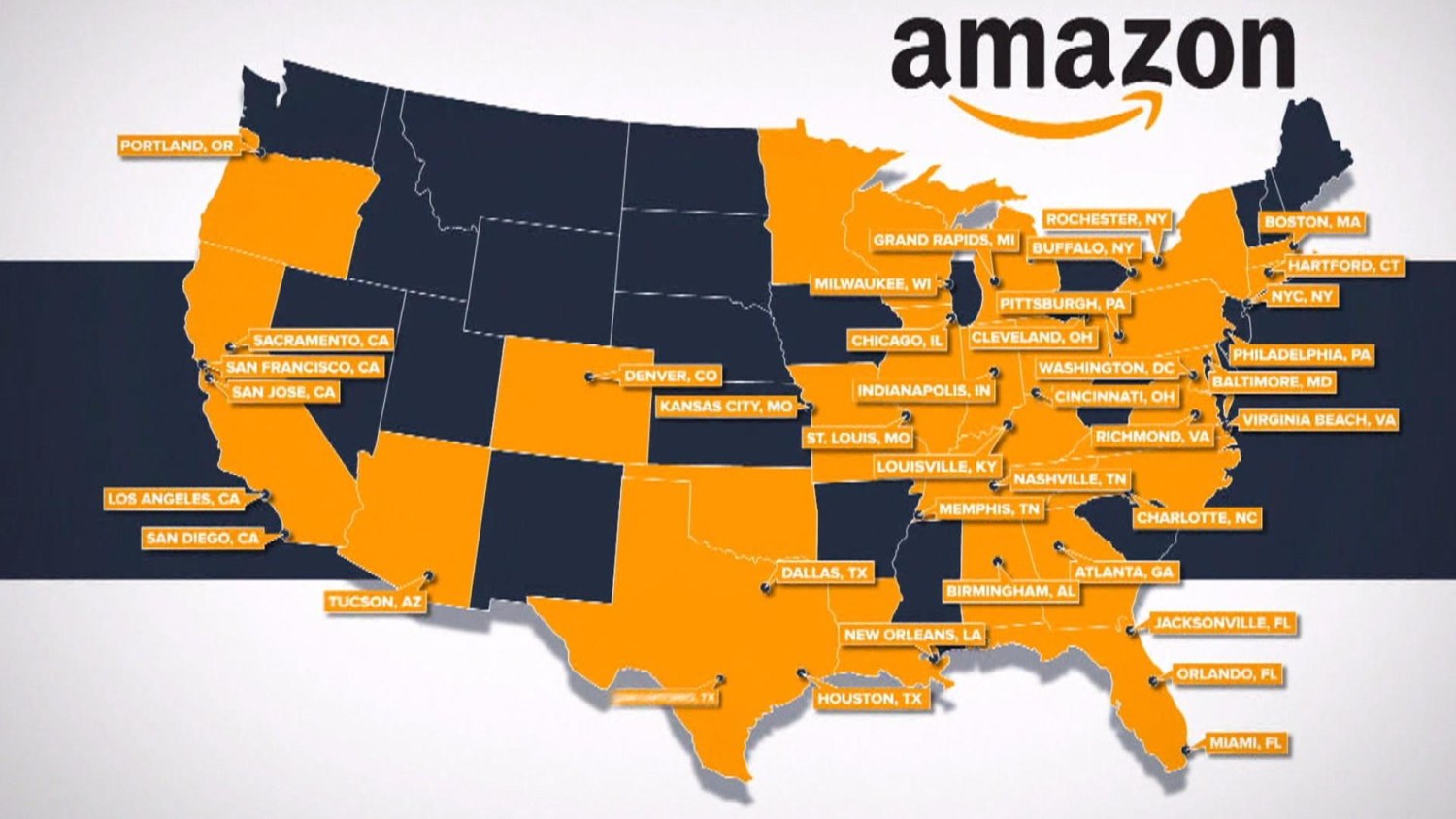
Beyond Seattle and Arlington, Amazon operates a vast network of data centers, fulfillment centers, research and development hubs, and international offices across nearly every continent. Each of these locations contributes to the seamless delivery of the Amazon brand experience globally. While the core brand identity remains consistent—customer obsession, innovation, convenience—the execution often involves localized adaptations. For instance, Amazon’s marketing, product offerings, and even its e-commerce interfaces are tailored to reflect local cultures, languages, and consumer preferences. This distributed operational model allows Amazon to maintain a robust global brand while delivering relevant, localized services, demonstrating a corporate identity that is both globally consistent and locally attuned.
The Strategic Importance of Multiple Hubs for Brand Resilience
Having multiple major headquarters (Seattle and Arlington) and numerous other significant operational hubs enhances Amazon’s brand resilience. It mitigates risks associated with concentrating too much talent, infrastructure, or political capital in one location. This strategic decentralization reflects a mature and adaptable brand strategy, ensuring that the company can continue to innovate and operate effectively even in the face of regional challenges. It signifies a brand that is not only powerful but also robust, capable of weathering economic shifts, talent shortages, or localized disruptions across its diverse geographic footprint.
Headquarters as Symbolic Anchors: More Than Just an Address
Ultimately, while Amazon’s physical presence is global and distributed, its headquarters in Seattle and Arlington remain symbolic anchors of its corporate identity. They are the physical manifestations of its mission, vision, and core brand values. These locations serve as global touchstones, representing Amazon’s innovation engine, its strategic nerve centers, and its commitment to economic leadership. For employees, investors, partners, and customers alike, knowing “where Amazon is based” is more than just a geographic fact; it’s an understanding of the strategic decisions that underpin a global brand, reflecting its journey from a humble startup to an omnipresent force that continues to reshape the future of commerce and technology. These locations embody Amazon’s brand narrative, serving as powerful symbols of its enduring legacy and ambitious future.
aViewFromTheCave is a participant in the Amazon Services LLC Associates Program, an affiliate advertising program designed to provide a means for sites to earn advertising fees by advertising and linking to Amazon.com. Amazon, the Amazon logo, AmazonSupply, and the AmazonSupply logo are trademarks of Amazon.com, Inc. or its affiliates. As an Amazon Associate we earn affiliate commissions from qualifying purchases.