
In the intricate world of personal and business finance, certain numbers serve as the bedrock upon which our monetary system operates. Among these, the bank routing number stands out as a critical identifier, acting like a digital postal code for your financial institution. It’s a nine-digit code that directs funds to the correct bank during transactions, ensuring that your money lands exactly where it’s supposed to go, whether it’s a direct deposit from your employer, an online bill payment, or a wire transfer to a loved one.
Despite its ubiquitous presence in banking, many individuals aren’t entirely sure what a routing number is, its purpose, or more importantly, where to find it when they need it most. This guide aims to demystify the bank routing number, offering a comprehensive look at its significance, practical applications, and easy-to-follow methods for locating it. By the end, you’ll not only understand the “where” but also the “why” and “how” of this indispensable financial tool, empowering you to navigate your financial transactions with confidence and security.
Understanding the Core: What Exactly Is a Bank Routing Number?
At its heart, a bank routing number is a unique identifier assigned to financial institutions by the American Bankers Association (ABA). Often referred to as an ABA routing number or routing transit number (RTN), its primary function is to facilitate the electronic transfer of funds between different banks. Think of it as a unique address for your bank, distinguishing it from thousands of other financial institutions across the United States.
The Anatomy of a Routing Number
Every routing number is a nine-digit code, and these digits aren’t random. They contain specific information that helps in processing transactions:
- First four digits: These identify the Federal Reserve processing center where the bank is located.
- Next four digits: These identify the specific ABA institution.
- Ninth digit: This is a checksum digit used for error detection, ensuring the validity of the routing number through a mathematical algorithm.
This structure ensures accuracy and efficiency in the massive volume of financial transactions processed daily.
Historical Context and Purpose
The concept of routing numbers emerged in 1910, long before the advent of electronic banking. Initially, they were designed to streamline the physical clearing of paper checks. When you wrote a check, the routing number on it told the receiving bank which financial institution to send it to for payment. With the rise of electronic funds transfers (EFTs) and the Automated Clearing House (ACH) network in the latter half of the 20th century, the routing number adapted to become the backbone of digital money movement. Today, it’s essential for direct deposits, automatic bill payments, and various other electronic transactions, linking your specific bank to the broader financial ecosystem.
Routing Numbers vs. Account Numbers
It’s crucial not to confuse a routing number with your bank account number. While both are vital for financial transactions, they serve distinct purposes:
- Routing Number: Identifies your bank or financial institution.
- Account Number: Identifies your specific account within that bank.
You can think of the routing number as the street address of a large apartment building (the bank) and your account number as your specific apartment unit number within that building. Both are required to deliver mail (or money) to the correct recipient. Using the wrong routing number might send funds to the wrong bank, while the wrong account number will result in funds failing to reach your specific account.
Why Your Routing Number Matters: Critical Uses in Everyday Finance
Understanding where to find your routing number is only part of the equation; knowing why it’s so important is equally vital. Your routing number is a foundational element for a multitude of financial operations, both personal and professional. Without it, many of the conveniences of modern banking would be impossible.
Direct Deposits and Automated Payments
Perhaps the most common use of a routing number for individuals is setting up direct deposits. Whether it’s your paycheck, government benefits like Social Security, or a tax refund, your employer or the relevant agency needs your bank’s routing number (along with your account number) to electronically transfer funds directly into your account. Similarly, setting up recurring automated payments for bills – such as mortgages, car loans, utility bills, or subscriptions – often requires your routing number to authorize the payee to pull funds directly from your bank. This automation saves time, reduces the risk of missed payments, and offers unparalleled convenience.
Online Bill Pay and Fund Transfers
When you pay bills online through your bank’s portal or send money to another person through a bank-to-bank transfer service, the routing number is silently at work in the background. It ensures that when you instruct your bank to send money to a utility company or a friend at a different bank, the funds are routed correctly. Most financial institutions use the routing number to identify the destination bank, allowing for seamless and secure digital fund transfers within the ACH network.
Wire Transfers: Domestic and International Nuances
For larger or time-sensitive fund transfers, wire transfers are often used. These are typically irreversible and transfer funds much faster than ACH transactions. Both domestic and international wire transfers require a routing number for the receiving bank. For international wires, however, an additional identifier known as a SWIFT/BIC (Society for Worldwide Interbank Financial Telecommunication/Bank Identifier Code) code is often necessary, as routing numbers are primarily a U.S.-specific system. Understanding this distinction is crucial when dealing with global transactions to avoid delays or misrouted funds.
Ordering Checks and Other Banking Services
Even in an increasingly paperless world, physical checks still have their place. When you order new checks from your bank or a third-party vendor, your bank’s routing number is pre-printed on them. This allows any bank processing the check to identify your specific financial institution. Beyond checks, other banking services, such as setting up certain types of investment accounts that link directly to your checking account or applying for loans that require direct deposit repayment, may also ask for your routing number.
Pinpointing Your Routing Number: Practical Methods and Common Pitfalls
Finding your bank routing number is usually straightforward, but the exact location can vary slightly depending on your bank and how you prefer to access your information. Knowing the various methods will ensure you can quickly retrieve it whenever needed.
On Your Checks: The Most Common Spot
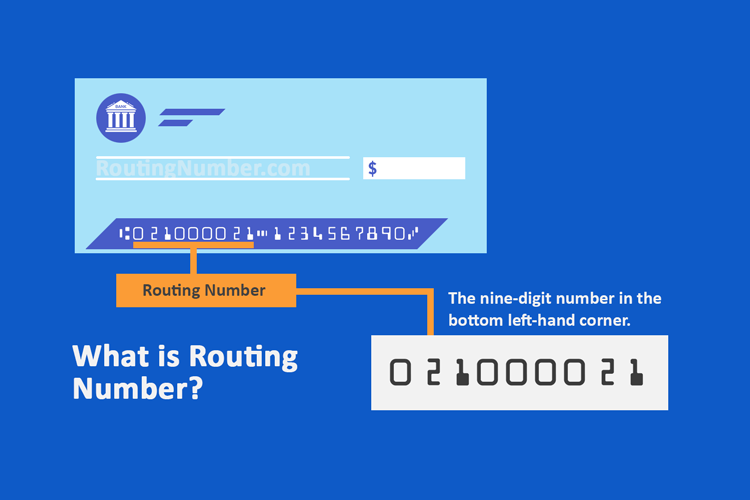
For most checking accounts, the easiest place to find your routing number is directly on a physical check. Look at the bottom left corner of your check. You’ll typically see three sets of numbers. From left to right, they are:
- Routing Number (9 digits): This is usually the first set of numbers.
- Account Number: This is your individual account number.
- Check Number: This corresponds to the check number printed at the top right of the check.
Be mindful that savings accounts typically do not have checks, so this method only applies to checking accounts.
Through Your Online Banking Portal or Mobile App

In today’s digital age, your online banking portal or mobile app is an incredibly convenient resource. Most banks prominently display your routing number within your account details.
- Online Banking: Log in to your bank’s website. Navigate to your specific checking or savings account. Look for sections like “Account Details,” “Account Summary,” “Direct Deposit Information,” or “View Statement.” The routing number is almost always listed there.
- Mobile App: Open your bank’s mobile app. After logging in, select the relevant account. You might need to tap on “Account Info,” “Details,” or a similar option to reveal the routing number. Some apps even have a “Direct Deposit” or “ACH Info” section that provides both your routing and account numbers together.
Contacting Your Bank Directly
If you prefer a more traditional approach or can’t locate the number online, simply contact your bank.
- Phone: Call your bank’s customer service line. Be prepared to verify your identity with personal information (e.g., account number, date of birth, mother’s maiden name) before they can provide you with the routing number.
- In Person: Visit a local branch of your bank. A teller will be able to provide you with the correct routing number for your account. Remember to bring a valid form of identification.
Using Public Resources (ABA Website Lookup)
For general routing number lookups, especially if you need to confirm a bank’s routing number but don’t have an account with them, the American Bankers Association (ABA) maintains a public search tool. While not all banks may be listed in every public database, this can be a reliable resource. Be cautious, however, and always verify information obtained from third-party sites directly with the bank itself if you are unsure or if the context is critical.
When You Have Multiple Accounts or Banks
A common pitfall is assuming your bank has only one routing number. Larger banks, especially those with a national presence, may have different routing numbers for different regions, types of transactions (e.g., ACH vs. wire transfers), or even different products (e.g., checking vs. savings accounts, though this is less common now). Always verify the correct routing number for the specific account and transaction type you intend to use it for. If you have accounts at multiple banks, ensure you’re using the routing number corresponding to the correct institution. A quick double-check can prevent significant delays or misdirected funds.
Safeguarding Your Financial Information: Best Practices for Routing Numbers
While routing numbers are widely used and necessary for countless financial transactions, they are still a piece of your financial identity. Practicing good security habits is paramount to prevent potential fraud or misuse.
When and With Whom to Share
The general rule of thumb is to be discreet. You typically need to provide your routing number along with your account number for legitimate purposes such as:
- Setting up direct deposit with your employer.
- Authorizing automated bill payments.
- Initiating a wire transfer.
- Setting up payments with government agencies (e.g., tax refunds).
Avoid sharing your routing number, especially in combination with your account number, via unsecured channels like unencrypted emails or social media messages. While a routing number alone poses less risk than a full account number, sharing both could potentially allow unauthorized access to your funds if intercepted by malicious actors. Reputable businesses and financial institutions will always use secure portals or encrypted forms for collecting sensitive financial information.
Recognizing and Avoiding Scams
Scammers are constantly evolving their tactics, and requests for financial information are a common ploy. Be wary of unsolicited calls, emails, or text messages asking for your routing number, account number, or other personal banking details.
- Phishing Attempts: Fake emails or websites designed to look like your bank may try to trick you into entering your information. Always verify the sender and the URL before clicking links or providing data.
- Impersonation Scams: Scammers might pose as government officials, utility companies, or even your bank, claiming there’s an issue with your account and demanding your routing number for “verification.” Legitimate organizations will rarely ask for sensitive information over the phone or via email if they initiated contact.
- Overpayment Scams: In these scams, a fraudster sends you a check for more than you’re owed and asks you to refund the difference using your banking details. The check is fake, and you end up losing your money.
If you ever doubt the legitimacy of a request for your banking information, directly contact your bank or the organization in question using a verified phone number or website, not one provided by the suspicious contact.
The Role of Digital Security in Banking
Modern banking relies heavily on robust digital security measures. Your bank employs encryption, multi-factor authentication, and fraud detection systems to protect your accounts. However, you are the first line of defense. Always use strong, unique passwords for your online banking. Enable multi-factor authentication whenever possible. Regularly monitor your account statements for any suspicious activity. If you spot an unauthorized transaction, report it to your bank immediately. Understanding that your routing number is a key piece of information, treat it with the same care as you would your credit card number or social security number.
Beyond the Basics: Advanced Insights for Businesses and Complex Transactions
While the fundamental use of a routing number remains consistent, its application can have additional nuances, particularly for businesses or those involved in more complex financial operations.
ACH vs. Wire Transfer Routing Numbers
As mentioned earlier, some banks, especially larger ones, might utilize different routing numbers for Automated Clearing House (ACH) transactions (like direct deposits and online bill pay) versus wire transfers. This distinction is often due to the differing processing networks and security protocols involved. Wire transfers are typically real-time, irreversible, and carry higher fees, requiring a more direct connection between banks. ACH transactions, while efficient, batch process over a few days. Always confirm the specific routing number required for the type of transaction you are initiating, as using an ACH routing number for a wire transfer (or vice versa) can cause significant delays or even failed transfers.
Business Banking and Payroll Considerations
For businesses, accurate routing numbers are foundational to smooth operations. Payroll processing relies heavily on correct routing and account numbers for employees’ direct deposits. Errors here can lead to delayed payments, employee frustration, and administrative headaches. Similarly, businesses use routing numbers for vendor payments, tax payments, and managing various financial accounts. Setting up robust internal controls and regularly verifying banking details are critical best practices for business finance managers.
International Banking and SWIFT Codes
While ABA routing numbers are specific to the United States, international transactions require a different set of identifiers. For transfers to banks outside the U.S., a SWIFT (Society for Worldwide Interbank Financial Telecommunication) code, also known as a BIC (Bank Identifier Code), is typically required. A SWIFT code identifies a specific bank globally, much like a routing number does domestically. These codes are usually 8 or 11 characters long and are essential for ensuring that international wire transfers reach the correct foreign bank. If you’re sending or receiving money internationally, you’ll need to know the SWIFT code for the recipient’s bank in addition to their international bank account number (IBAN), which is common in Europe and other regions.

Conclusion
The bank routing number, a simple nine-digit code, is an unsung hero of our financial lives. It’s the silent workhorse that ensures your paycheck arrives on time, your bills are paid automatically, and your funds move securely between financial institutions. Understanding where to find it – whether on your checks, through your online banking portal, or by contacting your bank – is a basic yet crucial piece of financial literacy.
Beyond simply locating it, however, lies the importance of understanding its purpose and the best practices for its use and protection. By being vigilant about who you share it with, recognizing potential scams, and utilizing the digital security tools at your disposal, you can harness the convenience of modern banking while safeguarding your financial well-being. So, the next time you set up a direct deposit or initiate an online transfer, take a moment to appreciate the humble yet indispensable bank routing number, a cornerstone of your financial connectivity.
aViewFromTheCave is a participant in the Amazon Services LLC Associates Program, an affiliate advertising program designed to provide a means for sites to earn advertising fees by advertising and linking to Amazon.com. Amazon, the Amazon logo, AmazonSupply, and the AmazonSupply logo are trademarks of Amazon.com, Inc. or its affiliates. As an Amazon Associate we earn affiliate commissions from qualifying purchases.