
In the hyper-competitive world of commercial aviation, a route map is more than a list of destinations; it is a visual manifesto of a company’s market power, strategic priorities, and brand promise. For American Airlines, one of the “Big Three” legacy carriers in the United States, the question of “where does American Airlines fly” reveals the blueprint of a brand built on the pillars of connectivity, reliability, and global scale.
The American Airlines brand identity is inextricably linked to its status as a cornerstone of the Oneworld alliance and its massive domestic footprint. By examining the carrier’s network through the lens of brand strategy, we can see how the airline leverages its geographic reach to maintain its position as a dominant force in the global marketplace.
The Architecture of Connectivity: Hub-and-Spoke as a Brand Foundation
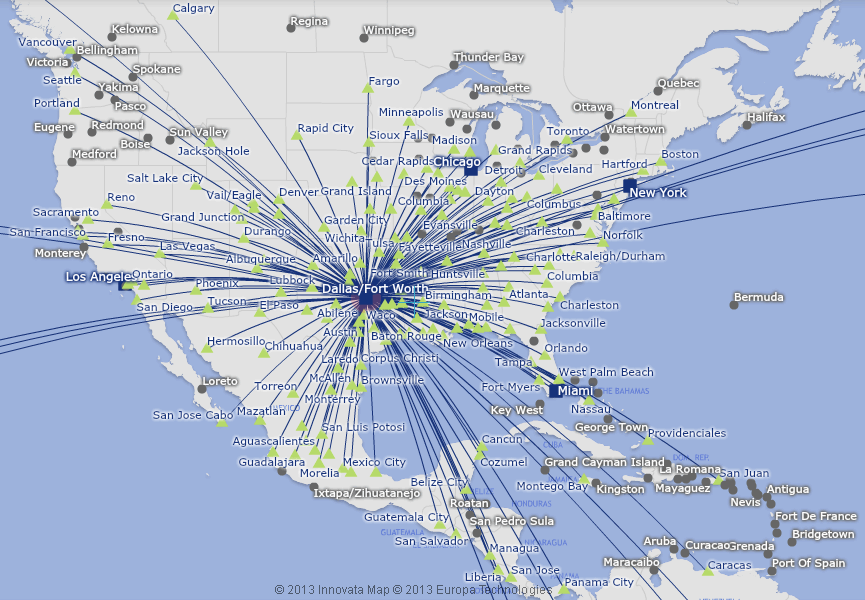
The core of the American Airlines brand identity is its “fortress hub” strategy. This operational model does not just facilitate travel; it defines the passenger’s perception of the brand as an omnipresent force in American life. By funneling traffic through key strategic gateways, American ensures that its brand touchpoints are concentrated and consistent.
The Power of the Fortress Hub: DFW and Beyond
At the heart of the American Airlines network is Dallas-Fort Worth International Airport (DFW). As the airline’s primary global gateway and corporate home, DFW is more than a transit point; it is the physical embodiment of the brand’s scale. The sheer volume of flights—often exceeding 800 departures a day—reinforces a brand message of “anywhere, anytime.” When a traveler asks where American flies, the answer starts here, extending to nearly every corner of the North American continent and beyond. This dominance allows American to capture the “loyalty share” of the mid-continent, positioning itself as the indispensable choice for both business and leisure travelers in the central United States.
Charlotte and Miami: Regional Specialization and Brand Moats
Strategic branding requires differentiation, and American achieves this through its specialized hubs. Charlotte (CLT) serves as a high-efficiency connection point for the Southeast, while Miami (MIA) acts as the brand’s “Gateway to the Americas.” The Miami hub is particularly crucial for the brand’s corporate identity. By maintaining a near-monopoly on high-value routes to South and Central America, American Airlines has branded itself as the premier U.S. carrier for Latin American commerce and culture. This regional dominance creates a “brand moat” that is difficult for competitors like Delta or United to bridge, ensuring that for millions of international travelers, the American Airlines logo is the first one they see when planning a trip to the Southern Hemisphere.
Competitive Positioning: The Global Brand and the Oneworld Alliance
While its domestic network provides the volume, American Airlines’ international reach defines its prestige. In the branding war of the legacy carriers, international “connectivity” is a high-status asset. American leverages its membership in the Oneworld alliance to extend its brand influence far beyond the reach of its own silver-painted fuselages.
The London Heathrow Stronghold and Transatlantic Identity
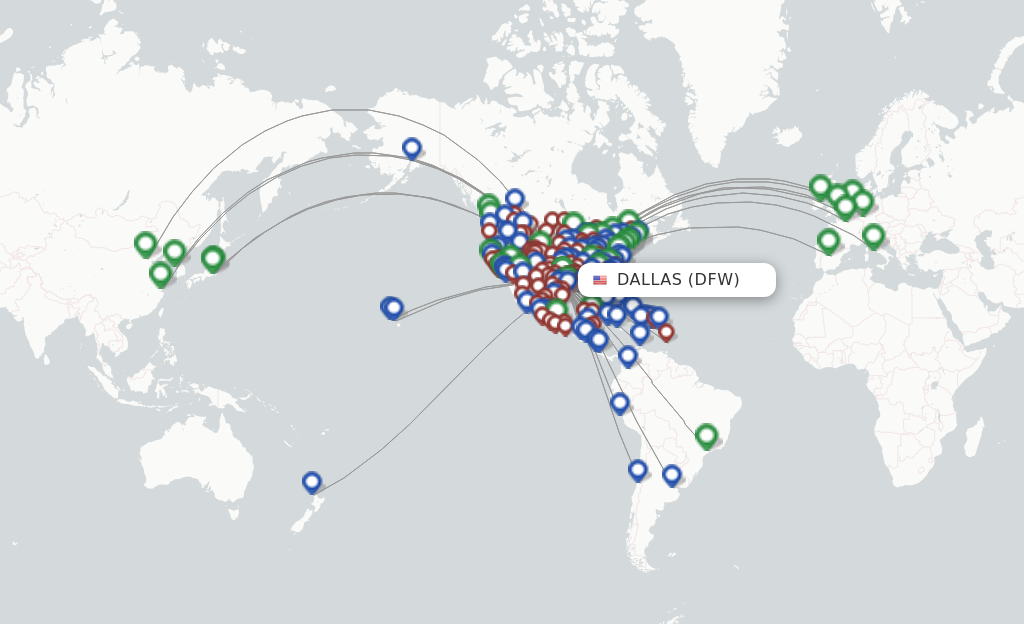
For the American Airlines brand, the route between New York (JFK) and London Heathrow (LHR) is the “Blue Ribbon” of aviation. Through a deep joint business agreement with British Airways, American has positioned itself as the dominant brand for the corporate elite traveling between the world’s two most important financial centers. This partnership allows American to project a brand image of sophistication and global integration. By offering a “seamless” experience across both carriers, American reinforces a brand promise of global luxury and professional reliability, ensuring that the brand remains top-of-mind for high-yield business travelers.
Oneworld: Extending Reach Through Partnership
Where American Airlines does not fly its own metal, it flies through its partners. This is a masterful branding move. By aligning with high-quality carriers like Qatar Airways, Japan Airlines, and Qantas, American ensures that its frequent flyers can earn and redeem rewards globally. This “halo effect” from partner brands enhances American’s own identity; it transforms a domestic powerhouse into a truly global entity. When a customer sees the Oneworld logo alongside the American “Flight Symbol,” it communicates a message of boundless possibility, effectively expanding the brand’s perceived map to include over 1,000 destinations worldwide.
Brand Evolution through Network Modernization and the Premium Experience
The decision of where to fly is increasingly dictated by the “yield”—the profitability of a route. From a brand perspective, this has led to a shift toward premiumization. American Airlines is not just flying more places; it is curating the way it flies to those places to elevate its corporate identity.
Targeting the Premium Traveler on High-Yield Routes
In recent years, American’s network strategy has leaned heavily into “premium leisure” and high-demand business corridors. By deploying its most advanced aircraft—equipped with Flagship First and Business Class suites—on routes to Tokyo, Paris, and Sao Paulo, the airline is rebranding itself as a premium service provider. This is a strategic shift away from the “bus in the sky” perception that plagued legacy carriers in the early 2000s. The brand identity is now focused on the “journey experience,” where the destination (where they fly) is matched by the exclusivity of the cabin (how they fly).
American Eagle: Maintaining Brand Consistency in the Hinterlands
A significant portion of where American Airlines flies is handled by its regional subsidiary, American Eagle. The branding challenge here is immense: maintaining a consistent “mainline” feel on smaller aircraft serving smaller cities like Abilene, Texas, or Eugene, Oregon. By integrating American Eagle seamlessly into the main booking engine and loyalty program, the airline ensures that its brand reach extends to “Main Street USA.” This ubiquitous presence reinforces the brand’s identity as the “national” carrier of the United States, providing a vital link between small-town America and the global economy.
Future-Proofing the Brand: Adapting to a Shifting Global Landscape
The geography of where American Airlines flies is not static; it is a living reflection of changing global economics and consumer behavior. To maintain a strong brand, the airline must constantly re-evaluate its “where” to ensure it aligns with “who” its customers are becoming.
Post-Pandemic Shifts: The Rise of the “Sun Belt” and Leisure Focus
In the wake of the global pandemic, American Airlines made a decisive brand pivot. While competitors remained tethered to traditional business hubs, American doubled down on its strengths in the “Sun Belt”—Texas, Arizona, and North Carolina. This move was a brand acknowledgment of the shifting American population and the rise of remote work. By increasing flights to vacation destinations and growing its presence in secondary markets, American has rebranded itself as a more flexible, lifestyle-oriented airline. It is no longer just the airline of the corporate suit; it is the airline of the modern, mobile American.
Sustainability and the “Green” Brand Frontier
As the conversation around climate change intensifies, where an airline flies is being scrutinized through the lens of environmental impact. American Airlines is increasingly integrating sustainability into its brand narrative by investing in more fuel-efficient aircraft like the Boeing 787 Dreamliner and the Airbus A321XLR. These planes allow American to fly thinner, long-haul routes more efficiently. From a brand standpoint, this allows American to claim the mantle of a “responsible global citizen.” The ability to fly a passenger from a secondary U.S. city to a European capital on a single, fuel-efficient jet is a powerful marketing tool that aligns the brand with the values of the modern, eco-conscious traveler.
Conclusion: The Map as a Brand Manifesto
When we ask, “Where does American Airlines fly?” we are essentially asking, “What is American Airlines’ place in the world?” The answer is a complex tapestry of strategic hubs, international alliances, and a relentless focus on market dominance. American’s network is its greatest brand asset—a physical manifestation of a promise to connect people to what matters most.
Through its fortress hubs, its leadership in the Oneworld alliance, and its strategic pivot toward premium and “Sun Belt” markets, American Airlines has crafted a brand identity that is both massive in scale and focused in its execution. The airline’s map is not just a guide for travelers; it is a declaration of corporate intent, ensuring that wherever the future of global commerce and travel goes, the American Airlines brand will be there to lead the way. In the end, the brand is defined not just by the cities it serves, but by the reliability, prestige, and connectivity it offers at every coordinate on the globe.
aViewFromTheCave is a participant in the Amazon Services LLC Associates Program, an affiliate advertising program designed to provide a means for sites to earn advertising fees by advertising and linking to Amazon.com. Amazon, the Amazon logo, AmazonSupply, and the AmazonSupply logo are trademarks of Amazon.com, Inc. or its affiliates. As an Amazon Associate we earn affiliate commissions from qualifying purchases.