
Navigating the landscape of federal tax payments can seem daunting, but understanding the various methods and requirements is crucial for every taxpayer. Whether you’re an individual fulfilling annual obligations, a small business managing quarterly estimated taxes, or an employer remitting payroll taxes, the Internal Revenue Service (IRS) offers a range of options designed to accommodate different preferences and circumstances. Making timely and accurate payments is not just about compliance; it’s a cornerstone of sound personal and business finance, helping to avoid penalties, interest, and unnecessary financial stress. This guide demystifies the process, outlining the primary avenues for submitting your federal tax payments and offering insights into best practices for financial management.
Understanding Your Federal Tax Payment Options
The IRS provides several secure and convenient methods for taxpayers to remit their federal tax payments. The choice of method often depends on the type of tax, the amount, the desired speed of processing, and personal preference for electronic versus traditional mail options. Each method carries specific instructions and benefits.
Electronic Payment Methods
Electronic payments are increasingly the preferred choice due to their speed, security, and convenience. They offer immediate confirmation and reduce the risk of lost mail or delays.
IRS Direct Pay
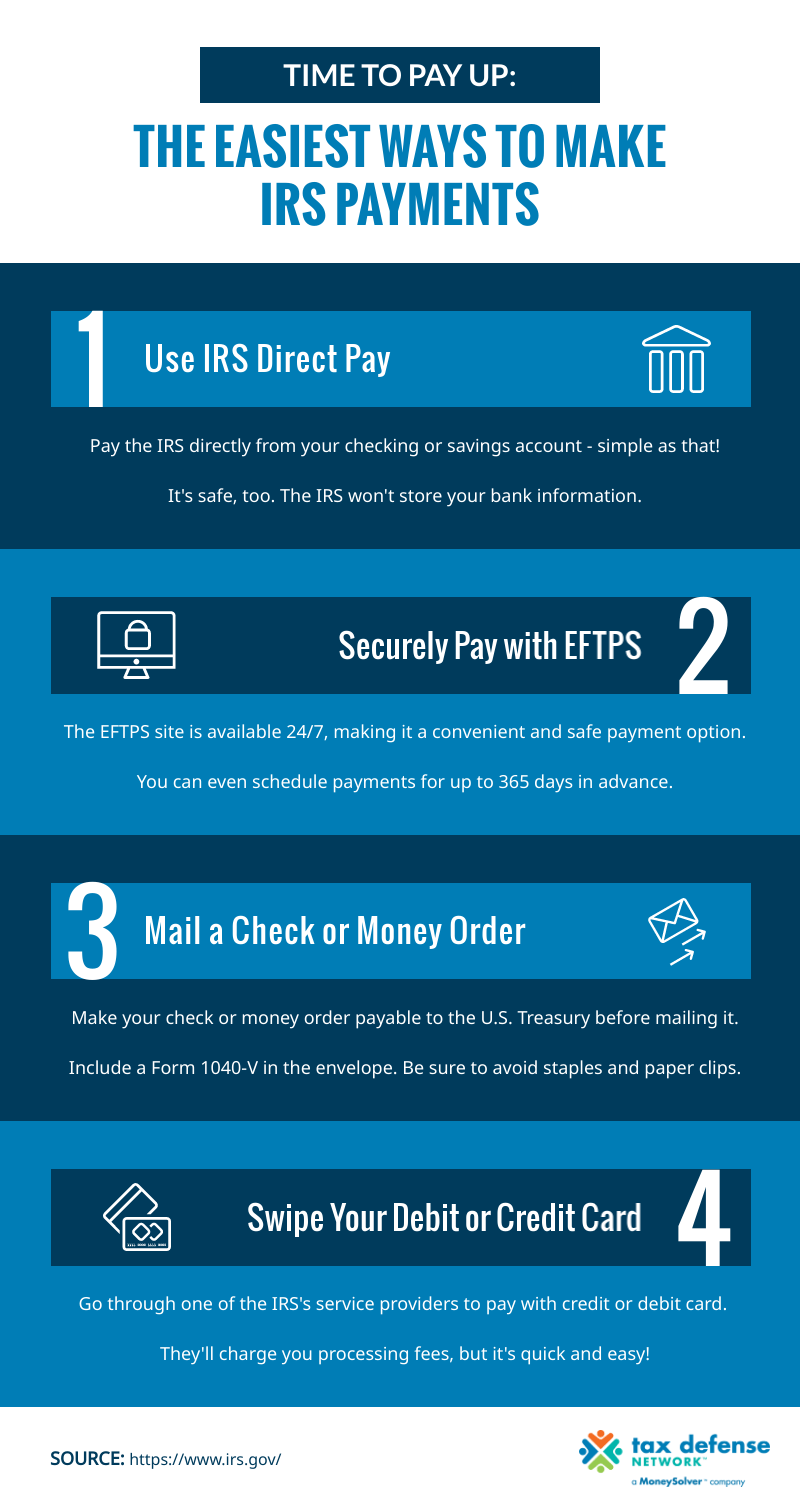
IRS Direct Pay is a free, secure service offered directly by the IRS. It allows individuals to pay their tax bill or make estimated tax payments directly from their checking or savings account. This method is suitable for most individual income tax payments (Form 1040 series), estimated taxes, and payments for extensions. Users receive instant confirmation of their payment submission. Key advantages include no processing fees and direct integration with IRS systems, minimizing potential errors associated with third-party services.
Electronic Federal Tax Payment System (EFTPS)
EFTPS is a free service provided by the U.S. Department of the Treasury. It’s designed for all federal taxes, including individual, corporate, payroll, and excise taxes. While Direct Pay is ideal for many individual payments, EFTPS offers a more comprehensive solution, particularly for businesses and those making regular, recurring payments. Registration is required, which can take several days to complete, but once set up, it allows for scheduling payments up to 365 days in advance. EFTPS is a robust tool for proactive financial planning and compliance, ensuring payments are made on time every time.
Credit or Debit Card Payments
Taxpayers can also pay their federal taxes using a credit card, debit card, or digital wallet through various authorized third-party payment processors. While this option offers flexibility, convenience, and potentially rewards points from your card issuer, it’s important to note that these processors charge a convenience fee, typically a percentage of the payment amount for credit cards, or a flat fee for debit cards. This method can be useful for those needing to defer payment due to cash flow issues (by utilizing credit) or for those who prefer the simplicity of card transactions. Always compare fees between different processors to find the most cost-effective option.
Digital Wallets and Payment Apps
Some authorized payment processors also integrate with digital wallets like PayPal or Click to Pay. These options can streamline the payment process for users already accustomed to these platforms, offering a quick and secure way to complete transactions. Similar to credit/debit card payments, convenience fees apply.
Mail Payments
For those who prefer traditional methods or cannot use electronic options, mailing a check or money order remains a viable route. However, it’s crucial to follow specific IRS guidelines to ensure your payment is processed correctly.
Sending a Check or Money Order
When mailing a payment, always make your check or money order payable to the “U.S. Treasury.” Include your name, address, daytime phone number, Social Security number (or Employer Identification Number for businesses), the tax year, and the related tax form or notice number on the payment. Do not staple your payment to your tax return. The mailing address varies depending on the tax form you are filing (e.g., Form 1040, Form 1120), your state of residence, and whether you are enclosing it with your return or sending it separately. The IRS publishes detailed tables with the correct mailing addresses on its website and in the instructions for each tax form. Using certified mail with a return receipt can provide proof of mailing and delivery, which is invaluable for record-keeping and dispute resolution.
Cash Payments
While less common, cash payments are possible through specific retail partners, which charge a fee, or directly at IRS Taxpayer Assistance Centers (TACs) by appointment only. This method requires careful adherence to IRS procedures to ensure proper credit and security. Always obtain and retain a payment receipt.
Key Considerations for Timely Payments
Understanding how to pay is only part of the equation; knowing when and what to pay is equally important for maintaining financial health and avoiding penalties.
Deadlines and Extensions
Federal tax deadlines are typically April 15th for individual income tax returns, though extensions are available. An extension to file does not, however, grant an extension to pay. If you expect to owe tax, you must estimate and pay that amount by the original due date to avoid interest and penalties. Businesses often have different filing and payment deadlines depending on their entity type (e.g., S-corporations, C-corporations, partnerships). Staying abreast of these dates is fundamental to tax compliance and sound financial management.
Estimated Tax Payments
Many individuals and businesses are required to pay estimated taxes throughout the year if they expect to owe at least $1,000 (individuals) or $500 (corporations) and have income not subject to withholding, such as income from self-employment, investments, or rental properties. These payments are typically due quarterly: April 15, June 15, September 15, and January 15 of the following year. Underpaying estimated taxes can result in penalties, making accurate forecasting and timely remittances essential. Financial planning tools and professional advice can help in calculating these amounts.

What to Do If You Can’t Pay
Facing a tax bill you can’t immediately pay can be stressful, but the IRS offers several relief options. Do not ignore the issue.
- Short-Term Payment Plan: You may be granted up to 180 additional days to pay your tax liability in full, though interest and penalties still apply.
- Offer in Compromise (OIC): An OIC allows certain taxpayers to resolve their tax liability with the IRS for a lower amount than they originally owe if they can demonstrate significant financial hardship. This is a complex process and not available to everyone.
- Installment Agreement: This allows you to make monthly payments for up to 72 months. Again, interest and penalties continue to accrue, but it provides a structured repayment plan.
Engaging with the IRS to establish one of these plans demonstrates good faith and can prevent more severe collection actions.
Navigating Specific Payment Scenarios
The “where” and “how” of federal tax payments can also vary depending on the type of taxpayer or the specific nature of the payment.
Paying Business Taxes
Businesses, from sole proprietorships to large corporations, have distinct tax obligations. Small businesses often use EFTPS for payroll taxes (Form 941, 944, 940) and estimated income taxes (Form 1120-ES for corporations, or as part of individual estimated taxes for pass-through entities). Employers are generally required to deposit federal income tax withheld and Social Security and Medicare taxes using EFTPS. Adherence to strict deposit schedules (monthly or semi-weekly) is critical to avoid substantial penalties. Utilizing integrated accounting and payroll software can greatly streamline these processes, ensuring accuracy and timely submissions.
Paying for Others (e.g., Trust Funds)
Fiduciaries responsible for estates and trusts also have federal tax payment obligations, including income tax on the trust or estate and potentially estimated taxes. The payment methods available are generally the same as for individuals or businesses, but the specific forms and responsible parties differ. Careful attention to the fiduciary duties and reporting requirements is paramount.
Common Pitfalls and Best Practices
Avoiding common mistakes can save taxpayers significant time, money, and anxiety. Proactive financial management and diligent record-keeping are your best defenses.
Avoiding Penalties and Interest
Penalties can be assessed for various reasons, including failure to file on time, failure to pay on time, and underpayment of estimated taxes. Interest accrues on underpayments and unpaid balances. The best way to avoid these is to:
- File your return or extension request on time.
- Pay your tax liability in full by the due date.
- If you can’t pay in full, pay as much as you can and contact the IRS to set up a payment arrangement.
- Accurately estimate and pay your quarterly taxes if required.
Record Keeping
Maintain meticulous records of all tax payments, including dates, amounts, payment method used, confirmation numbers (for electronic payments), and copies of checks or money orders. Keep these records with your tax returns and supporting documents for at least three to seven years. In case of any discrepancy or audit, clear documentation is your most powerful tool. Digital backups and cloud storage can complement physical records.
Verifying Payment Confirmation
Always ensure you receive and retain confirmation of your payment. For electronic payments, this usually comes as an on-screen confirmation number and/or an email receipt. For mail payments, certified mail with a return receipt serves as proof. Never assume a payment has gone through without explicit confirmation.
Security Precautions
Be vigilant about protecting your personal and financial information. Only use authorized IRS payment channels or legitimate third-party processors. Be wary of unsolicited emails, phone calls, or texts purporting to be from the IRS demanding immediate payment, especially through unusual methods like gift cards or wire transfers. The IRS will generally first contact you by mail.
Utilizing Financial Tools for Tax Management
Modern financial tools can significantly simplify the process of calculating, planning, and paying federal taxes.
Tax Software Integration
Many popular tax preparation software programs (e.g., TurboTax, H&R Block Tax Software) offer direct integration with IRS payment systems. After preparing your return, these platforms can guide you through the electronic payment process, linking directly to IRS Direct Pay or authorized third-party processors. This streamlines the filing and payment steps into one cohesive workflow.
Accounting Software Benefits
For businesses, robust accounting software packages often include modules for payroll processing and tax liability tracking. These tools can automatically calculate payroll tax liabilities, generate necessary forms, and facilitate electronic payments via EFTPS. Features like automated reminders for payment deadlines and comprehensive reporting capabilities can be invaluable for ensuring compliance and maintaining healthy cash flow.
Professional Tax Advisors
For complex financial situations, large businesses, or those simply seeking peace of mind, engaging a professional tax advisor (e.g., a CPA or Enrolled Agent) can be an excellent investment. These experts can not only prepare your returns but also advise on optimal payment strategies, help navigate estimated tax requirements, and represent you in dealings with the IRS, ensuring all payments are made correctly and on time.
In conclusion, understanding where and how to send federal tax payments is a fundamental aspect of financial literacy and responsible money management. By leveraging the available electronic options, adhering to deadlines, maintaining thorough records, and utilizing modern financial tools, taxpayers can efficiently meet their obligations, avoid penalties, and contribute to their overall financial well-being.
aViewFromTheCave is a participant in the Amazon Services LLC Associates Program, an affiliate advertising program designed to provide a means for sites to earn advertising fees by advertising and linking to Amazon.com. Amazon, the Amazon logo, AmazonSupply, and the AmazonSupply logo are trademarks of Amazon.com, Inc. or its affiliates. As an Amazon Associate we earn affiliate commissions from qualifying purchases.