
Navigating the logistical requirements of the Internal Revenue Service (IRS) is a fundamental aspect of financial management for both individuals and business owners. While the digital revolution has moved much of our financial lives online, a significant portion of the American population still relies on traditional mail to settle their federal tax obligations. Whether you are paying a balance due on a 1040 return, making quarterly estimated tax payments, or settling corporate liabilities, knowing exactly where to send your check or money order is critical. A misdirected payment can lead to processing delays, unnecessary interest charges, and frustrating penalty notices.
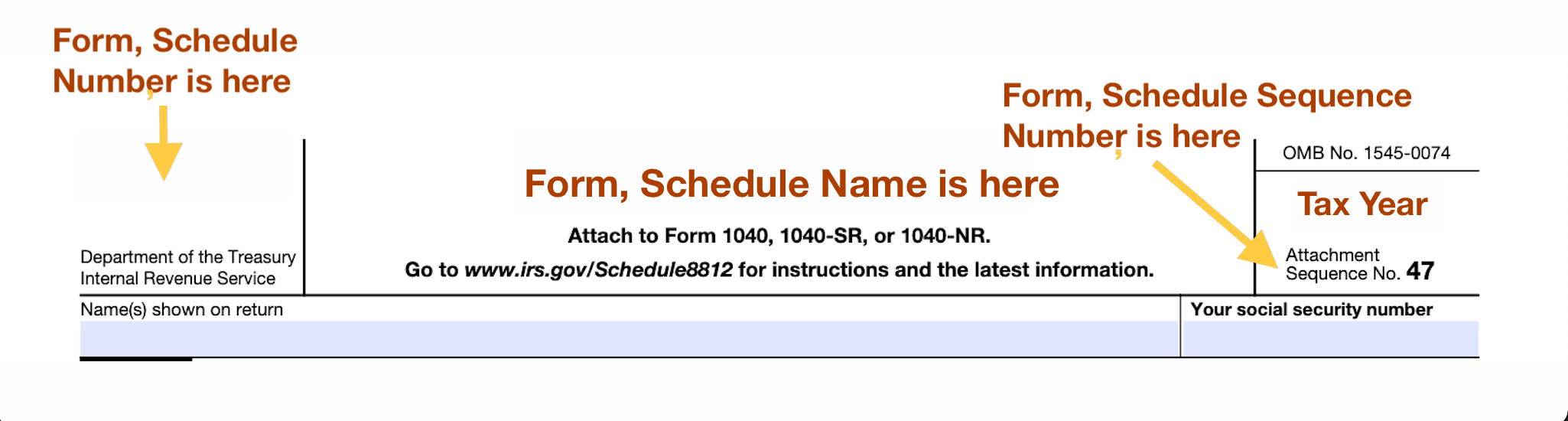
The process of mailing a federal tax payment is not as simple as addressing an envelope to “The IRS.” The agency utilizes a decentralized network of processing centers across the United States. Your specific mailing destination is determined by a variety of factors, including your state of residence, the type of tax form you are filing, and whether or not you are enclosing a payment with your tax return.
Understanding the IRS Processing Network
The Internal Revenue Service does not operate out of a single central location for payment processing. Instead, it utilizes several Internal Revenue Service Centers and lockbox locations managed by the Department of the Treasury. These facilities are designed to handle millions of pieces of mail efficiently, especially during the peak tax season between January and April.
The Role of Regional Processing Centers
The IRS divides the United States into various regions, typically grouping states together based on geographic proximity to a specific processing hub. For example, taxpayers in the Northeast may be directed to a center in Missouri or Massachusetts, while those in the West may send their documents to a facility in Utah or California. These assignments are subject to change as the IRS reallocates resources or closes older facilities to modernize its infrastructure.
Payment vs. No Payment: The Destination Difference
One of the most important distinctions in the federal mailing system is whether a tax return is being sent with or without a payment. If you are filing a return and expect a refund, your documents may go to one address. However, if you are enclosing a check or money order, the mailing address is often different. This is because payments are often routed through “lockbox” operations—financial institutions authorized by the Treasury to process payments immediately to ensure the funds enter the government’s accounts as quickly as possible.
The Anatomy of the 1040-V Voucher
For individual taxpayers, the most common document associated with mailing a payment is Form 1040-V, the Payment Voucher. This small, one-page document is essential for the IRS to accurately credit your account. It contains your name, Social Security number, the tax year, and the amount being paid. When you generate a tax return through software or a professional preparer, Form 1040-V is usually printed with the correct mailing address based on your specific filing situation.
Determining Your Specific Mailing Address
To find the correct mailing address, you must consult the official IRS instructions for the specific form you are filing. However, most individual income tax payments follow a standard regional pattern.
Grouping by State and Region
Generally, the IRS categorizes states into groups. For instance, taxpayers residing in Florida, Louisiana, Mississippi, and Texas often mail their payments to a center in Charlotte, North Carolina. Conversely, those in Alaska, Arizona, California, and Hawaii might be directed to a processing center in Cincinnati, Ohio, or Ogden, Utah.
It is vital to verify the address every single year. The IRS frequently updates its mailing instructions to balance the workload across its service centers. Relying on an address you used three years ago could result in your payment being forwarded, which adds days or even weeks to the processing time.
Addressing Payments for Estimated Taxes
Small business owners, freelancers, and investors who pay quarterly estimated taxes use Form 1040-ES. The mailing addresses for these vouchers are also state-dependent. Because these payments occur four times a year, many taxpayers find it helpful to print a set of addressed envelopes at the beginning of the year to ensure consistency and accuracy.
Business and Corporate Tax Mailing
Corporations and employers have a different set of rules. While many business taxes are now required to be paid electronically via the Electronic Federal Tax Payment System (EFTPS), some smaller entities or specific tax types still allow for mailed payments. These are often sent to the same regional centers as individual payments but must include the correct Employer Identification Number (EIN) and the specific tax period on the check.
Best Practices for Sending Payments Through the Mail

Sending a check through the postal system involves a certain level of risk. To mitigate the chances of lost mail or misapplied funds, taxpayers should follow a strict protocol when preparing their mailing.
Preparing the Check or Money Order
The IRS has specific requirements for how a check should be written to ensure it is processed without manual intervention.
-
Make it Payable to the U.S. Treasury: Never make a check out to “IRS” or “Internal Revenue Service.” Always use “United States Treasury.”
-
Include Identifying Information: On the memo line of your check, you should always write your Social Security number (or EIN for businesses), the tax year the payment applies to, and the form number (e.g., “2023 Form 1040”). If you are filing a joint return, use the Social Security number that appears first on the tax return.
-
Do Not Staple: While it is tempting to staple your check to the voucher or return to ensure it stays in place, the IRS requests that you use a paperclip or simply leave it loose in the envelope. Staples can damage the high-speed scanning equipment used at processing centers.
Utilizing Certified Mail and Tracking
The most common point of contention between a taxpayer and the IRS is the date a payment was sent. If the IRS claims a payment was late, the burden of proof falls on the taxpayer. The best way to protect yourself is to use United States Certified Mail with a Return Receipt Requested.
The IRS follows the “Postmark Rule,” which states that a payment is considered made on the date it is postmarked by the United States Postal Service (USPS), not the date it is received. By using certified mail, you receive a receipt with a date-stamped postmark that serves as legal proof of timely filing. Private delivery services like FedEx and UPS can also be used, but only specific services offered by these companies are recognized by the IRS as meeting the “timely filing” criteria.
Ensuring Proper Envelope Preparation
Use a sturdy envelope and ensure the IRS address is clearly legible. If you are using an envelope provided in a tax package, double-check that the address visible through the window is the one that corresponds to your current state of residence.
Avoiding Common Mistakes and Pitfalls
Even with the best intentions, errors in the mailing process can lead to significant financial headaches. Awareness of common mistakes can help you maintain a clean record with the Treasury.
Sending Cash Through the Mail
You should never, under any circumstances, mail cash to the IRS. Not only is it a security risk, but there is no paper trail to prove you made the payment if the envelope is lost or stolen. If you must pay in cash, the IRS offers several “Pay at a Retail Partner” options where you can settle your debt at participating convenience stores or pharmacies.
Missing the Postmark Deadline
For annual returns, the deadline is typically April 15th. If the 15th falls on a weekend or a legal holiday (such as Emancipation Day in Washington, D.C.), the deadline is moved to the next business day. To be considered “on time,” your envelope must be postmarked by the USPS by that date. Waiting until the final collection time on the day of the deadline is risky; if you miss the last pickup, your mail won’t be postmarked until the following day, potentially triggering late payment penalties.
Incorrect Vouchers or Years
Applying a payment to the wrong tax year is a frequent error. If you owe money for 2022 but send a check with a 2023 voucher, the IRS will credit the 2023 year, leaving the 2022 balance unpaid. This will result in automated collections notices for the “unpaid” 2022 tax. While these errors can be fixed by calling the IRS, the process is notoriously time-consuming. Always double-check that the voucher matches the year of the debt you are settling.
The Digital Alternative: When to Stop Mailing
While mailing a payment is a valid and legal method, the IRS and financial experts increasingly recommend digital alternatives for their speed and security. Understanding these options can help you decide if mailing is truly the best strategy for your personal finances.
IRS Direct Pay
For individuals, IRS Direct Pay is a free service that allows you to pay directly from your checking or savings account. The system provides an immediate confirmation number, which serves as much stronger proof of payment than a mail receipt. It also eliminates the risk of a check being stolen from a mailbox or lost in transit.
The EFTPS System
For businesses and large individual payments, the Electronic Federal Tax Payment System (EFTPS) is the gold standard. It requires a prior registration process, but once set up, it allows for scheduled payments and provides a comprehensive history of all federal tax transactions.

Why Some Prefer the Mail
Despite the benefits of digital payments, many taxpayers prefer mailing a physical check for psychological or record-keeping reasons. A physical checkbook carbon copy or a cancelled check provides a tangible trail that some find easier to organize for their annual audits. Additionally, mailing a check can sometimes provide a few extra days of “float” while the mail travels and the check is processed, though in an era of electronic check imaging, this float time has diminished significantly.
In conclusion, knowing where to mail federal tax payments is a vital skill in maintaining financial health. By identifying the correct regional processing center, preparing your documentation with precision, and utilizing certified mail for protection, you can ensure your obligations to the U.S. Treasury are met without incident. Whether you are a first-time filer or a seasoned business owner, the attention to detail you apply to the mailing process is just as important as the accuracy of the tax return itself.
aViewFromTheCave is a participant in the Amazon Services LLC Associates Program, an affiliate advertising program designed to provide a means for sites to earn advertising fees by advertising and linking to Amazon.com. Amazon, the Amazon logo, AmazonSupply, and the AmazonSupply logo are trademarks of Amazon.com, Inc. or its affiliates. As an Amazon Associate we earn affiliate commissions from qualifying purchases.