
The quest for capital is a defining journey for almost every entrepreneur. Whether you are in the nascent stages of a startup, looking to bridge a seasonal cash flow gap, or planning a massive infrastructure expansion, the question of where to secure a small business loan is central to your financial strategy. The lending landscape has evolved significantly over the last decade, moving from a rigid system dominated by local branch managers to a complex ecosystem of digital platforms, government-backed guarantees, and specialized financial instruments.
Navigating this terrain requires an understanding of the different types of lenders, their specific requirements, and the cost of capital associated with each. Choosing the right source is not just about getting a “yes”; it is about finding a partner whose terms align with your business’s long-term fiscal health.
The Pillars of Traditional Lending: Banks and Credit Unions
For many business owners, the first thought when seeking a loan is the local bank. Traditional financial institutions remain the bedrock of the lending world, offering some of the lowest interest rates and most favorable terms available in the market. However, they also maintain the strictest qualification criteria.
National and Regional Commercial Banks
Large commercial banks, such as Chase, Bank of America, or Wells Fargo, have the deepest pockets and the most sophisticated financial products. These institutions are ideal for established businesses with strong credit scores, significant annual revenue, and a proven track record of profitability.
The advantage of working with a national bank lies in the breadth of their services. They can offer integrated treasury management, international trade financing, and high-limit lines of credit. However, the application process is often rigorous and time-consuming. These banks typically rely heavily on automated credit scoring models and strict “box-ticking” exercises. If your business falls slightly outside their risk appetite—perhaps due to a lower-than-average credit score or being in a “high-risk” industry like restaurants or retail—securing an approval can be an uphill battle.
Community Banks and Local Credit Unions
Community banks and credit unions offer a more personalized approach to business finance. Because these institutions are often invested in the local economy, they may be more willing to look beyond a simple credit score and consider the character of the borrower and the potential impact of the business on the community.
Credit unions, being member-owned cooperatives, often return profits to their members in the form of lower interest rates and reduced fees. The “relationship banking” model is alive and well here; having your business checking and savings accounts at a local community bank can significantly improve your chances of loan approval. They are often more flexible in their underwriting, though their total lending capacity may be lower than that of the national giants.
Government-Backed Solutions: The Small Business Administration (SBA)
When a business has a solid plan but lacks the collateral or the lengthy credit history required by traditional banks, the Small Business Administration (SBA) often steps in. It is a common misconception that the SBA lends money directly to businesses. Instead, the SBA provides a government guarantee to the lender (usually a bank), promising to pay back a portion of the loan if the borrower defaults. This reduces the risk for the bank, allowing them to extend credit to businesses they might otherwise reject.
The SBA 7(a) Loan Program
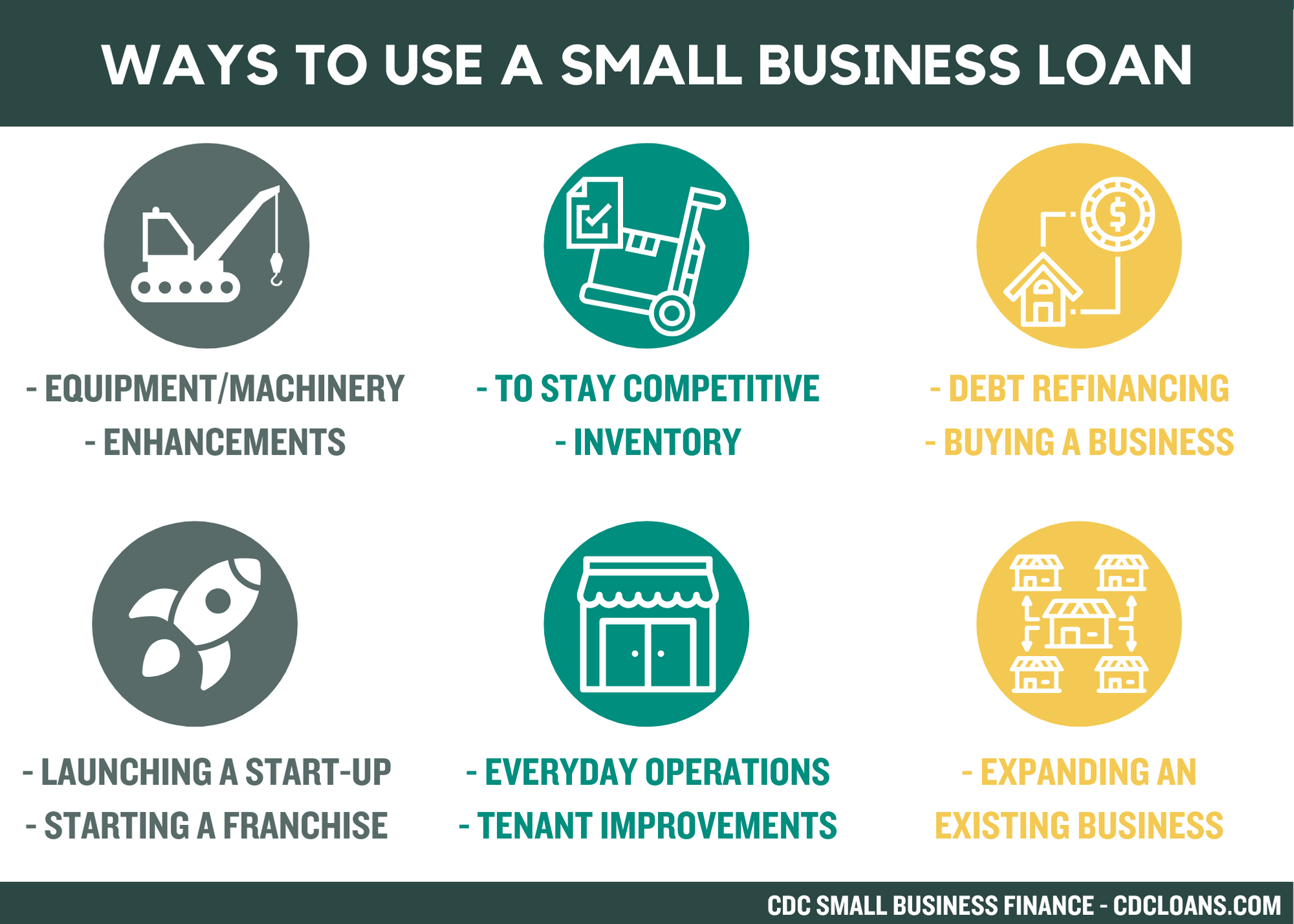
The 7(a) program is the SBA’s most popular and versatile loan. It can be used for working capital, debt refinancing, or the purchase of furniture, fixtures, and supplies. The maximum loan amount is $5 million, and the terms can extend up to 10 years for working capital and 25 years for real estate. Because of the government guarantee, 7(a) loans feature some of the most competitive interest rates in the industry, often pegged to the prime rate plus a small spread.
The 504 Loan Program and Microloans
If your business needs to purchase heavy equipment or commercial real estate, the SBA 504 loan program is the premier choice. This program involves a partnership between a bank and a Certified Development Company (CDC), providing long-term, fixed-rate financing for major assets that promote business growth and job creation.
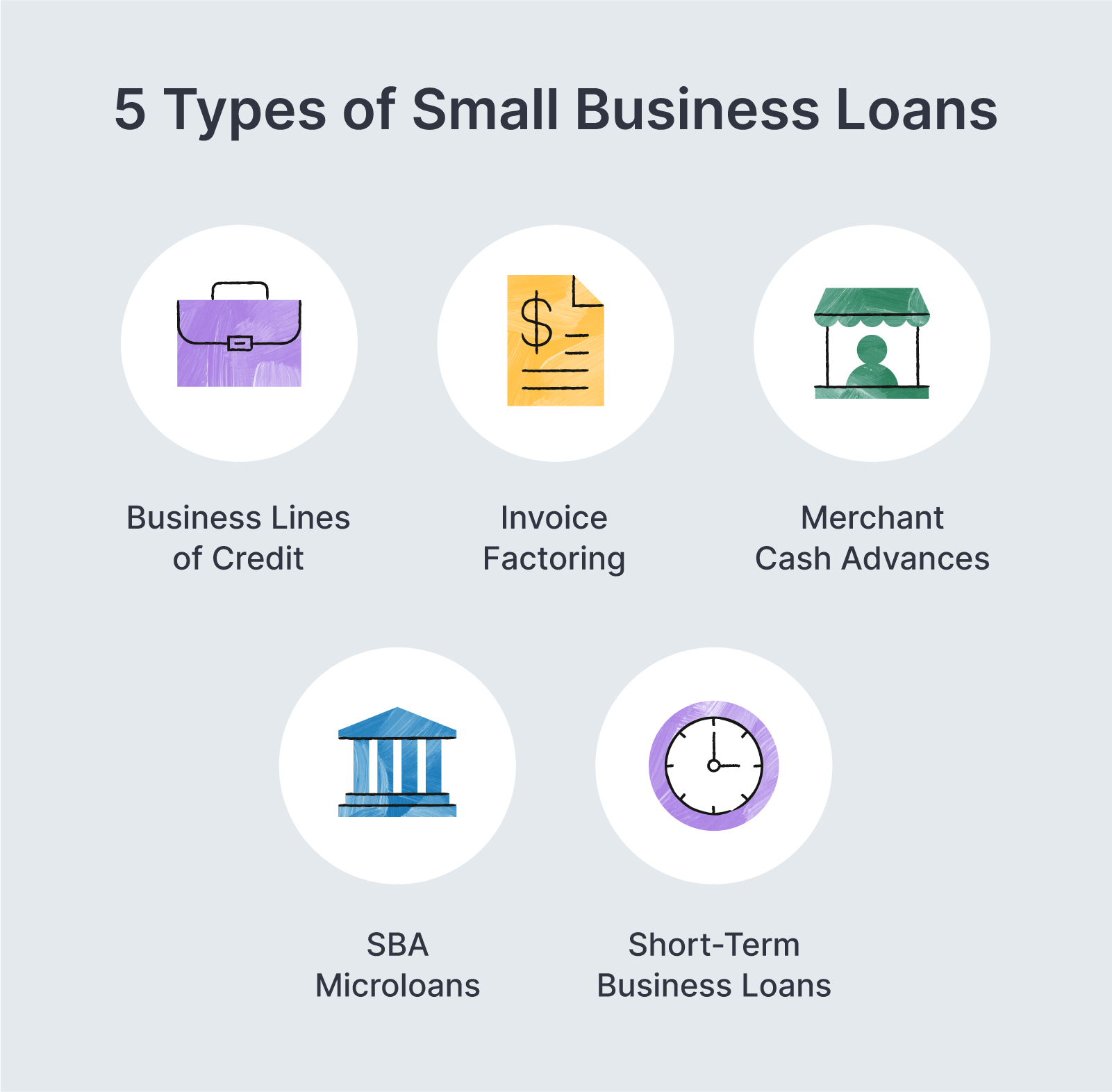
For smaller needs—specifically those under $50,000—the SBA Microloan program is an excellent resource. These funds are distributed through nonprofit community-based organizations. These lenders often provide “technical assistance,” offering business coaching and financial training alongside the capital, which is invaluable for early-stage entrepreneurs.
The Digital Shift: Online Lenders and FinTech Platforms
The rise of Financial Technology (FinTech) has revolutionized how small businesses access capital. Online lenders have filled the void left by traditional banks, particularly for small-dollar loans and businesses that need funding quickly.
Term Loans and Lines of Credit
Online lenders like OnDeck, Bluevine, and Fundera utilize advanced algorithms to assess risk, often pulling data directly from a business’s accounting software and bank accounts. The primary advantage of online lenders is speed. While a bank loan might take 30 to 90 days to close, an online lender can often fund a loan within 24 to 48 hours.
However, this speed and convenience come at a cost. Interest rates for online business loans are generally higher than those at traditional banks. Some lenders use “factor rates” rather than traditional APR, which can make the total cost of the loan higher than it initially appears. These loans are best suited for businesses that have an immediate opportunity for growth or an urgent need for cash flow but can afford a higher cost of capital.
Peer-to-Peer (P2P) Lending Networks
P2P lending platforms connect business owners directly with individual and institutional investors. By bypassing the traditional banking intermediary, P2P platforms can sometimes offer more competitive rates for borrowers with good credit. The process is entirely digital, and the “crowdsourced” nature of the funding allows for a diverse range of business types to find support.
Specialized and Asset-Based Financing
Sometimes, a general-purpose term loan isn’t the most efficient way to finance a specific need. Asset-based lending allows a business to use its own balance sheet to secure funding.
Equipment Financing and Leasing
If you need to buy a $100,000 piece of manufacturing equipment, an equipment loan is often the most logical path. In this scenario, the equipment itself serves as collateral for the loan. If you default, the lender reclaims the machinery. Because the loan is secured, interest rates are typically lower than unsecured business loans, and the terms are usually matched to the expected life of the equipment.
Invoice Factoring and Merchant Cash Advances
For businesses that struggle with slow-paying clients, invoice factoring can be a lifesaver. A factoring company “buys” your unpaid invoices at a discount, providing you with immediate cash. Once the client pays the invoice, the factoring company takes their cut and returns the remainder to you.
Merchant Cash Advances (MCAs) are another form of specialized financing, though they should be approached with caution. An MCA provider gives you a lump sum in exchange for a percentage of your future daily credit card sales. While easy to qualify for, MCAs often carry extremely high effective interest rates and can create a “debt trap” if the business’s sales volume fluctuates.
Strategic Preparation: Positioning Your Business for Approval
Regardless of where you choose to apply, the success of your application depends on your preparation. Lenders are looking for “The Five C’s of Credit”: Character, Capacity, Capital, Collateral, and Conditions.
Financial Documentation and Credit Worthiness
Before applying, you must ensure your financial house is in order. This includes having at least two years of federal business tax returns, current year-to-date profit and loss statements, and a clean balance sheet.
Your personal credit score still matters significantly in small business lending. Most lenders will look for a FICO score of 680 or higher for traditional loans, though online lenders may go as low as 600 or 620. Furthermore, the Debt Service Coverage Ratio (DSCR)—your business’s annual net operating income divided by your total annual debt payments—is a critical metric. A ratio of 1.25 or higher indicates that you have enough cash flow to comfortably cover new loan payments.

The Role of the Business Plan
For startups and businesses seeking significant expansion capital, a formal business plan is non-negotiable. This document should detail exactly how the loan will be used and how it will generate the necessary revenue to pay back the debt. A well-constructed plan demonstrates to the lender that you are a professional who understands the financial mechanics of your industry.
When you ask, “Where do you get a small business loan?” the answer depends entirely on your business’s current stage, your credit profile, and how quickly you need the funds. By weighing the low-cost but slow-moving traditional banks against the high-cost but lightning-fast online lenders, you can select the financial fuel that best powers your company’s journey toward its next milestone.
aViewFromTheCave is a participant in the Amazon Services LLC Associates Program, an affiliate advertising program designed to provide a means for sites to earn advertising fees by advertising and linking to Amazon.com. Amazon, the Amazon logo, AmazonSupply, and the AmazonSupply logo are trademarks of Amazon.com, Inc. or its affiliates. As an Amazon Associate we earn affiliate commissions from qualifying purchases.