
In the intricate landscape of personal finance, your bank account number stands as a fundamental identifier, a unique sequence that unlocks access to your financial world. It’s a number you’ll need for a multitude of essential financial tasks, from setting up direct deposits with your employer to paying bills, initiating transfers, or linking various financial accounts. Despite its critical importance, many individuals find themselves pausing, scrambling for information when asked for this specific sequence.
This guide aims to demystify the process of locating your bank account number, transforming a moment of uncertainty into a swift, informed action. We’ll explore the various reliable locations where this crucial identifier resides, both in traditional and modern digital formats, ensuring you’re always prepared to manage your finances effectively and securely. Understanding where and how to access this information is not just about convenience; it’s a cornerstone of responsible financial management and digital literacy in an increasingly interconnected financial ecosystem.
The Cornerstone of Your Financial Identity: Understanding Your Bank Account Number
Before delving into the “where,” it’s vital to grasp the “what” and “why.” Your bank account number is more than just a string of digits; it’s a key component of your financial identity, enabling seamless transactions and robust record-keeping.
What Exactly Is an Account Number?
Your bank account number is a unique sequence of digits, typically ranging from 8 to 12 characters, assigned by your financial institution to identify your specific checking or savings account. Think of it as the individual address for your funds within your bank. While your bank might have millions of customers, your account number ensures that money is directed precisely to your designated account, differentiating it from every other account held by that institution. This number is distinct from your debit card number, credit card number, or any other identifier associated with your broader banking relationship.
Why Is This Number So Important?
The utility of your bank account number extends across numerous critical financial activities. Its importance cannot be overstated in a modern financial context:
- Direct Deposits: Employers, government agencies (for tax refunds or benefits), and other entities require your account number to directly deposit funds into your account, bypassing physical checks and accelerating access to your money.
- Automatic Bill Payments: Setting up recurring payments for utilities, loans, rent, or subscriptions often involves providing your account number to the payee, authorizing them to pull funds directly from your account on scheduled dates.
- Electronic Fund Transfers (EFTs): When sending or receiving money from other individuals or businesses, especially for larger sums or international transfers, your account number (often alongside a routing number) is essential for initiating these electronic movements of money.
- Linking Financial Accounts: If you wish to connect your bank account to investment platforms, online payment services (like PayPal or Venmo for direct bank transfers), budgeting apps, or other financial tools, your account number is typically required for verification and transaction processing.
- Account Verification: In certain instances, such as applying for loans, setting up new financial services, or confirming your identity, your bank account number may be requested as part of the verification process.
Differentiating from Routing Numbers and Other IDs
It’s crucial to distinguish your bank account number from other financial identifiers that often appear alongside it:
- Routing Number (ABA Transit Number): This is a nine-digit code that identifies your specific financial institution (bank or credit union) and its location. While your account number identifies your specific account, the routing number identifies where your account is held. Both are typically needed for ACH (Automated Clearing House) transactions like direct deposits and electronic bill payments.
- Debit Card Number: This is the 16-digit number found on the front of your debit card. It is used primarily for point-of-sale transactions and online purchases, directly linking to your checking account. While it accesses the same funds, it is not your bank account number.
- Bank Identifier Code (BIC) or SWIFT Code: For international wire transfers, you’ll need a SWIFT code, which identifies your bank globally, in addition to your account number.
Understanding these distinctions prevents errors and ensures you provide the correct information for each specific financial task.
Primary Havens: Where to Locate Your Bank Account Number
When you need to find your bank account number, several reliable sources are readily available. These are often the first places to look, representing both traditional and modern methods of documentation.
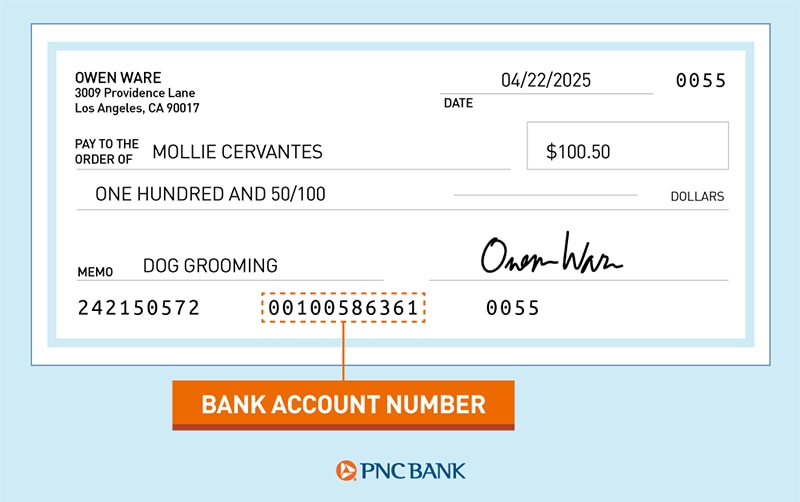
On Your Checks: The Traditional Method
For those who still use physical checks, this remains one of the most straightforward and traditional ways to find your account number.
- Location: Look at the bottom of a physical check. You’ll typically see three sets of numbers, separated by special characters.
- Order: From left to right:
- Routing Number: The first nine-digit sequence.
- Account Number: The second sequence of digits, often 10-12 digits long. This is your bank account number.
- Check Number: The third, shorter sequence, which matches the check number printed in the top right corner.
- Caution: Always double-check this location. While this layout is standard, some institutions might have slight variations, though the account number is invariably in the middle section of the MICR (Magnetic Ink Character Recognition) line.
Bank Statements: Paper and Digital Records
Bank statements serve as comprehensive records of your account activity and are an excellent source for your account number.
- Paper Statements: If you receive physical statements in the mail, your account number is almost always prominently displayed near the top of the first page. It’s usually found alongside your name and address, often clearly labeled as “Account Number” or “Account No.”
- Digital Statements (eStatements): Most banks offer the option to access your statements electronically through their online banking portal. Once you log in and navigate to the statements section, you can download a PDF version of your statement. Your account number will be located in the same prominent position as on a paper statement. This method offers a convenient, searchable, and environmentally friendly way to access your details.
In-Branch Assistance: When All Else Fails
If digital methods aren’t accessible or you simply prefer a face-to-face interaction, visiting a branch is always an option.
- Process: Head to your local bank branch during business hours. A customer service representative or teller will be able to provide your account number.
- Verification: Be prepared to present a valid form of identification (e.g., driver’s license, passport) to verify your identity. This is a crucial security measure to prevent unauthorized access to your account information.
Digital Pathways: Accessing Your Number Through Online & Mobile Banking
In today’s digital age, online and mobile banking platforms are the most common and often the quickest ways to retrieve your bank account number. These methods offer instant access from virtually anywhere, provided you have an internet connection.
Navigating Your Online Banking Portal
Your bank’s secure online portal is a treasure trove of your account information.

- Login: Access your bank’s official website and log in using your unique username and password. Ensure you are on the legitimate bank website to avoid phishing scams.
- Account Summary/Details: Once logged in, navigate to your account summary page or click on the specific checking or savings account for which you need the number.
- Locating the Number: Your account number is typically displayed under “Account Details,” “Account Information,” or a similar section. It might be partially masked (e.g., “XXXX1234”) for security reasons, requiring you to click a “show full number” button or enter a password for complete visibility. Banks often present both the account number and routing number together for convenience.
Utilizing Mobile Banking Applications
Mobile banking apps offer a streamlined experience, bringing your bank’s services directly to your smartphone or tablet.
- Login: Open your bank’s official mobile app and log in using your credentials, which may include biometric authentication (fingerprint or facial recognition).
- Account Selection: Tap on the specific account (checking or savings) you need information for.
- Details Section: Look for an option like “Account Details,” “Account Info,” or a gear/settings icon associated with the account. Here, you should find your account number, often presented alongside your routing number. Similar to online banking, it might be partially masked and require an extra tap or verification to reveal the full number.
The Role of Digital Wallets and Payment Apps
While digital wallets like Apple Pay or Google Pay and payment apps like Venmo or Zelle are incredibly convenient for transactions, they typically do not display your full bank account number within the app itself. These services act as intermediaries, linking to your bank account using encrypted tokens or abbreviated information. If you need your full account number, you’ll still need to refer to your bank’s primary online portal, mobile app, or other direct sources.
Beyond the Obvious: Alternative Avenues and Specific Scenarios
Sometimes, the standard places don’t yield the desired results, or you might be looking for your number in a specific context. Several other documents and processes can also reveal your bank account number.
Loan Documents and Account Opening Paperwork
When you first opened your bank account or applied for a loan from your bank, you likely received a packet of documents.
- Account Opening Forms: The initial agreement or welcome letter you received when you opened your checking or savings account will almost certainly contain your full account number. These are important documents to keep securely filed.
- Loan Agreements: If you have a loan with your bank (e.g., a personal loan, auto loan), the loan agreement or associated paperwork might list the bank account number from which payments are debited or to which funds were disbursed.
Direct Deposit Forms from Employers
If you’ve ever set up direct deposit with an employer, you would have filled out a specific form.
- HR Records: Your employer’s Human Resources or payroll department will have a record of the direct deposit authorization form you submitted. This form explicitly contains your bank account and routing numbers. While you can’t directly retrieve it, HR might be able to provide you with a copy or confirm the details for you, though they are usually cautious due to security protocols.
- Your Personal Copy: Ideally, you kept a copy of this form for your own records. If so, it’s a reliable source.
Contacting Customer Service: Preparing for Verification
If all other methods fail, or you simply prefer to speak with someone, your bank’s customer service department is equipped to assist.
- Phone Call: Call your bank’s customer service number (usually found on their website, the back of your debit card, or a bank statement).
- Verification Process: Be prepared for a thorough identity verification process. The representative will ask you a series of security questions (e.g., your full name, address, date of birth, mother’s maiden name, recent transaction details, last four digits of your Social Security number) to confirm you are the legitimate account holder before providing any sensitive information. This is a critical security measure to protect your funds.
Safeguarding Your Financial Gateway: Security Best Practices
Your bank account number is a sensitive piece of information. While it’s generally considered less risky than, say, your Social Security number, its exposure can still lead to fraudulent activities, especially when combined with other personal details. Therefore, protecting it is paramount.
The Risks of Exposure
While someone typically can’t drain your account with just your account number and routing number, these details can be used to set up unauthorized debits (ACH transfers), create fraudulent checks, or phish for more sensitive information. Identity thieves often piece together various bits of information to build a comprehensive profile.
Protecting Physical Documents
- Shred Old Statements and Checks: Do not simply throw away old bank statements or voided checks. Use a cross-cut shredder to destroy them thoroughly before disposal.
- Secure Storage: Keep current physical statements, checkbooks, and account opening documents in a secure location, such as a locked filing cabinet or a safe deposit box.
- Mindful Discarding: Be careful where you leave your checkbook or statements lying around, especially in public places or unsecured offices.
Securing Your Digital Footprint
- Strong, Unique Passwords: Use complex, unique passwords for your online banking portal and mobile app. Consider using a password manager.
- Two-Factor Authentication (2FA): Always enable 2FA if your bank offers it. This adds an extra layer of security, typically requiring a code sent to your phone in addition to your password.
- Secure Networks: Avoid accessing your online banking or mobile app over unsecured public Wi-Fi networks, which can be vulnerable to eavesdropping. Use a Virtual Private Network (VPN) if you must use public Wi-Fi.
- Device Security: Keep your devices (computer, smartphone) updated with the latest security patches and use reliable antivirus/anti-malware software.
- Phishing Awareness: Be extremely wary of unsolicited emails, texts, or calls asking for your bank account number or other personal financial information. Your bank will never ask for your full account number via email or text. Always verify the sender and, if in doubt, contact your bank directly using official contact information.

What to Do If Your Number Is Compromised
If you suspect your bank account number has fallen into the wrong hands or you notice unusual activity on your account:
- Contact Your Bank Immediately: Report the potential compromise to your bank’s fraud department without delay. They can monitor your account, place alerts, or even close the compromised account and open a new one if necessary.
- Review Account Activity: Scrutinize your bank statements and online transaction history regularly for any unauthorized charges or withdrawals.
- Change Passwords: Update your online banking password and any other relevant financial passwords.
- Report to Authorities: Depending on the severity, consider filing a report with the police or relevant consumer protection agencies.
By understanding where to find your bank account number and, equally important, how to protect it, you empower yourself to navigate your financial life with confidence and security. This seemingly small piece of information is a powerful tool in managing your money, and responsible handling is key to maintaining your financial well-being.
aViewFromTheCave is a participant in the Amazon Services LLC Associates Program, an affiliate advertising program designed to provide a means for sites to earn advertising fees by advertising and linking to Amazon.com. Amazon, the Amazon logo, AmazonSupply, and the AmazonSupply logo are trademarks of Amazon.com, Inc. or its affiliates. As an Amazon Associate we earn affiliate commissions from qualifying purchases.