
Navigating the intricacies of federal tax payments can often feel like a complex puzzle. For many individuals and businesses, the annual or quarterly obligation to remit funds to the Internal Revenue Service (IRS) is a significant financial event. The core question, “Where do I send my federal tax payment?”, while seemingly simple, opens up a range of secure and efficient options, each with its own benefits and considerations. Understanding these methods is crucial not only for compliance but also for peace of mind, ensuring your hard-earned money reaches its intended destination without complications. This comprehensive guide will demystify the process, detailing the various avenues available for federal tax payments and equipping you with the knowledge to choose the method best suited to your financial circumstances.

The Digital Frontier: Convenient Online Payment Methods
In an increasingly digital world, the IRS has embraced technology to streamline tax payments, offering a suite of online options that prioritize convenience, speed, and security. These methods are often preferred for their instant processing and reduced risk of postal delays or lost mail.
IRS Direct Pay: Your Free and Secure Gateway
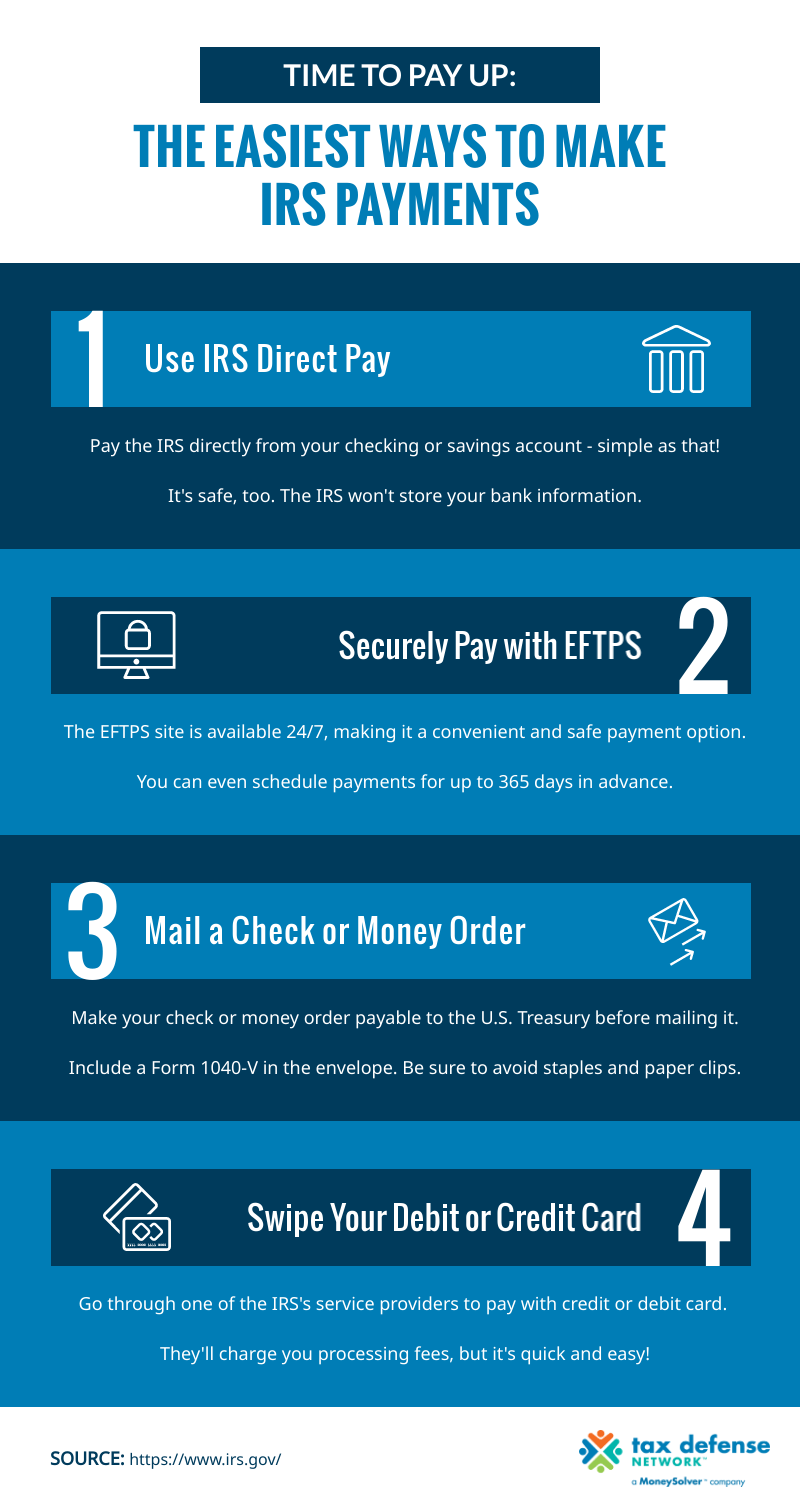
One of the most straightforward and cost-effective ways to pay your federal taxes is through IRS Direct Pay. This service allows you to make payments directly from your checking or savings account, completely free of charge. It’s an ideal choice for taxpayers who want to ensure their payment is processed quickly and without any third-party fees.
- How it Works: You simply visit the IRS.gov website, select “Direct Pay,” and follow the prompts. You’ll need to provide your bank account information (routing and account numbers), your Social Security Number (SSN) or Individual Taxpayer Identification Number (ITIN), and your filing status from your last tax return for verification.
- Benefits: No fees, instant confirmation, ability to schedule payments up to 365 days in advance, and email notifications for successful payments. It’s perfect for individual income tax, estimated taxes, and payments for an extension.
Debit Card, Credit Card, or Digital Wallet Options
For those who prefer the flexibility of credit cards, debit cards, or modern digital wallets (like PayPal or Click to Pay), the IRS partners with several third-party payment processors. While these methods offer convenience and the potential to earn rewards (for credit card users), it’s important to be aware of the associated processing fees.
- Processor Fees: The third-party processors charge a fee, typically a percentage for credit/debit cards and a flat fee for digital wallets, which varies depending on the processor and the payment amount. These fees are in addition to your tax payment.
- Choosing a Processor: The IRS website lists approved processors. You can compare their fees and choose the one that best suits your needs. This option is popular for those who need to pay quickly and don’t mind the extra cost for the convenience or the potential for credit card rewards.
Electronic Federal Tax Payment System (EFTPS): For Businesses and Estimated Taxes
The Electronic Federal Tax Payment System (EFTPS) is a robust and secure online platform primarily used by businesses for various federal tax payments, including employment taxes, corporate income taxes, and excise taxes. However, individuals making estimated tax payments can also benefit from EFTPS.
- Registration Required: Unlike IRS Direct Pay, EFTPS requires a registration process that can take several days to complete, as the IRS mails you a Personal Identification Number (PIN). Once registered, you can schedule payments up to 365 days in advance.
- Key Features: Highly secure, allows for detailed payment histories, and provides confirmation numbers for every transaction. It’s particularly useful for those who make frequent or recurring tax payments.
Integrated Tax Software Payment Options
Many popular tax preparation software programs, such as TurboTax or H&R Block, offer integrated payment options. If you prepare your taxes using one of these platforms, you can often elect to have your payment debited directly from your bank account or pay via credit/debit card as part of the e-filing process. This streamlines the entire tax filing and payment procedure into one convenient workflow.
The Traditional Route: Paying by Mail
Despite the rise of digital options, paying federal taxes by mail remains a viable and necessary method for many taxpayers, particularly those who prefer not to conduct financial transactions online or who are filing paper returns.
When to Send Your Payment by Mail
Mailing a check or money order is typically an option if you:
- Are filing a paper tax return (Form 1040, etc.).
- Are making an estimated tax payment using a payment voucher (Form 1040-ES).
- Are not comfortable with online payments or do not have access to a bank account suitable for direct debit.
Proper Addressing and Enclosures: Precision is Key
Accuracy is paramount when mailing your tax payment. The IRS mailing addresses vary depending on:
-
The type of form you are filing: (e.g., Form 1040, Form 1040-ES).
-
Whether you are enclosing a payment: Different addresses exist for returns with and without payments.
-
Your geographic location: The IRS has several processing centers across the country.
-
Finding the Correct Address: Always refer to the specific form’s instructions or the “Where to File” section on the IRS website (IRS.gov) for the most current and correct mailing address.
-
What to Include:
- Check or Money Order: Make it payable to the “U.S. Treasury.” Write your name, address, daytime phone number, Social Security Number (SSN) or Employer Identification Number (EIN), the tax year, and the related tax form number (e.g., “2023 Form 1040”) on the check or money order. Do not send cash.
- Payment Voucher: If making an estimated tax payment or a balance due payment with a paper return, detach and include the appropriate payment voucher (e.g., Form 1040-V or the relevant 1040-ES voucher).
- Tax Return: If you are mailing a balance due payment with your paper return, ensure your return is properly completed and signed.
Certified Mail and Record Keeping: Your Proof of Payment
To safeguard against disputes or claims of non-payment, it is highly advisable to use certified mail with a return receipt requested when mailing significant tax payments.
- Proof of Mailing: Certified mail provides verifiable proof that you sent your payment and when it was received by the IRS. This documentation can be invaluable in case of any discrepancies or if the payment is lost in transit.
- Personal Records: Regardless of the payment method, always keep thorough records. For mailed payments, retain copies of your check, payment voucher, and postal receipts. For online payments, save confirmation numbers and email receipts.
Special Scenarios and Important Considerations
Beyond the standard payment methods, there are specific situations and financial strategies related to federal tax payments that taxpayers should be aware of.
Estimated Tax Payments: Planning for Non-Withheld Income
Individuals who earn income not subject to withholding (e.g., self-employment income, interest, dividends, rent, alimony) are generally required to make estimated tax payments throughout the year.
- Quarterly Deadlines: These payments are typically due quarterly (April 15, June 15, September 15, and January 15 of the following year, with adjustments for weekends/holidays).
- Payment Methods: You can pay estimated taxes using IRS Direct Pay, EFTPS, debit/credit card, or by mail with Form 1040-ES payment vouchers. Failing to pay enough estimated tax can result in penalties.
Payment Plans and Agreements: When You Can’t Pay in Full
If you find yourself unable to pay your federal taxes in full by the deadline, the IRS offers several relief options:
- Short-Term Payment Plan: Allows you up to 180 additional days to pay your tax liability in full, though interest and penalties still apply.
- Installment Agreement: Allows you to make monthly payments for up to 72 months. This is an option if you owe a combined total of under $50,000 (tax, penalties, and interest) as an individual, or $25,000 as a business, and have filed all required returns.
- Offer in Compromise (OIC): Allows certain taxpayers to resolve their tax liability with the IRS for a lower amount than what they originally owe. This is generally an option for those facing severe financial hardship.
- How to Apply: You can apply for these plans online, via phone, or by mail. Interest and penalties may still accrue, so it’s best to address the situation promptly.
Foreign Payments and Expatriate Considerations
U.S. citizens and resident aliens living abroad may have specific rules regarding federal tax payments. While most online methods are available, they might need to account for exchange rates and international banking procedures. It’s crucial for expatriates to consult IRS Publication 54, Tax Guide for U.S. Citizens and Resident Aliens Abroad, or a tax professional specializing in international taxation.
Avoiding Penalties: Timeliness and Accuracy
The IRS imposes penalties for various reasons, including:
- Failure to File: Not filing your return by the due date.
- Failure to Pay: Not paying the taxes you owe by the due date.
- Underpayment of Estimated Tax: Not paying enough tax throughout the year through withholding or estimated payments.
To avoid penalties, ensure your payments are accurate and submitted on time, regardless of the method chosen. If you anticipate difficulty meeting a deadline, consider filing for an extension to file (which does not extend the time to pay) or contacting the IRS to discuss payment options.
Concluding Thoughts: Choosing Your Best Path
The question of “where do I send my federal tax payment” offers multiple valid answers, each designed to accommodate different preferences and circumstances. Whether you opt for the immediate convenience of IRS Direct Pay, the structured approach of EFTPS, the traditional reliability of mail, or the flexibility of credit card payments, the overarching goal remains the same: to ensure your federal tax obligation is met accurately and on time.
By understanding the available options, meticulously following instructions, and maintaining diligent records, taxpayers can navigate the payment process with confidence and avoid unnecessary stress or penalties. Proactive financial planning and a clear understanding of your chosen payment method are your best allies in fulfilling your civic duty while maintaining sound personal financial health.
aViewFromTheCave is a participant in the Amazon Services LLC Associates Program, an affiliate advertising program designed to provide a means for sites to earn advertising fees by advertising and linking to Amazon.com. Amazon, the Amazon logo, AmazonSupply, and the AmazonSupply logo are trademarks of Amazon.com, Inc. or its affiliates. As an Amazon Associate we earn affiliate commissions from qualifying purchases.